What is PropOne Primer Kit and why choose it?
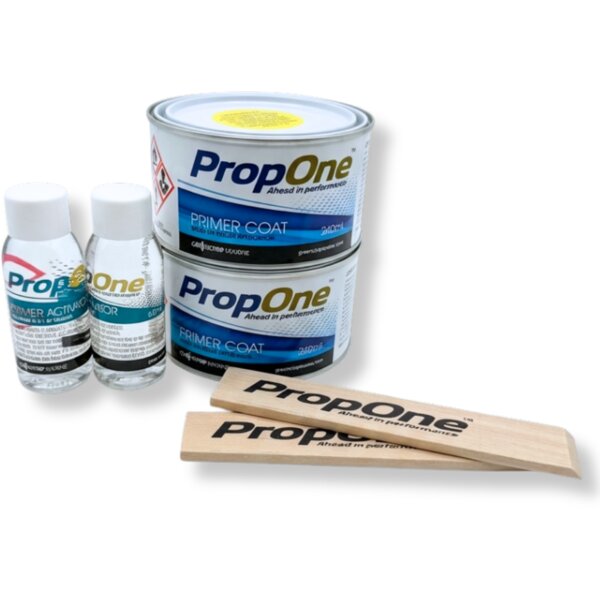
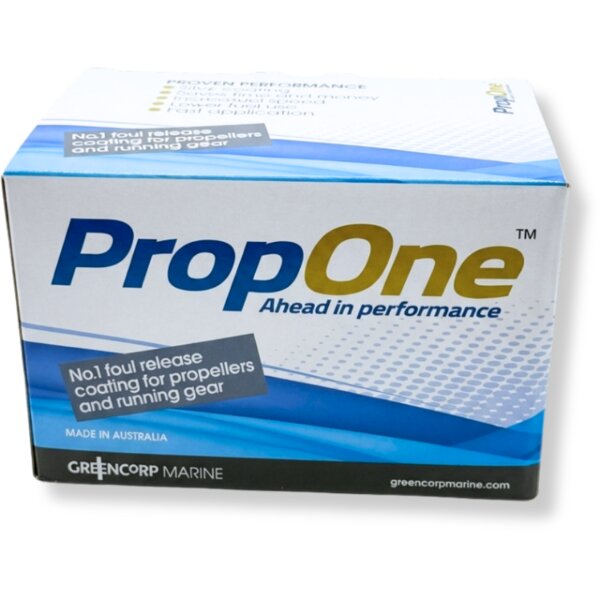
The PROP ONE PRIMER KIT from Prop-One is part of the PropOne System, a two-coat solution designed for propellers and fast-moving underwater components. It combines an anti-corrosive Primer Coat (used with a Primer Activator) and a non-biocidal Foul Release Clear Coat. The Clear Coat creates a low surface energy finish that makes it difficult for marine organisms to adhere strongly to the treated surface, so fouling is easily dislodged once the boat is in drive.
The system does not rely on biocides or chemical poisoning of the environment. Instead, fouling organisms are removed by mechanical action when the vessel is operated, offering a practical foul-release approach for ferrous and non-ferrous marine alloys, including aluminium.
Main features
- Two-coat system: anti-corrosive Primer Coat plus Foul Release Clear Coat.
- Clear Coat is non-biocidal and low surface energy, helping prevent strong adhesion of marine organisms.
- Fouling removal is purely mechanical when the boat is placed in drive.
- Suitable for use on all ferrous and non-ferrous marine alloys, including aluminium.
- Not suitable for Aquaculture applications.
- Primer mixed at a 4:1 ratio with Primer Activator by volume.
- Minimum application temperature of 5°C (40°F).
- Touch dry Clear Coat in approximately 1 hour at 20°C and 55% relative humidity.
- System can be immersed after appropriate curing time depending on temperature and humidity.
Coverage
A 1 litre PropOne Kit provides coverage for approximately 3.8 m² of surface.
- PropOne Primer Coat: approximately 6.3 m² per litre when applying 2 coats.
- PropOne Clear Coat: approximately 9.5 m² per litre.
Kit size guidance by propeller size and running gear
- One propeller:
- 18"–24" (three or four blades): 250 ml Kit.
- 24"–36" (four or five blades): 500 ml Kit.
- 36"–48" (five blades): 500 ml Kit.
- Two propellers:
- 18"–24": 250 ml Kit.
- 24"–36": 500 ml Kit.
- 36"–48": 1 litre Kit.
- Two propellers, two rudders and two propeller shaft struts:
- 18"–24": 500 ml Kit.
- 24"–36": 500 ml Kit.
- 36"–48": 1 litre Kit.
- Two propellers, two rudders, two propeller shaft struts and two trim tabs:
- 18"–24": 500 ml Kit.
- 24"–36": 1 litre Kit.
- 36"–48": 1 litre Kit.
Technical specifications
Primer Coat
- Appearance and odour: opaque yellow, sweet-alcoholic.
- Specific gravity: 0.99.
- Boiling point: 138–141°C.
- Volatile volume: 90%.
- Evaporation rate: slower than ether.
- Vapour density: heavier than air.
- Solubility in water: N/A.
- Volatile Organic Compounds (theoretical, as packaged): 687 g/L emitted VOC.
Primer Activator
- Appearance and odour: water white, sweet-alcoholic.
- Specific gravity: 0.91.
- Boiling point: 81–100°C.
- Volatile volume: 92%.
- Evaporation rate: slower than ether.
- Vapour density: heavier than air.
- Solubility in water: 100% miscible.
- Volatile Organic Compounds (theoretical, as packaged): 687 g/L emitted VOC.
- pH: 2.
Clear Coat
- Appearance and odour: hazy, strong aromatic.
- Specific gravity: 0.95.
- Boiling point: 159–176°C.
- Volatile volume: 28%.
- Evaporation rate: 23 (solvent; n-butyl acetate = 100).
- Vapour density: heavier than air.
- Solubility in water: immiscible.
- Volatile Organic Compounds (theoretical, as packaged): 324 g/L emitted VOC.
- Flashpoint: 42°C.
- Touch dry: approximately 1 hour at 20°C / 55% RH (extended by lower temperature or humidity).
System and application data
- Primer mixing ratio: 4 parts Primer Coat to 1 part Primer Activator by volume.
- VOC of mixed Primer: 687 g/L.
- Storage temperature: between 5°C and 27°C (40°F–80°F).
- Minimum application temperature: 5°C (40°F).
- Recommended mixing temperature range for Primer Coat and Activator: 5°C–30°C.
- Pot life of mixed Primer: 4 hours at 25°C (77°F).
- Time to immersion at 55% RH:
- At 10°C (50°F): 16 hours.
- At 20°C (68°F): 12 hours.
- Minimum application conditions: 10°C (50°F) and 55% RH.
- Do not apply to anodes.
- Not suitable for use in Aquaculture applications.
Applications and use cases
The PROP ONE PRIMER KIT is intended for use as part of the PropOne System on underwater running gear that remains permanently immersed in water and operates at speed. Typical components include:
- Propellers (various diameters and blade counts as per coverage guide).
- Rudders.
- Propeller shaft struts.
- Trim tabs.
The system is suitable for all ferrous and non-ferrous marine alloys, including aluminium. It is specifically designed so that, while the vessel is not in use, marine organisms may colonise the surface, but they are easily dislodged once the boat is driven and water flow provides mechanical cleaning.
Surface preparation overview
Proper surface preparation is essential to maximise the performance and service life of the PropOne System.
- Remove foreign matter such as marine growth, old coatings, rust and corrosion by brushing, abrasion or scraping.
- Remove surface contaminants by brushing, wiping with a clean cloth, blowing off with clean, dry air, or vacuum cleaning.
- Clean metal surfaces using Prop Wash Wipes, rinse with fresh water, and wipe with a clean damp white cloth until no discolouration is observed.
- Wipe all surfaces with a clean cloth soaked in acetone.
- Inspect the cleaned surfaces and correct any unsatisfactory areas before coating.
- Apply the PropOne System immediately after the surfaces have been cleaned.
Application overview
- Primer mixing: Thoroughly mix the Primer Coat to re-disperse settled pigments, then add one whole bottle of Primer Activator to one whole can of Primer while mixing. Mix for a further 2 minutes, replace the lid and shake the can for 2 minutes.
- Primer application: Apply sparingly by brush or roller, preferably by brush, starting at the hub of the propeller and working towards the blade edges to prevent runs. Apply two coats, allowing the first coat to reach touch dry before applying the second.
- Clear Coat application: As soon as the Primer is touch dry, apply one generous Clear Coat using a new soft, clean brush, working from the centre to the edges and covering all primed areas. Check carefully for runs and drips.
- Curing: Do not allow anything to contact the uncured Clear Coat for a minimum of 12 hours.
- Tool cleaning: Clean Primer tools and equipment with acetone immediately after use; clean Clear Coat tools and equipment with xylene.
FAQ
1. What is included in the PROP ONE PRIMER KIT?
The kit comprises the PropOne Primer Coat and the Primer Activator, which together form the anti-corrosive base for the PropOne System. The Clear Coat is applied over the primed surface.
2. Does the Clear Coat use biocides to prevent fouling?
No. The Clear Coat is non-biocidal and does not prevent marine growth by chemically poisoning the environment. Fouling is removed mechanically when the vessel operates.
3. On which substrates can the PropOne System be used?
It is suitable for use on all ferrous and non-ferrous marine alloys, including aluminium. It must not be applied to anodes.
4. Is PropOne suitable for Aquaculture applications?
No. The product is not suitable for use in Aquaculture applications.
5. What is the recommended mixing ratio for the Primer?
The Primer mixing ratio is 4 parts Primer Coat to 1 part Primer Activator by volume.
6. What are the minimum application conditions?
The minimum application temperature is 5°C (40°F). Minimum application conditions for curing are 10°C (50°F) and 55% relative humidity.
7. How long before the coated components can be immersed?
At 55% relative humidity, time to immersion is approximately 16 hours at 10°C (50°F) and 12 hours at 20°C (68°F). Lower temperatures or humidity will extend cure time.
8. How quickly does the Clear Coat become touch dry?
At 20°C and 55% relative humidity, the Clear Coat becomes touch dry in approximately 1 hour, with longer times at lower temperature or humidity.
9. How should tools be cleaned after application?
Clean tools used with the Primer using acetone immediately after use. Tools used with the Clear Coat should be cleaned with xylene.
10. Why is surface preparation so important?
Insufficient or incorrect surface preparation, or incorrect application of the primer, can lead to product failure and a reduction in the service life of the coating.
Transport information
Consultar ficha técnica del fabricante.
Individual protection measures
Consultar ficha técnica del fabricante.
*Contenido generado por IA