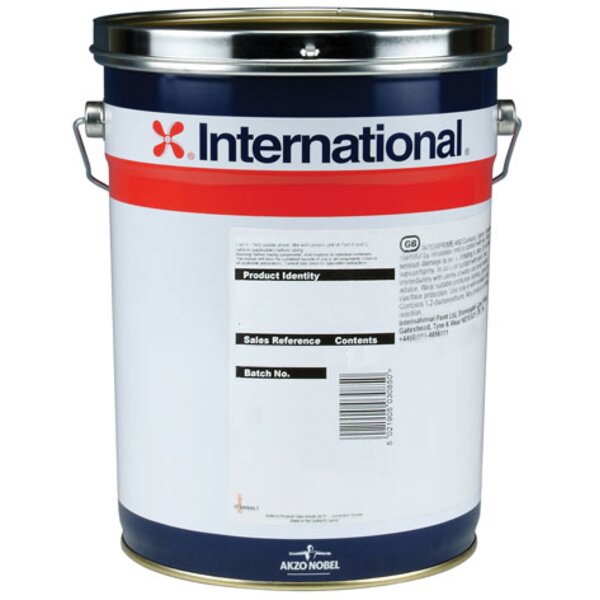
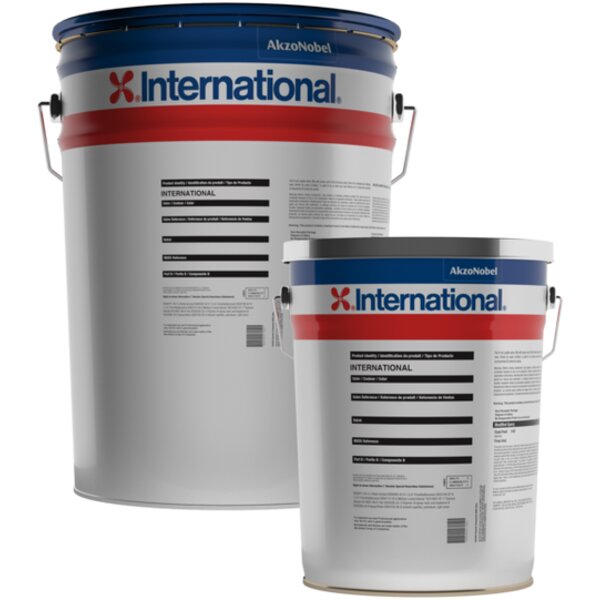
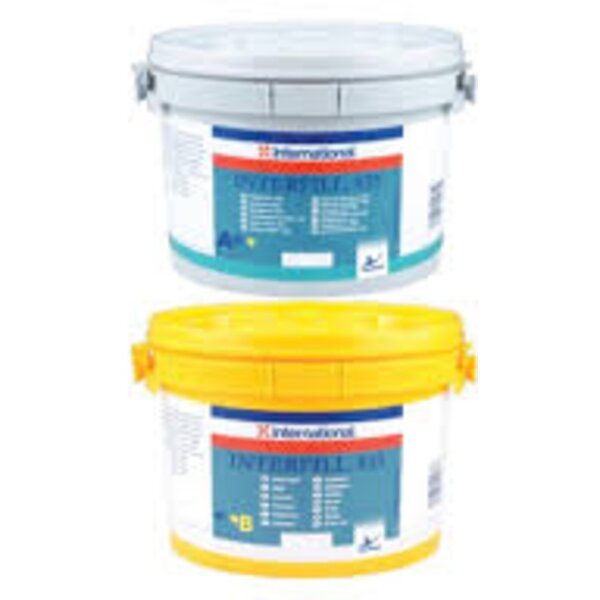
What is Intergard 269 Base and why choose it?
Intergard 269 Base is the Part A of a quick drying, two-pack epoxy holding primer and tie coat designed for the temporary protection of properly prepared steel and aluminium. Once mixed with its curing agent (EGA089), it forms a high performance anticorrosive epoxy primer that can be overcoated after extended periods of weathering. It is also widely used as a tie coat over freshly applied zinc primers, preventing zinc salt formation and reducing pinholing in subsequent coating layers.
Developed for demanding marine and industrial environments, Intergard 269 is suitable for newbuilding, maintenance and repair, and on-board maintenance. Its long overcoating window, reliable adhesion to steel, aluminium and zinc primers, and compatibility with a wide range of epoxy and polyurethane topcoats make it a versatile choice for professional applicators.
Main features
- Two-pack epoxy holding primer / tie coat – provides temporary protection to freshly blasted substrates and ties in subsequent coating layers.
- Quick drying – touch dry from 20 to 45 minutes depending on temperature, enabling fast turnaround.
- Extended overcoating intervals – can be safely overcoated after lengthy weathering when applied within specification.
- Anticorrosive protection for metals – formulated for prepared steel and aluminium; also seals zinc primers to prevent zinc salt formation.
- Compatible with cathodic protection – suitable for use in systems with controlled cathodic protection, including ballast tank service.
- Certified performance (when used in approved schemes):
- Food contact – carriage of grain (NOHH).
- Fire resistance – surface spread of flame (Exova Warringtonfire).
- Fire resistance – Marine Equipment Directive compliant.
- Control of corrosion – Chinese Classification Society approval (selected systems).
- Wide application window – designed for application between 5°C and 35°C (substate and ambient conditions), with pot life and drying adjusted to temperature.
- Multiple application methods – airless spray, conventional spray, brush and roller, allowing efficient coverage of both large areas and small details.
Technical specifications
- Product type: Two-pack epoxy holding primer / tie coat.
- Colour (Base): EGA088 Red. (Other colours such as light grey or white are available in specific regions and for non-immersed service; consult local representative.)
- Finish: Matt / not applicable sheen.
- Mixing ratio: 4 parts by volume Intergard 269 Base (Part A) to 1 part by volume curing agent EGA089 (Part B).
- Volume solids: 47% ±2% (ISO 3233:1998).
- Typical dry film thickness (DFT): 40 microns dry.
- Typical wet film thickness (WFT): 85 microns wet.
- Theoretical coverage: 11.75 m²/litre at 40 microns DFT (allow appropriate loss factors for practical coverage).
- Recommended number of coats: 1 coat (multiple coats may be required when applied by brush or roller to reach specified DFT).
- Application methods: Airless spray, conventional spray, brush, roller.
- Thinner: International GTA220 (thinning generally not required; maximum 5% by volume where allowed by local legislation or 15–25% over zinc primers to minimise pinholing).
- Cleaner: International GTA822 or GTA220 for equipment cleaning and flushing.
- Airless spray data: tip range 0.38–0.53 mm (15–21 thou); minimum total fluid pressure at tip 141 kg/cm² (2010 psi).
- Conventional spray: suitable proprietary equipment, pot pressure typically <2 bar, atomising 3–4 bar (reference data from related sheets).
- Flash point (typical): Part A 26°C; Part B 25°C; mixed product 26°C.
- Induction time: Not required (apply after thorough mixing).
- VOC (as supplied):
- 450 g/l (EPA Method 24).
- 293 g/kg of liquid paint (EU Solvent Emissions Directive 1999/13/EC).
- 420 g/l Chinese National Standard GB23985 (guidance value).
- Typical density (Base, colour-dependent): approx. 1.54–1.67 g/cm³.
- Shelf life (typical, at 25°C in unopened containers): Part A approx. 12 months; Part B approx. 18 months (subject to reinspection).
- Recommended storage temperature: 5–35°C in dry, shaded conditions away from heat and ignition; keep containers tightly closed.
Drying and pot life
| Substrate temperature |
Touch dry |
Hard dry |
Pot life (mixed) |
| 5°C |
45 minutes |
24 hours |
20 hours |
| 10–15°C |
40–35 minutes |
16–12 hours |
17–12 hours |
| 23–25°C |
30 minutes |
8 hours |
8 hours |
| 35°C |
20 minutes |
2 hours |
3 hours |
Minimum curing temperature: 5°C. For maximum performance, curing temperature should be above 10°C. Product will not cure adequately below 5°C.
Overcoating intervals (typical guidance)
The following data are typical minimum and maximum overcoating intervals for selected compatible products. Actual values may vary by region and conditions; consult your local International representative for project-specific recommendations.
| Overcoated by |
Substrate temperature |
Minimum |
Maximum |
| Intertuf 262 |
5°C |
24 hours |
ext |
| 10°C |
17 hours |
ext |
| 25°C |
6 hours |
ext |
| 35°C |
6 hours |
ext |
| Intershield 300 |
5°C |
24 hours |
ext |
| 10°C |
17 hours |
ext |
| 25°C |
6 hours |
ext |
| 35°C |
6 hours |
ext |
| Intershield 300HS |
5°C |
24 hours |
6 months |
| 10°C |
17 hours |
6 months |
| 25°C |
6 hours |
6 months |
| 35°C |
6 hours |
6 months |
| Interthane 990 / 990E |
5°C |
24 hours |
14 days |
| 10°C |
17 hours |
14 days |
| 25°C |
6 hours |
14 days |
| 35°C |
6 hours |
7 days |
Where “ext” is shown, extended overcoating intervals are possible. If maximum overcoating times are exceeded, surfaces should be cleaned and may require light abrasion (e.g. sweep blasting or sanding with 280-grit paper).
Applications and use cases
As a holding primer for water ballast tanks (immersion service)
- Round off all welds, sharp edges and projections; remove weld spatter.
- Abrasive blast clean steel to Sa2½ (ISO 8501‑1:2007) or SSPC‑SP10 (North America equivalent).
- If rusting occurs between blasting and application, reblast to the specified visual standard.
- Repair surface defects revealed by blasting by grinding, filling or other appropriate methods.
- Minor repairs can be prepared by power tooling to Pt3 (JSRA SPSS:1984) or SSPC‑SP11 as regional equivalent.
- Spray apply one coat of Intergard 269 within 1 hour of blasting (or grinding) and allow to dry a minimum of 6 hours before overcoating, observing temperature-related intervals.
As a holding primer for areas other than ballast tanks
- Abrasive blast clean steel to Sa2 (ISO 8501‑1:2007) or SSPC‑SP6 where applicable.
- Reblast if oxidation occurs before application.
- Address surface defects after blasting by grinding or filling.
- Intergard 269 may also be applied to surfaces prepared to International Hydroblasting Standard HB2, with flash rusting not worse than HB2L (underwater hull/boottop) or HB2M (above water areas).
- Minor areas can be mechanically prepared to Pt3 / SSPC‑SP11.
As a tie coat over zinc primers
- Ensure the zinc primer is clean, dry and free of contamination.
- Repair breakdown or damaged areas to the specified standard (e.g. Sa2½).
- Apply Intergard 269 within the specified overcoating interval of the zinc primer.
- To avoid pinholing over zinc silicate primers, thin Intergard 269 by approximately 15–25% with International GTA220, respecting local VOC legislation.
Substrates
- Prepared carbon steel (blast cleaned or hydroblasted, in accordance with International specifications).
- Aluminium (when specified by International and correctly prepared, including abrasive blasting or discing to an appropriate profile).
- Freshly applied zinc primers (as tie coat and sealer).
Recommended conditions during application
- Do not apply below 5°C substrate or ambient temperature.
- Substrate and ambient temperature: minimum 5°C, maximum 35°C.
- Product temperature: 10–35°C; for optimum application, 21–27°C prior to mixing.
- Surface temperature must be at least 3°C above the dew point.
- Avoid application where condensation may form on the substrate.
- Do not apply more than the recommended film thickness to avoid splitting or other film defects.
FAQ
-
What is Intergard 269 Base used for?
Intergard 269 Base, when mixed with its curing agent, is used as a quick drying epoxy holding primer for prepared steel and aluminium and as a tie coat over zinc primers. It provides short to medium term anticorrosive protection and improves adhesion and appearance of subsequent coating layers.
-
Can Intergard 269 be used in immersion service, such as ballast tanks?
Yes. When applied to correctly prepared steel (Sa2½) and used as part of an approved system, Intergard 269 is suitable as a holding primer in water ballast tanks and is compatible with controlled cathodic protection.
-
Which application methods are recommended?
The product is designed primarily for airless spray but can also be applied by conventional spray. Brush and roller may be used for small areas or touch-up, although multiple coats might be required to reach the specified dry film thickness.
-
Do I need to thin Intergard 269?
Thinning is not normally required. Where necessary due to extreme conditions or when used over zinc primers to reduce pinholing, International GTA220 may be used, observing local environmental and VOC regulations. Maximum thinning values are indicated in the technical data.
-
How soon can I overcoat Intergard 269?
Minimum overcoating intervals depend on substrate temperature and the chosen subsequent coating. As a guide, at 25°C typical minimum intervals are 6 hours for products such as Intertuf 262, Intershield 300, Intershield 300HS and Interthane 990/990E. Always check temperature-specific tables and local guidance.
-
Does Intergard 269 have any certifications?
When used as part of an approved coating scheme, Intergard 269 contributes to systems certified for food contact (carriage of grain), surface spread of flame, and Marine Equipment Directive fire performance, among others.
-
What surfaces preparation is required before application?
Steel typically requires abrasive blasting to Sa2 or Sa2½ (or equivalent SSPC standards) or hydroblasting to HB2. Welds and sharp edges must be rounded and surface contaminants removed by high-pressure fresh water wash and solvent cleaning (SSPC‑SP1). Zinc primers must be within their overcoating window and free from salts and contamination.
-
Can Intergard 269 be applied over aluminium?
Yes, Intergard 269 may be applied to properly prepared aluminium substrates. The aluminium should be abrasively blasted or mechanically prepared to a clean, bright surface with a suitable anchor profile. Always confirm specification with your local International Paint representative.
-
Is Intergard 269 suitable for use under polyurethane topcoats?
Yes. It is commonly overcoated with epoxy primers and fillers and then polyurethane finishes such as Interthane 990 or Interthane 990E, within the indicated overcoating intervals.
-
What should I do if maximum overcoating times are exceeded?
If the maximum interval is exceeded, the surface should be cleaned to remove contaminants, then lightly abraded (for example by sweep blasting or sanding) to restore a sound profile before overcoating.
Section 14 – Transport information
Intergard 269 Base (as part of the mixed product) is classified as a flammable paint material for transport. Key transport data include:
- UN number: UN1263.
- UN proper shipping name: PAINT.
- Transport hazard class: Class 3 (flammable liquid).
- Packing group: III.
- ADR/RID: UN1263, Paint, Class 3, PG III; tunnel code typically D/E (where applicable).
- IMDG: UN1263, Paint, Class 3, PG III; not classified as a marine pollutant; emergency schedules F‑E, S‑E.
- IATA: UN1263, Paint, Class 3, PG III.
- General transport precautions: Always transport in tightly closed, upright containers secured against movement. Keep away from sources of heat and ignition. Ensure personnel know the appropriate actions to take in the event of an accident or spillage.
Section 8 – Personal protective measures
Intergard 269 Base contains organic solvents and reactive epoxy components. During mixing, application, drying and any subsequent work (such as sanding or flame cutting on coated surfaces), appropriate personal protection and ventilation are essential.
Engineering controls
- Use only with adequate ventilation. Employ local exhaust or process enclosure to keep solvent vapour and particulate levels below applicable exposure limits.
- Ventilation systems must also ensure vapour concentrations remain below lower explosive limits and should be explosion‑proof.
Personal protective equipment (PPE)
- Eye and face protection:
- Wear chemical splash goggles and/or a face shield meeting approved standards whenever there is a risk of splashes, sprays or mists.
- Where inhalation hazards exist, a full‑face respirator may be required instead of goggles.
- Hand protection:
- Use chemical‑resistant, impervious gloves compliant with relevant standards. Examples specified include nitrile or Viton gloves, with thickness and breakthrough time selected according to exposure duration and manufacturer data.
- Inspect gloves regularly and replace at any sign of degradation, puncture or breakthrough.
- Skin and body protection:
- Wear protective clothing covering arms, legs and body to prevent skin contact.
- Where there is a risk of ignition from static electricity, use anti‑static protective garments including overalls, gloves and footwear compliant with EN 1149 or equivalent guidance.
- Respiratory protection:
- When adequate ventilation cannot be guaranteed or exposure assessments indicate a need, wear a respirator conforming to EN140 fitted with an A/P2 (or higher) filter suitable for organic vapours and particulates.
- During dry sanding, cutting or welding of cured films, use local exhaust ventilation and, if necessary, appropriate respiratory protection to control dust and fumes.
- Other skin protection:
- Wear appropriate safety footwear and any additional protective items needed based on the task and risk assessment.
Hygiene and safe handling practices
- Avoid contact with eyes and skin. Do not breathe vapour, mist or spray.
- Do not eat, drink or smoke in areas where the product is mixed, applied or stored. Wash hands, forearms and face thoroughly after handling and before breaks.
- Remove contaminated clothing and PPE before entering eating areas. Wash contaminated garments before reuse; do not take contaminated work clothing out of the workplace.
- Ensure eyewash stations and safety showers are available close to the work area.
*Contenido generado por IA