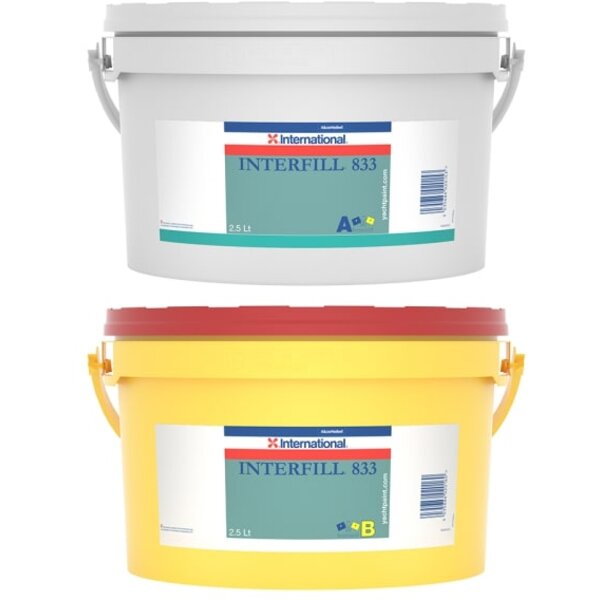
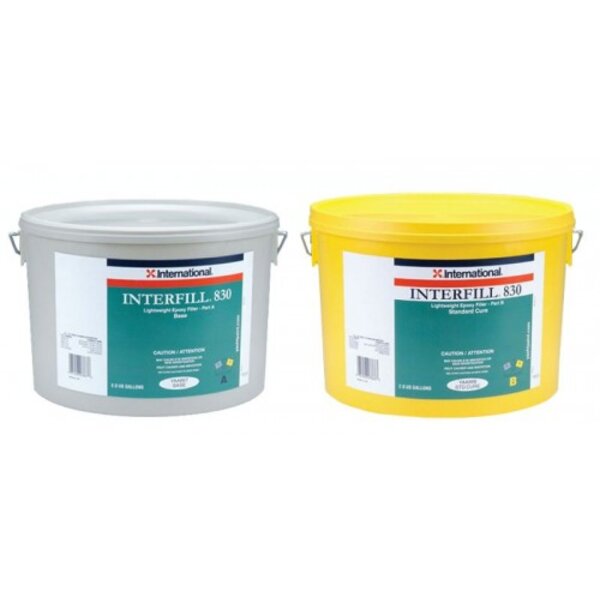
What is Interfill 830 Standard Part B and why choose it
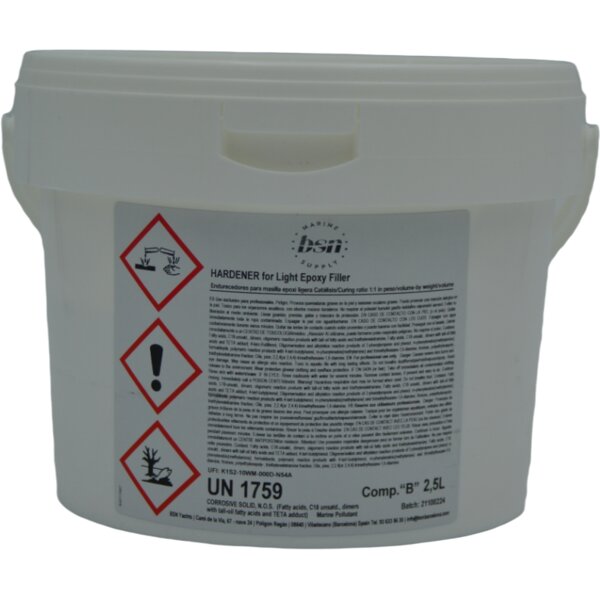
Interfill 830 Standard Part B is the curing agent for the low-density Interfill 830 epoxy fairing filler system from International Náutica. It is designed for professional use and is mixed with Interfill 830 Base (YAA867) to create a fairing compound for profiling above and below the waterline on steel, aluminium and composite hulls.
When combined with Interfill 830 Base, the system provides a lightweight, easy-to-sand, impact-resistant and moisture-resistant epoxy filler that can be applied in thick layers for efficient fairing on large surfaces.
Main features
- Curing agent specifically formulated for Interfill 830 Base (YAA867).
- Part of a low-density epoxy filler system widely used by professional applicators.
- Enables high-build application of the Interfill 830 system without sagging or sinking when used as directed.
- Contributes to a fairing compound that is easy to sand and resistant to moisture and impact.
- Suitable for use on steel, aluminium and composite/GRP substrates within the Interfill 830 system.
- For professional use only.
Technical specifications
Product identification
- Product name: Interfill 830 Curing Agent (Standard)
- Product code: YAA868
- Role: Part B curing agent for Interfill 830 Base (YAA867)
- Recommended use: Epoxy curing agent for marine fairing filler; only as specified in the Interfill 830 technical documentation
Physical and chemical properties
- Physical state: Paste
- Specific gravity: 0.697
- Flash point (closed cup): 101°C
- Vapour density: Heavier than air
- Lower explosion limit: 0.0
- Water solubility: Immiscible in water
System and mixing data
- Compatible base component: Interfill 830 Base (YAA867)
- Mix ratio with Interfill 830 Base: 1:1 by volume (as supplied)
- Recommended application methods for the mixed filler: Trowel or batten/screeding board
- Recommended maximum wet film thickness of mixed Interfill 830 filler per coat: 20,000 microns (2 cm)
- Typical overcoating and sanding times for mixed Interfill 830 system: Consultar ficha técnica del fabricante.
- Typical shelf life (system information): 2 years
Applications and use cases
Typical applications
- Profiling and fairing of hulls above and below the waterline ("obra viva y muerta").
- Fairing large steel, aluminium and composite/GRP surfaces when used as part of the Interfill 830 system.
- Fairing repairs where thick epoxy filler layers are required.
Suitable substrates within the system
- Steel and aluminium primed with compatible epoxy primers such as Intergard 269 or Interprime 820.
- Rigid, properly primed wood substrates (using Interprime 820).
- GRP/composite substrates, including in osmosis treatment systems where Interfill 830 is used in the specified phase.
Key system benefits when mixed with Interfill 830 Base
- Low-density, easy-to-sand epoxy fairing filler.
- High general and impact resistance.
- Moisture-resistant and suitable for underwater hull areas when correctly overcoated.
- Can be applied in thick layers up to approximately 25.4 mm in a single application without sagging, when used as directed.
FAQ
1. What is Interfill 830 Standard Part B used for?
Interfill 830 Standard Part B (YAA868) is the curing agent that must be mixed with Interfill 830 Base (YAA867) to create the Interfill 830 epoxy fairing filler used for profiling and fairing marine hulls.
2. What is the correct mixing ratio with Interfill 830 Base?
The Interfill 830 system is mixed at 1:1 by volume (base to curing agent) as supplied. Mix thoroughly to a uniform colour before application.
3. On which substrates can the mixed Interfill 830 system be used?
When used as specified, the Interfill 830 system can be applied over cured epoxy primers and fillers on steel, aluminium, rigid wood and GRP/composite substrates that are clean, dry and correctly prepared.
4. How thick can I apply the mixed filler in a single coat?
The recommended maximum wet film thickness for the mixed Interfill 830 system is 20,000 microns (approximately 2 cm) per coat using a trowel or batten.
5. What is the pot life and sanding/overcoating time?
Pot life, sanding and overcoating intervals depend on temperature and are defined for the mixed Interfill 830 system, not for Part B alone. Consultar ficha técnica del fabricante.
6. Do I need a specific primer under Interfill 830?
Yes. Steel and aluminium should be primed with suitable epoxy primers such as Intergard 269 or Interprime 820. Bare rigid wood substrates should be primed with Interprime 820. GRP/composite should be prepared and primed as specified in the system guidelines.
7. Can I use Part B with other epoxy fillers or bases?
No. Interfill 830 Standard Part B is designed for use only with Interfill 830 Base (YAA867) at the specified ratio.
8. Is Interfill 830 Standard Part B suitable for consumer use?
No. The curing agent and the Interfill 830 system are intended for professional use only.
Section 14 – Transport information
According to the safety data provided for Interfill 830 Curing Agent (YAA868):
- ADR/RID: Not dangerous for transport.
- IMDG: Non hazardous.
- ICAO/IATA: Non hazardous.
The product should nevertheless be transported in securely closed original containers, kept upright, and protected from damage and extreme temperatures. Avoid release to drains, watercourses or soil in case of accidental spillage.
Section 8 – Individual protection measures
Personal protective equipment and exposure control recommendations for handling Interfill 830 Standard Part B (YAA868) are as follows:
- Ventilation and engineering controls: Provide adequate general and, where practical, local exhaust ventilation to keep airborne concentrations below occupational exposure limits.
- Respiratory protection: If exposure may exceed limits, use approved respiratory protection. When applying by spray, use a mask with combined organic vapour and particulate filters (for example, A2-P2 type) or air-fed respiratory equipment in confined spaces. For brush or roller application, use an organic vapour filter (A2) where needed.
- Hand protection: Wear nitrile gloves during mixing and application. Gloves should comply with relevant standards and be replaced regularly or immediately if damaged.
- Eye and face protection: Use suitable eye protection such as chemical splash goggles, and where splashing is likely, a face shield.
- Skin and body protection: Wear protective clothing covering arms and legs to prevent skin contact. No skin should be left exposed.
- Hygiene measures: Do not eat, drink or smoke in application areas. Wash hands, forearms and face thoroughly after handling and before breaks. Remove contaminated clothing and protective equipment before entering eating areas and wash them before reuse.
*Contenido generado por IA