What is AWLCRAFT 3000 CLEAR and why choose it?
AWLCRAFT 3000 CLEAR from Awlgrip is a two-component, premium polyurethane clearcoat designed for professional spray application. It delivers a durable, high-gloss finish that is fast drying, easy to apply and can be repaired and maintained in a wide variety of climates. Formulated to be used as a clearcoat over Awlcraft SE basecoats, as well as over existing Awlcraft 2000 and Awlcraft 3000 topcoats, it provides a high-quality clear finish for interior and exterior coated surfaces.
Main features
- Two-component polyurethane clearcoat for professional use.
- High-gloss finish, designed to give a smooth, wet-look appearance.
- Fast drying and easy to apply with standard air-atomized spray equipment.
- Easily repaired and maintained, even in a wide range of climatic conditions.
- Designed as a clear top layer over Awlcraft SE Basecoat and over prepared Awlcraft 2000 / Awlcraft 3000 topcoats.
- Professional-only system, with specific mixing, reduction and spray parameters.
- Good theoretical coverage of approximately 13.1 m²/L (533.7 ft²/gal) at the recommended dry film thickness.
Technical characteristics
Product composition and packaging
- Type: Two-component polyurethane clearcoat.
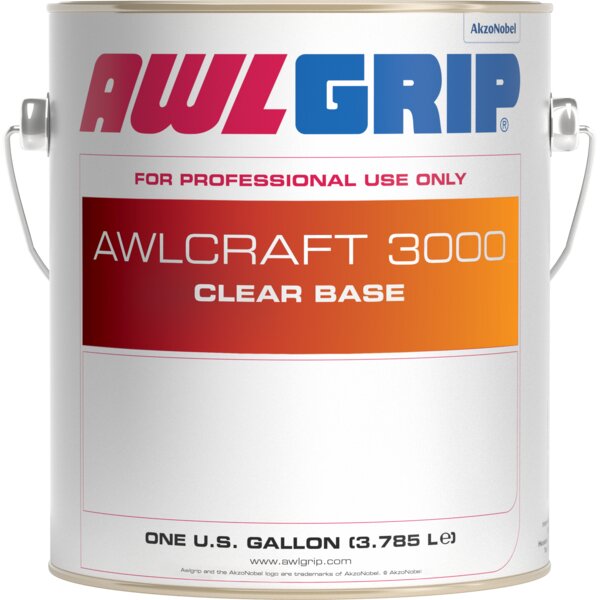
- Base: TF0300 Awlcraft 3000 Clearcoat Base.
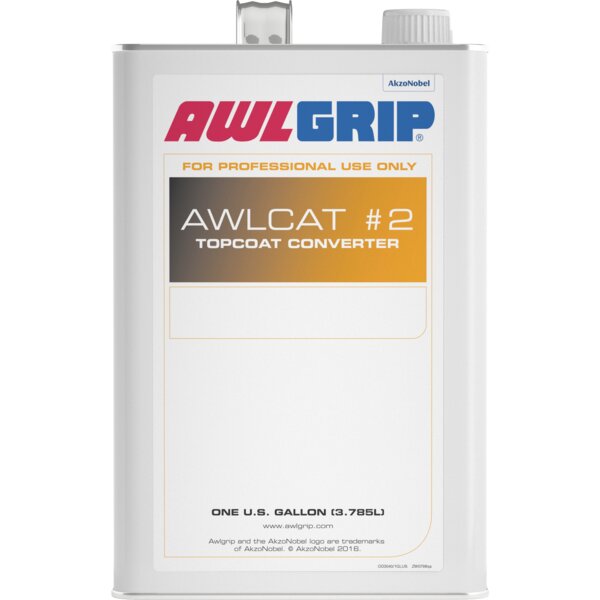
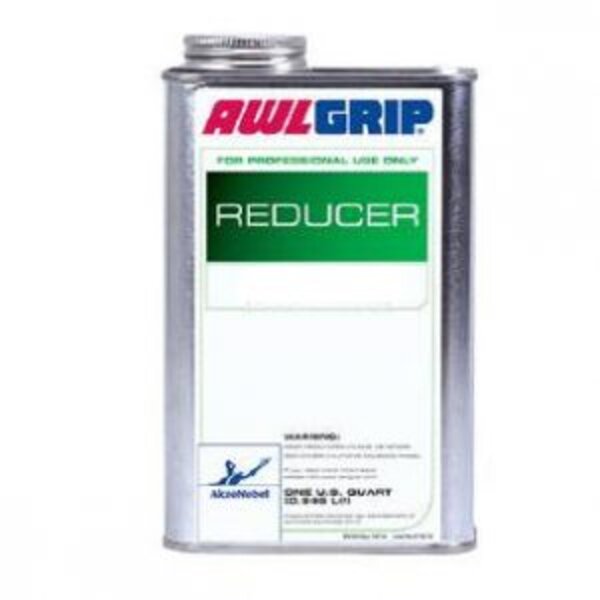
- Converter: Awlcat #2 (G3010) Spray Converter.
- Available pack sizes: 1 US Quart, 1 US Gallon.
- Typical shelf life: Base – 3 years; Converter – 1 year.
Physical properties
- Volume solids (unthinned): 44.3%.
- Specific gravity: 0.99 (unthinned).
- Color: Colorless clearcoat.
Theoretical coverage (mixed, unthinned)
- Recommended application method: Air atomized spray.
- Number of coats: Typically 3.
- Recommended wet film thickness (per coat): 75 µm (3 mil).
- Recommended dry film thickness (per coat): 33 µm (1.3 mil).
- Theoretical coverage at recommended DFT: 13.1 m²/L (533.7 ft²/gal).
- Coverage figures are based on 100% transfer efficiency and will vary with equipment setup, thinning, technique and environment.
VOC data (as supplied, without reducer)
- G3010 Converter: 589 g/L; 4.92 lb/gal; 593 g/kg; 0.59 lb/lb.
- TF0300 Base: 429 g/L; 3.58 lb/gal; 433 g/kg; 0.43 lb/lb.
- Awlcraft 3000 Clearcoat (mixed average, without thinner): 488 g/L; 4.07 lb/gal; 494 g/kg; 0.49 lb/lb.
- All VOC data are theoretical and may vary by batch and when tested by standard methods.
Mixing and reduction
- Mix ratio (Base : Converter): 2 : 1 by volume (two parts TF0300 Base to one part Awlcat #2 G3010).
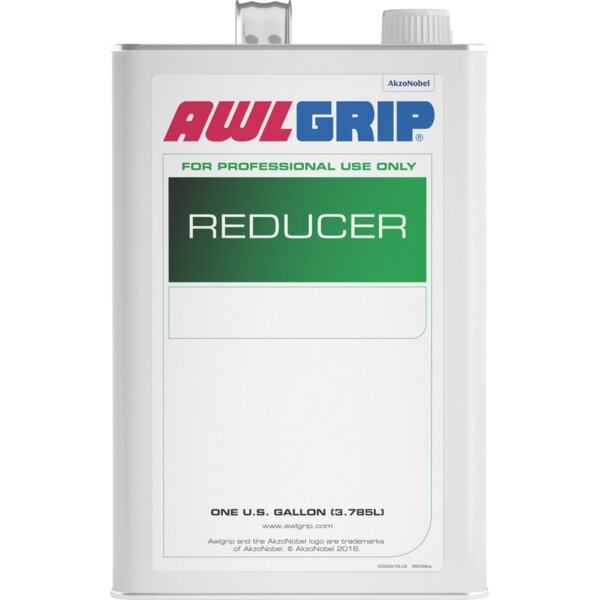
- Reducers:
- T0001 – Fast Evaporating Reducer – Spray.
- T0002 – Very Fast Evaporating Reducer – Spray.
- T0003 – Standard Reducer – Spray.
- T0005 – Hot Weather Reducer – Spray.
- Recommended thinning: 15–33% with the appropriate reducer.
- Target spraying viscosity: 11–15 seconds DIN 4 cup (equivalent to 16–18 seconds Zahn 2).
- Example overall mix at 25% reduction: 2 : 1 : ¾ by volume (e.g. 8 oz Base, 4 oz G3010, 3 oz Reducer or 2 L Base, 1 L G3010, 0.75 L Reducer).
Application parameters
- Application method: Air atomized spray only.
- Substrate / system:
- Apply over Awlcraft SE Basecoat following the Awlcraft SE Technical Data Sheet.
- Can also be applied over Awlcraft 2000 and Awlcraft 3000 topcoats sanded with P400 and cleaned with Surface Cleaner T0170 (US/AP) or T0340 (EU) using the two-cloth wipe-down method.
- Surface preparation notes: The basecoat or topcoat surface must be clean at all times and properly prepared before clearcoat application.
- Spray gun setup (air atomized):
- Fluid tip: 1.00–1.20 mm (39–47 thou).
- Fluid flow rate: 200–300 cc/min.
- Air pressure: 2–2.5 bar (29–36 psi).
- Application technique:
- Apply a smooth, wet first coat and allow 15–45 minutes flash-off.
- Apply a full wet second coat to achieve film build and allow 30–45 minutes flash-off until only slightly tacky.
- Apply a third wet coat, taking care not to over-apply to avoid sagging.
- Three coats are typical; actual number may vary with project requirements.
Drying, recoat and curing times
Typical times for AWLCRAFT 3000 CLEAR at different temperatures:
| Condition |
15°C (59°F) |
25°C (77°F) |
35°C (95°F) |
| Tape free |
48 hours |
24 hours |
24 hours |
| Hard dry |
72 hours |
24 hours |
24 hours |
| Light service |
5 days |
3 days |
3 days |
| Cure time |
21 days |
21 days |
21 days |
| Pot life |
7 hours |
7 hours |
7 hours |
Overcoating intervals with Awlcraft 3000 Clearcoat
| Temperature |
Minimum |
Maximum |
| 15°C (59°F) |
60 minutes |
24 hours |
| 25°C (77°F) |
30 minutes |
24 hours |
| 35°C (95°F) |
30 minutes |
24 hours |
Clearcoat films allowed to cure for more than 24 hours must be sanded before recoating.
Environmental and application conditions
- Do not apply if the surface is less than 5°F (3°C) above the dew point.
- Do not apply to surfaces warmer than 105°F (41°C).
- Ambient temperature should be between 55°F (13°C) and 105°F (41°C).
- At 25°C (77°F) and 50% RH, avoid applying when the temperature could fall below the dew point within 6–8 hours after application.
- Avoid painting in direct sunlight.
Applications and use cases
- Clear finishing over Awlcraft SE Basecoat: Provides a protective, high-gloss clear layer that enhances appearance and facilitates maintenance.
- Refinishing existing Awlcraft 2000 and Awlcraft 3000 topcoats: After sanding with P400 and proper cleaning, AWLCRAFT 3000 CLEAR can be used to refresh gloss and protection.
- Interior and exterior coated surfaces: The product is specified as a two-component coating suitable for both interior and exterior use when applied within the system guidelines.
- Professional spray operations: Intended exclusively for professional applicators using air-atomized spray equipment in controlled environments.
Section 8 – Personal protective measures
According to the Safety Data Sheet, AWLCRAFT 3000 CLEAR is a flammable liquid and may cause an allergic skin reaction, drowsiness or dizziness, and is harmful to aquatic life with long-lasting effects. Appropriate personal protection and safe working practices are essential.
Engineering controls
- Use only with adequate ventilation.
- Employ process enclosures, local exhaust ventilation or other engineering controls to keep airborne concentrations below occupational exposure limits.
- Use explosion-proof ventilation equipment and ensure gas, vapor or dust levels are below lower explosion limits.
Hygiene measures
- Wash hands, forearms and face thoroughly after handling chemical products and before eating, smoking or using the lavatory.
- Use appropriate techniques to remove potentially contaminated clothing; do not take contaminated workwear out of the workplace.
- Wash contaminated clothing before reuse; ensure eyewash stations and safety showers are close to the work area.
Eye and face protection
- Use safety eyewear complying with an approved standard to avoid exposure to liquid splashes, mists, gases or dusts.
- If contact is possible, wear safety glasses with side shields unless a higher level of protection is required by risk assessment.
Hand protection
- Wear chemical-resistant, impervious gloves complying with an approved standard whenever handling the product if indicated by risk assessment.
- For prolonged or frequently repeated contact, use gloves with protection class 6 (breakthrough time > 480 minutes according to EN374). Recommended: Viton or nitrile gloves, thickness ≥ 0.38 mm.
- For brief contact, gloves with protection class 2 or higher (breakthrough time > 30 minutes according to EN374) are recommended. Recommended: nitrile gloves, thickness ≥ 0.12 mm.
- Replace gloves regularly and when any sign of damage appears. Glove performance can be reduced by physical or chemical damage or poor maintenance.
Skin and body protection
- Select protective clothing based on the specific task and associated risks; equipment should be approved by a specialist before use.
- Where there is risk of ignition from static electricity, wear anti-static protective clothing, including overalls, boots and gloves with anti-static properties (see EN 1149 for requirements and testing).
- Use appropriate footwear and any additional skin protection measures based on the operation being performed.
Respiratory protection
- Select a respirator that meets appropriate standards or certifications based on hazard and exposure assessment.
- Wear a respirator conforming to EN140 with type A/P2 filter or better when ventilation is inadequate.
- Dry sanding, flame cutting or welding of dry paint films generates hazardous dust and fumes; wet sanding/flatting should be used whenever possible. If exposure cannot be controlled by ventilation, use suitable respiratory protective equipment.
- Respirators must be used within a respiratory protection program that includes proper fit, training and maintenance.
Environmental exposure controls
- Check emissions from ventilation and process equipment to ensure compliance with environmental protection legislation.
- Where necessary, use fume scrubbers, filters or process modifications to reduce emissions.
- Do not allow the product to enter drains or watercourses.
Section 14 – Transport information
- UN number / ID number: UN1263.
- UN proper shipping name: PAINT.
- Transport hazard class: Class 3 (flammable liquid).
- Packing group: III.
- Environmental hazards: Not classified as environmentally hazardous for ADR/RID, IMDG or IATA.
- Viscous liquid exception (ADR/RID): This class 3 viscous liquid is not subject to regulation in packagings up to 450 L according to 2.2.3.1.5.1.
- Viscous liquid exception (IMDG): This class 3 viscous liquid is not subject to regulation in packagings up to 450 L according to 2.3.2.5.
- Tunnel restriction code (ADR/RID): (D/E).
- Special precautions for user: Within user’s premises, always transport in closed containers that are upright and secure. Ensure personnel transporting the product know what to do in case of accident or spillage.
- Transport in bulk according to IMO instruments: Not applicable.
FAQ – AWLCRAFT 3000 CLEAR
-
Is AWLCRAFT 3000 CLEAR suitable for consumer use?
No. All available documentation specifies that AWLCRAFT 3000 CLEAR is developed for professional use and spray application only.
-
What mixing ratio should I use?
Mix two parts Awlcraft 3000 Clearcoat Base (TF0300) with one part Awlcat #2 (G3010) Converter by volume, then reduce 15–33% with the appropriate spray reducer to reach 11–15 seconds DIN 4 viscosity.
-
How many coats are recommended?
The product data sheet recommends three air-atomized spray coats, applied wet with appropriate flash-off times between coats.
-
Can I apply AWLCRAFT 3000 CLEAR directly over existing finishes?
Yes, it may be applied over Awlcraft 2000 and Awlcraft 3000 topcoats when they are sanded with P400 to remove gloss and cleaned with the specified surface cleaner using the two-cloth wipe-down method.
-
What is the pot life once the product is mixed?
The typical pot life is 7 hours at 15°C, 25°C or 35°C.
-
How long before the coated surface can be lightly serviced?
Light service is typically possible after 5 days at 15°C (59°F) or 3 days at 25°C (77°F) and 35°C (95°F).
-
What are the temperature limitations during application?
Do not apply if the surface is less than 5°F (3°C) above dew point, or if the surface temperature exceeds 105°F (41°C). Ambient temperature should be between 55°F (13°C) and 105°F (41°C).
-
Is AWLCRAFT 3000 CLEAR classified as hazardous for transport?
Yes. It is classified as UN1263 PAINT, Class 3, Packing Group III. However, it qualifies for a viscous liquid exception in packagings up to 450 L.
-
Does the product have any specific environmental hazards?
According to the Safety Data Sheet, it is harmful to aquatic life with long lasting effects (Aquatic Chronic 3, H412), so releases to the environment should be avoided.
-
Where can I find more detailed performance data?
Consultar ficha técnica del fabricante.
*Contenido generado por IA