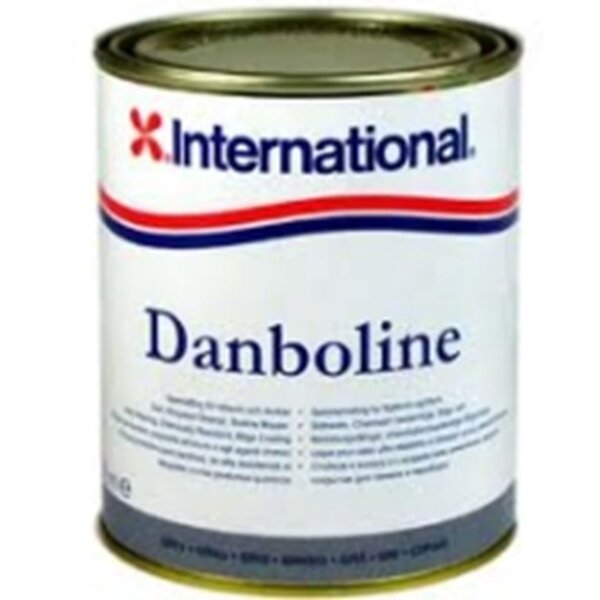
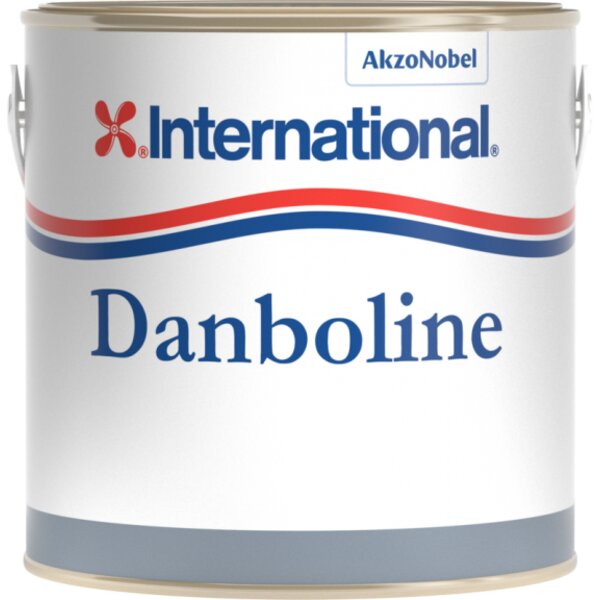
What is Danboline and why choose it?
Danboline from International Náutica is a solvent-borne protective paint designed to shield bilges, cabins and bulkheads from wear and moisture penetration. Its tough, high-opacity formula offers excellent coverage, resists oil and fuel spills and is easy to clean, making it ideal for demanding marine interiors and bilge areas.
Main features
- Specific bilge and interior protection: formulated to protect bilges, cabins and bulkheads against abrasion and moisture ingress.
- Oil and fuel resistant: withstands accidental oil and fuel spills and can be cleaned easily.
- High opacity: excellent hiding power for fast, uniform coverage.
- Very durable coating: tough finish for areas subject to everyday wear.
- Gloss finish: high level of lustre for a clean, bright look.
- Colour range: available in Grey (YMA100), Red (YMA101) and White (YMA102). Not all colours or pack sizes are available in all countries.
- Interior and exterior use: solvent-borne coating suitable for interior and exterior applications as specified.
Technical specifications
- Product type: Solvent borne coating.
- Recommended use: protective paint for bilges, cabins and bulkheads.
- Finish: high gloss / high level of lustre.
- Colour codes: YMA100 Grey, YMA101 Red, YMA102 White.
- Density: approx. 1.05.
- Volume solids: approx. 48%.
- VOC (as supplied): approx. 411 g/l.
- Typical shelf life: 2 years.
- Pack sizes: 750 ml and 2.5 l (availability depends on country).
- Number of coats: 1–2 coats.
- Theoretical coverage: 12.3 m²/l by brush.
- Practical coverage: 11.0 m²/l.
- Recommended DFT per coat: 40 μm dry.
- Recommended WFT per coat: 82 μm wet.
- Application methods: brush, conventional spray, roller.
- Thinner/cleaner: Thinner/Disolvente No.1 (No.10 or 910 for spray as specified).
- Application temperature (product): 15–35°C.
- Ambient temperature: 5–35°C.
- Substrate temperature: 5–35°C.
Drying and overcoating times
- Touch dry (ISO):
- 5°C: 16 hours
- 15°C: 8 hours
- 23°C: 6 hours
- 35°C: 3 hours
- Overcoating with Danboline (minimum / maximum):
- 5°C: 36 hours / 4 days
- 15°C: 24 hours / 3 days
- 23°C: 16 hours / 2 days
- 35°C: 12 hours / 1 day
Applications and use cases
Typical substrates
- Previously painted surfaces in good or poor condition (as specified).
- Bare wood.
- Steel.
- Aluminium.
- Fibreglass (GRP) / gelcoat.
Typical areas on board
- Bilges and bilge spaces.
- Cabins and interior structures.
- Bulkheads and structural panels.
Surface preparation (summary)
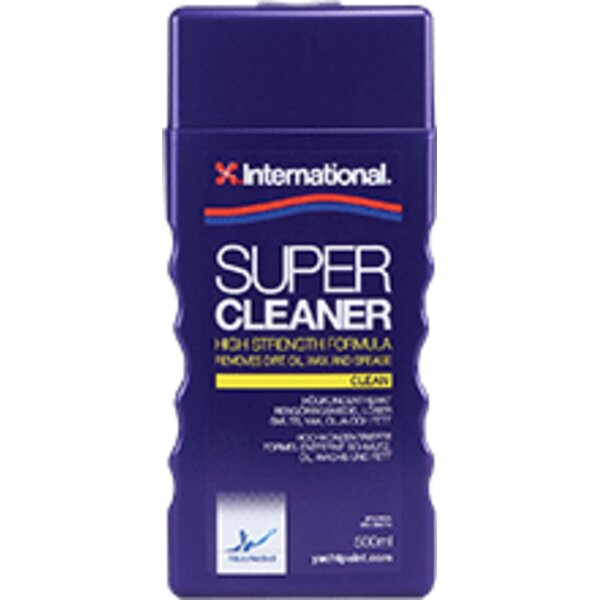
- Previously painted surfaces in good condition: wash with Super Cleaner, rinse with fresh water and allow to dry; abrade with 180–220 grit paper.
- Previously painted surfaces in poor condition: remove all previous coatings and prime the substrate.
- Bare wood: prime as specified (e.g. Yacht Primer or other primers indicated).
- Steel: prime with Yacht Primer or Interprotect as specified.
- Aluminium: prime with Yacht Primer or Interprotect as specified.
- Fibreglass/gelcoat: wash with Super Cleaner, rinse with fresh water and allow to dry; sand with 180–220 grit paper. Particular attention should be paid to moulded GRP. No primer required.
Application guidance (summary)
- Sand primer with 180–280 grit wet or dry paper; remove dust with a clean cloth.
- Apply 1–2 coats by brush, roller or conventional spray.
- Stir thoroughly before use.
- Apply in a dry atmosphere with good ventilation.
- For conventional spray: pressure 3–4 bar, nozzle 1.2 mm; thin by approx. 20% with appropriate spray thinner, for professional use only.
- For enhanced protection against moisture absorption and osmosis in bilges, Gelshield/Interprotect systems are recommended as specified.
FAQ – Danboline
- What is Danboline used for?
Danboline is used as a protective paint for bilges, cabins and bulkheads to resist wear, moisture, oil and fuel spills.
- How many coats are recommended?
The technical data specifies 1–2 coats, depending on substrate and desired protection.
- What is the coverage?
The theoretical coverage is 12.3 m²/l by brush with a practical coverage of about 11.0 m²/l.
- How long should I wait before recoating?
Depending on temperature, typical minimum times range from 36 hours at 5°C to 12 hours at 35°C, with maximum overcoating windows between 1 and 4 days.
- Which colours are available?
Grey YMA100, Red YMA101 and White YMA102. Availability of colours and pack sizes varies by country.
- Can Danboline be sprayed?
Yes, Danboline can be applied by conventional spray using specified pressure, nozzle size and thinner, for professional use only.
- What thinners should I use?
Thinner/Disolvente No.1 is used for brushing and cleaning; specific spray thinners (No.10 or 910) are indicated for spray application.
- What is the shelf life?
The typical shelf life is 2 years when stored correctly between 5°C and 35°C in tightly closed original containers.
- Is Danboline suitable for all substrates?
It is indicated for the substrates specifically listed in the technical sheet and should only be overcoated with one-component paints.
- Where should I not use Danboline?
Consultar ficha técnica del fabricante.
Section 14 – Transport information
The product is classified as a flammable liquid for transport.
- UN number: UN1263.
- Proper shipping name: PAINT / PINTURAS.
- Transport hazard class: 3 (flammable liquid).
- Packing group: III.
- Land transport (ADR/RID): Class 3, UN1263, Packing Group III, tunnel code (D/E).
- Sea transport (IMDG): Class 3, UN1263, Packing Group III; emergency schedules F-E, S-E.
- Air transport (IATA): Class 3, UN1263, Packing Group III.
- On-site handling: transport only in closed, upright and secure containers; ensure personnel know actions to take in case of accident or spillage.
Section 8 – Individual protection measures
The following personal protective equipment and exposure controls are indicated in the safety documentation for Danboline Grey and White. Selection must be based on a site-specific risk assessment.
Engineering controls and hygiene
- Use only with adequate ventilation; apply in dry, well-ventilated conditions.
- Use local exhaust and explosion-proof ventilation where necessary to keep concentrations below occupational exposure limits and lower explosion limits.
- Avoid inhalation of vapours, spray or mist.
- Do not eat, drink or smoke in areas where the product is handled; wash hands, forearms and face thoroughly after use.
- Ensure eyewash stations and safety showers are available near the work area.
Respiratory protection
- Where ventilation is insufficient or exposure limits may be exceeded, wear a respirator conforming to EN140 with type A/P2 filter or equivalent.
- For spray application, follow a respiratory protection programme; in confined spaces use air-fed or self-contained breathing apparatus as specified.
Hand protection
- Wear chemical-resistant, impermeable gloves complying with EN374.
- For prolonged or frequently repeated contact: gloves with protection class 6 (breakthrough time > 480 minutes); recommended materials include Viton or nitrile, thickness ≥ 0.38 mm.
- For brief contact: gloves with protection class ≥ 2 (breakthrough time > 30 minutes); recommended nitrile gloves, thickness ≥ 0.12 mm.
- Inspect and replace gloves regularly; performance may be reduced by physical or chemical damage.
Eye and face protection
- Wear safety goggles or safety glasses with side shields that comply with an approved standard to protect against liquid splashes and mists.
Skin and body protection
- Wear protective clothing covering body, arms and legs; no skin should be left exposed.
- When there is a risk of ignition from static electricity, wear anti-static protective clothing (for example anti-static overalls, boots and gloves) complying with EN 1149.
- Use suitable protective footwear; avoid petroleum-based barrier creams.
Additional safety considerations
- Product and vapour are flammable; keep away from heat, sparks, open flames and all sources of ignition.
- Take precautions against electrostatic discharge when transferring product; ensure proper earthing and bonding.
- Do not use solvents or thinners to clean skin.
- Prevent release to drains, watercourses and soil; dispose of residues and containers according to local regulations.
*Contenido generado por IA