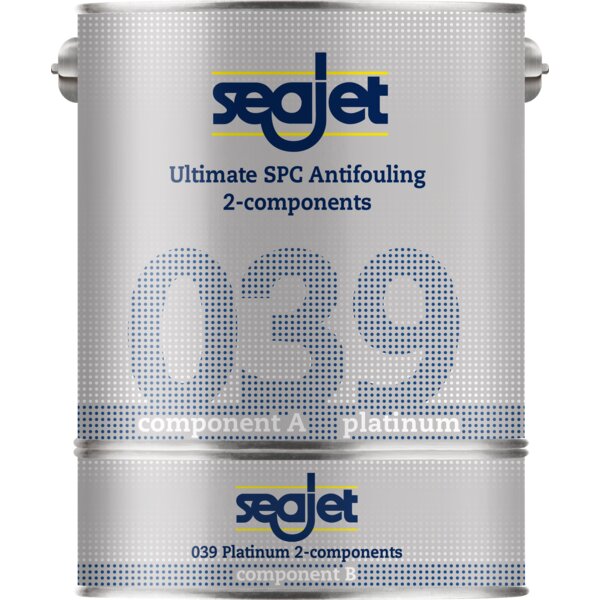
What is SEAJET 039 PLATINUM PART B and why choose it?
SEAJET 039 PLATINUM PART B is the copper(I) oxide based hardener component of the two-pack SEAJET 039 Platinum 2-Components antifouling system. This advanced Self Polishing Copolymer (SPC) technology is designed for very high fouling areas and long-distance blue water cruising. Part B is mixed with Part A to create a high-performance, tin-free antifouling suitable for GRP, wood and steel hulls (not aluminium).
With a high content of cuprous(I) oxide and a proven SPC binder system, the combined coating provides excellent protection against marine growth on yachts, superyachts and other leisure craft operating up to approximately 40 knots and in demanding waters.
Main features
- Component B of SEAJET 039 Platinum 2-Components antifouling system.
- Cuprous(I) oxide based biocidal component (95–100 % cuprous(I) oxide in Part B).
- Part of an advanced Self Polishing Copolymer (SPC) antifouling technology for ultimate performance in high fouling areas.
- Suitable for blue water cruisers and vessels operating in the highest fouling risk zones.
- For use on properly primed GRP, wood and steel hulls; not suitable for aluminium.
- Free from organotin compounds as biocides and compliant with the IMO convention on harmful antifouling systems.
- Very high solids when mixed (approx. 48 ±2 % by volume for the finished paint).
- Designed for application by brush, roller or professional spray.
Technical specifications
Chemical and physical data (Part B)
- Composition (Part B): 95–100 % cuprous(I) oxide (Cu+).
- Physical state: Powder.
- Colour (Part B): Red brown.
- Relative density: 6 (20 °C, ASTM D1475-98).
- Solubility: Not soluble in water.
- Median particle diameter: D50 ≈ 30 µm (range 0–44 µm, ISO 13320-1).
Mixed product (Part A + Part B)
- Type: Two-pack SPC self-polishing antifouling.
- Colour range: Mid blue, navy blue, red, black.
- Volume solids: 48 ±2 %.
- VOC (theoretical): 565 g/l.
- Flash point: 27 °C.
- Mixing ratio (by volume): Component A 88 : Component B 12.
- Mixing ratio (by weight): Component A 60 : Component B 40.
- Recommended wet film thickness per coat: 100 µm.
- Recommended dry film thickness per coat: 48 µm.
- Theoretical spreading rate: 10.0 m²/l per coat at 48 µm DFT.
- Pot life after mixing (all temperatures listed): 36 hours.
Drying and launching times (mixed coating, at 48 µm DFT)
- 5 °C: Surface dry 3 h; hard dry 12 h; minimum overcoat 12 h; dry to launch 24 h.
- 10 °C: Surface dry 2 h; hard dry 8 h; minimum overcoat 8 h; dry to launch 18 h.
- 20 °C: Surface dry 1 h; hard dry 5 h; minimum overcoat 5 h; dry to launch 12 h.
- 30 °C: Surface dry 30 min; hard dry 4 h; minimum overcoat 4 h; dry to launch 10 h.
Note: Drying times and overcoating intervals increase with higher film thickness. Always ensure the existing film is fully dry before recoating.
Application parameters (mixed coating)
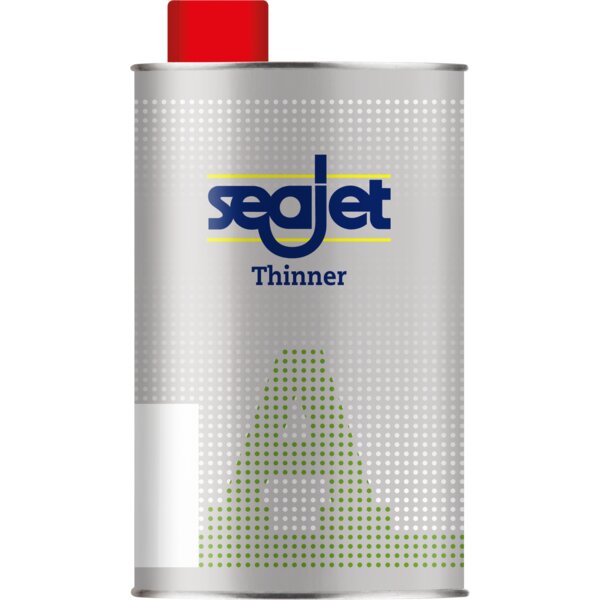
- Thinner: SEAJET THINNER A (0–5 % by volume for spray).
- Application methods: Brush, roller, spray (professional use only, with prefilter).
- Ambient temperature during application: min. 5 °C, max. 35 °C.
- Substrate temperature: min. 7 °C, max. 35 °C.
- Product temperature: min. 5 °C, max. 35 °C.
- Maximum relative humidity: 85 % RH.
- Spray equipment: Graco 621–723 tip; paint output pressure 12.0 MPa.
- Shelf life (unopened, 20 °C): Minimum 2 years.
Applications and use cases
Intended use
- Biocidal component of SEAJET 039 Platinum 2-Components SPC antifouling for leisure craft.
- Registered as PT21 antifouling paint component.
- Ideal for blue water cruisers and vessels operating in very high fouling areas.
Suitable substrates (when correctly primed)
- GRP (fibreglass).
- Steel.
- Wood.
- Not suitable for aluminium substrates.
Recommended coating system
- Primers (preceding coats):
- SEAJET 015 Underwater Primer.
- SEAJET 117 Multipurpose Epoxy Primer.
- Antifouling build coats: 2 full coats of SEAJET 039 Platinum 2-Components, with an extra coat on leading edges, waterline, rudders and stern gear.
Surface preparation guidelines
- Existing antifouling (good condition): High-pressure fresh-water wash (approx. 200 bar) to remove fouling and salts. Check SEAJET compatibility table; if compatible, apply directly. If compatibility is unknown or not compatible, apply a barrier coat of SEAJET 015.
- Existing antifouling (poor condition): Completely remove the old antifouling. Only wet sand or chemically strip. Never burn off or dry sand old antifouling.
- New GRP/steel: Sand with P100 abrasive paper, remove dust and apply SEAJET 117 Multipurpose Epoxy Primer.
- New wood: Sand with P100 abrasive paper, remove dust and apply SEAJET 015.
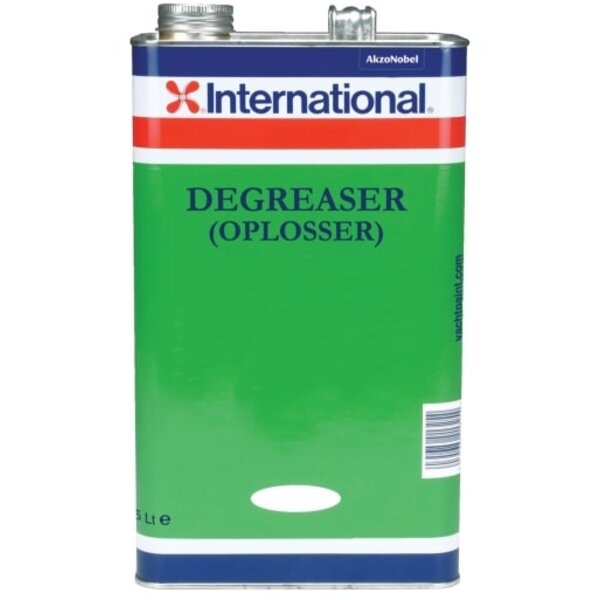
- All substrates: Ensure surfaces are clean, dry and free from salt, grease and oil. Degrease where necessary.
Mixing and application notes for Part B
- Add Component B gradually into Component A while mechanically mixing.
- Do not add the full amount of Part B at once; split into 3–4 portions during mixing.
- Stir thoroughly before and during use to maintain uniform suspension.
- Due to chemical reaction, the mixture may thicken in the pot; as long as it is used within the stated pot life, this will not affect performance.
- For airless spray, use the paint within 4 hours after mixing and use an appropriate prefilter.
- After immersion, a slight colour change may occur; colour variations between batches are also possible. Mix different batches together before application if uniform colour is critical.
FAQ
-
What is the role of SEAJET 039 PLATINUM PART B?
Part B is the cuprous(I) oxide biocidal component of the SEAJET 039 Platinum 2-Components system. It must be mixed with Part A to form the final antifouling coating.
-
On which hull materials can the mixed product be used?
On correctly primed GRP, wood and steel substrates. It must not be used on aluminium surfaces.
-
How many coats are recommended?
The technical data specifies two full coats, with an additional coat on leading edges, waterline, rudders and stern gear.
-
How should Part B be mixed with Part A?
Add Part B slowly into Part A in 3–4 portions while mechanically mixing. Do not dump the entire content at once. Stir thoroughly before use.
-
What is the pot life of the mixed paint?
The pot life is 36 hours. Within this period the product may thicken, but it remains usable if properly mixed.
-
Can I apply the antifouling by brush?
Yes. Brush, roller and professional spray are allowed. When brushing, additional coats may be needed to achieve the specified dry film thickness.
-
What thinner should I use?
Use SEAJET THINNER A. For spray application, thinning up to 0–5 % by volume is indicated.
-
When can the boat be launched after painting?
Depending on temperature and 48 µm DFT, launching is typically allowed after 24 h (5 °C), 18 h (10 °C), 12 h (20 °C) or 10 h (30 °C).
-
Does the product contain organotin biocides?
No. The system does not contain organotin compounds acting as biocides and complies with the IMO convention on harmful antifouling systems.
-
What should I do with leftover Part B and empty containers?
Do not empty into drains. Dispose of contents and container at an approved hazardous or special waste collection point, following local regulations.
Section 14 – Transport information
- UN number: UN 3077.
- Proper shipping name: Environmentally hazardous substance, solid, n.o.s. (Cuprous(I)Oxide.).
- Transport hazard class: Class 9 (miscellaneous dangerous substances and articles).
- Packing group: III.
- Environmental hazards: Classified as environmentally hazardous for transport; marine pollutant under IMDG.
- Applicable transport regulations: ADR/RID/ADN, IMDG Code, IATA.
- Hazard identification number (ADR/RID): 90.
- Special precautions for user: Always transport in securely closed, upright containers. Ensure personnel know emergency and spill procedures.
- Maritime bulk transport according to IMO instruments: Not applicable.
Section 8 – Personal protective measures
General exposure controls
- Use only in well ventilated areas; provide local exhaust ventilation where possible.
- Avoid inhalation of dust from Part B and dusts or fumes arising from sanding, cutting or welding of the dry coating. Prefer wet sanding.
Respiratory protection
- If exposure levels may exceed occupational limits, wear appropriate certified respirators, e.g. EN149 FFP2.
Hand protection
Use chemical-resistant gloves tested to EN 374. Depending on exposure time, the following materials with indicated minimum thickness and typical resistance are specified:
- High protection, long exposure (>480 min):
- Polyethylene (PE) gloves, 0.062 mm.
- PVA gloves, 0.2–0.3 mm.
- Butyl/Viton gloves, 0.70 mm.
- Butyl gloves, 0.3 mm.
- Neoprene gloves, 0.13 mm (lower resistance noted).
- Medium to high protection for shorter breakthrough times (240–480 min, 120–240 min, 60–120 min): combinations of PE, PVA, butyl, butyl/Viton and neoprene gloves with the same typical thicknesses as above.
- Short-term splash protection (30–60 min, 10–30 min): PE 0.062 mm, PVA 0.2–0.3 mm, butyl/Viton 0.70 mm, butyl 0.3 mm, neoprene 0.13 mm, nitrile 0.12 mm (nitrile shows low resistance).
Gloves must be replaced immediately if damaged and at regular intervals. Follow the glove manufacturer’s instructions for storage, use and maintenance.
Eye and face protection
- Wear safety goggles or face shield tested according to EN 166, suitable for protection against liquid splashes.
Skin and body protection
- Wear protective clothing to prevent skin contact.
- Use anti-static clothing made of natural fibre or high-temperature-resistant synthetic fibre.
Hygiene and environmental precautions
- Wash skin thoroughly after handling.
- Avoid contact with eyes and skin and avoid inhalation of spray mist and vapours from the mixed product.
- Provide adequate ventilation; do not eat, drink or smoke in the application area.
- Do not allow the product or waste to enter drains or watercourses.
*Contenido generado por IA