What is SEAJET RIBCOAT and why choose it
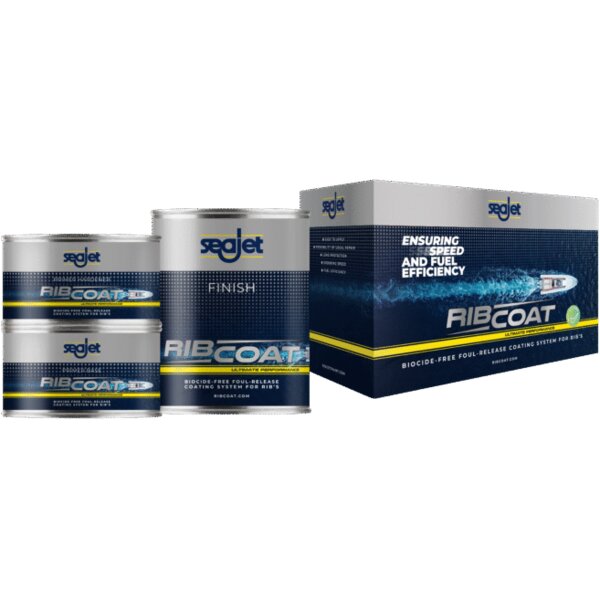
SEAJET RIBCOAT by Seajet is a transparent, biocide-free silicone foul-release coating system designed specifically for the underwater hulls and inflatable tubes of rigid inflatable boats (RIBs). The set combines an epoxy primer with a foul-release finish to provide long-term protection against fouling in both fresh and salt water. Fouling may loosely attach to the treated surfaces but is easily removed by normal water movement or simple washing with a sponge.
Main features
- Biocide-free foul-release technology for underwater hulls and RIB tubes.
- Transparent silicone finish that allows the substrate colour to remain visible.
- Long-term protection against fouling in fresh and salt water environments.
- Fouling is easily removed by water flow or light cleaning.
- Easy to apply with a mohair roller following a clear step-by-step process.
- Possibility of local repair.
- Designed to support enduring speed and fuel efficiency by helping keep hulls clean.
- Complete set supplied in a 1.75 L pack, sufficient to treat approximately 40 ft² (3.88 m²).
Technical specifications
- Product type: Epoxy primer and foul-release coating system.
- System components and content (total 1,750 ml):
- 450 ml RIBCOAT PRIMER BASE.
- 300 ml RIBCOAT PRIMER HARDENER.
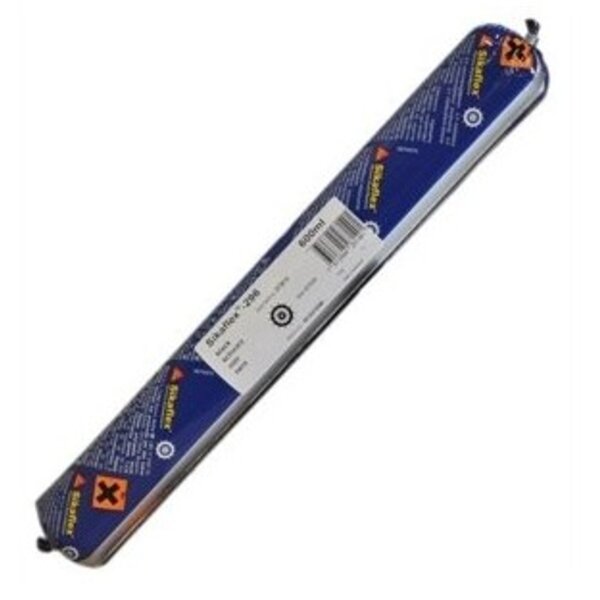
- 1 L RIBCOAT FINISH.
- Colour/appearance: Transparent finish.
- Coverage: Quantity is sufficient to treat 40 ft² (3.88 m²).
- Recommended substrates: Fibreglass or aluminium hulls and inflatable tubes of RIBs.
- Pack size: 1.75 L set.
- Shelf life: 3 years at 20 °C (in unopened containers stored as recommended).
- Storage conditions: Store in a dry, cool and well-ventilated area, away from direct sunlight. Keep containers tightly closed and handle with care.
- Product type classification (transport): UN 1263, PAINT, Class 3, Packing Group III.
Applications and use cases
SEAJET RIBCOAT SET is intended for boat owners and professionals who need an efficient foul-release solution for RIBs:
- Underwater hulls of fibreglass RIBs used in fresh water (lakes, rivers) or salt water (coastal and offshore).
- Aluminium RIB hulls where a foul-release coating is required.
- Inflatable tubes of RIBs that are exposed to fouling.
- Situations where biocide-free protection is preferred.
Surface preparation and application steps
- Remove old coatings and contamination
Use a combination of scraper, abrasive paper and abrasive pads to remove all contamination and existing coating from the surface. Rinse thoroughly with fresh water to remove dust.
- Prepare the hull and clean tubes
For the hull, sand with abrasive paper (grit size P-100 to P-120) to create a proper surface profile before painting. Renew the abrasive paper when it becomes clogged. Clean and degrease the inflatable tubes using SEAJET Thinner A.
- Final cleaning
Clean the entire surface with SEAJET Thinner A.
- Mix and apply SEAJET RIBCOAT PRIMER
Mix SEAJET RIBCOAT hardener and SEAJET RIBCOAT base and stir thoroughly for 5 minutes. Apply one full coat of SEAJET RIBCOAT PRIMER to the fibreglass or aluminium hull using a mohair roller. Do not apply primer to the inflatable tubes.
- Apply first coat of SEAJET RIBCOAT FINISH
After applying the primer at 20 °C, stir SEAJET RIBCOAT FINISH for 5 minutes. Apply the first coat of SEAJET RIBCOAT FINISH to the primed hull and the tubes using a mohair roller.
Minimum overcoating interval: 30 minutes at 20 °C (surface should be tacky, not wet).
Maximum overcoating interval: 8 hours.
- Apply second coat of SEAJET RIBCOAT FINISH
Apply the second coat of SEAJET RIBCOAT FINISH after 3 hours at 20 °C using a mohair roller.
- Launching
The RIB can be launched 24 hours after the final coat.
FAQ
- Is SEAJET RIBCOAT biocide-free?
Yes. SEAJET RIBCOAT is described as a biocide-free silicone foul-release coating system.
- On which parts of the boat can I use this set?
It is designed for the underwater hulls of fibreglass or aluminium RIBs and for the inflatable tubes.
- How much area can one SEAJET RIBCOAT set cover?
The 1.75 L set is sufficient to treat approximately 40 ft² (3.88 m²).
- How many coats are required?
One coat of SEAJET RIBCOAT PRIMER on the hull (not on tubes), followed by two coats of SEAJET RIBCOAT FINISH on both hull and tubes.
- What are the overcoating intervals?
At 20 °C, the minimum interval between finish coats is 30 minutes (surface tacky, not wet), with a maximum interval of 8 hours. The second finish coat is typically applied after 3 hours.
- When can I relaunch the boat?
The RIB can be launched 24 hours after the final coat has been applied.
- How should I store the product?
Store containers in a dry, cool and well-ventilated area away from direct sunlight. Keep them firmly closed and handle with care.
- What is the shelf life?
Shelf life is 3 years at 20 °C under recommended storage conditions.
- How should leftover product and empty containers be disposed of?
Do not empty into drains. Dispose of the material and its container at a hazardous or special waste collection point. The waste code indicated is 08 01 11* for paint and varnish waste containing organic solvents or other dangerous substances.
- Where can I find detailed technical performance data?
Consultar ficha técnica del fabricante.
Section 14 – Transport information
- UN number: UN 1263.
- Proper shipping name: PAINT.
- Transport hazard class: Class 3 (flammable liquid).
- Packing group: III.
- Marine pollutant: Not classified as a marine pollutant according to the supplied data.
- Basic precautions during transport:
- Transport in securely closed containers, kept upright.
- Ensure those handling the product during transport know what to do in case of accident or spillage.
Section 8 – Individual protection measures
General safety measures
- Observe all precautionary notices on the containers.
- Provide adequate ventilation during application and drying.
- Avoid skin contact and inhalation of spray mist and vapours.
- If the product contacts skin, wash thoroughly with lukewarm water and soap or a suitable cleaner.
- If the product enters the eyes, rinse immediately with water and seek medical advice.
- Product contains flammable materials; keep away from sparks and open flames and do not smoke in the area.
Respiratory protection
- Ensure good local exhaust and general ventilation to keep solvent vapour concentrations below occupational exposure limits.
- If exposure may exceed limits, use an EN 140 approved half mask equipped with an appropriate combined filter for particles and vapours according to EN 14387, with a protection factor of at least 10 (for example, A2P3).
- When sanding dry coatings, cutting with a torch or welding on dry paint, avoid generating dust and fumes; wet sanding is preferred. If not possible, use adequate respiratory protection.
Hand protection
- Use chemical resistant gloves tested according to EN 374.
- Nitrile gloves provide good protection during spray or roller application.
- Viton or Viton/butyl gloves provide good protection for intensive solvent contact, such as immersion.
- Polyethylene (PE) gloves can be worn under other gloves in situations of high exposure or when chemical properties are not fully known.
- Replace gloves regularly and immediately if any damage is observed.
Eye and face protection
- Wear protective goggles or safety glasses designed to protect against liquid splashes, in accordance with EN 166.
Skin and body protection
- Wear antistatic clothing made from natural fibre or high temperature-resistant synthetic fibre.
- Use antistatic footwear where electrostatic charge may occur during transfer or application.
Environmental protection
- Prevent product from entering drains, sewers or natural watercourses.
*Contenido generado por IA