What it is and why choose it
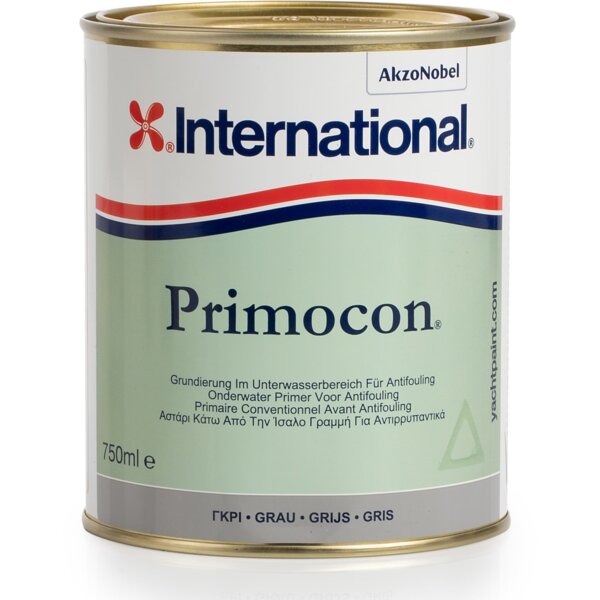
PRIMOCON from International Náutica is a fast drying, single-pack, aluminium-pigmented vinyl anticorrosive primer designed for underwater areas. Formulated for use below the waterline, it provides adhesion and corrosion protection on Timber, GRP (fibreglass), Steel, Aluminium, cast iron keels and lead keels. It can be used under a wide range of International antifoulings or as a barrier/sealer coat over incompatible or unknown existing antifoulings. Thanks to its quick drying, long open recoating time with itself and easy application by brush, roller or spray, it is suitable for both professional and experienced DIY boat maintenance.
Main features
- Underwater anticorrosive primer: Conventional single-pack vinyl system with aluminium flake pigmentation for enhanced barrier protection below the waterline.
- Wide substrate compatibility: Suitable for Timber, GRP, Steel, Aluminium, Zinc/galvanised steel, cast iron and lead keels, as well as previously antifouled surfaces.
- Barrier/sealer coat: Acts as a sealer over incompatible or unknown antifoulings and as a barrier to prevent interaction between old and new antifouling systems.
- Controls TBT leaching: An 80 µm dry film thickness of Primocon (typically two coats by roller) prevents leaching of tributyltin (TBT) from underlying TBT antifoulings when applied as specified.
- Fast drying: Touch dry in approximately 60 minutes at 15–35°C (1.5 hours at 5°C), helping to reduce downtime between coats.
- Long overcoating window: Can be recoated with itself after 3 hours with no stated maximum, providing flexibility in scheduling work.
- Flexible application methods: Can be applied by brush, roller or airless spray.
- Designed for professional use: Solvent-borne, flammable coating classified as hazardous; requires correct personal protection and handling.
Technical characteristics
- Product type: Single-pack aluminium pigmented vinyl anticorrosive primer
- Colour: YPA984 Grey
- Finish: Matt
- Specific gravity: 1.1
- Volume solids: 33%
- VOC (as supplied): 584 g/L
- Typical shelf life: 2 years (in unopened containers, stored correctly)
- Available sizes: 750 ml, 2.5 L, 5 L
Drying and overcoating
- Touch dry:
- 5°C: 1.5 hours
- 15°C: 60 minutes
- 23°C: 60 minutes
- 35°C: 60 minutes
- Minimum overcoating times (with Micron 350 antifouling):
- 5°C: 6 hours (max. 1 month)
- 15°C: 3 hours (max. 1 month)
- 23°C: 3 hours (max. 1 month)
- 35°C: 3 hours (max. 1 month)
- Overcoating with itself (Primocon): Minimum 3 hours at 5–35°C, no stated maximum interval.
- Drying times: Based on brush or roller application.
Recommended film thickness and coverage
- Recommended DFT per coat: 40 µm dry
- Recommended WFT per coat: 121 µm wet
- Number of coats by brush: 1–5 depending on substrate
- Theoretical coverage: 8.33 m²/L per coat
- Practical coverage by brush: Approximately 7.4 m²/L per coat
Application conditions and methods
- Application methods: Brush, roller, airless spray
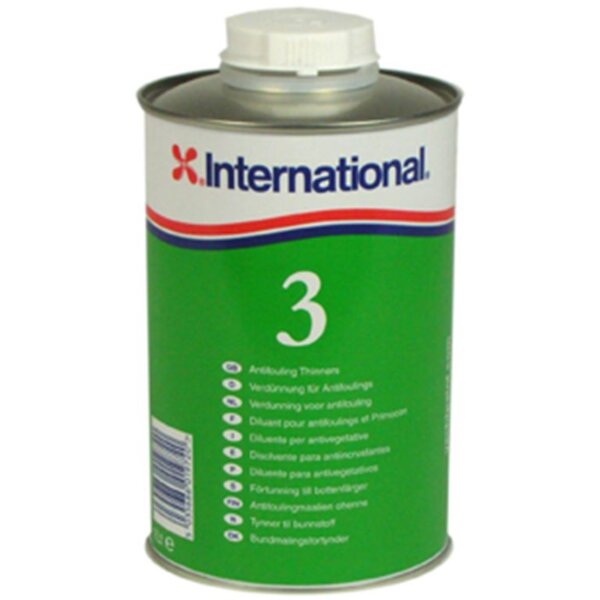
- Thinner/Cleaner: YTA085 Thinner No. 3
- Airless spray parameters: Approx. 211 bar; tip size 2180–2680
- Ambient temperature during application: Minimum 5°C / 41°F, maximum 35°C / 95°F
- Product temperature during application: Minimum 5°C / 41°F, maximum 35°C / 95°F
- Substrate temperature: 3°C / 5°F above dew point, maximum 35°C / 95°F
- Important: Do not use below 5°C and do not overcoat with 2‑component products.
- Film build note: Under some conditions, 40 µm dry film thickness may not be achieved in a single coat. On GRP, a single coat is suitable if 20 µm or more DFT is obtained. On other substrates, additional coats may be required to reach adequate total film thickness.
Substrates, preparation and typical systems
Surface preparation (summary)
- All substrates (except steel): Wash with Super Cleaner, then sand as specified.
- Bare GRP: Sand with 180–220 grit paper. Apply 1 coat of Primocon.
- Bare wood/plywood: Sand smooth with 80–180 grit then 280 grit. Remove dust thoroughly. If wiped with solvent, allow to dry completely. Apply 1 thinned coat of Primocon (10–15% Thinner No. 3) followed by 3 further coats.
- Aluminium: Degrease, then sand with 24–120 grit aluminium‑compatible paper (coarser grades preferred for adhesion). Clean and dry. Pre-prime with a suitable International primer within 8 hours. Apply 1 thinned coat of Primocon (10–15% Thinner No. 3) plus 5 further coats.
- Zinc/galvanised steel: Degrease, sand with 60–120 grit, clean and dry. Pre-prime with a suitable International primer. Apply 1 thinned coat of Primocon plus 5 further coats.
- Lead: Degrease, sand with 120 grit paper or use a power wire brush, clean and dry. Pre-prime with a suitable International primer. Apply 1 thinned coat of Primocon plus 5 further coats.
- Steel: Gritblast to Sa 2½ (near white metal). If blasting is not possible, grind with 24–36 grit abrasive discs to a bright, uniform surface with a 50–75 µm anchor profile; use an angle grinder on difficult areas. Apply 1 thinned coat of Primocon plus 5 further coats.
- Previously antifouled surfaces:
- In good condition: Remove loose material, wash with fresh water and allow to dry.
- In poor condition: Remove antifouling using Interstrip.
- Barrier/sealer coat over old antifouling: Apply Primocon as specified. Before sealing old antifouling layers, boat owners must check and comply with local legislative requirements.
Typical number of coats by substrate
- GRP: 1 coat
- Wood/plywood: 3 coats (after one thinned preparatory coat)
- Aluminium, light alloys, zinc/galvanised steel, lead, steel: 5 coats (after one thinned preparatory coat)
- Barrier/sealer coat over antifouling: 1 coat (ensure total DFT is adequate; 80 µm minimum required for TBT sealing performance)
Applications and use cases
- Underwater hull primer: First coat for underwater areas on GRP, wood or metal hulls, prior to applying compatible International antifouling systems.
- Keel protection: Anticorrosive system for cast iron and lead keels, providing a sound base for subsequent antifouling.
- Barrier between antifoulings: Sealer coat when changing between unknown, incompatible or TBT-containing antifoulings and modern antifouling systems.
- Maintenance and repair: Localised priming of bare patches on previously coated hulls after spot blasting, grinding or filling.
- Professional refit yards and DIY yards: Suitable where a rapid-drying, single-pack system is preferred over more complex multi-component primers.
FAQ
1. On which substrates can I use PRIMOCON?
PRIMOCON is suitable for Timber, GRP (fibreglass), Steel, Aluminium, Zinc/galvanised steel, cast iron keels and lead keels, as well as previously antifouled surfaces prepared as specified.
2. Can PRIMOCON be used as a barrier over old or unknown antifouling?
Yes. It can be used as a barrier/sealer coat over incompatible or unknown antifoulings. For TBT antifoulings, an 80 µm dry film thickness of Primocon (minimum two coats by roller, applied as specified) has been shown to prevent TBT leaching.
3. How long can I wait before overcoating PRIMOCON with antifouling?
When overcoating with Micron 350, the maximum interval is 1 month at 5–35°C. For other specified International antifoulings, use the Micron 350 overcoating times. If the maximum time is exceeded, sand with 80–180 grit paper before overcoating.
4. Can I overcoat PRIMOCON with 2‑component products?
No. The manufacturer states that PRIMOCON should not be overcoated with 2‑component products.
5. What is the minimum application temperature?
Do not use PRIMOCON below 5°C. Ambient and product temperatures should be between 5°C and 35°C, and substrate temperature must be at least 3°C above the dew point.
6. How many coats do I need on metal keels?
For Aluminium, Zinc/galvanised steel, Steel and Lead (after appropriate pre-priming where specified), apply 1 thinned coat of PRIMOCON followed by 5 full coats.
7. How should I thin or clean tools?
Use YTA085 Thinner No. 3 both as thinner (typically 10–15% for preparatory coats) and as cleaner for tools and equipment.
8. How do I dispose of leftover product?
Remainders of PRIMOCON cannot be disposed of through normal municipal waste or poured into watercourses. Allow paint to harden where possible and arrange disposal in consultation with the relevant authorities or a licensed waste contractor, following local regulations.
9. Is PRIMOCON hazardous?
Yes. It is a solvent-borne, flammable liquid and vapour, toxic to aquatic life with long lasting effects and may cause skin sensitisation and other health effects. It is intended for professional use and must be handled with the specified safety measures.
Section 14 – Transport information
- UN number / ID number: UN1263
- UN proper shipping name: PAINT
- Transport hazard class: Class 3 (flammable liquid)
- Packing group: III
- Environmental hazards: Classified as environmentally hazardous; marine pollutant in IMDG (e.g. solvent naphtha (petroleum), light aromatics, 1,2,4-trimethylbenzene).
- ADR/RID: Class 3, Packing Group III; viscous liquid exception for packagings up to 5 L when general provisions are met; tunnel code (D/E).
- IMDG: Class 3, Packing Group III; marine pollutant; emergency schedules F-E, S-E; viscous liquid exception for packagings up to 5 L when general provisions are met.
- IATA: Class 3, Packing Group III; environmentally hazardous substance mark may appear if required by regulations.
- Special precautions for users: Within the user’s premises, always transport in closed, upright and secure containers. Ensure personnel know the emergency actions in case of accident or spillage.
Section 8 – Personal protective measures
PRIMOCON is a solvent-borne, flammable and hazardous coating. The following personal protection and exposure controls are specified in the safety documentation:
Engineering controls
- Use only with adequate ventilation.
- Employ process enclosures, local exhaust ventilation or other engineering controls to keep airborne concentrations below recommended or statutory limits.
- Ventilation systems must also keep gas, vapour or dust concentrations below the lower explosive limit and should be explosion-proof.
Hygiene measures
- Do not eat, drink or smoke in areas where the product is handled or stored.
- Wash hands, forearms and face thoroughly after handling and before breaks.
- Remove contaminated clothing and protective equipment before entering eating areas; wash contaminated clothing before reuse.
- Ensure eyewash stations and safety showers are close to the work area.
Eye and face protection
- Wear safety glasses with side shields, or other approved eye protection, when there is a risk of splashes, mists or vapours.
Hand protection
- Wear chemical-resistant, impervious gloves compliant with an approved standard.
- For prolonged or frequent contact, gloves of protection class 6 (breakthrough time > 480 minutes, EN374) are recommended. Recommended materials: Viton or Nitrile, thickness ≥ 0.38 mm.
- For brief contact, gloves of protection class 2 or higher (breakthrough time > 30 minutes, EN374) are recommended. Recommended material: Nitrile, thickness ≥ 0.12 mm.
- Replace gloves regularly and immediately if damaged; performance can be reduced by physical or chemical damage or poor maintenance.
Skin and body protection
- Wear suitable protective clothing selected according to task and risks, approved by a specialist.
- Where there is a risk of ignition from static electricity, use anti-static protective clothing (e.g. anti-static overalls, boots and gloves), in line with EN 1149 requirements.
- Wear appropriate protective footwear and any additional skin protection as required.
Respiratory protection
- Select a respirator that meets the appropriate standard or certification based on hazard and exposure potential.
- Wear a respirator conforming to EN140 with type A/P2 filter or better when ventilation is inadequate.
- During dry sanding, flame cutting or welding of the dry paint film, provide local exhaust ventilation and/or suitable respiratory protective equipment, as these operations produce hazardous dust and fumes.
Environmental exposure controls
- Emissions from ventilation or work-process equipment must comply with environmental protection legislation.
- Where necessary, use fume scrubbers, filters or modify process equipment to reduce emissions to acceptable levels.
*Contenido generado por IA