What is Awlcoat TPC and why choose it?
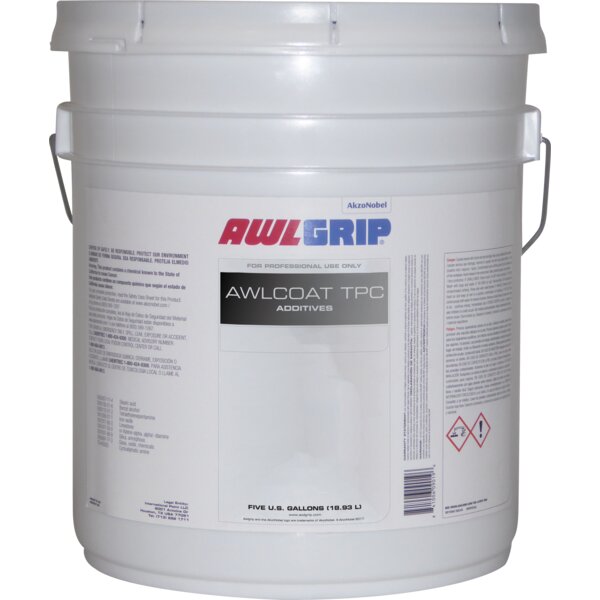
Awlcoat TPC is a water-based, temporary peelable protective coating designed to shield finished surfaces from scuffing, abrasion and a wide range of contaminants. Once dry, it forms a tough gray film that can be peeled away in one piece, leaving the underlying Awlgrip or Awlcraft 2000 topcoat clean and intact. Developed for professional boat building and refit environments, it is ideal wherever high-value painted surfaces need short- to medium-term protection during production, storage or transport.
Because the product is water-based with a low VOC content (55 g/L), it offers effective protection while helping to reduce solvent emissions compared to traditional solventborne masking systems.
Main features
- Temporary peelable film – forms a continuous protective layer that can be removed by hand once dry.
- Protection against damage – guards against scuffing, abrasion and general handling damage.
- Contamination barrier – helps prevent staining and marking from overspray, acid rain, fly rust and sanding dust.
- Designed for Awlgrip systems – suitable for use over cured Awlgrip and Awlcraft 2000 topcoats.
- Water-based and low VOC – VOC content of 55 g/L (0.46 lb/gal) as supplied.
- Easy application and removal – spray or brush application; higher film builds are easier to peel.
- Good recoatability with itself – second coat can be applied once touch-dry to build extra film thickness.
- Professional-grade durability – higher dry film thickness (5–10 mils / 125–250 μm) increases resistance to wear and abrasion.
Key technical specifications
- Product type: Water-based vinyl acrylic temporary protective coating.
- Color: Light gray / gray.
- Volume solids: 50%.
- Packaging: 5 US gallon containers.
- Typical shelf life: 3 years.
- VOC (as supplied): 55 g/L; 0.46 lb/gal.
- Recommended substrates: Cured Awlgrip and Awlcraft 2000 topcoats.
- Unsuitable substrates: Unpainted gelcoat, polycarbonates, glass, wood, bare wooden substrates, tight corners.
- Do not overcoat with: Other Awlgrip products.
Film thickness and coverage
- Minimum recommended dry film thickness (DFT): 75 μm / 3 mils for easy removal.
- Recommended high-build DFT for better wear resistance: 125–250 μm / 5–10 mils (may require two-coat application).
- Air atomized spray (1 coat):
- Wet film thickness (WFT): 200 μm / 7.9 mil.
- DFT: 100 μm / 3.9 mil (max 125 μm / 4.9 mil).
- Theoretical coverage at recommended DFT: 5 m²/L; 203.7 ft²/gal.
- Brush (4 coats, small areas only):
- Per coat WFT: 80 μm / 3.1 mil.
- Per coat DFT: 40 μm / 1.6 mil (max 50 μm / 2 mil).
- Theoretical coverage at recommended DFT: 12.5 m²/L; 509.3 ft²/gal.
Coverage values are theoretical and based on 100% transfer efficiency. Actual coverage will vary with application method, equipment condition, part geometry and environment.
Application and drying
- Application methods: Conventional air atomized spray (recommended) or brush for small areas.
- Spray equipment (air atomized):
- Fluid tip: 1.80–2.20 mm (71–87 thou).
- Fluid flow rate: 220–280 cc/min.
- Atomizing air pressure: 1.6–1.8 bar (23–26 psi).
- Mixing: Single-component product; mix thoroughly prior to use, preferably with a power agitator. Do not reduce.
- Recoat with Awlcoat TPC (self-recoatability):
- At 15°C (59°F): minimum 30 minutes; maximum extended.
- At 25°C (77°F): minimum 20 minutes; maximum extended.
- Touch-dry times:
- 15°C (59°F): 60 minutes.
- 25°C (77°F): 20 minutes.
- Peel time: Minimum 1 hour at 13–40°C (55–104°F); do not leave on the painted surface for more than 4 months.
- Environmental limits: Do not apply if the surface is less than 3°C (5°F) above the dew point or hotter than 41°C (105°F).
- Storage: Water-based product; must be protected from freezing. Keep container tightly closed when not in use to prevent skinning.
Physical properties
- Physical state: Liquid.
- Color: Gray.
- Odor: Odorless.
- Density: 1.132 g/cm³ (DIN EN ISO 2811-1).
- Flash point: 101°C (213.8°F), closed cup (Pensky-Martens).
- Viscosity (kinematic): 1 mm²/s at room temperature and at 40°C (DIN EN ISO 3219).
Applications and use cases
- Boat building and refit yards – temporary protection of Awlgrip and Awlcraft 2000 topcoats during construction, outfitting and repair.
- Storage and lay-up – shielding topsides and superstructures from acid rain, airborne contamination and light mechanical abuse during yard storage.
- Transport protection – guarding finished hulls and components against scuffing and overspray during movement and shipping within professional facilities.
- Localised masking – protection of selected panels or areas near sanding or spray work, where a peelable barrier is preferred to traditional masking systems.
Surface preparation guidance
- Apply only over fully cured Awlgrip or Awlcraft 2000 topcoats (minimum two cure cycles, equal to 96 hours at 25°C / 77°F).
- Ensure the surface is clean, dry and free from contaminants.
- Use masking tape to protect adjacent areas from overspray and to avoid thin feather edges that are difficult to peel.
- Mask deep joints, channels and sharp edges where a mechanical key or low film build may make peeling more difficult.
- Plastic fine-line masking tape is recommended; it is not affected by the water content of the wet film.
- Do not apply over unpainted gelcoat, polycarbonate, glass, wood, bare wooden substrates or in tight corners.
Application best practices
- Promote good airflow around the workpiece; the product is water-based and benefits from ventilation.
- Aim for a smooth, continuous film without sags or defects. In warm climates, heavy sags can cause a "print-through" effect on the finish.
- For additional protection, apply a second coat after the first is touch-dry (typically 20 minutes at 25°C).
- In high wear areas, reinforcement can be achieved by placing lint-free cloths between the first and second coats, ensuring they are fully wetted out and then rolling additional product on top.
- Overspray does not peel but can be wiped away with a damp cloth or alcohol. Overspray can also be recoated to build thickness and then peeled off.
- Remove masking tape from edges while the product is still wet for the cleanest peel edge.
- Awlcoat TPC may develop a certain level of "sticking" when in contact with itself or other surfaces; avoid stacking coated items under heavy loads to prevent imprints in the substrate.
- During spraying, keep the gun air cap clean with water and a brush and filter the product through a 60-mesh screen before application.
Removal and cleanup
- Allow the coating to dry completely; thicker areas will dry more slowly.
- To remove, grasp an edge of the film and peel it from the surface. Higher film builds are easier to remove in large sheets.
- If the product is peeled before full cure, peelability may be reduced.
- Occasionally a very light haze may remain on the topcoat; this usually self-corrects within 24 hours, particularly in sunlight, or can be removed with a wet cloth.
- Equipment can be cleaned with water while the coating is still wet, or with M.E.K. when dry.
- Once removed, the film can be compacted by hand (using gloves) to reduce waste volume and must be disposed of according to regional regulations.
Section 8 – Individual protection measures
According to the Safety Data Sheet for Awlcoat TPC Gray, the following personal protective equipment and hygiene measures are recommended when handling this product:
- General hygiene: Wash hands, forearms and face thoroughly after handling and before eating, drinking, smoking or using the lavatory. Contaminated work clothing should not leave the workplace and must be washed before reuse. Ensure eyewash stations and safety showers are available near the work area.
- Eye/face protection: Use safety glasses with side shields or equivalent eye protection that complies with an approved standard whenever there is a risk of splashes, mists or aerosols.
- Hand protection:
- Wear chemical-resistant, impervious gloves compliant with EN374 or other approved standards.
- For prolonged or frequently repeated contact: gloves with protection class 6 (breakthrough time > 480 minutes), recommended materials Viton or nitrile, thickness ≥ 0.38 mm.
- For brief contact: gloves with protection class 2 or higher (breakthrough time > 30 minutes), recommended material nitrile, thickness ≥ 0.12 mm.
- Replace gloves regularly and if any damage or degradation is observed.
- Skin and body protection: Wear suitable protective clothing selected according to the task and risks, approved by a safety specialist. Use appropriate footwear and any additional skin protection measures as needed.
- Respiratory protection: Where ventilation is insufficient, or exposure to spray mist, vapors, sanding dust or fumes may occur, wear a respirator conforming to EN140 with type A/P2 filter or better. For dry sanding, flame cutting or welding of the dry film, wet sanding/flatting is preferred; if not possible, appropriate respiratory protection must be used.
- Engineering controls: Good general ventilation is usually sufficient for normal use, but local exhaust or additional controls may be required if airborne concentrations are higher.
- Environmental controls: Emissions from ventilation and process equipment should be checked to ensure compliance with environmental regulations; scrubbers, filters or engineering changes may be needed to keep releases at acceptable levels.
Section 14 – Transport information
- UN number / ID number (ADR/RID, IMDG, IATA): Not regulated.
- UN proper shipping name: Not regulated.
- Transport hazard class(es): Not applicable.
- Packing group: Not applicable.
- Environmental hazards (marine pollutant): No.
- Special precautions for user: Within user premises, always transport in closed containers kept upright and secure. Ensure personnel transporting the product know what to do in the event of an accident or spillage.
- Transport in bulk according to IMO instruments: Not applicable.
Frequently asked questions (FAQ)
1. What surfaces can I protect with Awlcoat TPC?
Awlcoat TPC is intended for use over fully cured Awlgrip and Awlcraft 2000 topcoats. The surface must be clean, dry and free from contaminants before application.
2. Which substrates should I avoid?
Do not apply Awlcoat TPC over unpainted gelcoat, polycarbonates, glass, wood, bare wooden substrates or in tight corners. It is also not recommended for use over surfaces that have not fully cured.
3. How long can the film remain on the surface?
The minimum peel time is 1 hour at 13–40°C (55–104°F). The product should not be left on the painted surface for more than 4 months.
4. Can I apply another Awlgrip product over Awlcoat TPC?
No. Other Awlgrip products must not be applied over Awlcoat TPC.
5. How do I remove overspray?
Overspray will not peel off with the main film but can be removed using a damp cloth or by wiping with alcohol. Alternatively, you can recoat overspray areas to build film thickness and then peel away.
6. What happens if the coating leaves a haze on the topcoat?
In rare cases a very light haze may remain after removal. This typically self-corrects within about 24 hours, particularly when exposed to sunlight. If it persists, it can be wiped off with a wet cloth.
7. Is Awlcoat TPC classified as hazardous?
According to the Safety Data Sheet, the product is classified as Skin Sensitization Category 1 (may cause an allergic skin reaction) and Aquatic Chronic Category 3 (harmful to aquatic life with long lasting effects). Appropriate personal protective equipment and environmental precautions must be used.
8. What precautions should I take during application?
Avoid breathing vapors or spray mist, wear suitable gloves and eye protection, and prevent release to the environment. Maintain good ventilation, keep the product above freezing, and do not apply to surfaces outside the recommended temperature range or close to the dew point.
9. How should I dispose of used film and containers?
Removed film can be compacted by hand (using gloves) and must be disposed of in accordance with local and regional regulations. Waste paint and varnish should be treated as waste code EWC 08 01 12. Empty containers should be recycled where possible or disposed of safely, as they may retain product residues.
10. Is Awlcoat TPC suitable for consumer use?
The Safety Data Sheet states that the product is for professional use only. It should be handled by trained personnel following all safety and handling guidance.
*Contenido generado por IA