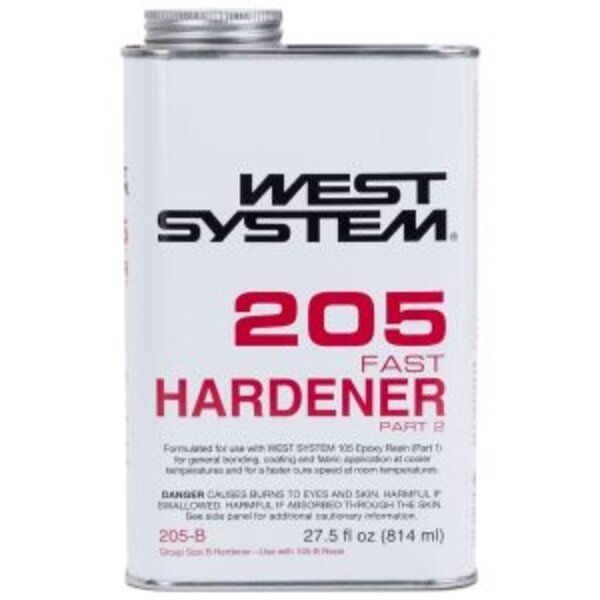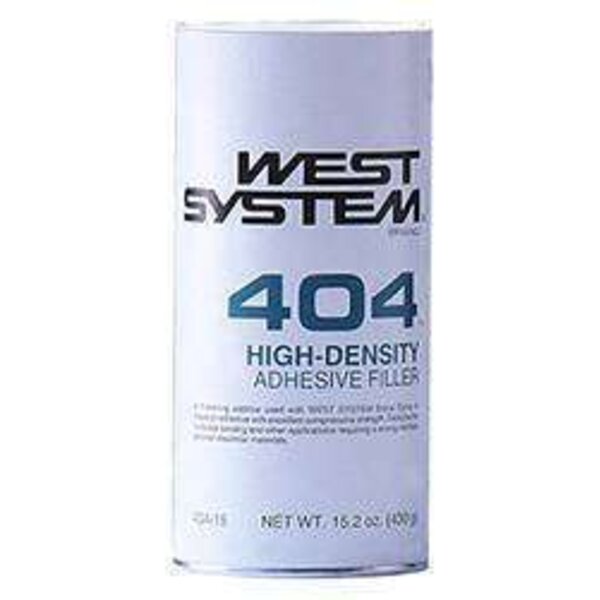
404 HIGH DENSITY FILLER

FROM:

Regular price 16,86€

*VAT not included

West System 404 High Density Filler is an epoxy thickening additive designed to be mixed with WEST SYSTEM epoxy resins to create a high-strength adhesive. It is mainly used for hardware bonding, gap filling and structural fillets in applications where high cyclic loads and especially strong bonds are required. Some technical details may be unverified; please consult the official technical data sheet before use.

*Contenido generado por IA

    Presentation: Container
    Colour:
    Mixing ratio: 35-60% en peso sobre la mezcla de epoxy
    Base: 105 EPOXY RESIN
    Catalizador: 205 FAST CATALYST
    206 STANDARD CATALYST
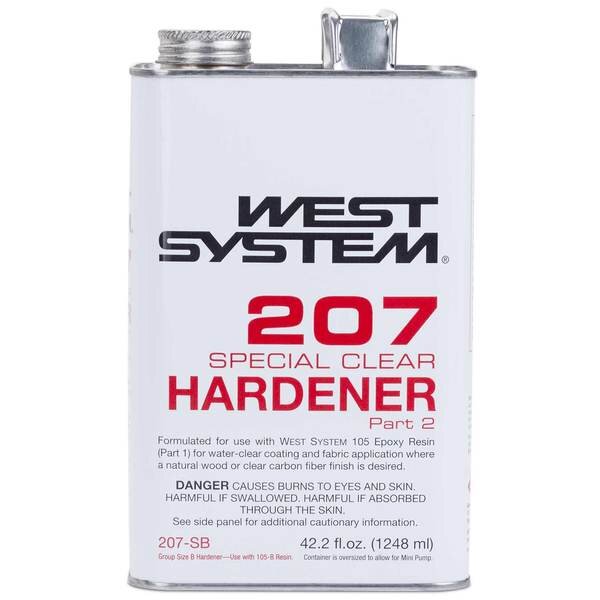
    207 SPECIAL COATING HARDENER
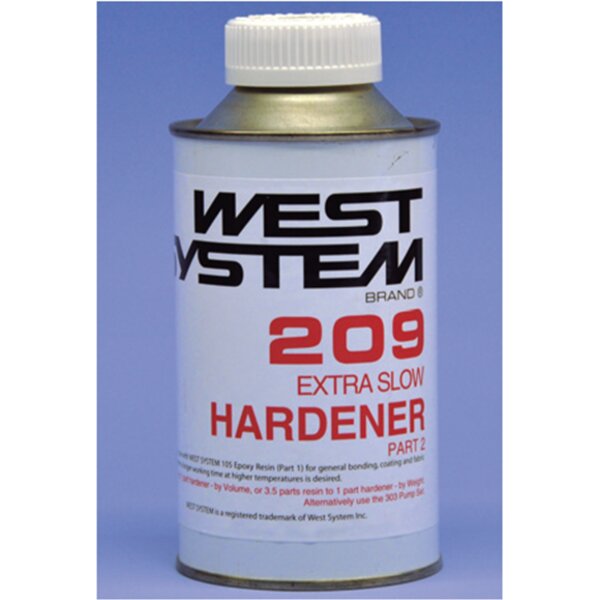
    209 EXTRA SLOW HARDENER

Features

    Presentation: Container
    Colour:
    Mixing ratio: 35-60% en peso sobre la mezcla de epoxy
    Base: 105 EPOXY RESIN
    Catalizador: 205 FAST CATALYST
    206 STANDARD CATALYST
    207 SPECIAL COATING HARDENER
    209 EXTRA SLOW HARDENER

description

What is West System 404 High Density Filler and why choose it

West System 404 High Density Filler is a high-strength, off-white powder additive designed to thicken epoxy for structural bonding. When mixed with WEST SYSTEM epoxy resins and hardeners, it produces a dense, highly resistant adhesive ideal for hardware bonding, gap filling and filleting in demanding marine, industrial and DIY applications where high cyclic loads and maximum bond strength are required.

Compared with general-purpose fillers, 404 High Density is formulated specifically to increase the compressive strength and fatigue resistance of epoxy, making it a preferred choice whenever fasteners, hardware or structural components must withstand significant loads over time.

Main features

  • High-density structural filler: Developed to maximise physical properties in hardware bonding and high-load joints.
  • Epoxy thickening additive: Mixes with WEST SYSTEM 105 Resin/200 Series Hardeners and compatible epoxies to adjust viscosity from fluid to paste.
  • Excellent for high cyclic loads: Ideal where fittings, fasteners or bonded components are repeatedly loaded and unloaded.
  • Multi-purpose structural use: Suitable for bonding, gap filling and filleting where maximum strength is required.
  • Off-white colour: Fine powder that cures to an off-white solid, easy to overcoat, fair or paint when used within an epoxy system.
  • Good workability: Can be blended into epoxy to achieve consistencies ranging from injectable mixtures to non-sag pastes for vertical or overhead work (exact ratios may vary by application).
  • High compressive strength: Improves the load-bearing capacity of filled epoxy, helping prevent crushing around fasteners and hardware (based on manufacturer information; exact strength values depend on resin system and mix ratio).

Technical specifications

The data below is based on the manufacturer’s published information. Some values can vary depending on batch, regional specification and the epoxy system used.

  • Product type: High-density adhesive filler / epoxy thickening additive.
  • Physical state: Solid powder.
  • Appearance: Fine fibre powder, off-white colour.
  • Cured appearance (with epoxy): Off-white solid.
  • Typical mix ratio (by weight into mixed epoxy): Approx. 35% – 60% to adjust viscosity from flowable to thick paste (range from manufacturer documentation; exact ratio should be adapted to the desired consistency and ambient temperature).
  • Relative density (bulk powder): Approx. 2.45 – 2.96.
  • Bulk density (indicative): Loose about 2.45 lb/gal; tapped about 3.37 lb/gal; packed about 5.29 lb/gal (values given in SDS and may vary).
  • Melting point: > 1000 °C (will not freeze as a powder, SDS data).
  • Flammability: Not classified as flammable in SDS (major components will not support combustion under normal conditions).
  • Solubility: Slightly soluble.
  • Typical pack sizes (may vary by region): Commonly supplied around 250 g, 1.75 kg and 10 kg/large bulk packs. Please check the specific listing for the exact size being sold.

For complete and updated technical details (including mechanical properties of the cured epoxy/filler mix), it is recommended to consult the official West System technical datasheet for 404 High Density Filler.

Applications and use cases

  • Hardware and fastener bonding: Ideal for bedding and bonding deck fittings, winches, cleats, tracks, hinges, brackets and other hardware subjected to high tension or compression loads.
  • High-load structural repairs: Filling and rebuilding high-stress areas such as cores under hardware, damaged substrates around fastener holes, or compressed core materials.
  • Gap filling in structural joints: Used to bridge small gaps between components when a strong, load-bearing adhesive line is required (e.g. stringer and frame joints, structural reinforcements).
  • Filleting with maximum strength: Creation of structural fillets in areas where high strength and stiffness are more important than easy sanding (for easier sanding, lower-density fairing fillers are typically used).
  • Marine and boatbuilding: Widely used in marine construction and repair to bond hardware to wood, composites and other suitable substrates using WEST SYSTEM epoxy.
  • General industrial and DIY projects: Any application where an epoxy adhesive must resist significant compressive forces, fatigue and vibration, such as fixtures, jigs and supports.

FAQ – West System 404 High Density Filler

1. What is West System 404 High Density Filler used for?

It is used as a high-strength thickening additive for epoxy. Mixed into WEST SYSTEM epoxy, it becomes a structural adhesive for hardware bonding, gap filling and filleting in high-load areas.

2. Can I mix 404 High Density Filler with any epoxy?

It is designed primarily for WEST SYSTEM 105 Resin with compatible hardeners and is also indicated as compatible with certain other West System epoxies (such as G/flex 650 and G/5). Use with other brands may be possible but is not verified; always follow the epoxy manufacturer’s recommendations.

3. How much filler should I add to the epoxy?

Manufacturer information indicates that 404 can typically be added at about 35% to 60% by weight of the mixed resin and hardener, depending on the desired viscosity. Lower additions produce more fluid mixes; higher additions produce thick, paste-like mixes. Always adjust gradually and follow the latest official instructions.

4. What colour does the cured mixture have?

The filler itself is off-white and cures with epoxy to an off-white solid that can usually be sanded and overcoated with compatible primers, paints or coatings.

5. Is 404 High Density Filler easy to sand?

Because it is a high-density structural filler, cured mixes tend to be harder and more resistant to sanding than low-density fairing fillers. It is optimised for strength, not for easy sanding.

6. Can it be used for underwater or constantly immersed structures?

West System epoxies filled with 404 are commonly used in marine environments, but suitability for permanent immersion depends on the entire epoxy system and coating scheme. Always follow West System’s guidance for barrier coats and immersion service, and verify with the official manuals for your specific project.

7. Is the product hazardous to handle?

According to the Safety Data Sheet, the powder can cause skin and eye irritation, may irritate the respiratory system if inhaled and contains crystalline silica, which may cause cancer by inhalation during prolonged or repeated exposure. Appropriate PPE and safe handling practices are required. Refer to the current SDS for full hazard information.

8. How should I store 404 High Density Filler?

The SDS recommends keeping the container tightly closed in a dry, well-ventilated place, protected from moisture, and out of the reach of children. Store it locked up where required and avoid conditions that generate dust.

9. Does it change the curing time of the epoxy?

Fillers can influence heat build-up and cure behaviour, but the main control of cure time remains the epoxy resin/hardener system and temperature. Adding 404 will thicken the mix and may affect exotherm in large masses; always follow West System guidance regarding pot life and thickness of pours.

10. Where can I find exact safety and technical data?

For precise, up-to-date information on composition, hazards, exposure limits, detailed mixing guidance and performance data, consult the latest official West System Safety Data Sheet (SDS) and technical datasheet for 404 High Density Filler.

Section 14 – Transport information

The following transport details are summarised from the manufacturer’s Safety Data Sheet and may be updated by the supplier. Always verify against the latest SDS before shipping.

  • UN classification: Not regulated as a dangerous good under major transport regulations according to the SDS.
  • Transport by road/rail (e.g. DOT/TDG or similar frameworks): Not regulated.
  • Transport by sea (IMDG): Not regulated; not classified as a marine pollutant.
  • Transport by air (IATA): Not regulated; not classified as a marine pollutant.
  • General recommendation: Even though it is not classified as dangerous for transport, containers should be kept closed, secured against damage and protected from moisture and dust release during handling and shipping.

Section 8 – Exposure controls and individual protection measures

This summary is based on the Safety Data Sheet for West System 404 High Density Filler. Local regulations and workplace risk assessments may require additional or different protective measures.

Exposure controls

  • Engineering controls: Ensure good general ventilation of the work area. Local exhaust ventilation is recommended where dust may be generated or exposure limits may be approached.
  • Environmental controls: Avoid release of dust to the environment. Prevent spills from entering drains and waterways.

Individual protection measures (PPE)

  • Respiratory protection: In case of insufficient ventilation or if dust is generated, use suitable respiratory equipment selected according to anticipated exposure levels and applicable standards. The SDS indicates that respirator selection must consider exposure levels, product hazards and the safe working limits of the chosen respirator.
  • Hand protection: Wear suitable protective gloves resistant to chemical penetration. Replace damaged or contaminated gloves promptly.
  • Eye/face protection: Wear appropriate eye or face protection (for example, safety glasses with side shields or a face shield) to prevent dust from entering the eyes.
  • Skin and body protection: Wear suitable protective clothing to avoid contact with skin and contamination of personal garments.
  • Hygiene measures: Take off contaminated clothing and wash before reuse. Wash hands, forearms and face thoroughly after handling and before eating, drinking or smoking.

According to the SDS, the product may cause skin and eye irritation, may cause respiratory irritation and may cause cancer (due to crystalline silica) and organ damage (lungs) through prolonged or repeated inhalation exposure. Implement appropriate controls, training and PPE consistent with local regulations and the latest SDS.

Contenido generado por IA
TECHNICAL SHEET

TECHNICAL SHEET

link

APPLICATION MANUAL

APPLICATION MANUAL

link

SAFETY DATA SHEETS

SAFETY DATA SHEETS

link

MANUAL

MANUAL

link

Recently Viewed

Ref. Capacity Amount*
404-1 250 g 16,86 €
404-2 1,75 kg 74,71 €
404-4 10 kg 247,96 €
Page up

Product Quick View Popup

Vendor: Optimal

Product Type: Tops

SKU: 50-ABC

In stock Pre-order Now Sold out Order now, Only 10 left!
$400.00$300.00
Optimal Multipurpose Bootstrap 5 Html Template that will give you and your customers a smooth shopping experience which can be used for various kinds of stores such as fashion..
  • Black
  • Green
  • Orange
  • Blue
  • Red
  • XS
  • S
  • M
  • L
  • XL

Added to your shopping cart successfully.

Added to your shopping cart successfully.
Ditsy Floral Dress

Color: Gray

1 X $113.88

Total: $113.88