What it is and why choose it
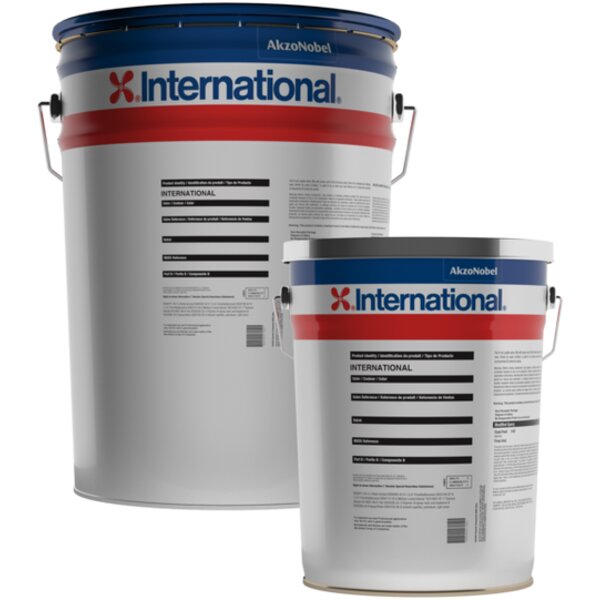
INTERBOND 2340 UPC PART A INDIVISIBLE KIT is the Part A component of Interbond 2340UPC, a next-generation alkylated amine epoxy phenolic universal pipe coating from International. It is designed for external protection of process pipes, valves and vessels operating at high and cryogenic temperatures, from -196°C (-321°F) up to 230°C (446°F). The system provides corrosion resistance in accordance with ISO 12944-9 at ambient temperatures and delivers productivity benefits compared with inorganic zinc silicate and traditional epoxy phenolic systems.
This coating is suitable for both new construction and maintenance projects on carbon steel and austenitic stainless steel, with or without insulation. Thanks to its high dry film thickness (DFT) tolerance and reduced environmental constraints during application, it helps lower the risk of cracking and simplifies site work in a wide range of climates.
Main features
- High temperature and cryogenic performance: protects steelwork in continuous service from -196°C (-321°F) to 205°C (401°F), with intermittent surges up to 230°C (446°F).
- Corrosion resistance to ISO 12944-9: formulated to provide corrosion protection at ambient temperatures in line with ISO 12944-9 requirements.
- Next-generation epoxy phenolic technology: based on alkylated amine epoxy, delivering improved performance over traditional epoxy phenolic coatings.
- High DFT tolerance: recommended 100–200 microns (4–8 mils) dry, significantly reducing the risk of thick-film cracking compared with conventional phenolic epoxies.
- Versatile application window: eliminates the strict temperature and humidity requirements typical of inorganic zinc primers, improving quality and productivity in different climates.
- Excellent thermal shock resistance: withstands rapid temperature cycling without loss of protective performance.
- Direct-to-metal system: normally applied directly to abrasive blast-cleaned carbon steel or suitably prepared stainless steel.
- Multiple colours for identification: available in Grey, Pink, Olive Grey and Aluminium, with additional regional colours for certain temperature ranges.
- Compatible with topcoats: can be overcoated with selected polyurethane and high temperature finishes such as Interthane 870, Interthane 990 and Intertherm 875 (topcoat choice may limit maximum temperature resistance of the scheme).
Technical specifications
Coating system and performance
- Product type: two-component alkylated amine epoxy phenolic coating (this item is Part A).
- Intended use: external corrosion protection of process pipes, valves and vessels; suitable for insulated and uninsulated steelwork and for cryogenic service.
- Service temperature range:
- Continuous: -196°C (-321°F) to 205°C (401°F)
- Intermittent surges: up to 230°C (446°F)
- Corrosion standard: corrosion resistance at ambient temperatures in accordance with ISO 12944-9.
- Thermal shock: excellent resistance to thermal shock during rapid temperature cycling.
Appearance and composition
- Colour range: Grey, Pink, Olive Grey, Aluminium; limited additional colours regionally available for operation from ambient to 175°C (347°F) with intermittent 230°C (446°F).
- Gloss level: Not applicable.
- Volume solids: 60%.
- Typical dry film thickness (DFT): 100–200 microns (4–8 mils).
- Typical wet film thickness: 167–333 microns (6.7–13.3 mils).
Coverage
- Theoretical coverage: 3 m²/litre at 200 microns DFT with stated volume solids.
- Theoretical coverage (US units): 120 sq.ft/US gallon at 8 mils DFT with stated volume solids.
- Practical coverage: allow for appropriate loss factors according to substrate profile, method and conditions.
Application parameters
- Supplied as: two-container unit (Base Part A + Curing Agent Part B). Always mix the full unit.
- Mix ratio: 3 parts Base (Part A) : 1 part Curing Agent (Part B) by volume.
- Recommended application methods: airless spray (preferred), brush and roller (small areas or touch-up only; multiple coats may be required to reach full DFT).
- Airless spray data:
- Tip range: 0.48–0.60 mm (19–24 thou)
- Minimum fluid pressure at tip: 211 kg/cm² (3000 psi)
- Thinner: International GTA220 only (thinning normally not required except for air spray; up to 10% by volume when air spray is used).
- Cleaner: International GTA822 or International GTA220.
- Pot life (working pot life after mixing):
- -5°C (23°F): 6 hours
- 10°C (50°F): 4.5 hours
- 20°C (68°F): 3 hours
- 35°C (95°F): 1 hour
- Steel surface temperature: must be at least 3°C (5°F) above the dew point during application.
Drying and overcoating
- Typical drying times (self-overcoating intervals):
- -5°C (23°F): touch dry 7 h; hard dry 10 h; minimum overcoat 14 h; maximum overcoat 14 days.
- 10°C (50°F): touch dry 5 h; hard dry 8 h; minimum overcoat 10 h; maximum overcoat 14 days.
- 20°C (68°F): touch dry 4 h; hard dry 6 h; minimum overcoat 7 h; maximum overcoat 14 days.
- 35°C (95°F): touch dry 2 h; hard dry 4 h; minimum overcoat 4 h; maximum overcoat 10 days.
- Dry film inspection: after final cure, check total system DFT using a suitable non-destructive magnetic gauge; coating should be free of pinholes, runs, sags, drips and inclusions.
Surface preparation
- New carbon steel construction:
- Abrasive blast clean to minimum Sa2½ (ISO 8501-1:2007) or SSPC-SP10.
- Recommended sharp, angular profile: 50–75 microns (2–3 mils).
- Apply Interbond 2340UPC before oxidation occurs; reblast any rusted areas.
- Maintenance and repair (carbon steel): for certain service conditions, may be applied to bare steel prepared to minimum St2 (ISO 8501-1:2007) or power tool cleaned to SSPC-SP11 for small repair areas and welds (with minimum 50 microns / 2 mils profile).
- Austenitic stainless steel: clean and dry surface, free from corrosion products; abrasive blast with non-metallic, chloride-free abrasive (e.g. aluminium oxide or garnet) to approximately 35 microns (1.4 mils) anchor profile.
Regulatory and physical data (Part A mixed system)
- Flash point (typical): Part A 28°C (82°F); Part B 26°C (79°F); mixed 28°C (82°F).
- Product weight: 1.22 kg/litre (10.2 lb/gal).
- VOC content (mixed coating):
- 3.25 lb/gal (390 g/L) – EPA Method 24
- 318 g/kg – EU Solvent Emissions Directive (Council Directive 2010/75/EU)
- 333 g/L – Chinese National Standard GB23985
- Density (Part A SDS): 1.302 g/cm³ (DIN EN ISO 2811-1).
- Boiling point (mixed liquid): approximately 139°C (282.2°F).
- Flash point (Part A SDS): 28°C (82.4°F) closed cup (Pensky-Martens).
Pack size and weight (Part A)
- Pack sizes:
- 20 litre unit: 15 litre Part A pack + 5 litre Part B pack (volumetric); shipping weight Part A 21.1 kg, Part B 5.2 kg.
- 5 US gallon unit: 3 US gal Part A pack + 1 US gal Part B pack; shipping weight Part A 36.9 lb, Part B 8.7 lb.
- Shelf life: minimum 12 months at 25°C (77°F), subject to re-inspection; store in dry, shaded conditions away from heat and ignition sources.
Applications and use cases
- Process piping: external protection of high temperature and cryogenic process lines in refineries, petrochemical plants and other industrial facilities.
- Valves and fittings: coating of valves and associated accessories operating across a wide temperature envelope.
- Vessels and tanks: external surfaces of vessels and tanks where resistance to high temperature and thermal cycling is required.
- Insulated steelwork: corrosion protection of steel under insulation cycling between wet and dry conditions within the stated temperature range.
- Newbuild and maintenance: suited for shop application on new construction as well as on-site repair and maintenance, including touch-up of welds and damaged areas.
FAQ
1. What temperature range can INTERBOND 2340 UPC be used in?
Interbond 2340UPC protects steelwork in continuous service from -196°C (-321°F) to 205°C (401°F), with intermittent surges up to 230°C (446°F).
2. On which substrates can this coating be applied?
It is suitable for carbon steel and austenitic stainless steel, both insulated and uninsulated, provided surfaces are prepared as specified (Sa2½ or St2/SSPC-SP11 for carbon steel, and non-metallic abrasive blast for stainless steel).
3. What is the recommended dry film thickness?
The recommended DFT is 100–200 microns (4–8 mils) per coat, equivalent to 167–333 microns (6.7–13.3 mils) wet film thickness.
4. How is the product mixed?
The material is supplied as a two-component unit. Always mix a complete unit at a ratio of 3 parts Base (Part A) to 1 part Curing Agent (Part B) by volume, using a power agitator.
5. Which application methods are recommended?
Airless spray is recommended for most work. Brush and roller are suitable for small areas and touch-up, but multiple coats may be needed to achieve the specified DFT.
6. Does colour change at high temperature affect performance?
Interbond 2340UPC will chalk and yellow on exterior exposure and show a marked colour change at higher temperatures, but these effects are not detrimental to anti-corrosive performance provided the recommended temperature limits are not exceeded.
7. Can it be overcoated with other products?
Yes. It is normally applied direct to metal and can be overcoated with selected topcoats such as Interthane 870, Interthane 990 and Intertherm 875, subject to topcoat compatibility and overcoating windows.
8. What is the pot life after mixing?
Pot life varies with temperature: approximately 6 hours at -5°C (23°F), 4.5 hours at 10°C (50°F), 3 hours at 20°C (68°F) and 1 hour at 35°C (95°F).
9. Is the product classified as hazardous?
Yes. Part A is classified under CLP as a flammable liquid (Category 3) that causes skin irritation and serious eye damage, may cause an allergic skin reaction and respiratory irritation, may cause damage to organs through prolonged or repeated exposure, and is toxic to aquatic life with long lasting effects.
10. Who is this product intended for?
The coating is intended for use only by professional applicators in industrial environments.
Section 14 – Transport information
According to the transport sections of the Safety Data Sheet for Interbond 2340UPC Pink Part A, the product is classified as follows:
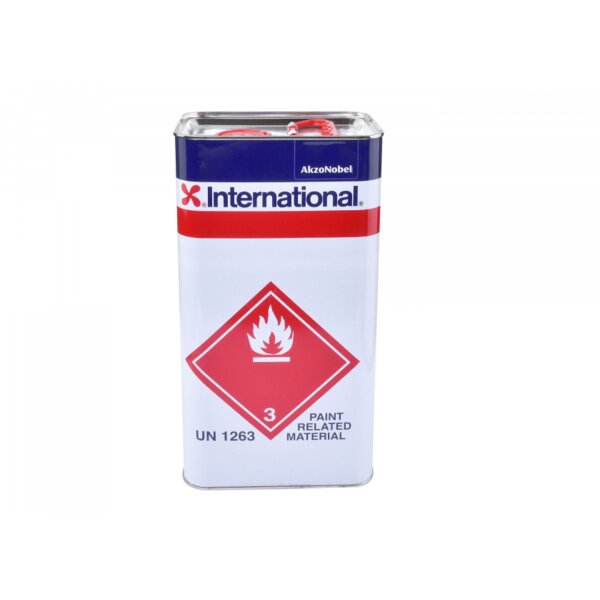
- UN number: UN1263
- UN proper shipping name: PAINT
- Transport hazard class: Class 3 (flammable liquid)
- Packing group: III
- Marine pollutant / environmental hazard: yes – contains bis-[4-(2,3-epoxipropoxi)phenyl]propane and solvent naphtha (petroleum), light aromatics; the environmentally hazardous substance/marine pollutant mark is not required when transported in packages of ≤5 L or ≤5 kg.
- Tunnel restriction code (ADR/RID): (D/E)
- Emergency schedules (IMDG): F-E, S-E
- Special precautions for user: within user premises, always transport in closed, upright and secure containers; ensure personnel know what to do in case of accident or spillage.
Section 8 – Individual protection measures
The Safety Data Sheet for Interbond 2340UPC Pink Part A specifies the following personal protection and exposure control measures. Selection of PPE must be based on a site-specific risk assessment.
Engineering and hygiene controls
- Use only with adequate ventilation; apply local exhaust or process enclosure to keep airborne concentrations below statutory limits and below lower explosive limits.
- Use explosion-proof ventilation and electrical equipment.
- Provide eyewash stations and safety showers close to work areas.
- Prohibit eating, drinking and smoking in areas where the product is handled; wash hands, forearms and face thoroughly after use and before breaks.
Eye and face protection
- Wear safety eyewear complying with an approved standard whenever there is a risk of splashes, mists, gases or dust.
- Recommended: chemical splash goggles and/or face shield.
- If significant inhalation hazards exist, a full-face respirator may be required.
Hand protection
- Wear chemical-resistant, impervious gloves complying with EN374 or equivalent.
- For prolonged or frequently repeated contact, use gloves with protection class 6 (breakthrough time > 480 minutes): recommended materials – Viton or nitrile, thickness ≥ 0.38 mm.
- For expected brief contact, use gloves with protection class ≥ 2 (breakthrough time > 30 minutes): recommended material – nitrile, thickness ≥ 0.12 mm.
- Replace gloves regularly and immediately if damaged; effectiveness may be reduced by physical or chemical damage or poor maintenance.
Skin and body protection
- Wear suitable protective clothing selected according to the task and associated risks.
- Where there is a risk of ignition by static electricity, use anti-static protective clothing including overalls, boots and gloves in accordance with EN 1149.
- Select appropriate protective footwear and any additional skin protection based on the work being performed.
Respiratory protection
- When ventilation is inadequate or exposure limits may be exceeded, wear a respirator conforming to EN140 with A/P2 type filter or better, within a structured respiratory protection programme.
- Dry sanding, flame cutting or welding of the dry coating film will generate hazardous dust and fumes; wherever possible use wet methods, and if exposure cannot be controlled by local exhaust, use suitable respiratory protection.
Environmental exposure control
- Check emissions from ventilation and process equipment to ensure compliance with environmental legislation.
- Use fume scrubbers, filters or engineering modifications where necessary to reduce emissions.
*Contenido generado por IA