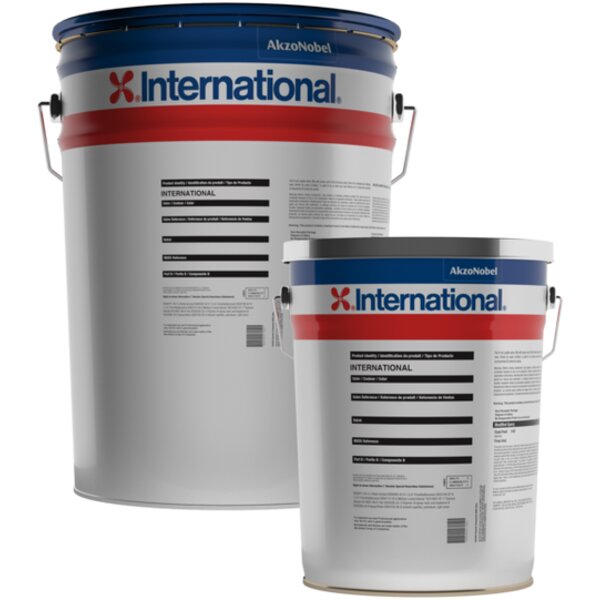
INTERLINE 925 PART A INDIVISIBLE KIT

Regular price 440,92€

*VAT not included

Interline 925 Part A Indivisible Kit is the base component of a light coloured, solvent free pure epoxy tank coating for interior and exterior use. When mixed with its curing agent, it forms a high performance coating for potable water tanks as well as ballast tanks, void spaces, cofferdams and wet spaces.

Contenido generado por IA.

    Presentation: Container
    Capacity: 20 l
    Colour:
    Mixing ratio: 3 Partes Base 1 Parte Catalizador
    Base: THA125/20LT/EU - INTERLINE 925 PART A INDIVISIBLE KIT
    Catalizador: INTERLINE 925 PART B INDIVISIBLE KIT
    Cleaner: THINNER GTA 822

Features

    Presentation: Container
    Capacity: 20 l
    Colour:
    Mixing ratio: 3 Partes Base 1 Parte Catalizador
    Base: THA125/20LT/EU - INTERLINE 925 PART A INDIVISIBLE KIT
    Catalizador: INTERLINE 925 PART B INDIVISIBLE KIT
    Cleaner: THINNER GTA 822

description

What is Interline 925 Part A Indivisible Kit and why choose it?

Interline 925 Part A Indivisible Kit by International Marina is the base component of a light coloured, solvent free, pure epoxy tank coating. When mixed with its dedicated curing agent (Part B), it forms a high performance lining specifically developed for potable water tanks and also suitable for ballast tanks, void spaces, cofferdams and other wet spaces in marine and industrial environments. Its 100% volume solids formulation, high film build and extensive potable water certifications make it a robust solution for newbuilding as well as maintenance and repair projects.

Main features

  • Solvent free pure epoxy – 100% volume solids (ISO 3233:1998) for high build and minimal VOC emissions.
  • Potable water certified – approved for carriage and storage of potable water and compliant with multiple international potable water standards when used as part of an approved scheme.
  • High chemical and water resistance – designed for long-term immersion service in potable and grey water, ballast and other service tanks.
  • Gloss finish – smooth, easy-to-clean internal tank surfaces.
  • High film thickness in a single coat – typical dry film thickness 300 microns (NSF approval based on 450 microns dry in a single coat).
  • Flexible application methods – optimized for airless spray; brush or roller can be used for small areas and touch-up.
  • Controlled curing and overcoating – defined drying and overcoating intervals from 10°C to 35°C.
  • Fire performance certification – tested for surface spread of flame, smoke and toxicity when used as part of an approved system.
  • Low VOC values – typical VOC 125 g/L as supplied (EPA Method 24); 23 g/kg under EU Solvent Emissions Directive; 30 g/L under Chinese Standard GB23985.

Technical characteristics

  • Product type: Solvent free pure epoxy tank coating (Part A of a two-component system).
  • Colour options: White and Cream (in combination with the corresponding Part B curing agents).
  • Volume solids: 100% (ISO 3233:1998).
  • Typical dry film thickness: 300 microns dry (300 microns wet). NSF approval based on 450 microns dry in a single coat.
  • Theoretical coverage: 3.33 m²/L at 300 microns DFT (loss factors must be allowed for).
  • Finish/Sheen: Gloss.
  • Mix ratio: 3 parts by volume Part A to 1 part by volume Part B (THA126 or THA127).
  • Flash point (typical): Part A >101°C; Part B >101°C; Mixed >101°C.
  • Application methods: Airless spray (recommended); brush (small areas only); roller (small areas only). Conventional spray not recommended.
  • Airless spray parameters: Tip size 0.53–0.64 mm (21–25 thou); minimum fluid pressure at tip 211 kg/cm² (3000 psi). Mixed material temperature 30–35°C for optimum spraying.
  • Pot life (mixed product): approx. 2 h at 10°C; 90 min at 15°C; 60 min at 25°C; 45 min at 35°C.

Drying and overcoating information (substrate temperature)

  • Touch dry (ISO 9117/3:2010): 15 h (10°C); 12 h (15°C); 8 h (25°C); 5 h (35°C).
  • Hard dry (ISO 9117-1:2009): 36 h (10°C); 24 h (15°C); 18 h (25°C); 8 h (35°C).
  • Overcoating with Interline 925:
    • 10°C: minimum 36 h, maximum 5 days.
    • 15°C: minimum 24 h, maximum 3 days.
    • 25°C: minimum 18 h, maximum 36 h.
    • 35°C: minimum 8 h, maximum 16 h.

    When used in non-marine applications, different overcoating intervals apply. Consultar ficha técnica del fabricante.

Environmental and curing conditions

  • Minimum steel temperature for curing: 10°C (product will not cure adequately below this).
  • Recommended maximum during cure: below 35°C; avoid localized overheating when using forced hot air.
  • Relative humidity inside tank:
    • Max. 50% at 10–15°C.
    • Max. 60% at ≥16°C.
  • Surface temperature at application: at least 3°C above dew point.

Unit sizes and packaging

  • 20 L unit: Part A 15 L in 20 L can; Part B 5 L in 5 L can. Approximate unit shipping weight: 33 kg.
  • 4 US gallon unit: Part A 3 US gal in 5 US gal can; Part B 1 US gal in 1 US gal can. Approximate unit shipping weight: 55.3 lb.

Storage

  • Shelf life: 18 months at 25°C, subject to re-inspection thereafter.
  • Storage conditions: store in dry, shaded conditions away from heat and ignition sources. Keep containers tightly closed.

Applications and use cases

  • Potable water tanks – internal lining for tanks carrying or storing potable water, including offshore installations and marine potable water tanks.
  • Grey water tanks – lining for sewage and grey water service tanks (using the dedicated application guidelines).
  • Ballast tanks – corrosion protection and long-term immersion performance in marine ballast tanks.
  • Void spaces and cofferdams – protection of difficult-access spaces subject to condensation and intermittent wetting.
  • Wet spaces – general-purpose lining in areas where long-term water and chemical resistance is required, in both newbuild and maintenance scenarios.

Substrate preparation

  • General: all surfaces must be clean, dry and free from contamination. Remove oil, grease, soluble salts and other contaminants by fresh water washing and solvent cleaning to SSPC-SP1.
  • Newbuilding steel:
    • Remove weld spatter, smooth weld seams and sharp edges.
    • Blast clean welds and damaged areas to Sa2½ (ISO 8501-1:2007).
    • Intact shop primer: sweep blast to International Paint AS3 standard or power tool to Pt3 (JSRA SSPC:1984).
    • PVB or unapproved shop primers: full abrasive blast to Sa2½.
    • Potable water tanks: entire tank to be blast cleaned to at least Sa2½.
  • Major refurbishment: abrasive blast to Sa2½; reblast if oxidation occurs before coating. Grind, fill or otherwise treat any steel defects revealed.
  • North American marine standards (alternative): SSPC-SP10 may be used in place of Sa2½; SSPC-SP11 in place of Pt3.

Mixing and application notes

  • Mixing:
    1. Agitate Base (Part A) with a power agitator.
    2. Agitate Curing Agent (Part B) with a power agitator.
    3. Combine entire contents of Part B with Part A and mix thoroughly with a power agitator.

    Always mix complete units in the supplied proportions and use within the specified pot life.

  • Brush and roller: for small areas only; multiple coats may be required to reach the specified dry film thickness.
  • Thinner: not recommended.
  • Cleaner: International GTA822/GTA415 (selection may be subject to local legislation).
  • Work stoppages and cleaning: do not allow material to remain in hoses, gun or spray equipment. Thoroughly flush with GTA822/GTA415 after use and during prolonged stoppages. Do not exceed pot life.

Section 14 – Transport information

  • UN number: UN3082.
  • Proper shipping name: ENVIRONMENTALLY HAZARDOUS SUBSTANCE, LIQUID, N.O.S. (reaction product: bisphenol-A-(epichlorhydrin); epoxy resin).
  • Transport hazard class: Class 9 (miscellaneous dangerous substances and articles).
  • Packing group: III.
  • Marine pollutant: Yes – reaction product: bisphenol-A-(epichlorhydrin); epoxy resin.
  • Environmentally hazardous: Yes (ADR/RID, IMDG, IATA).
  • ADR/RID tunnel code: (-).
  • Exemptions for small packages: not regulated as a dangerous good when transported in sizes of ≤5 L or ≤5 kg, provided packaging complies with the general provisions of the applicable transport codes.
  • Special precautions for users: within user premises, always transport in closed, upright and secure containers. Ensure personnel know procedures in case of accident or spillage.
  • Bulk transport according to IMO instruments: not applicable.

Section 8 – Personal protective measures

Recommended personal protective equipment (PPE)

  • Hand protection:
    • Chemical-resistant, impervious gloves complying with an approved standard.
    • For prolonged or frequently repeated contact: protection class 6 (breakthrough time >480 min, EN374). Recommended: Viton or nitrile, thickness ≥0.38 mm.
    • For brief contact: protection class ≥2 (breakthrough time >30 min, EN374). Recommended: nitrile, thickness ≥0.12 mm.
    • Replace gloves regularly and if any damage is observed.
  • Eye/face protection: chemical splash goggles complying with an approved standard when there is a risk of liquid splashes, mists or sprays.
  • Skin and body protection: suitable protective clothing selected according to the task and associated risks; approved by a safety specialist before use.
  • Respiratory protection:
    • Where ventilation is inadequate or exposure limits may be exceeded, wear a respirator conforming to EN140 with type A/P2 (or A/PP2) filter or better.
    • During dry sanding, flame cutting or welding of the dry coating, use suitable respiratory protection if effective local exhaust ventilation cannot be provided.
  • Other skin protection: appropriate protective footwear and any additional skin protection measures as required by risk assessment.

Hygiene and exposure control

  • Provide good general ventilation; in many cases this will be sufficient to control airborne contaminants.
  • Wash hands, forearms and face thoroughly after handling and before eating, drinking or smoking.
  • Remove contaminated clothing and protective equipment before entering eating areas; wash contaminated clothing before reuse.
  • Ensure eyewash stations and safety showers are available close to work areas.
  • Emissions from ventilation or process equipment should be checked to ensure compliance with environmental legislation; fume scrubbers or filters may be required.

FAQ

  1. Is Interline 925 Part A suitable for potable water tanks?

    Yes. When used as part of an approved Interline 925 system, the coating is certified for potable water service, including tanks over 1,000 gallons and offshore potable water installations.

  2. Can I apply this product by brush or roller only?

    Brush and roller application is recommended only for small areas. Multiple coats may be necessary to achieve the specified 300 microns dry film thickness.

  3. What is the recommended mixing ratio?

    Mix 3 parts by volume of Interline 925 Part A with 1 part by volume of the specified curing agent (Part B: THA126 or THA127). Always mix a complete unit.

  4. At what temperatures can I apply and cure the coating?

    Minimum steel temperature for curing is 10°C; below this the product will not cure adequately. For maximum performance, keep curing temperatures below 35°C and maintain surface temperature at least 3°C above the dew point.

  5. How should the steel surface be prepared before application?

    For new steel and major refurbishment, surfaces should generally be abrasive blast cleaned to Sa2½ (ISO 8501-1:2007). Potable water tanks must be blast cleaned to at least Sa2½ throughout.

  6. Can Interline 925 be used over existing shop primers?

    Yes, provided they are intact and compatible: prepare by sweep blasting to International Paint AS3 or power tooling to Pt3. PVB and unapproved shop primers must be fully blast cleaned to Sa2½.

  7. What cleaner should I use for spray equipment?

    Use International GTA822 or GTA415, following local legislation and the supplier’s recommendations.

  8. Is the product hazardous during transport?

    Yes. It is classified as UN3082, ENVIRONMENTALLY HAZARDOUS SUBSTANCE, LIQUID, N.O.S., Class 9, Packing Group III. However, packages ≤5 L or ≤5 kg may be shipped under limited conditions where it is not regulated as a dangerous good.

  9. Does the product contain solvents?

    No. Interline 925 is a solvent free epoxy with 100% volume solids, though small amounts of volatile components are present and VOC values are specified.

  10. Where can I find detailed overcoating intervals for non-marine use?

    Consultar ficha técnica del fabricante.

Contenido generado por IA

TECHNICAL SHEET

TECHNICAL SHEET

link

SAFETY DATA SHEETS

SAFETY DATA SHEETS

link

Recently Viewed

Ref. Amount*
THA125/20LT/EU 440,92 €
Page up

Product Quick View Popup

Vendor: Optimal

Product Type: Tops

SKU: 50-ABC

In stock Pre-order Now Sold out Order now, Only 10 left!
$400.00$300.00
Optimal Multipurpose Bootstrap 5 Html Template that will give you and your customers a smooth shopping experience which can be used for various kinds of stores such as fashion..
  • Black
  • Green
  • Orange
  • Blue
  • Red
  • XS
  • S
  • M
  • L
  • XL

Added to your shopping cart successfully.

Added to your shopping cart successfully.
Ditsy Floral Dress

Color: Gray

1 X $113.88

Total: $113.88