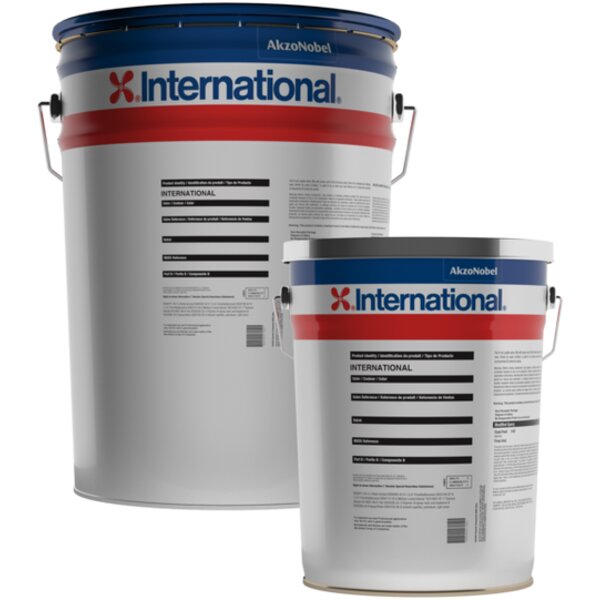
INTERZINC 22 PART A INDIVISIBLE KIT

Regular price 330,02€

*VAT not included

Interzinc 22 Part A Indivisible Kit is the liquid binder component of a two-component, solvent-based inorganic zinc rich ethyl silicate primer for interior and exterior use. It is designed as a zinc rich primer for bridges, tanks, pipework, offshore structures and structural steelwork, providing excellent corrosion protection when correctly topcoated and fast curing in a wide range of climatic conditions. Interzinc 22 is also suitable as an internal tank lining for dedicated storage of methanol and ethanol and for tanks carrying certain chemical cargoes (e.g. styrene).

*Contenido generado por IA

    Presentation: Container
    Colour:
    Mixing ratio: 3.1 Partes Base 1 Parte Catalizador
    Base: INTERZINC 22 PART A INDIVISIBLE KIT
    Catalizador: INTERZINC 22 PART B INDIVISIBLE KIT

Features

    Presentation: Container
    Colour:
    Mixing ratio: 3.1 Partes Base 1 Parte Catalizador
    Base: INTERZINC 22 PART A INDIVISIBLE KIT
    Catalizador: INTERZINC 22 PART B INDIVISIBLE KIT

description

What is Interzinc 22 Part A and why choose it?

INTERZINC 22 PART A INDIVISIBLE KIT is the liquid binder component (Part A) of Interzinc 22, a two-component, solvent-based, inorganic zinc rich ethyl silicate primer. When mixed with the dedicated zinc dust component (Part B), it forms a rapid-recoat, fast-curing primer that meets SSPC Paint 20 Level 1 and uses ASTM D520 Type II zinc dust. It is designed to deliver excellent corrosion protection for correctly prepared steel across demanding industrial, marine and offshore environments.

Interzinc 22 is suitable for both new construction and maintenance of bridges, tanks, pipelines, offshore structures and general structural steel, and can be used as an internal lining for methanol and ethanol storage tanks and for the carriage of certain chemical cargoes. The system provides high temperature resistance when correctly topcoated and can be applied over a wide range of climatic conditions.

Main features

  • High-performance zinc rich primer system: solvent-based inorganic ethyl silicate technology with zinc dust (Part B) to provide galvanic corrosion protection.
  • Fast curing and rapid recoat: short touch-dry and hard-dry times from 5°C to 40°C, enabling quick return to service and high productivity.
  • Wide application window: formulated for use in a broad range of climatic conditions, including low and high temperatures.
  • Excellent corrosion protection: protects correctly prepared steel substrates and, when suitably topcoated, resists temperatures up to 540°C (1004°F).
  • Chemical and cargo tank suitability: can be used as tank coating for appropriate chemical cargoes such as styrene (according to International Paint’s Chemical Resistance Guide) and as an internal lining for dedicated methanol and ethanol storage tanks.
  • Compatible with multiple high-performance topcoats: can be overcoated with a wide range of Intercure, Intergard, Interseal and Intertherm intermediates and finishes.
  • Specification approvals: includes approvals such as AISC Specification 348-04 Class B coating and UNE 48293 (Spain).
  • Professional industrial system: intended for use only by trained professional applicators in controlled industrial environments.

Technical specifications

  • Product type: two-component inorganic zinc rich ethyl silicate primer (Part A is liquid binder; requires Part B zinc dust).
  • Colour (mixed system): Green Grey.
  • Gloss level: Matt.
  • Volume solids: 63%.
  • Recommended dry film thickness (DFT): 50–75 microns (2–3 mils).
  • Typical wet film thickness (WFT): 79–119 microns (3.2–4.8 mils).
  • Theoretical coverage: 8.40 m²/litre at 75 microns DFT (337 sq.ft/US gallon at 3 mils DFT), excluding loss factors.
  • Application methods: airless spray, air spray; brush suitable for small areas only; roller not recommended.
  • Mix ratio (Part A : Part B): 3.1 parts : 1 part by volume (mix only in supplied proportions).
  • Working pot life (mixed unit):
    • 5°C (41°F): 12 hours
    • 15°C (59°F): 8 hours
    • 25°C (77°F): 4 hours
    • 40°C (104°F): 2 hours
  • Drying and overcoating times (at 55% RH, except 5°C at 60% RH):
    • 5°C (41°F): touch dry 30 min; hard dry 3 h; minimum overcoat 18 h; maximum overcoat extended.
    • 15°C (59°F): touch dry 20 min; hard dry 90 min; minimum overcoat 9 h; maximum overcoat extended.
    • 25°C (77°F): touch dry 10 min; hard dry 1 h; minimum overcoat 4.5 h; maximum overcoat extended.
    • 40°C (104°F): touch dry 5 min; hard dry 30 min; minimum overcoat 1.5 h; maximum overcoat extended.

    Prior to overcoating, a value of 4 in the ASTM D4752 MEK rub test is required.

  • Surface preparation (steel): abrasive blast to Sa2½ (ISO 8501-1:2007) or SSPC-SP6 (SSPC-SP10 for optimum performance) with surface profile 40–75 microns (1.5–3.0 mils).
  • Shop-primed steelwork: suitable over fresh, unweathered zinc silicate shop primers; other shop primers must be removed by abrasive blasting.
  • Maximum recommended DFT: generally avoid >125 microns (5 mils). For high-temperature systems, limit Interzinc 22 to 50 microns (2 mils) DFT.
  • Temperature resistance:
    • Up to 400°C (752°F) continuous dry if left untopcoated.
    • Up to 540°C (1004°F) continuous dry when used as a primer for Intertherm 50 and suitably topcoated.
  • Specific gravity (mixed product): 2.44 kg/l (20.4 lb/gal).
  • Flash point (typical): 19°C (66°F) closed cup (Part A 19°C; mixed 19°C).
  • VOC: 3.92 lb/gal (470 g/L) to EPA Method 24; 216 g/kg under EU Solvent Emissions Directive (2010/75/EU).
  • Pack sizes (kit): typical unit 13.78 litre (Part A 10.42 L can / Part B 3.36 L can); 5 US gal kit (Part A 3.78 US gal / Part B 1.22 US gal).
  • Typical shipping weight per 13.78 L kit: Part A 11.6 kg; Part B 25.8 kg (5 US gal kit: Part A 34.4 lb; Part B 72.4 lb).
  • Shelf life: minimum 12 months at 25°C (77°F), subject to re-inspection; store dry, in the shade, away from heat and ignition sources.
  • Environmental classification: mixture not classified as hazardous to the environment under CLP, but contains environmentally hazardous substances; do not allow to enter drains or watercourses.

Applications and use cases

  • New-build and maintenance steel structures: bridges, structural steelwork and industrial frameworks requiring long-term corrosion protection.
  • Storage tanks: internal tank lining for dedicated storage of methanol and ethanol; suitable as tank coating for certain chemical cargoes such as styrene (according to International Paint’s Chemical Resistance Guide).
  • Offshore and marine structures: offshore platforms and associated steel where high-performance zinc-rich priming is required.
  • Pipelines and pipework: external protection of correctly prepared carbon steel pipework.
  • High-temperature systems: as a primer beneath Intertherm 50 and other compatible high-temperature finishes up to 540°C dry service, within the stated thickness limits.

FAQ

  1. Is INTERZINC 22 PART A usable on its own?

    No. Interzinc 22 Part A is the liquid binder component and must be mixed with the specified zinc dust Part B in the supplied ratio (3.1:1 by volume) before application.

  2. What surface preparation is required before application?

    Steel substrates should be abrasive blast cleaned to Sa2½ (ISO 8501-1:2007) or SSPC-SP6/10 with a surface profile of 40–75 microns. Surfaces must be clean, dry and free from oil, grease, soluble salts and zinc corrosion products.

  3. Can it be applied over zinc shop primers?

    Yes, it is suitable for application to unweathered steelwork freshly coated with zinc silicate shop primers. Extensively deteriorated shop primers or those with heavy zinc corrosion products require sweep blasting, and non-zinc shop primers must be fully removed by abrasive blasting.

  4. What is the recommended application method?

    Airless spray or conventional air spray are recommended. Brush may be used for small areas only, and roller is not recommended.

  5. How soon can I overcoat Interzinc 22?

    At 25°C (77°F) and 55% relative humidity, minimum overcoating interval with recommended topcoats is about 4.5 hours. At 5°C (41°F) it is 18 hours. Maximum overcoating interval is noted as extended; confirm full cure using the ASTM D4752 MEK rub test (value 4).

  6. Is it suitable for continuous water immersion without a topcoat?

    No. Untopcoated Interzinc 22 is not suitable for continuous water immersion or for exposure to acidic or alkaline conditions.

  7. Which topcoats are typically used over Interzinc 22?

    Common intermediate and finish coats include Intercure 200, Intercure 420, Intergard 251, Intergard 269, Intergard 345, Intergard 475HS, Interseal 670HS, Intertherm 50 and Intertherm 715.

  8. How should the mixed paint be cleaned from equipment?

    Do not allow mixed material to cure in hoses or guns. Flush and clean spray equipment with International GTA803, GTA415 or GTA138 immediately after use and periodically during the working day.

  9. How should the product be stored?

    Store sealed, in the original containers, in a dry, cool, well-ventilated area away from heat, sparks, open flame and oxidizing materials. Keep out of direct sunlight and store locked up. Shelf life is at least 12 months at 25°C (77°F), subject to re-inspection.

Section 14 – Transport information

  • UN number / ID number: UN1263.
  • UN proper shipping name: PAINT.
  • Transport hazard class: Class 3 (flammable liquid).
  • Packing group: II.
  • Transport regulations: ADR/RID, IMDG, IATA.
  • Environmental hazards: not classified as environmentally hazardous for transport (ADR/RID, IMDG, IATA: “No”).
  • ADR/RID additional information: special provision 640 (C); tunnel restriction code (D/E).
  • IMDG additional information: emergency schedules F-E, S-E.
  • Special precautions for user: within user’s premises, transport only in closed, upright and secure containers. Ensure personnel know procedures in case of accident or spillage.
  • Transport in bulk according to IMO instruments: not applicable.

Section 8 – Personal protective measures

Interzinc 22 Part A is a highly flammable liquid that can cause skin and eye irritation, respiratory effects and organ damage from prolonged or repeated exposure. Appropriate engineering controls and personal protective equipment (PPE) are essential for safe professional use.

Engineering and hygiene controls

  • Use only with adequate ventilation, employing process enclosures and local exhaust to keep airborne concentrations below occupational exposure limits and below the lower explosive limit.
  • Use explosion-proof ventilation and electrical equipment.
  • Provide eyewash stations and safety showers close to the work area.
  • Prohibit eating, drinking and smoking in handling areas; wash hands, forearms and face thoroughly after use and before breaks.

Eye and face protection

  • Wear chemical splash goggles complying with an approved standard whenever there is risk of liquid splashes, mists or vapours.

Hand protection

  • Use chemical-resistant, impervious gloves meeting EN 374 or equivalent.
  • For prolonged or frequently repeated contact, wear gloves with protection class 6 (breakthrough time > 480 minutes). Recommended: Viton or nitrile, thickness ≥ 0.38 mm.
  • For brief contact, use gloves with protection class ≥ 2 (breakthrough time > 30 minutes). Recommended: nitrile gloves, thickness ≥ 0.12 mm.
  • Replace gloves regularly and at any sign of damage or degradation.

Body and skin protection

  • Select chemical-resistant protective clothing based on task and exposure level.
  • Where static ignition risk exists, wear anti-static protective clothing including overalls, boots and gloves, in accordance with EN 1149 guidance.
  • Use appropriate protective footwear and any additional skin protection measures recommended by a safety specialist.

Respiratory protection

  • Select a respirator according to hazard and exposure potential and as part of a respiratory protection program.
  • Wear a respirator conforming to EN140 with type A/P2 filter or better when ventilation is insufficient.
  • During dry sanding, flame cutting or welding of the dry paint film, use local exhaust ventilation; if exposure cannot be controlled, wear suitable respiratory protection.

Environmental exposure controls

  • Check emissions from ventilation and process equipment to ensure compliance with environmental legislation.
  • Use fume scrubbers, filters or engineering modifications where necessary to keep releases to acceptable levels.
  • Prevent spills from entering soil, drains, watercourses or sewers.

*Contenido generado por IA

TECHNICAL SHEET

TECHNICAL SHEET

link

SAFETY DATA SHEETS

SAFETY DATA SHEETS

link
Ref. Capacity Amount*
QHA285/15LT/EU 15 l 330,02 €
Page up

Product Quick View Popup

Vendor: Optimal

Product Type: Tops

SKU: 50-ABC

In stock Pre-order Now Sold out Order now, Only 10 left!
$400.00$300.00
Optimal Multipurpose Bootstrap 5 Html Template that will give you and your customers a smooth shopping experience which can be used for various kinds of stores such as fashion..
  • Black
  • Green
  • Orange
  • Blue
  • Red
  • XS
  • S
  • M
  • L
  • XL

Added to your shopping cart successfully.

Added to your shopping cart successfully.
Ditsy Floral Dress

Color: Gray

1 X $113.88

Total: $113.88