What it is and why choose it
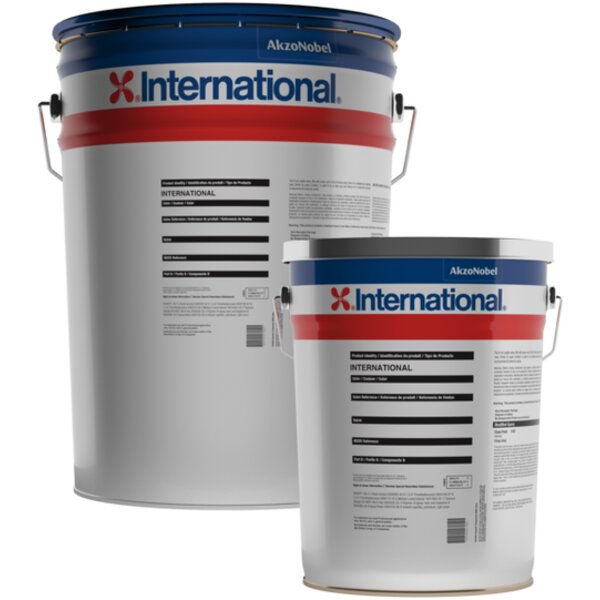
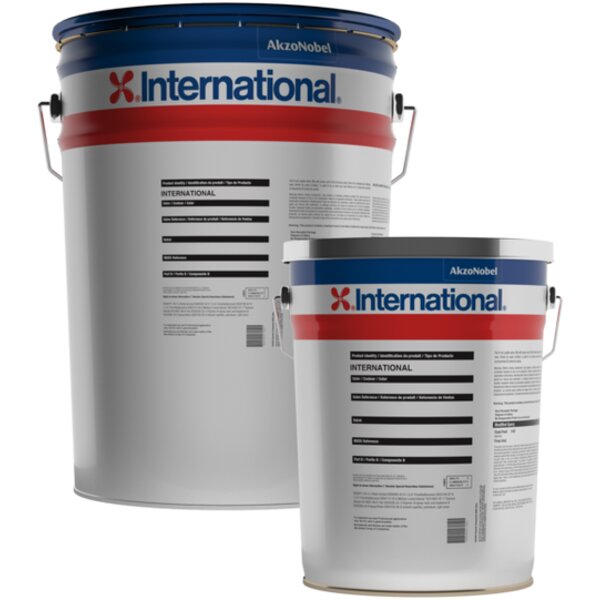
INTERFINE 629 HS PART A INDIVISIBLE KIT is the Part A base of Interfine 629HS, a high performance, two-pack, isocyanate-free, cross-linking modified acrylic finish designed for marine environments. It combines low VOC emissions with low solar absorption (LSA) pigmentation to deliver durable cosmetic protection on above-water areas, maintaining colour and gloss over time.
Formulated for use in newbuilding as well as maintenance and repair, this gloss finish is applied over approved epoxy anticorrosive primers or tie coats. With high volume solids and an efficient theoretical coverage, it supports compliance with solvent emission regulations while offering reliable application by airless spray, brush or roller.
Main features
- Isocyanate-free acrylic finish: Two-component cross-linking modified acrylic system without isocyanates.
- Low VOC formulation: 339 g/l as supplied (EPA Method 24) and 212 g/kg of liquid paint as supplied (EU Solvent Emissions Directive 1999/13/EC).
- Low Solar Absorption (LSA) pigmentation: Selected shades, such as HYA001-LSA Lt W/work Grey, are formulated for reduced solar heat absorption.
- High durability: Provides good colour and gloss retention for long-term cosmetic performance on above-water marine structures.
- Gloss finish: Brillante / Gloss sheen for a clean, high-quality appearance.
- High volume solids: 65% ±3% by volume (ISO 3233:1998) for efficient film build and reduced solvent content.
- Flexible application methods: Suitable for airless spray, conventional spray (with suitable equipment), brush and roller.
- Controlled drying and pot life: Pot life and drying times adapted to a wide temperature range from 10°C to 40°C.
- Above-water use only: Not recommended for immersed conditions.
Technical specifications
System compatibility and primers
- Substrates: Designed for use over suitable epoxy anticorrosive primers or tie coats only.
- Typical compatible primers / tie coats:
- Interbond 808
- Intergard 400
- Intergard 840
- Overcoating: May be overcoated with itself (Interfine 629HS) within the stated overcoating windows. Overcoating information is guidance only and may vary with climate.
Surface preparation
- Use in accordance with Worldwide Marine Specifications.
- All surfaces must be clean and free from oil, grease, salts and other contaminants.
- High-pressure fresh water wash or fresh-water wash as appropriate, followed by solvent cleaning to SSPC-SP1.
- Newbuilding / major refurbishment:
- Apply only over a recommended primer scheme.
- Primer surface must be dry and within its specified overcoating interval.
- Breakdown or damaged areas should be prepared to specified standard (e.g. Sa2½, ISO 8501-1:2007) and reprimed before application.
- Repair:
- Apply over a sound, recommended primer scheme, clean and dry, within overcoating intervals.
- Aged Interfine 629HS in good condition can be overcoated after thorough fresh water washing and degreasing; remove loose or flaking coatings back to a firm edge and spot prime/spot coat as required.
Applications and use cases
- Cosmetic finish for above-water marine areas: Designed as a decorative, protective topcoat for areas not subject to immersion.
- Newbuilding projects: Final gloss finish over epoxy anticorrosive schemes on superstructures and other above-water steelwork.
- Maintenance and repair: Refurbishment of existing Interfine 629HS systems or compatible primed surfaces, restoring colour and gloss.
- Brush and roller applications: In some colours, two coats may be required for uniform coverage, especially over dark undercoats and when using certain bright, lead-free colours such as yellows and oranges.
- Heat and weather-exposed structures: Low solar absorption pigmentation in selected shades helps reduce solar heating, particularly benefitting sun-exposed decks and superstructures (above water, non-immersed).
FAQ
1. What kind of product is INTERFINE 629 HS PART A INDIVISIBLE KIT?
It is the Part A base component of Interfine 629HS, a two-pack, isocyanate-free, cross-linking modified acrylic gloss finish for above-water marine use.
2. Where can this coating be used?
It is intended as a cosmetic finish on above-water areas only, for both newbuilding and maintenance and repair. It is not recommended for immersed conditions.
3. Which primers can I use under Interfine 629HS?
It should be applied over suitable epoxy anticorrosive primers or tie coats such as Interbond 808, Intergard 400 or Intergard 840, depending on the area of the vessel and application location.
4. Can it be applied directly to bare steel?
No. Interfine 629HS must always be applied over a recommended primer system. Areas of breakdown must be prepared (e.g. Sa2½) and reprimed before application.
5. What is the mixing ratio with Part B?
The mixing ratio is 7.0 parts by volume of Part A to 1.0 part by volume of Part B (curing agent HYA340). Always mix complete units as supplied.
6. How is the product applied?
Recommended methods are airless spray, with suitable tip and pressure, or by brush or roller. Conventional spray can be used with suitable proprietary equipment. Thinning is generally not recommended except with International GTA220 and only under controlled conditions.
7. What are the curing limitations?
The product will not cure adequately below 5°C. For best performance, ambient curing temperatures should be above 10°C and substrate temperature at least 3°C above dew point.
8. Is the coating low VOC?
Yes. The VOC content is typically 339 g/l as supplied (EPA Method 24) and 212 g/kg of liquid paint as supplied under the EU Solvent Emissions Directive 1999/13/EC.
9. Can I overcoat aged Interfine 629HS?
Yes, provided the existing film is intact and tightly adherent. Thorough fresh water washing and degreasing are required, and any loose or flaking material must be removed and repaired before overcoating.
10. Why might two coats be needed when brushing or rolling?
When brushing or rolling, and particularly with certain bright, lead-free colours (e.g. yellows and oranges) or over dark undercoats, two coats of Interfine 629HS may be required to achieve uniform colour and appearance.
Section 14 – Transport information
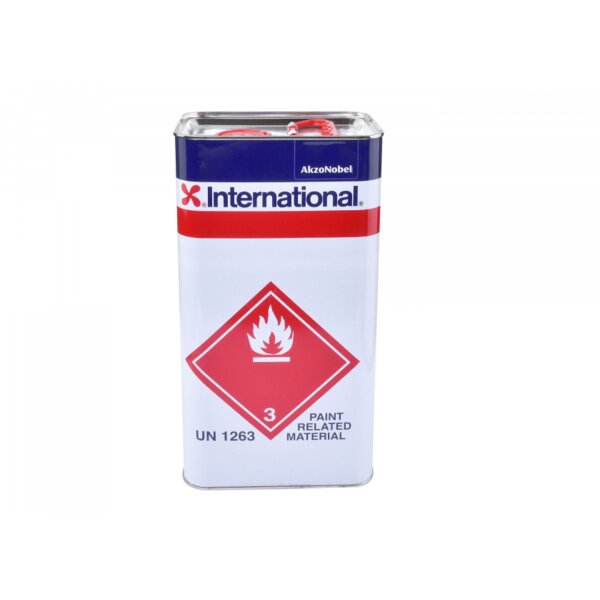
- UN number (ADR/RID, IMDG, IATA): UN1263
- UN proper shipping name: PAINT
- Transport hazard class: Class 3 (flammable liquid)
- Packing group: III
- Environmental hazards: Not classified as a marine pollutant / no environmental hazard marking required under the listed modes.
- Tunnel restriction code (ADR/RID): D/E
- Emergency schedules (IMDG): F-E, S-E
- Special precautions for user: Within user premises, always transport in closed, upright and secure containers; ensure personnel know the actions to take in case of accident or spillage.
- Transport in bulk according to IMO instruments: Not applicable.
Section 8 – Individual protection measures
The following information summarises key personal protection measures extracted from the safety data sheet for Interfine 629HS Base Yellow Part A. Final selection of PPE must be based on a site-specific risk assessment.
Engineering controls and hygiene
- Use only with adequate ventilation; apply process enclosures or local exhaust ventilation to keep airborne levels below occupational exposure limits and below lower explosion limits.
- Use explosion-proof ventilation and equipment.
- Wash hands, forearms and face thoroughly after handling and before eating, drinking or smoking.
- Contaminated work clothing should not be taken out of the workplace; wash before reuse.
- Ensure eyewash stations and safety showers are available near the work area.
Eye and face protection
- Use chemical splash goggles complying with an approved standard when there is a risk of liquid splashes, mists or vapours.
Hand protection
- Wear chemical-resistant, impervious gloves complying with EN374 or equivalent whenever handling the product.
- For prolonged or frequently repeated contact, gloves with protection class 6 (breakthrough time > 480 minutes) are recommended. Recommended materials: Viton or nitrile, thickness ≥ 0.38 mm.
- For brief contact, gloves with protection class 2 or higher (breakthrough time > 30 minutes) are recommended. Recommended material: nitrile, thickness ≥ 0.12 mm.
- Replace gloves regularly and whenever signs of damage or degradation are observed.
Body and skin protection
- Select protective clothing based on the task and risk level; garments should be approved by a competent specialist.
- Where there is a risk of ignition from static electricity, wear anti-static protective clothing (coveralls, gloves and footwear) that complies with EN 1149 or equivalent.
- Use suitable protective footwear and additional skin protection measures as required by the work conditions.
Respiratory protection
- Where ventilation is insufficient to maintain concentrations below exposure limits, wear a respirator conforming to EN140 with type A/P2 filter or better.
- Dry sanding, flame cutting or welding of the dry paint film produces hazardous dusts and fumes; wet sanding/flatting is preferred. If exposure cannot be controlled by ventilation, use suitable respiratory protective equipment.
- Respirator selection and use must be part of a formal respiratory protection programme covering fit, training and maintenance.
Contenido generado por IA