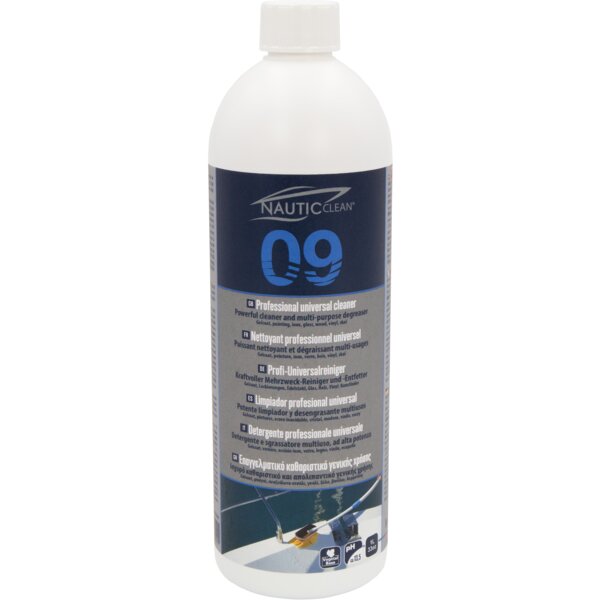
What NAUTICCLEAN 09 UNIVERSAL CLEANIING SHAMPOO is and why choose it
NAUTICCLEAN 09 UNIVERSAL CLEANIING SHAMPOO is an alkaline professional universal cleaner specially developed for the cleaning of boats. Its formula contains specific complexing and sequestering agents that solubilize limescale stains, general salts, grease, exhaust smoke residues, dust and environmental dirt. Designed for professional users, it is highly concentrated and based on surfactants of vegetable origin, without phosphates, NTA, chlorine or its derivatives, or silicones.
Main features
- Alkaline detergent for boats with a pH of 13.5 (at 20 °C), ideal for removing stubborn marine dirt.
- Special complexing and sequestering agents to dissolve limescale marks, salt deposits, grease and residues from exhaust fumes.
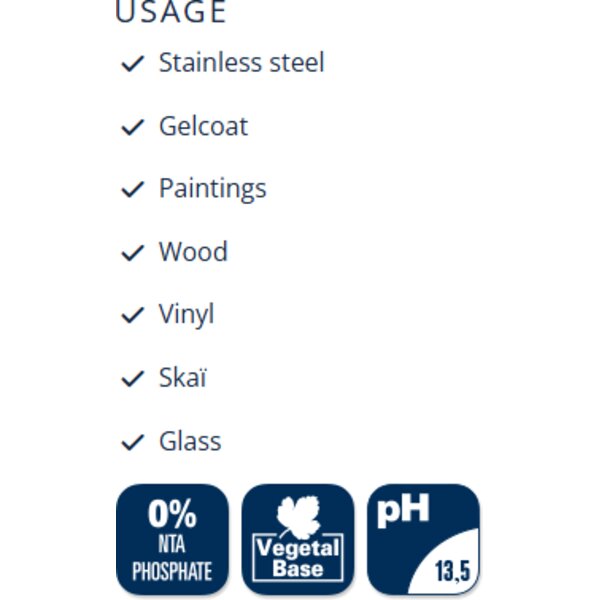
- Multi-surface compatibility: conceived especially for Gelcoat and also suitable for stainless steel, glass, plexiglas, chrome, paint, wood, vinyl and similar surfaces.
- Vegetable-origin surfactants, free from phosphates, NTA, chlorine and derivatives, and silicones.
- Highly concentrated and economical: allows low-dose dilutions for daily maintenance or higher concentrations for persistent stains.
- Biodegradability: the surfactant content complies with the biodegradability criteria of Regulation (EC) No 648/2004 on detergents.
- Physical appearance: blue liquid with characteristic odour.
- Professional-grade formulation classified as corrosive; instructions and precautions for use must be strictly respected.
Technical specifications
- Product type: alkaline universal cleaner for boats.
- Physical state: liquid.
- Colour: blue.
- Odour: characteristic.
- pH (20 °C): 13.5.
- Density (20 °C): 1.09.
- Water solubility: completely miscible in water.
- Main hazardous component on label: sodium hydroxide.
- Hazard classification (Regulation (EC) No 1272/2008):
- Skin Corr. 1B, H314: causes severe skin burns and eye damage.
- Eye Dam. 1, H318: causes serious eye damage.
- Surfactant and additive content: less than 5% (phosphonates, non-ionic surfactants, anionic surfactants).
- Biodegradability: surfactants meet the biodegradability criteria of Regulation (EC) No 648/2004 on detergents.
- Storage conditions: keep container tightly closed, protected from frost, UV rays, cold and heat, in a ventilated place. Protect from heat and direct sunlight and from light in general.
- Packaging references:
- 09-1: 1 L bottle.
- 09-5: 5 L jerrycan.
Applications and use cases
Recommended surfaces
- Gelcoat.
- Painted surfaces.
- Stainless steel.
- Glass and windows.
- Plexiglas.
- Chrome parts.
- Wood.
- Vinyl and similar materials.
Daily maintenance cleaning
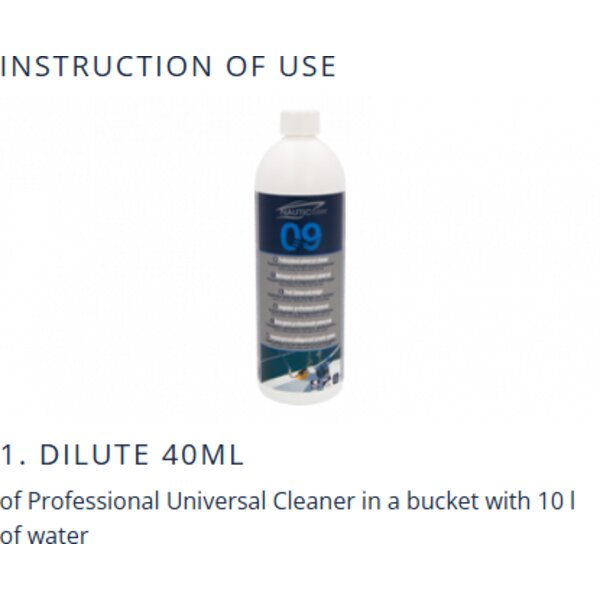
- Dilute 40 ml of NAUTICCLEAN 09 UNIVERSAL CLEANIING SHAMPOO in a 10 L bucket of fresh water.
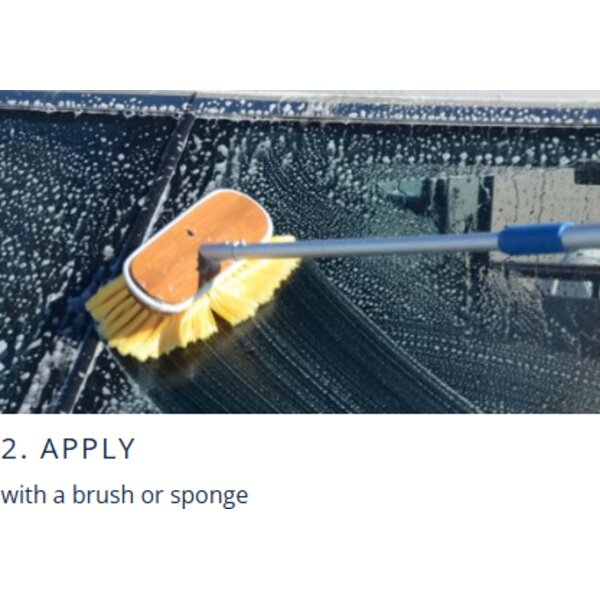
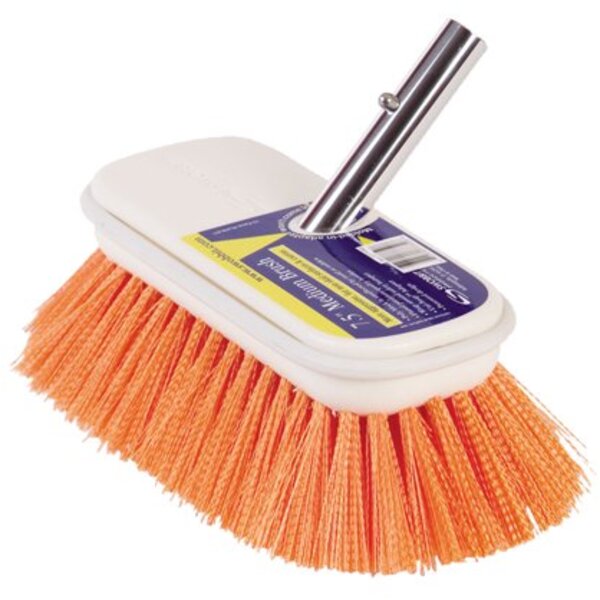
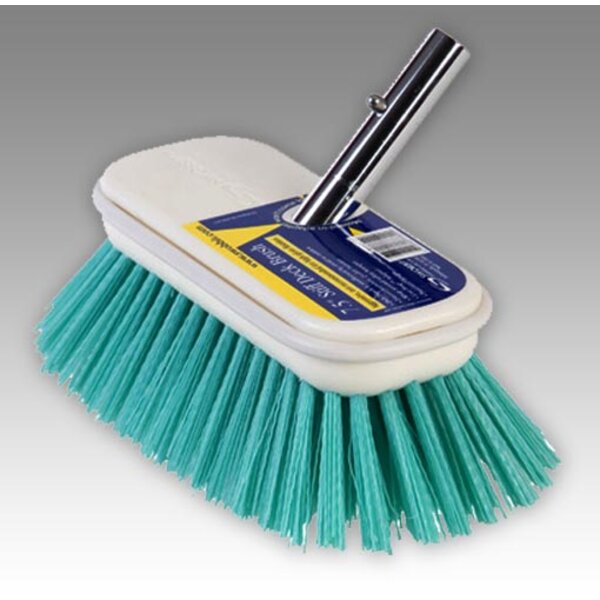
- Apply the solution with a brush or sponge.
- Scrub the surface.
- Rinse with fresh water.
- Dry using a cloth or squeegee.
Persistent or difficult stains
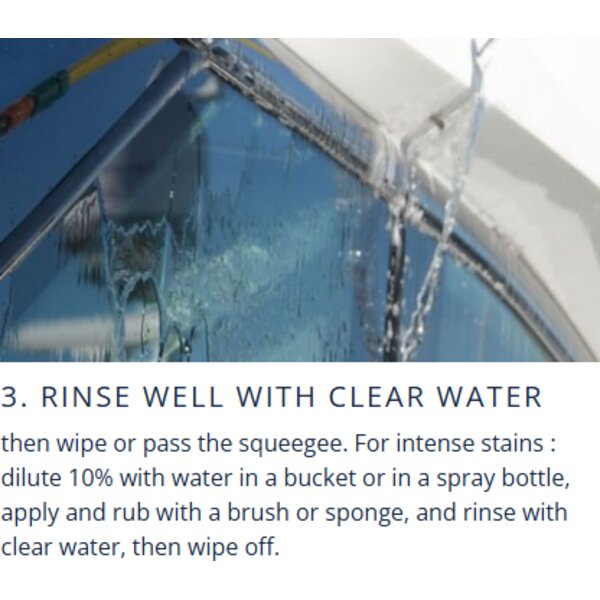
- Prepare a solution at a higher concentration, up to 10%, either in a bucket or in a spray bottle.
- Apply the product with a sponge or brush.
- Allow it to act.
- Rinse thoroughly with fresh water.
- Dry manually.
Due to its corrosive nature, the product is dangerous; always respect the instructions and safety precautions provided by the manufacturer.
FAQ – NAUTICCLEAN 09 UNIVERSAL CLEANIING SHAMPOO
1. On which materials can this cleaner be used?
It is conceived especially for Gelcoat and can also be used on stainless steel, glass, plexiglas, chrome, paint, wood, vinyl and similar surfaces.
2. What type of dirt does it remove?
It solubilizes residues of limescale stains, general salts, grease, exhaust smoke residues, dust and environmental dirt.
3. What is the recommended dilution for daily cleaning?
For daily maintenance, dilute 40 ml of product in 10 litres of fresh water.
4. How should I treat persistent or difficult stains?
Use a higher concentration solution at 10%, either in a bucket or spray bottle, apply with a sponge or brush, let it act, then rinse with fresh water and dry manually.
5. Is the product biodegradable?
The surfactants contained in the preparation comply with the biodegradability criteria set out in Regulation (EC) No 648/2004 on detergents.
6. Does it contain phosphates, NTA, chlorine or silicones?
No. It is formulated without phosphates, NTA, chlorine or its derivatives, and without silicones.
7. What is the pH of the product?
The product has a pH of 13.5 at 20 °C.
8. How should it be stored?
Keep the container tightly closed, protected from frost, UV rays, cold and heat, in a ventilated area, and protected from light.
9. Is it dangerous?
Yes. It is classified as corrosive, causing severe skin burns and serious eye damage; all safety instructions and precautions for use must be followed.
Section 14 – Transport information
- UN number: UN3267.
- Official transport designation:
- ADR: 3267 LÍQUIDO CORROSIVO, BÁSICO, ORGÁNICO, N.E.P. (HIDRÓXIDO SÓDICO, N,N-diacetic glutamic acid tetrasodium salt).
- IMDG / IATA: CORROSIVE LIQUID, BASIC, ORGANIC, N.O.S. (SODIUM HYDROXIDE, N,N-diacetic glutamic acid tetrasodium salt).
- Transport hazard class:
- ADR: class 8 (C7) corrosive substances; label 8.
- IMDG, IATA: class 8 corrosive substances; label 8.
- Packing group: III (ADR, IMDG, IATA).
- Marine pollutant: no.
- Special precautions for user: attention, corrosive substances.
- Kemler number: 80.
- EMS number: F-A, S-B.
- Segregation group: alkalis.
- Stowage category: A.
- Stowage code: SW2 clear of living quarters.
- Segregation code: SG35 stow "separated from" acids.
- Bulk transport according to MARPOL Annex II and IBC Code: not applicable.
- ADR additional data:
- Limited quantities (LQ): 5 L.
- Excepted quantities (EQ): code E1 – maximum 30 ml per inner packaging; maximum 1000 ml per outer packaging.
- Transport category: 3.
- Tunnel restriction code: E.
- IMDG additional data:
- Limited quantities (LQ): 5 L.
- Excepted quantities (EQ): code E1 – maximum 30 ml per inner packaging; maximum 1000 ml per outer packaging.
Section 8 – Individual protection measures
- General hygiene measures:
- Keep away from food, drink and animal feeding stuffs.
- Remove contaminated clothing immediately.
- Wash hands before breaks and at the end of work.
- Do not breathe dust, mist or vapour.
- Avoid contact with eyes and skin.
- Respiratory protection:
- For brief or low-level exposure: use a respiratory mask.
- For more intense or prolonged exposure: use self-contained breathing apparatus.
- Hand protection:
- Wear protective gloves impermeable and resistant to the product.
- The choice of glove material must consider breakthrough time, permeation rate and degradation; request precise breakthrough times from the glove manufacturer and respect them.
- Eye protection: tight-fitting safety goggles.
- Body protection: protective suit appropriate to the level of exposure.
*Contenido generado por IA