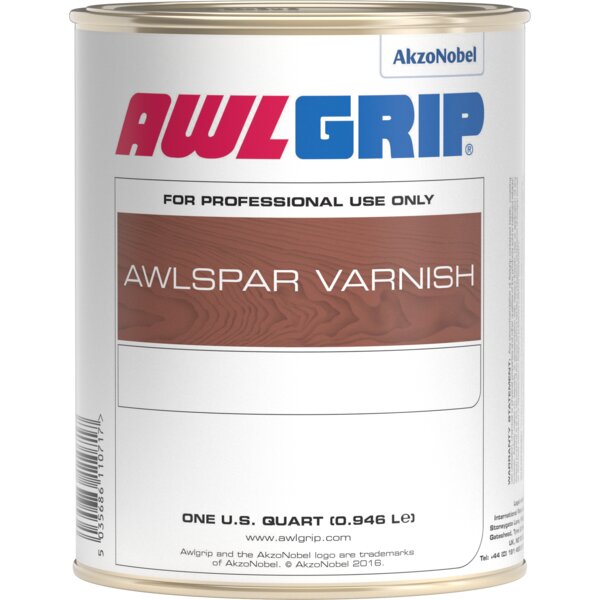
AWLSPAR CLASSIC VARNISH

Regular price 91,88€

*VAT not included

AWLSPAR CLASSIC VARNISH is a phenolic tung oil, solvent-borne spar varnish for interior and exterior brightwork above the waterline, protecting wood against water and weather. It offers fast drying, excellent recoatability, and a rich amber color with deep gloss for a highly durable protective finish.

*Contenido generado por IA

    Presentation: Container
    Capacity: 1/4 gal
    Colour:
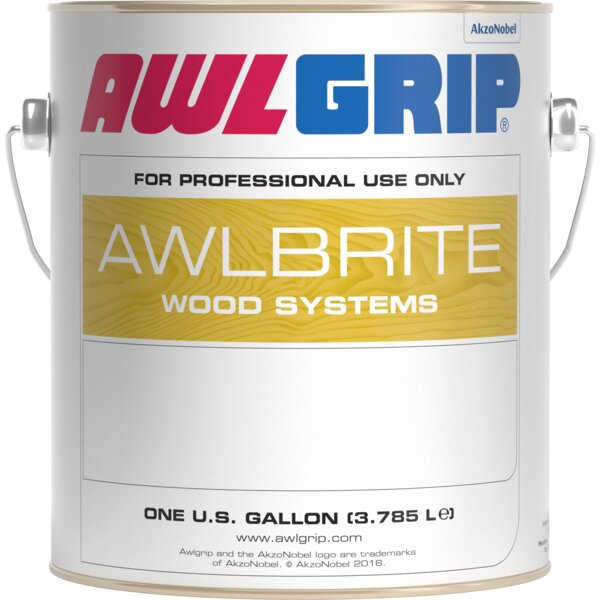
    Base: OM3131/1QTCE - AWLSPAR CLASSIC VARNISH
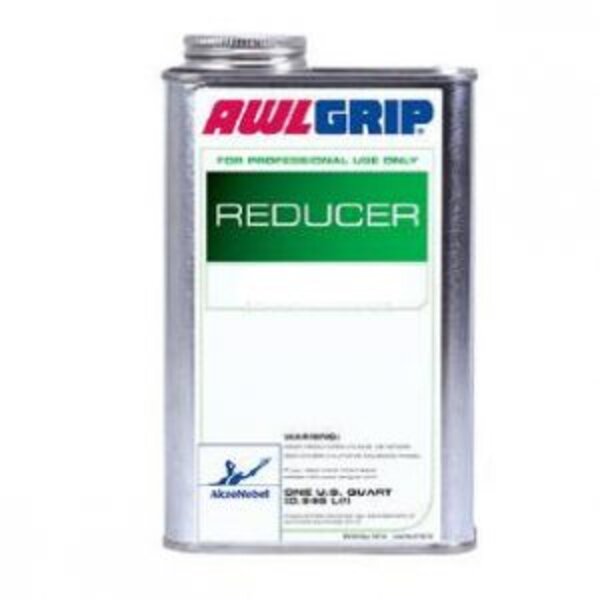
    Solvent:: OT0016/1LTCE - AWLSPAR VARNISH REDUCER

Features

    Presentation: Container
    Capacity: 1/4 gal
    Colour:
    Base: OM3131/1QTCE - AWLSPAR CLASSIC VARNISH
    Solvent:: OT0016/1LTCE - AWLSPAR VARNISH REDUCER

description

What it is and why choose it

AWLSPAR CLASSIC VARNISH M3131 is a phenolic tung oil spar varnish designed for brightwork and wood protection above the waterline. It delivers rich amber color, deep gloss and durable protection against water, weather and abrasion. Fast drying and easily recoatable, it allows multiple coats per day under the recommended conditions, making it suitable for professional and industrial applications where turnaround time is important.

Main features

  • Phenolic tung oil varnish for marine and exterior/interior wood brightwork.
  • Above-the-waterline use for protection against water and weather.
  • Fast-drying and recoatable: typically 3–4 hours between coats, up to 36 hours maximum without sanding.
  • Excellent re-coatability with itself and with Awlbrite Clear systems.
  • Rich amber color and deep gloss to enhance natural wood appearance.
  • Durable protective film helping resist abrasion, corrosion and UV-related degradation of timber when used as directed.
  • Can be built as a complete system (7–10 coats) or used as a sealer before Awlbrite Clear.
  • Brush, roller or spray application with dedicated reducers and clear application guidance.

Technical specifications

  • Product type: Phenolic varnish (phenolic tung oil varnish)
  • Color: Amber
  • Use: Solvent borne coating for interior and exterior use, above the waterline only
  • Volume solids: 48%
  • Specific gravity: 0.88 g/cm³
  • Recommended coats: 7–10
  • Recommended wet film thickness per coat: 2–3 mil (50–75 microns)
  • Recommended dry film thickness per coat: 1–1.5 mil (25–37.5 microns)
  • Theoretical coverage (per coat at 1 mil DFT): approx. 700 ft²/gal (65 m²/L)
  • Theoretical coverage at recommended total DFT (7–10 mil): approx. 70–100 ft²/gal (6.5–9 m²/L)
  • Typical coverage (data sheet variant): 19 m²/L (774.1 ft²/gal) at 1 mil DFT
  • Anticipated cure time at 25°C / 77°F, 50% RH: 24 hours to handle
  • Recoatability with itself: 3–4 hours minimum, 36 hours maximum without sanding
  • Recoatability with Awlbrite Clear / Awlbrite Quik-Fil: 3 days minimum; M3131 can also be applied over Quik-Fil after 24 hours cure
  • Minimum curing temperature: will cure from 45°F (7°C); best results 60–90°F (18–32°C)
  • Maximum and minimum surface temperature for application: do not apply to surfaces warmer than 105°F (40°C) or colder than 45°F (7°C)
  • VOC (as supplied, without reducer): approx. 404–406 g/L (about 3.4–3.39 lb/gal)
  • Available packs: Quarts and pints (pints in North America only); US Quart noted in technical sheet
  • Base: M3131
  • Brush reducer: T0016 Awlspar Reducer
  • Spray reducer: T0180 Awlspar Spray Reducer (T0016 noted as reducer in some datasheet versions)
  • Equipment cleaning: T0016 or odorless mineral spirits (where specified)
  • Typical shelf life: 2 years

Applications and use cases

Intended uses

  • Brightwork protection against water and weather above the waterline.
  • Protective and decorative coating for exterior and interior wood where a high-gloss, amber marine varnish finish is required.
  • Use as a sealer and build coats for wood that will be finished with Awlbrite Clear systems.

Suitable substrates and preparation

  • Clean, dry, smooth wood with moisture content below 14%.
  • New wood:
    • Use a marine teak cleaner or wood bleach as advised to remove excess oils and promote uniform color and adhesion.
    • Rough-sawn lumber: sand heavily to level the grain, progressing through 60/80 → 100/150 → 220 grit; then smooth sand with 320 grit.
  • Previously coated surfaces (old finishes in good condition):
    • Wash with Awlprep Surface Cleaner.
    • Sand with 220–320 grit to remove gloss.
  • Old finishes in poor condition: remove completely.
  • Compatibility test: always test a small area to make sure the varnish does not attack the old finish; if it does, remove the old coating fully.

Mixing, thinning and application

  • New wood – first coat: reduce 100% (1 part M3131 : 1 part T0016 by volume) to penetrate and seal the grain.
  • Spray application:
    • Reduce 50–100% with T0180 (or T0016 as indicated in some product data).
    • Subsequent coats: typically apply with 25% reduction.
  • Brush application:
    • After the first reduced coat, thinning is normally not required.
    • If desired, reduce up to 20% with T0016.
    • Stir only; do not shake.
  • Application methods: brush, roller or spray (pressure pot, siphon/cup gun, or HVLP) with nozzle and pressure ranges specified in the product data sheet.
  • Film build: apply light, smooth, even coats at 2–3 mil wet film thickness.
  • Multi-coat system:
    • At 77°F (25°C), 2–3 coats per day can be applied.
    • If sanding is required, allow 24 hours cure before sanding.
    • For best results, sand with 320–400 grit after every 2–3 coats.
    • As a stand-alone coating, repeat until grain is filled and covered; 7–10 coats may be needed, depending on wood type, film thickness and sanding.
  • Ultimate Brightwork System (example use case):
    • Seal bare wood and provide color with Awlspar M3131 (2–3 smooth coats).
    • Dry for minimum 72 hours at 77°F (25°C). In colder conditions, allow 7–10 days.
    • Finish with Awlbrite Clear Urethane (full gloss or semi-gloss).
  • Environmental conditions:
    • Do not apply or cure in direct sunlight, if possible.
    • Do not apply to surfaces warmer than 105°F (40°C) or colder than 45°F (7°C).
    • Do not attempt to cure below 45°F (7°C).

FAQ

  1. Is AWLSPAR CLASSIC VARNISH suitable for use below the waterline?

    No. The product data specify use above the waterline only.

  2. How many coats are recommended for a complete system?

    The technical data recommend 7–10 coats when building M3131 as a stand-alone coating, or 2–3 coats as a sealer before finishing with Awlbrite Clear.

  3. How long should I wait between coats?

    Typical recoating time is 3–4 hours, with a maximum of 36 hours without sanding. If more than 36 hours elapse, sand before recoating.

  4. Can it be sanded between coats?

    Yes. If sanding is required, allow 24 hours cure before sanding and use 320–400 grit paper, typically after every 2–3 coats.

  5. What reducers should I use for brush and spray?

    For brushing, use T0016 Awlspar Reducer (up to 20% after the first coat, if desired). For spray, reduce 50–100% with T0180 (or as specified) and 25% for subsequent coats.

  6. What is the theoretical coverage?

    At 1 mil dry film thickness, the theoretical coverage is about 700 ft² per gallon (65 m² per litre). At the recommended total dry film thickness of 7–10 mils, coverage is approximately 70–100 ft² per gallon (6.5–9 m² per litre).

  7. Can AWLSPAR CLASSIC VARNISH be overcoated with Awlbrite Clear?

    Yes. It can be overcoated with Awlbrite Clear Urethane or Awlbrite Quik-Fil. A minimum of 3 days cure is recommended before overcoating with Awlbrite Clear at 25°C (77°F).

  8. What surfaces should not be coated?

    Do not apply to wet or green timber, and do not use below the waterline.

  9. What is the shelf life of the product?

    The typical shelf life is 2 years when stored correctly in the original, unopened container.

  10. What should I do if I need more detailed performance data?

    Consultar ficha técnica del fabricante.
Section 14 – Transport information

  • UN number / ID number: UN1263
  • UN proper shipping name: PAINT
  • Transport hazard class: Class 3 (flammable liquid)
  • Packing group: III
  • Environmental hazards (ADR/RID, IMDG, IATA): No
  • ADR/RID tunnel code: (D/E)
  • IMDG emergency schedules: F-E, S-E
  • Special precautions for user: Transport within user’s premises in closed, upright and secure containers. Ensure that persons transporting the product know what to do in case of an accident or spillage.
  • Transport in bulk according to IMO instruments: Not applicable.

Section 8 – Personal protective measures

Exposure controls and individual protection

  • General hygiene: Wash hands, forearms and face thoroughly after handling. Do not eat, drink or smoke while using the product. Remove contaminated clothing and protective equipment before entering eating areas.
  • Engineering controls: Use only with adequate ventilation. Apply process enclosures, local exhaust ventilation or other engineering controls to keep airborne concentrations below recommended limits. Use explosion-proof ventilation where required.

Eye and face protection

  • Use chemical splash goggles complying with an approved standard where there is risk of splashes, mists, gases or dusts.

Hand protection

  • Wear chemical-resistant, impervious gloves complying with relevant standards when handling the product.
  • For prolonged or frequently repeated contact, a glove with protection class 6 (breakthrough time > 480 minutes according to EN374) is recommended; suggested materials include Viton or nitrile with thickness ≥ 0.38 mm.
  • For brief contact, a glove with protection class 2 or higher (breakthrough time > 30 minutes according to EN374) is recommended; suggested material nitrile with thickness ≥ 0.12 mm.
  • Replace gloves regularly and if any damage or degradation is observed.

Skin and body protection

  • Select protective clothing based on the specific task and risks, and have it approved by a specialist.
  • Where there is a risk of ignition from static electricity, use anti-static protective clothing, including overalls, boots and gloves, in line with EN 1149 requirements.
  • Use appropriate footwear and any additional skin protection measures as required by the risk assessment.

Respiratory protection

  • Based on hazard and exposure potential, select a respirator that meets the appropriate standard or certification.
  • Wear a respirator conforming to EN140 with type A/P2 filter or better when ventilation is inadequate.
  • During dry sanding, flame cutting or welding of the dry paint film, use wet sanding where possible; if exposure cannot be avoided, use suitable respiratory protective equipment.

Environmental exposure controls

  • Check emissions from ventilation and process equipment to ensure compliance with environmental legislation.
  • Where necessary, use fume scrubbers, filters or engineering modifications to reduce emissions.
*Contenido generado por IA

TECHNICAL SHEET

TECHNICAL SHEET

link

SAFETY DATA SHEETS

SAFETY DATA SHEETS

link

APPLICATION MANUAL

APPLICATION MANUAL

link

Recently Viewed

Ref. Amount*
OM3131/1QTCE 91,88 €
Page up

Product Quick View Popup

Vendor: Optimal

Product Type: Tops

SKU: 50-ABC

In stock Pre-order Now Sold out Order now, Only 10 left!
$400.00$300.00
Optimal Multipurpose Bootstrap 5 Html Template that will give you and your customers a smooth shopping experience which can be used for various kinds of stores such as fashion..
  • Black
  • Green
  • Orange
  • Blue
  • Red
  • XS
  • S
  • M
  • L
  • XL

Added to your shopping cart successfully.

Added to your shopping cart successfully.
Ditsy Floral Dress

Color: Gray

1 X $113.88

Total: $113.88