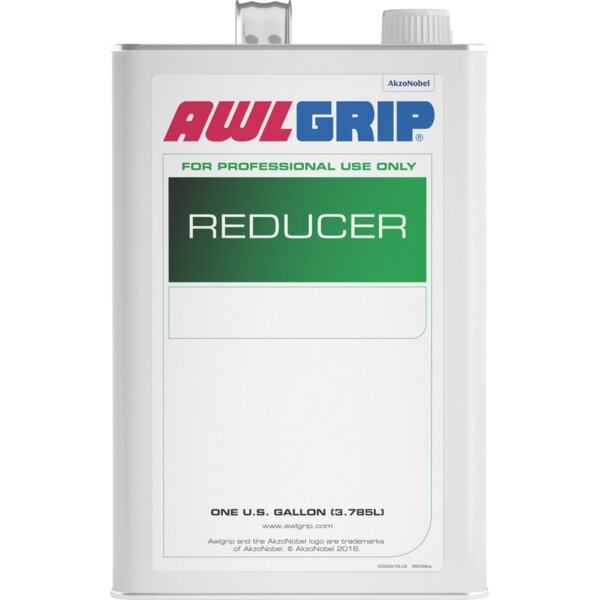
What it is and why choose it
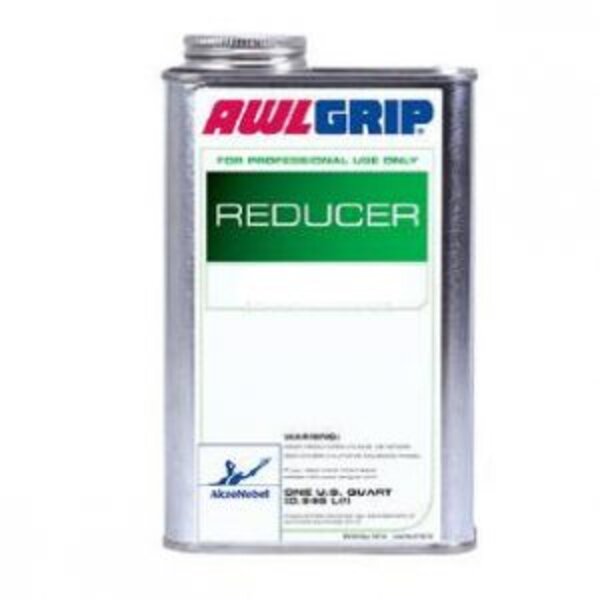
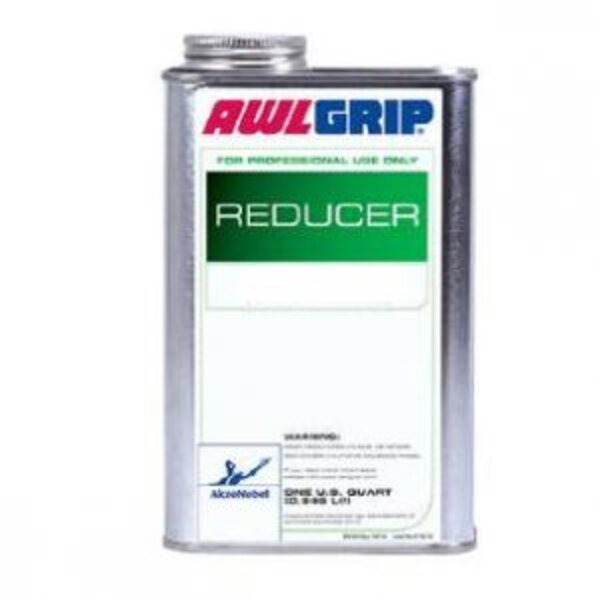
Awlgrip TOPCOAT HOT WEATHER REDUCER (Reducer T0005 Hot Weather) is a specially formulated hot weather reducer for Awlgrip, Awlcraft 2000 and Awlcraft SE urethane topcoats. It is designed for professional and industrial use to optimize flow and leveling of spray-applied topcoats when application and cure temperatures are high, typically between 90–105°F (32–41°C).
T0005 has a very slow evaporation rate. Used correctly, it helps maintain an open paint film for superior flow and appearance under hot conditions, and it can be blended with other Awlgrip spray reducers in any ratio to fine tune evaporation and flow characteristics.
Main features
- Hot weather performance: Recommended for use in Awlgrip, Awlcraft 2000 and Awlcraft SE urethane topcoats at application and cure temperatures of 90–105°F (32–41°C).
- Blendable with other reducers: Most often used as an additive, mixed with other Awlgrip spray reducers (such as T0001, T0002 or T0003) to improve flow. It is seldom used as the sole reducer.
- Flexible blending at lower temperatures: Below 90°F (32°C), T0005 can be blended in any ratio with other Awlgrip topcoat reducers to improve flow or adjust the evaporation rate of the blend.
- Very slow evaporation: Its slow solvent release keeps the film open for leveling; however, at temperatures below 75°F (24°C) it may lead to very long dry and tape times.
- High VOC solvent reducer: VOC content of 975 g/L (8.1 lb/gal).
- Compatibility with urethane topcoats: Intended for Awlgrip-family urethane topcoats; not specified for epoxy or varnish systems.
- Professional-only product: For professional use only, with specific health, safety and environmental precautions.
- Flammable liquid: Classified as a flammable liquid with a flash point of approximately 33–34°C (91–93°F) and flammable vapors.
Technical specifications
- Product type: Hot weather reducer for urethane topcoats
- Product code / SDS code: OT0005
- Recommended use: Diluent / reducer for Awlgrip, Awlcraft 2000 and Awlcraft SE urethane topcoats
- Application temperatures: Approx. 90–105°F (32–41°C) for primary use
- Evaporation rate: Very slow (relative; designed to keep film open in hot conditions)
- VOC content: 975 g/L or 8.1 lb/gal
- Physical state: Liquid
- Color: Colorless
- Odor: Solvent
- Boiling point (approx.): 114°C (237.2°F)
- Flash point (closed cup): 33°C (91.4°F) [Pensky–Martens]
- Density: 0.972 g/cm³ (DIN EN ISO 2811-1)
- Viscosity (kinematic): approx. 1 mm²/s (1 cSt) at room temperature and at 40°C (DIN EN ISO 3219)
- Solubility in water: Not soluble in cold water (OECD TG 105)
- Main hazardous ingredients (typical ranges):
- 2-Propanol, 1-methoxy-, 2-propanoate: ≥25–≤50%
- 1-nitropropane: ≥10–≤20%
- Nitroethane: ≥10–≤25%
- Key hazard classifications (CLP/GHS): Flam. Liq. 3 (H226); Acute Tox. 4 oral (H302); Eye Irrit. 2 (H319); Repr. 2 (H361); STOT SE 3 (H335, H336)
Applications and use cases
- Hot climate topcoat application: Ideal when spraying Awlgrip, Awlcraft 2000 or Awlcraft SE topcoats in climates or seasons where ambient and substrate temperatures are between 90–105°F (32–41°C).
- Flow and leveling enhancement: Used as an additive to other spray reducers to keep the paint film open longer for improved flow and reduced orange peel at elevated temperatures.
- Adjustment of reducer blends: At temperatures below 90°F (32°C), T0005 can be combined in any ratio with other Awlgrip topcoat reducers to fine tune evaporation rate and application characteristics.
Important note on low temperatures: Because of its very slow evaporation rate, using T0005 below 75°F (24°C) may cause very long drying and tape times.
Important note on flat and semi-gloss finishes: Large amounts of T0005 in flat or semi-gloss products may increase gloss. Use carefully where low-gloss finishes are required.
FAQ
1. What is TOPCOAT HOT WEATHER REDUCER used for?
It is a hot weather reducer (diluent) for Awlgrip, Awlcraft 2000 and Awlcraft SE urethane topcoats, primarily to improve flow and leveling when spraying in high temperature conditions (90–105°F / 32–41°C).
2. Can T0005 be the only reducer in the mix?
T0005 is most often used as an additive blended with other spray reducers to improve flow and evaporation balance. It is seldom used as the sole reducer.
3. Can I blend T0005 with other Awlgrip reducers?
Yes. All listed Awlgrip, Awlcraft 2000 and Awlcraft SE topcoat reducers can be blended with each other in any ratio. T0005 can be combined at any ratio with other Awlgrip topcoat reducers, especially below 90°F (32°C), to achieve the desired flow and evaporation rate.
4. How much reducer can I add to my topcoat?
Most Awlgrip and Awlcraft 2000 topcoats recommend up to 25% reduction based on the combined volume of base and converter. For example, mixing 1 quart of base with 1 quart of converter yields 2 quarts of mixed material; 25% reduction equals 0.5 quart of total reducer (which may include T0005 in the blend).
5. What happens if I use T0005 at lower temperatures?
Because T0005 evaporates very slowly, using it at temperatures below 75°F (24°C) can result in very long dry and tape times.
6. Is T0005 suitable for flat or semi-gloss finishes?
Large amounts of T0005 in flat or semi-gloss products may increase gloss. Use it sparingly and with care in these systems.
7. Is this product water-soluble?
No. The reducer is not soluble in cold water.
8. Is TOPCOAT HOT WEATHER REDUCER flammable?
Yes. It is classified as a flammable liquid (Flam. Liq. 3) with a flash point around 33–34°C (91–93°F). Its liquids and vapors are flammable.
9. Is this product for consumer use?
No. The documentation specifies that it is for professional use only.
10. Does T0005 contain substances of very high concern (PBT/vPvB)?
According to the REACH-based safety data, this mixture does not contain substances identified as PBT or vPvB.
Section 14 – Transport information
UN number: UN1263
UN proper shipping name: Paint related material / Productos para la pintura
- Transport hazard class: Class 3 (flammable liquid)
- Packing group: III
- Environmental hazards: Not classified as a marine pollutant under the supplied data.
- Applicable modes: ADR/RID, IMDG, IATA, DOT – classified consistently as UN1263, Paint Related Material, Class 3, PG III.
- IMDG emergency schedules: F-E, S-E
- ADR tunnel code: (D/E)
Special precautions for users: Transport within user premises only in closed, upright and secure containers. Ensure personnel handling transport know the emergency procedures in case of accident or spillage.
Section 8 – Personal protection measures
Exposure controls
- Engineering controls: Use only with adequate ventilation. Employ local exhaust, process enclosures or explosion-proof ventilation to keep airborne concentrations below occupational exposure limits and below lower explosive limits.
- Hygiene measures: Wash hands, forearms and face thoroughly after handling and before eating, drinking or smoking. Remove contaminated clothing and protective equipment before entering eating areas. Ensure eyewash stations and safety showers are close to workstations.
Individual protective equipment
- Eye/face protection: Safety eyewear complying with an approved standard; typically chemical splash goggles or safety glasses with side shields when there is risk of splashes or mists.
- Hand protection: Chemical-resistant, impervious gloves meeting an appropriate standard. The SDS for similar compositions recommends Viton® or nitrile gloves; in prolonged or frequently repeated contact, class 6 gloves (breakthrough time > 480 min under EN374) are indicated, with regular replacement and inspection.
- Skin and body protection: Protective clothing selected according to task and risk assessment. Where ignition from static electricity is possible, use anti-static protective clothing including coveralls, boots and gloves.
- Other skin protection: Suitable footwear and additional skin protection measures should be chosen based on the specific operation and approved by a safety specialist.
- Respiratory protection: Where ventilation is inadequate or exposure limits may be exceeded, use an appropriate respirator as part of a respiratory protection program. For related products, an EN140 half mask with A/P2 or better filter is referenced; selection must be based on a site-specific risk assessment.
Environmental exposure control
- Check emissions from ventilation and process equipment for compliance with environmental regulations. Use fume scrubbers, filters or engineering modifications if necessary to reduce emissions.
Contenido generado por IA