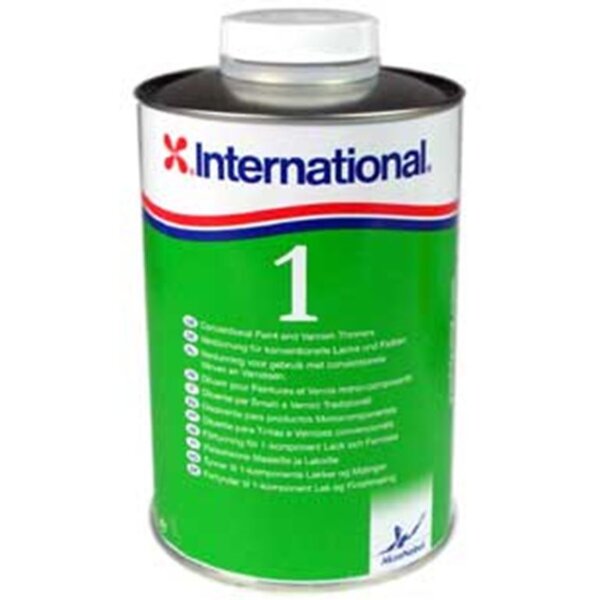
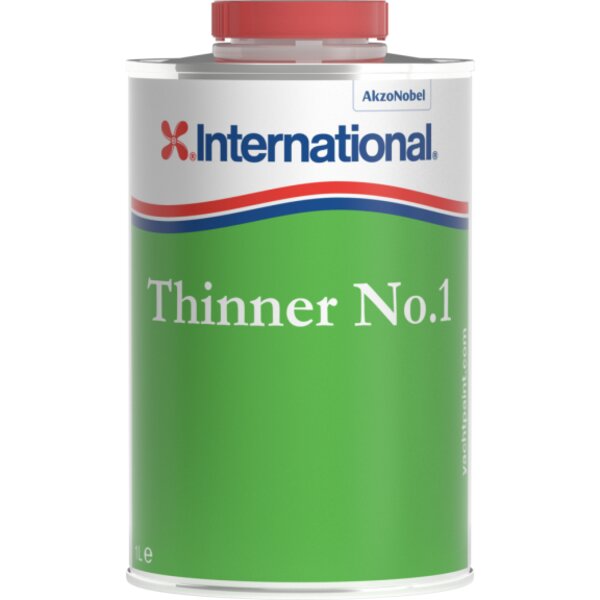
What SOLVENT N.1 is and why choose it
SOLVENT N.1 (Thinner No.1 by International Náutica) is a high quality, general purpose thinner formulated for use above the waterline with conventional, one-part paints (excluding antifoulings) and varnishes. It is ideal both for adjusting application viscosity and for wiping down and cleaning painted surfaces, ensuring a smooth, professional finish.
Main features
- General purpose thinner specifically designed for conventional one-part paints and varnishes.
- For use above the waterline, suitable for topside coatings and interior or exterior joinery.
- Excellent solvency power, optimised to thin and clean conventional marine coatings.
- Compatible substrates: conventional paints and varnishes.
- Ready-to-use packaging in 500 ml and 1 L units for easy handling on board or in the workshop.
- Clear, colour code YTA800, with 0% volume solids.
- High VOC content: 782 g/l (as supplied).
- Typical shelf life: 2 years when correctly stored between 5°C and 35°C, in a tightly closed container and out of direct sunlight.
- Flammable liquid (Flash point 35°C, closed cup) – handle and store away from ignition sources.
Technical specifications
- Product type: Thinner / solvent.
- Intended use: Thinner for one-part paints (excluding antifoulings) and conventional varnishes; surface wipe-down.
- Colour code: YTA800.
- Specific gravity / Density: 0.782–0.776 g/cm³ (approx.).
- Volume solids: 0%.
- VOC (as supplied): 782 g/l.
- Boiling point: approx. 155°C.
- Flash point: 35°C (closed cup, Pensky-Martens).
- Physical state: liquid.
- Appearance: colourless, solvent odour.
- Viscosity (kinematic): approx. 5–6 mm²/s.
- Solubility in water: not soluble.
- Main component: Hydrocarbons C9–C11, n-alkanes, isoalkanes, cyclics (<2% aromatics).
- Typical shelf life: 2 years (sealed, 5–35°C, out of direct sunlight).
- Container sizes: 500 ml, 1 L.
- CLP classification: Flam. Liq. 3 (H226), Asp. Tox. 1 (H304), STOT SE 3 (H336).
- Hazard statements: Flammable liquid and vapour; may be fatal if swallowed and enters airways; may cause drowsiness or dizziness; repeated exposure may cause skin dryness or cracking.
Applications and use cases
Recommended uses
- Thinning conventional paints for easier application by brush, roller or spray on areas above the waterline.
- Thinning conventional varnishes on timber joinery, masts, handrails and interior woodwork.
- Surface wipe-down prior to painting or varnishing: when used for surface cleaning, the cloth should be turned frequently to avoid re-applying residues.
Application hints
- Ventilation: ensure adequate ventilation and humidity control during use.
- Handling: use only with proper personal protective equipment and away from sources of ignition.
- Restrictions: no special restrictions are stated, but the product is for professional use and must not be used with antifouling paints.
FAQ – Frequently Asked Questions
-
What type of coatings is SOLVENT N.1 suitable for?
It is designed for use with conventional, one-part paints (excluding antifoulings) and varnishes, above the waterline.
-
Can it be used for surface cleaning before painting?
Yes. It can be used for surface wipe-down. When doing so, turn the cloth frequently to avoid re-applying residues.
-
Is SOLVENT N.1 flammable?
Yes. It is classified as a flammable liquid (Flash point 35°C) and must be kept away from heat, sparks, open flames and other ignition sources. No smoking nearby.
-
How should the containers be stored?
Store in tightly closed original containers, in a cool, dry and well-ventilated place between 5°C and 35°C, protected from direct sunlight and away from oxidising materials and ignition sources.
-
What is the typical shelf life?
The typical shelf life is 2 years when stored correctly in unopened containers within the recommended temperature range.
-
Is the product hazardous to health?
Yes. It may be fatal if swallowed and enters airways and may cause drowsiness or dizziness. Repeated exposure may cause skin dryness or cracking. Appropriate PPE and safe handling procedures are required.
-
Can I dispose of leftover solvent in normal waste streams?
No. Remainders of Thinner No.1 must not be disposed of through normal municipal waste routes or poured into drains or watercourses. Disposal must be arranged with authorised waste contractors and in consultation with local authorities.
-
Is SOLVENT N.1 intended for consumer use?
The safety data sheet states that it is for professional use only and not for general consumer use.
Section 14 – Transport information
- UN number (ADR/RID, IMDG, IATA): UN1263.
- Proper shipping name: PAINT RELATED MATERIAL.
- Transport hazard class: Class 3 (flammable liquids).
- Packing group: III.
- Environmental hazards: not classified as dangerous for the environment under ADR/RID, IMDG or IATA.
- ADR tunnel code: (D/E).
- IMDG emergency schedules: F-E, S-E.
- Transport in bulk according to IMO instruments: not applicable.
- Special precautions for user: within user’s premises, always transport in closed, upright and secure containers and ensure personnel know what to do in case of accident or spillage.
Section 8 – Personal protection measures
General hygiene measures
- Eating, drinking and smoking should be prohibited in areas where the product is handled, stored or processed.
- Wash hands, forearms and face thoroughly after handling and before eating, smoking or using the lavatory, and at the end of the work period.
- Remove contaminated clothing and protective equipment before entering eating areas and wash contaminated clothing before reuse.
Engineering controls
- Use only with adequate ventilation.
- Use process enclosures, local exhaust ventilation or other engineering controls to keep airborne concentrations below any recommended or statutory limits and below lower explosive limits.
- Use explosion-proof ventilation equipment in classified areas.
Eye and face protection
- Wear safety eyewear complying with an approved standard when there is a risk of exposure to liquid splashes, mists, gases or dusts.
- As a minimum, use safety glasses with side shields unless a higher level of protection is indicated by risk assessment.
Hand protection
- Wear chemical-resistant, impervious gloves complying with an approved standard when handling the product.
- For prolonged or frequently repeated contact, gloves with protection class 6 (breakthrough time > 480 minutes according to EN374) are recommended. Recommended materials: Viton or nitrile, thickness ≥ 0.38 mm.
- For brief contact, protection class 2 or higher (breakthrough time > 30 minutes according to EN374) is recommended. Recommended material: nitrile, thickness ≥ 0.12 mm.
- Gloves should be replaced regularly and whenever damage or deterioration is observed.
Skin and body protection
- Select protective clothing based on the specific task and risks, and ensure it is approved by a specialist before use.
- When there is a risk of ignition from static electricity, wear anti-static protective clothing including anti-static overalls, boots and gloves, in accordance with EN 1149 requirements.
- Use appropriate protective footwear and any additional skin protection as required by the risk assessment.
Respiratory protection
- Based on hazard and potential exposure, use a respirator conforming to EN140 with type A/P2 filter or better.
- Respirators must be used within a formal respiratory protection programme to ensure correct fit, training and maintenance.
- If local exhaust ventilation cannot adequately control exposure, suitable respiratory protective equipment is mandatory.
- During operations such as dry sanding, flame cutting or welding of dry paint films, expect dust and/or hazardous fumes; wet sanding/flatting is preferred wherever possible.
*Contenido generado por IA