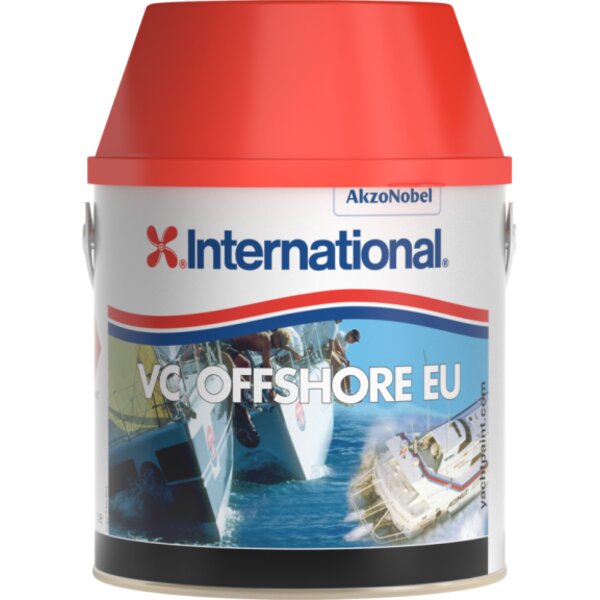
What VC OFFSHORE by International Náutica is and why choose it
VC OFFSHORE is a hard, high-performance antifouling coating from International Náutica, designed to protect boat hulls against fouling organisms such as slime, aquatic plants and animals. Suitable for both professional and consumer application, it can be used on vessels operating in fresh or salt water. Its ultra-smooth, hard and scrubbable finish is engineered to enhance speed and efficiency, making it ideal for racing sailors and powerboats that demand reliable, long-lasting performance.
This two-component exterior coating dries quickly, needs no sanding between coats and offers flexible launch times, helping to reduce downtime during maintenance while maintaining a clean, fast hull.
Main features
- High power antifouling protection against slime, aquatic plants and animals.
- Hard, scrubbable film that can be cleaned to help maintain hull speed and fuel efficiency.
- Ultra-smooth finish, particularly suitable for racing and high-speed powerboats.
- No sanding required between coats, simplifying the application process.
- Fast drying for rapid overcoating and flexible launch/immersion times.
- Usable on GRP (gelcoat), wood, steel/iron and lead hulls.
- Can be applied directly over most existing antifoulings in sound condition.
- For professional and amateur users, with spray application reserved for professional applicators.
Key technical characteristics
- Brand: International Náutica
- Product name: VC OFFSHORE (VC Offshore EU)
- Use: Two-component exterior antifouling coating
- Colours: YBB710 Dover White, YBB711 Red, YBB712 Blue, YBB713 Black
- Finish: Matt
- Specific gravity: 1.51 (average)
- Volume solids: 36% (average)
- Converter/curing agents: YBA779, YBA799
- Typical shelf life: 2 years (in closed container at 5°C to 35°C)
- VOC (as supplied): 558.7 g/L (average)
- VOC (EU solvent): 368.9 g/kg (average), EU Solvent Emissions Directive (Council Directive 1999/13/EC)
- Pack sizes: 750 mL and 2 L (availability varies by country)
Drying and immersion times
- At 5°C (41°F):
- Immersion: 6 hours
- Touch dry: 1 hour
- At 15°C (59°F):
- Immersion: 3 hours
- Touch dry: 30 minutes
- At 23°C (73°F):
- Immersion: 2 hours
- Touch dry: 20 minutes
- Maximum immersion window: 6 months between 5°C and 35°C.
Overcoating intervals (with VC OFFSHORE)
- At 5°C (41°F): minimum 3 hours, maximum: extended
- At 15°C (59°F): minimum 1.5 hours, maximum: extended
- At 23°C (73°F): minimum 1 hour, maximum: extended
Recommended film thickness and coverage
- By roller:
- 2 coats of 30 microns dry film thickness (DFT) each, total 60 microns for approx. 12 months’ service.
- Recommended DFT: 30 microns dry / 83 microns wet per coat.
- Theoretical coverage: 12 m²/L per coat.
- Practical coverage: approx. 10.8 m²/L per coat (conditions dependent).
- By spray (professional only):
- 1 coat of 60 microns DFT for approx. 12 months’ service (total 60 microns).
- Recommended DFT: 60 microns dry / 167 microns wet per coat.
- Theoretical coverage: 6 m²/L per coat.
- Practical coverage: approx. 3.6 m²/L per coat.
- High-wear areas: apply an additional stripe coat on chines, rudders, sterngear and all leading edges.
Application and use
Suitable substrates
- GRP / gelcoat
- Wood
- Steel / iron
- Lead
Not suitable for aluminium/alloy substrates or zinc-sprayed surfaces.
Surface preparation
- Existing VC OFFSHORE: Wash down with fresh water.
- Other antifoulings:
- Ensure the existing coating is in sound condition.
- Remove all fouling, loose paint and contamination by scraping and/or wet sanding.
- Use high pressure fresh-water wash (approx. 3000 psi / 207 bar).
- VC 17m or coatings containing PTFE must be wet sanded with 80–120 grit paper. Do not dry sand.
- GRP (gelcoat):
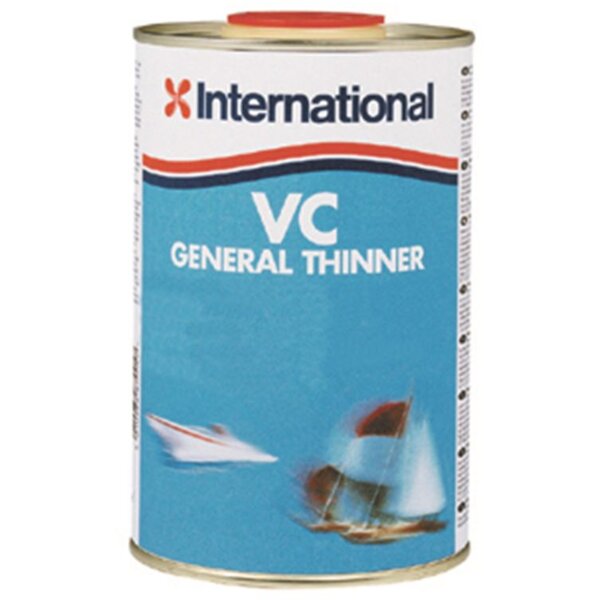
- Clean and fully degrease with VC General Thinner (YTA600).
- Lightly sand with 180–240 grit paper.
- Rinse with fresh water and allow to dry.
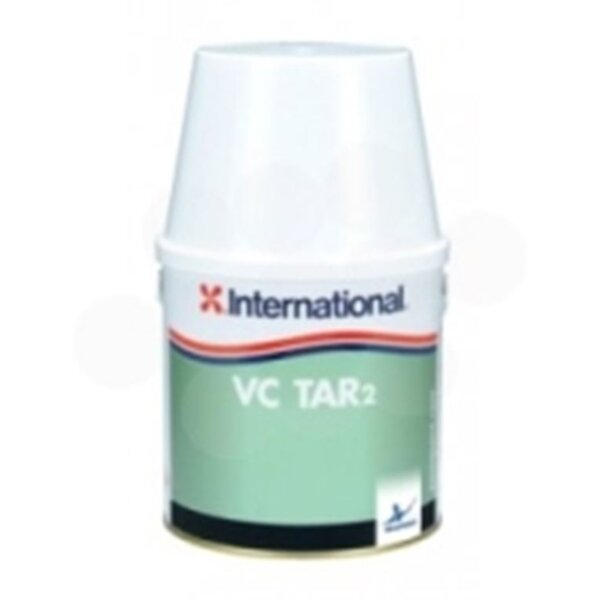
- Prime with VC Tar2 to help protect against osmosis.
- Steel: Prime bare metal with VC Tar2 to prevent corrosion.
- Lead: Prime with VC Tar2.
- Wood: Prime with Primocon.
Mixing and preparation of the product
- Stir thoroughly before use.
- Pour the powder component (stored under the plastic cap/hat) into the can.
- Stir or shake thoroughly until completely homogeneous.
- Once mixed, the product can be used for up to 7 days, provided the lid is kept on and the paint is re-mixed thoroughly before each application.
Application methods and equipment
- Roller: suitable for professional and amateur users.
- Airless spray (professional only):
- Pressure: 176–210 bar.
- Tip size: 517–521.
- Conventional spray (professional only):
- Pressure: 2–3 bar.
- Tip size: 1.5–1.8 mm.
- Airmix spray (professional only):
- Pressure: 2 bar.
- Tip size: 20–113.
- Cleaner for equipment: VC General Thinner (YTA600).
Application conditions and important points
- True colour develops after immersion.
- Apply the full calculated quantity of paint, even if this requires an additional coat.
- Correct film thickness is essential for antifouling performance and to avoid premature failure.
- Product temperature: between 5°C and 35°C.
- Ambient temperature: between 5°C and 35°C.
- Substrate temperature: at least 1°C above the dew point and not above 35°C.
Typical applications and use cases
- Racing sailboats: where a hard, ultra-smooth and scrubbable antifouling surface is needed to maximise hull speed.
- High-speed powerboats: looking for durable fouling protection without sacrificing performance.
- Performance cruising yachts: requiring a hard antifouling that can be regularly cleaned to maintain efficiency over long seasons.
- Vessels in high-fouling waters: fresh or salt water areas with intense microorganism and weed growth.
FAQ
-
On which hull materials can VC OFFSHORE be used?
It is suitable for GRP (gelcoat), wood, steel/iron and lead. It is not suitable for aluminium/alloy substrates or zinc-sprayed surfaces.
-
Do I have to sand between coats?
No sanding is required between coats of VC OFFSHORE. However, wet sanding is required when preparing certain existing antifoulings (such as VC 17m or PTFE-containing coatings) before overcoating.
-
How many coats do I need for one season?
By roller, apply 2 coats of 30 microns DFT each (total 60 microns) for approximately 12 months’ service. By spray (professional only), apply 1 coat of 60 microns DFT.
-
How soon can the boat be launched after painting?
Depending on temperature, immersion is possible approximately after 6 hours at 5°C, 3 hours at 15°C or 2 hours at 23°C. Maximum time before immersion is 6 months between 5°C and 35°C.
-
Can VC OFFSHORE be applied over old antifouling?
Yes, it can be applied directly over most types of antifoulings provided they are in sound condition and properly cleaned and prepared.
-
What thinner or cleaner should I use?
Use VC General Thinner (YTA600) to clean and degrease the surface (where specified) and to clean application equipment after use.
-
Is spray application allowed for all users?
No. For health and safety reasons, spray application (airless, conventional or airmix) must only be carried out by professional applicators following the specified safety guidance.
-
How long does the mixed product remain usable?
Once the powder component is mixed into the base and thoroughly stirred, the product can be used for up to 7 days, provided the container is kept closed and the paint is re-mixed thoroughly before use.
Section 14 – Transport information
- UN number / ID number: UN1263
- UN proper shipping name: PAINT
- Transport hazard class: Class 3 (flammable liquid)
- Packing group: III
- Environmental hazards: Classified as environmentally hazardous for transport; marine pollutant component: zinc oxide.
- ADR/RID: UN1263, PAINT, Class 3, Packing group III; tunnel restriction code: D/E. The environmentally hazardous substance mark is not required for pack sizes ≤5 L or ≤5 kg.
- IMDG: UN1263, PAINT, Class 3, Packing group III; marine pollutant (zinc oxide); emergency schedules F-E, S-E. The marine pollutant mark is not required for pack sizes ≤5 L or ≤5 kg.
- IATA: UN1263, PAINT, Class 3, Packing group III. The environmentally hazardous substance mark may appear if required by other transport regulations.
- Special precautions for user: Within user premises, always transport in closed containers that are upright and secure. Ensure personnel transporting the product know what to do in case of accident or spillage.
- Transport in bulk according to IMO instruments: Not applicable.
Section 8 – Individual protection measures
The following information summarises key personal protective measures indicated in the safety documentation for VC OFFSHORE Dover White Part A. Selection of PPE must always be based on a site-specific risk assessment.
Engineering controls and hygiene
- Use only with adequate ventilation, including local exhaust where necessary, to keep vapour levels below recommended exposure limits and below the lower explosion limit.
- Use explosion-proof ventilation and equipment where there is a risk of vapour ignition.
- Avoid eating, drinking or smoking in areas where the product is handled; wash hands, forearms and face thoroughly after use and before breaks.
- Ensure eyewash stations and safety showers are available near work areas.
Eye and face protection
- Wear chemical splash goggles meeting an approved standard when there is a risk of liquid splashes or mist.
Hand protection
- Wear chemical-resistant, impervious gloves complying with relevant standards.
- For prolonged or frequent contact, use gloves with protection class 6 (breakthrough time > 480 minutes according to EN374), recommended materials: Viton or nitrile, thickness ≥ 0.38 mm.
- For brief contact, use gloves with protection class 2 or higher (breakthrough time > 30 minutes according to EN374), recommended material: nitrile, thickness ≥ 0.12 mm.
- Replace gloves regularly and immediately if signs of damage or degradation appear.
Skin and body protection
- Wear suitable protective clothing covering body, arms and legs.
- In areas with risk of static ignition, use anti-static protective clothing including overalls, boots and gloves, in accordance with EN 1149.
- Ensure clothing contaminated with product is cleaned before reuse and is not taken off-site while contaminated.
Respiratory protection
- Where ventilation is insufficient, wear a respirator conforming to EN140 with type A/P2 filter or better.
- Dry sanding, flame cutting or welding of the dry paint film may generate hazardous dust and fumes; wet sanding/flatting is preferred. If exposure cannot be avoided, use suitable respiratory protection.
Additional safety notes
- Contains biocides. Old antifoulings must only be wet sanded. Do not dry sand or burn off old antifouling coatings.
- Spray application must be carried out only by professional applicators following all health and safety guidance.
Contenido generado por IA