What is THINNER GTA 220 and why choose it?
THINNER GTA 220 from International Marina (AkzoNobel / International Paint) is a dedicated thinner and equipment cleaner formulated specifically for use with selected International epoxy coating systems. It helps adjust the application viscosity of compatible epoxy primers and barrier coats and is widely used for cleaning spray equipment, brushes and rollers after applying these coatings.
Some details, such as exact compatible product lists for every region, may vary by market and are not fully verified here.
Main features
- Formulated for International epoxy coating systems, including products such as GELSHIELD 200, INTERPROTECT, INTERSHIELD 300 and INTERGARD 260 (product pairing may vary by region; always verify on the coating’s technical datasheet).
- Functions both as a thinner (where explicitly allowed) and as an equipment cleaner for epoxy paints and primers.
- Helps optimise application characteristics and film appearance under demanding conditions when used within the limits stated on the coating’s datasheet.
- Suitable for cleaning spray guns, hoses, brushes and rollers used with compatible epoxy systems.
- Not suitable for thinning polyurethane, silicone or fluoropolymer finishes; other dedicated thinners are specified for those systems.
- Solvent blend with a typical specific gravity of approximately 0.85 (at 20 °C), designed to be compatible with a wide range of International epoxy products.
- Supplied for professional and industrial use, subject to local VOC and transport regulations.
Technical specifications
The following parameters are taken from manufacturer documentation and safety data sheets; values may be approximate and can vary slightly by batch or region.
- Product type: Thinner and equipment cleaner for epoxy coating systems (International Marine / Protective range).
- Typical use: Thinning (where permitted) and cleaning equipment for selected International epoxy primers, tie coats and barrier coats.
- Appearance: Liquid; usually described as clear/colourless for commercial packs, although the SDS generically refers to a "coloured liquid" (this discrepancy is not fully verified).
- Specific gravity: approx. 0.85 g/ml at 20 °C.
- Volume solids: 0 % (solvent blend).
- VOC (as supplied): approx. 850 g/L, according to product data (value may differ depending on region and calculation method).
- Typical shelf life: around 2 years in unopened original containers, when stored correctly.
- Recommended storage temperature: typically between 5 °C and 35 °C; avoid extremes of heat or cold and keep containers tightly closed when not in use.
Applications and use cases
- Thinning of epoxy coatings (only where explicitly allowed):
- Used with selected International epoxy products (such as certain INTERGARD, INTERSHIELD, INTERPROTECT and GELSHIELD systems) when the corresponding product datasheet specifies GTA 220 as the correct thinner.
- Typically used in small percentages by volume to improve flow and atomisation under low-temperature, high-viscosity or otherwise demanding conditions. Over-thinning can adversely affect film build and performance.
- Cleaning of application equipment:
- For flushing spray equipment, hoses and guns after applying compatible epoxy primers and tie coats.
- For cleaning brushes and rollers during and after use with compatible epoxy systems.
- Work between coats and during stoppages:
- Helps keep tools and equipment clean during short work breaks, reducing the risk of cured epoxy blocking spray lines and nozzles.
- Marine and industrial environments:
- Designed primarily for marine and industrial maintenance painting where International epoxy coatings are specified.
- Use is governed by local regulations on VOC emissions, flammable liquids and waste disposal.
FAQ – THINNER GTA 220
1. What type of products is THINNER GTA 220 designed for?
It is designed for selected International epoxy coating systems (primers, barrier coats and tie coats). Compatibility must always be checked on the specific coating’s technical datasheet; this answer is based on typical usage and may not cover all regional variants.
2. Can I use GTA 220 with polyurethane or antifouling paints?
GTA 220 is generally not recommended for thinning polyurethane, silicone or fluoropolymer finishes. International specifies other dedicated thinners (such as certain GTA7xx grades) for those products. Always follow the coating manufacturer’s instructions.
3. Is thinning always necessary when using compatible epoxy coatings?
No. Under standard application conditions, many International epoxy products do not require thinning. GTA 220 is normally used only when the technical datasheet allows it and when conditions (e.g. temperature, equipment setup) make thinning necessary.
4. What is the main advantage of using the correct International thinner?
Using the specified thinner helps maintain the performance of the coating system (adhesion, film build, durability) while improving application characteristics such as spray pattern, flow and levelling. Using an incorrect solvent may compromise these properties; this is a general principle for solvent-borne coatings, not specific to a single batch.
5. Can THINNER GTA 220 be used purely as a cleaner?
Yes. One of its primary roles is as an equipment cleaner for spray guns, hoses, brushes and rollers that have been used with compatible International epoxy systems, provided local safety and environmental rules are followed.
6. How should I store THINNER GTA 220?
Store in tightly closed original containers, away from heat, sparks, open flames and direct sunlight, typically between about 5 °C and 35 °C. Avoid freezing and excessive heat. These conditions are derived from manufacturer data but may be expressed differently in local documentation.
7. Is THINNER GTA 220 flammable?
Yes. According to the safety data sheet, it is classified as a flammable liquid (Class 3), with a flash point around 34 °C. Handle and store it as a flammable solvent, observing all relevant regulations.
8. What personal protective equipment (PPE) is recommended?
Because it is a solvent blend that can irritate skin and eyes and may affect the respiratory system, the SDS recommends appropriate protective gloves, eye protection and, where necessary, respiratory protection. Detailed guidance is summarised in the "Individual protection measures" section below.
9. Are the exact composition and hazard classifications the same worldwide?
Not necessarily. Composition, classification and labelling can differ between regions due to local regulations and formulation changes over time. The information provided here is based on specific SDS and product data references and may not fully represent all markets or the latest revisions.
Section 14 – Transport information
The following summary is based on a referenced safety data sheet and applies to specific jurisdictions (e.g. US DOT, IMO/IMDG). Local transport regulations and classifications may differ; always refer to the current SDS for your country. Information marked as such is taken directly from the SDS and is considered verified for that document version, but may not cover all regulatory systems.
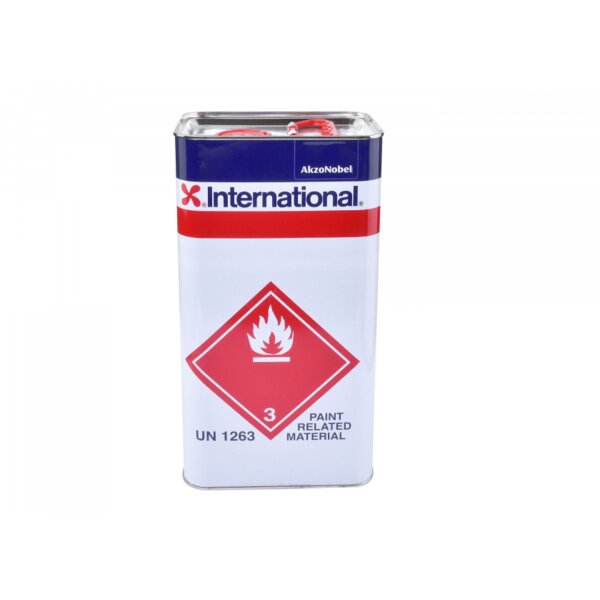
- UN number: UN 1263 (verified for the referenced SDS).
- UN proper shipping name: PAINT RELATED MATERIAL (verified for the referenced SDS).
- Transport hazard class: Class 3 – Flammable liquid (verified for the referenced SDS).
- Packing group: III (verified for the referenced SDS).
- IMDG marine pollutant: No, stated as “No (Petroleum naphtha)” in the referenced SDS.
- General transport precautions (summary):
- Classified as a flammable liquid; keep away from ignition sources, hot surfaces and open flames during transport.
- Ensure containers are properly closed, upright and secured to prevent leaks and damage.
- Observe all local, national and international regulations regarding the transport of dangerous goods.
Section 8 – Individual protection measures (PPE)
The following is a concise, good-faith summary of typical recommendations from the safety data sheet. Exact PPE requirements depend on local regulations, workplace risk assessment and operating conditions, and may change with SDS revisions.
8.1 Engineering controls
- Provide adequate general and/or local exhaust ventilation to keep vapour concentrations below applicable occupational exposure limits.
- Ensure good air circulation, especially in confined or poorly ventilated spaces.
- Emergency eyewash stations and safety showers should be available near any area where the product is handled.
8.2 Respiratory protection
- Use an appropriate, properly fitted respirator when ventilation alone cannot maintain exposure below applicable limits or where there is a risk of inhaling vapours, mists or sprays.
- The specific type of respirator (for example, organic vapour cartridge respirator) should be selected according to local regulations, exposure levels and the guidance in the current SDS.
8.3 Eye and face protection
- Use safety glasses with side shields as a minimum.
- Where splashing or spray is likely, use chemical splash goggles and, if necessary, additional face protection.
8.4 Hand and skin protection
- Wear suitable chemical-resistant gloves selected against the specific solvent blend (e.g. checking breakthrough times recommended by the glove manufacturer); the SDS does not always specify a single glove material, so selection should follow local risk assessment.
- Wear protective clothing such as solvent-resistant overalls or aprons to prevent repeated or prolonged skin contact.
- Use appropriate protective footwear if there is a risk of spills on the floor.
8.5 Hygiene measures
- Avoid breathing vapours or spray mist and avoid contact with skin, eyes and clothing.
- Wash hands and exposed skin thoroughly after handling, before eating, drinking or smoking, and after finishing work.
- Remove contaminated clothing and protective equipment before entering eating areas; clean or discard contaminated items according to local regulations.
Contenido generado por IA