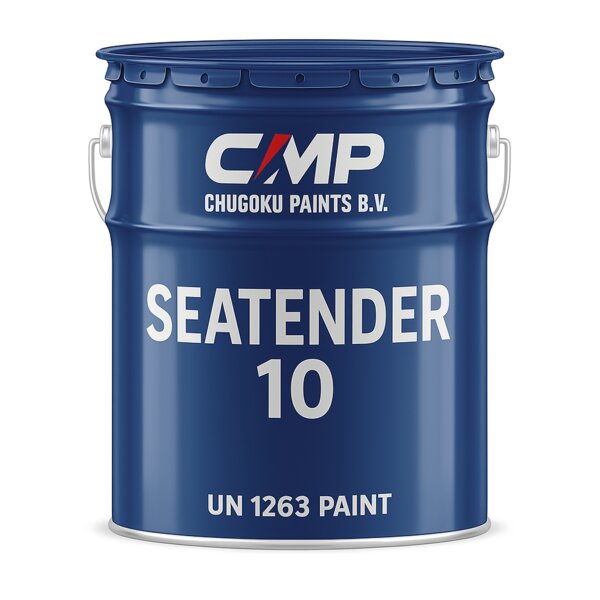
What SEATENDER 10 is and why choose it
SEATENDER 10 by Chugoku is a high-solids, tin-free erodable antifouling paint designed for long-term fouling control on immersed steel ship bottoms. Formulated for professional use, it extends drydocking intervals up to 36 months on underwater sides and up to 60 months on flat bottoms under average fouling conditions. The coating is compliant with the IMO Anti-fouling Systems Convention (AFS/CONF/26 & IMO MEP.331(76)), offering effective fouling protection without organotin biocides.
Thanks to its self-polishing behaviour and 60 ±2% volume solids, SEATENDER 10 delivers durable protection with controlled film erosion, helping maintain hull performance over extended service intervals.
Main features
- Tin-free erodable antifouling specifically developed for submerged areas of steel vessels.
- Extended service life: drydocking intervals up to 36 months on vertical underwater sides and up to 60 months on flat bottoms (under average fouling conditions).
- High solids content (60 ±2% by volume) for efficient film build and reduced solvent emission per dry film thickness.
- IMO AFS Convention compliant formulation without organotin compounds.
- Professional-grade application by airless spray, with the option of brush or roller for small areas and touch-up.
- Wide service profile: suitable for steel ships from river trading to worldwide service in average fouling waters.
- One-pack product for easier handling and mixing on board or in dockyards.
- Available colours: Black, Dark Red, Navy Blue.
Technical characteristics
Physical data
- Type: High solids, tin-free erodable antifouling paint.
- Colour: Black, Dark Red, Navy Blue.
- Volume solids: 60 ±2%.
- Flash point: 35°C.
- VOC (theoretical): 409 g/l.
- Relative density: 1.8 – 1.9 at 20°C (approx.).
- Physical state: Liquid, typical aromatic odour.
Recommended use
- Substrate: Steel hulls.
- Area: Submerged ship’s bottom (underwater sides and flat bottom).
- Service: From river trading to worldwide trade, in average fouling conditions.
- Users: Restricted to professional users only.
Surface preparation
- Remove all surface contamination such as dirt, grease, oil, etc.
- Apply over suitable existing antifoulings and primers.
- Check compatibility with the appropriate Chugoku representative before overcoating existing systems.
- Perform close high‑pressure fresh water washing up to 250 bar (3500 psi) to remove contamination and any leached layers from existing antifouling.
Application data
- Application methods: Airless spray, brush, roller*.
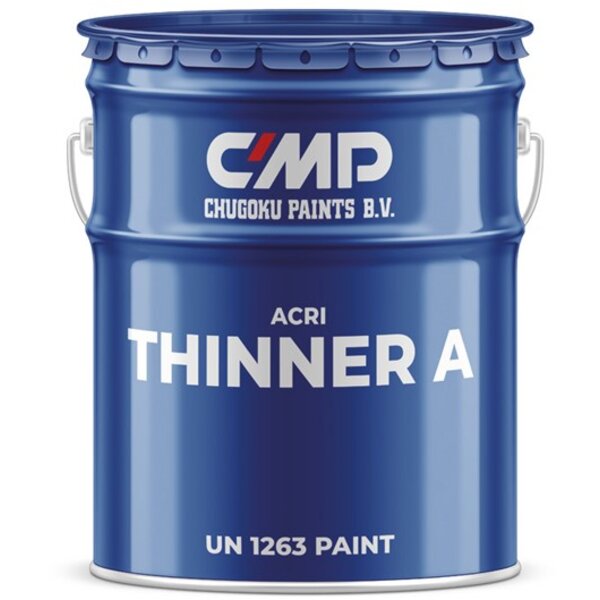
- Thinner: CR/ACRI THINNER A.
- Thinning: 0 – 7% by volume (depending on conditions and method).
- Minimum steel temperature: -5°C.
- Surface temperature: At least 3°C above the dew point.
- Maximum relative humidity: 85% R.H.
*When applied by brush or roller, additional coats are required to achieve the specified film thickness.
Airless spray parameters
- Recommended equipment: Graco 621(721), 633(733) tip sizes.
- Paint output pressure at tip: 11.7 – 14.7 MPa.
Film thickness and spreading rate
- Wet film thickness: 125 – 250 µm.
- Dry film thickness: 75 – 150 µm.
- Theoretical spreading rate: 8.0 – 4.0 m²/l (depending on specified DFT).
Compatible coatings
- Preferable preceding coatings: SILVAX SQ-K, CMP AC, BANNOH 1500 R Z.
- Preferable subsequent coatings: Consultar ficha técnica del fabricante.
Drying and overcoating times (at 100 µm DFT)
Values below are approximate and will increase with higher film thickness.
- -5°C: Surface dry 8 h; hard dry 22 h; minimum overcoating interval 22 h (no maximum); minimum time before launch 48 h.
- 0°C: Surface dry 5 h; hard dry 16 h; minimum overcoating interval 16 h (no maximum); minimum time before launch 36 h.
- 5°C: Surface dry 3 h; hard dry 12 h; minimum overcoating interval 12 h (no maximum); minimum time before launch 22 h.
- 10°C: Surface dry 2 h; hard dry 8 h; minimum overcoating interval 8 h (no maximum); minimum time before launch 16 h.
- 20°C: Surface dry 1 h; hard dry 5 h; minimum overcoating interval 5 h (no maximum); minimum time before launch 10 h.
- 30°C: Surface dry 30 min; hard dry 4 h; minimum overcoating interval 4 h (no maximum); minimum time before launch 8 h.
Before overcoating, always ensure the existing film is thoroughly dry.
Product notes
- On immersion, SEATENDER 10 may show a slight colour change without affecting its antifouling performance.
- Performance in static conditions depends on trading pattern, fouling pressure, pollution level and water temperature at the lay‑up locations.
- Below 10°C, additional thinning may be required to achieve proper application viscosity; excessive thinning reduces sag resistance and film properties.
Applications and use cases
- Commercial cargo vessels operating in rivers, coastal routes and worldwide trade looking to extend docking intervals while maintaining hull cleanliness.
- Tankers and bulk carriers requiring tin‑free antifouling systems compliant with international regulations.
- Ro‑Ro and ferry fleets operating in average fouling waters where controlled self‑polishing helps sustain speed and fuel efficiency between scheduled dockings.
- River‑sea vessels trading between inland waterways and open sea, benefiting from a single antifouling system suitable for both environments.
- Maintenance and repair jobs on compatible existing antifoulings and primers using airless spray for large areas and brush/roller for spot repair.
FAQ – SEATENDER 10
1. What type of ships is SEATENDER 10 designed for?
It is designed for steel-hulled vessels, from river trading ships to vessels in worldwide service, operating under average fouling conditions.
2. Can SEATENDER 10 be applied over existing antifouling?
Yes, it can be used over suitable existing antifoulings and primers, provided they are compatible and the surface is correctly cleaned and prepared.
3. What surface preparation is required before application?
All dirt, grease, oil and other contaminants must be removed. Existing antifouling should be high‑pressure fresh‑water washed up to 250 bar (3500 psi) to remove contamination and any leached layers.
4. Which application methods are recommended?
The primary method is airless spray. Brush and roller can be used for small areas or touch‑ups, but additional coats are needed to reach the specified dry film thickness.
5. What thinner should be used and at what level?
Use CR/ACRI THINNER A, typically at 0 – 7% by volume depending on temperature, application method and desired viscosity.
6. What are the typical dry film thickness and coverage?
The recommended dry film thickness per coat is 75 – 150 µm, with a theoretical spreading rate of about 8.0 – 4.0 m²/l, depending on the specified DFT and application conditions.
7. How long must I wait before launching the vessel?
Depending on temperature and 100 µm DFT, minimum time to launch ranges from 48 h at -5°C to 8 h at 30°C. At 20°C, a minimum of 10 h is required before launch.
8. Is SEATENDER 10 compliant with IMO antifouling regulations?
Yes. It is a tin‑free antifouling and complies with the IMO Anti‑fouling Systems Convention (AFS/CONF/26 & IMO MEP.331(76)). The product does not contain organotin compounds acting as biocides.
9. Does SEATENDER 10 pose environmental risks?
The product is classified as very toxic to aquatic life with long lasting effects and contains substances assessed as PBT/vPvB. Spillage and release to the environment must be avoided.
10. Who is allowed to use SEATENDER 10?
It is restricted to professional users. Children must be kept away until treated surfaces are dry.
Section 14 – Transport information
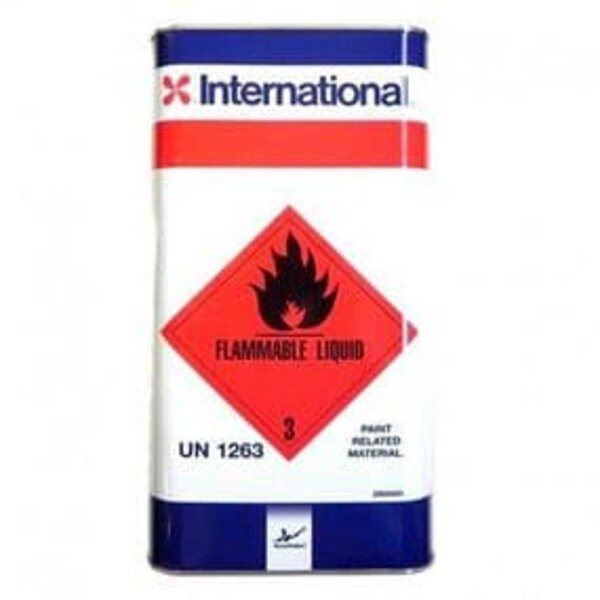
- UN number: UN 1263.
- UN proper shipping name: PAINT.
- Transport hazard class: Class 3 (flammable liquid).
- Packing group: III.
- Transport classifications:
- ADR/RID/ADN: UN 1263, Class 3, PG III, environmental hazardous substances (aquatic environment); hazard identification number 30.
- IMDG: UN 1263, Class 3, PG III, Marine Pollutant (Cuprous(I) Oxide, Zinc Oxide); EmS F‑E, S‑E.
- IATA: UN 1263, Class 3, PG III.
- Environmental hazards: Classified as dangerous for the aquatic environment; marine pollutant under IMDG.
- Transport within user’s premises: Always transport in closed, upright and secure containers. Ensure transport personnel know what to do in case of accident or spillage.
Section 8 – Personal protective measures
Exposure controls and PPE
- Engineering controls: Provide adequate ventilation using local exhaust and general extraction. If solvent vapour or particulates exceed occupational exposure limits, appropriate respiratory protection is required.
- Respiratory protection: If necessary, use a respirator compliant with EN 140 fitted with combined particulate and vapour filters to EN14387 (e.g. A2P3) with an assigned protection factor of at least 10. During spraying in booths with insufficient ventilation, use a compressed air‑fed respirator.
- Hand protection: Use chemical‑resistant gloves tested according to EN 374. Nitrile gloves are suitable for spray application. Viton or butyl/Viton gloves offer high protection for intensive solvent contact (e.g. immersion). PE gloves can be used as under‑gloves in high‑exposure or uncertain conditions.
- Eye/face protection: Wear safety goggles or a face shield meeting EN 166, designed to protect against liquid splashes.
- Skin and body protection: Wear anti‑static clothing made from natural fibres or high‑temperature‑resistant synthetic fibres. Avoid skin contact; barrier creams may be used preventively but never after exposure.
- Environmental protection: Prevent release into drains, surface waters or soil. Application, maintenance and repair should be carried out on impermeable hard standing with bunding or on soil covered with impermeable material, with all spills collected for reuse or disposal.
- General handling precautions: Keep away from heat, hot surfaces, sparks, open flames and other ignition sources. Do not breathe vapours or spray. Avoid contact during pregnancy and while nursing. Smoking, eating and drinking are prohibited in the application area.
Contenido generado por IA