What is SEAJET BIOCLEAN ECO CLEAR and why choose it?
SEAJET BIOCLEAN ECO CLEAR is a biocide-free, silicone foul-release coating designed for underwater hulls. It forms a special low-adhesion film that limits the attachment of fouling in both fresh and salt water. Any growth that does appear is only loosely attached and can be removed easily by water movement or simple washing with a sponge, helping to keep the hull clean with minimal maintenance.
Main features
- Biocide-free technology: foul-release coating based on silicone, without biocides.
- For underwater hulls: suitable for long-term protection against fouling in fresh and salt water environments.
- Clear finish: transparent coating (colour: clear).
- Easy cleaning: fouling can be removed by water movement or by hose and sponge, leaving the coating like new.
- Self-recoatable: SEAJET BIOCLEAN ECO should only be repainted with SEAJET BIOCLEAN ECO.
- Compatible substrates: for use over suitably primed GRP, wood, steel and aluminium.
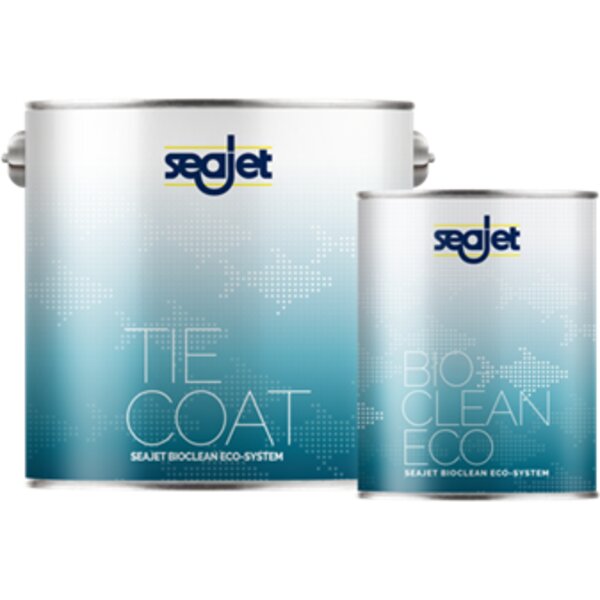
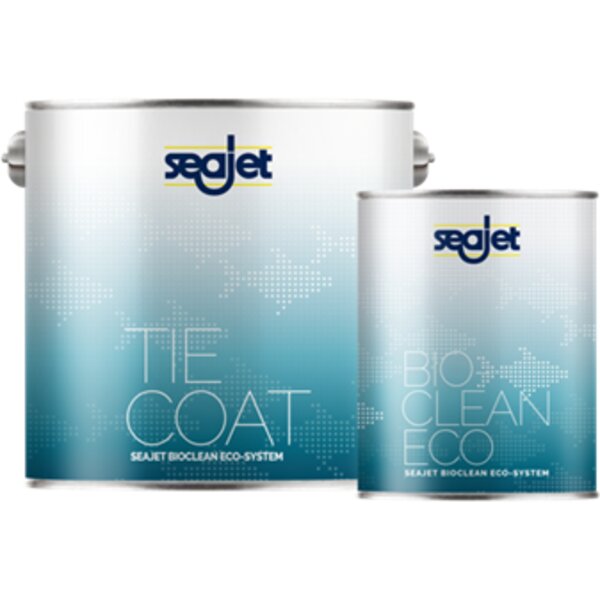
- System product: applied over SEAJET TIE COAT as the preceding coating.
- One-pack product: no mixing ratio calculation required.
Technical specifications
- Brand: Seajet
- Product name: SEAJET BIOCLEAN ECO CLEAR
- Type: biocide-free silicone foul-release coating for underwater hulls
- Colour: Clear
- Volume solids: 94 ±2 %
- VOC (theoretical): 51 g/l
- Flash point: 56°C
- Mixing ratio: One pack product
- Pack sizes: 0.75 L, 2.5 L
- Recommended dry film thickness per coat: 94 µm (100 µm wet)
- Spreading rate (theoretical): 10.0 m²/l
- Application methods: Brush, roller, airless spray (please consult Seajet Department first for airless spray)
- Thinner: SEAJET THINNER A
- Thinning (airless spray): 0 – 1 % by volume
- Spray details (airless): nozzle tip Graco 619 or 719; paint output pressure 17.7 – 20.6 MPa
- Maximum relative humidity during application: 85% R.H.
- Ambient temperature during application: min. 5°C – max. 35°C
- Product temperature during application: min. 5°C – max. 35°C
- Substrate temperature during application: min. 7°C – max. 35°C
- Suitable substrates (with primer): GRP, wood, steel, aluminium
- Preceding coating: SEAJET TIE COAT
- Subsequent coating: SEAJET BIOCLEAN ECO
- Shelf life: minimum 2 years at 20°C
Drying and overcoating times (at 100 µm DFT)
- 5°C:
- Surface dry: 50 min
- Hard dry: 8 hours
- Overcoating interval: min. 8 hours, max. 5 days
- Dry to launch: 1 day
- 10°C:
- Surface dry: 40 min
- Hard dry: 6 hours
- Overcoating interval: min. 6 hours, max. 5 days
- Dry to launch: 1 day
- 20°C:
- Surface dry: 30 min
- Hard dry: 5 hours
- Overcoating interval: min. 5 hours, max. 5 days
- Dry to launch: 1 day
- 30°C:
- Surface dry: 20 min
- Hard dry: 4 hours
- Overcoating interval: min. 4 hours, max. 5 days
- Dry to launch: 1 day
Drying times and overcoating intervals will increase with increasing film thickness. Before re-coating, always check that the existing paint film is through dry.
Applications and use cases
Recommended areas of use
- Underwater hulls operating in fresh water.
- Underwater hulls operating in salt water.
- Vessels where a biocide-free, foul-release solution is required.
Surface preparation and application guidelines
New application
- Ensure the substrate (GRP, wood, steel, aluminium) is suitably primed.
- Apply SEAJET TIE COAT according to the system specification.
- When using SEAJET BIOCLEAN ECO for the first time, apply 2 coats over SEAJET TIE COAT.
Re-coating over old SEAJET TIE COAT
- Wash and degrease the surface.
- Repair only damaged areas by carefully abrading with P-180 abrasive paper.
- Wipe the abraded area with thinner and touch up with SEAJET TIE COAT.
- Apply two fresh coats of SEAJET BIOCLEAN ECO.
Cleaning in service
- SEAJET BIOCLEAN ECO limits the adhesion of fouling due to the special properties of its film.
- For removing any fouling growth, use a light pressure wash or clean by hose pipe and sponge.
- This method avoids damaging the coating and leaves it looking like new.
Important application notes
- Due to the presence of silicon compounds, contamination of other areas by overspray should be avoided, as it can result in failure in those areas.
- Brushes, rollers and spray lines should be dedicated to this product or be discarded after use.
- Mask areas close by to avoid overspray.
- In static conditions, expected performance depends on trading pattern and environmental conditions such as fouling activity, pollution levels and water temperature at the static location.
- In case of brush or roller application, more layers may be required to achieve the specified film thickness (values given are based on roller application).
FAQ
-
Is SEAJET BIOCLEAN ECO CLEAR an antifouling paint?
No. It is a biocide-free silicone foul-release coating that works differently from traditional antifoulings by limiting the adhesion of fouling.
-
On which substrates can I apply SEAJET BIOCLEAN ECO CLEAR?
It is suitable for use over suitably primed GRP, wood, steel and aluminium when applied over SEAJET TIE COAT.
-
What primer should I use before applying this product?
The specified preceding coating is SEAJET TIE COAT.
-
How many coats are recommended for a new application?
When using for the first time, apply 2 coats of SEAJET BIOCLEAN ECO over SEAJET TIE COAT.
-
Can I recoat SEAJET BIOCLEAN ECO with another product?
No. SEAJET BIOCLEAN ECO should only be repainted by itself.
-
How do I clean fouling from a hull coated with SEAJET BIOCLEAN ECO?
Use a light pressure wash or clean with a hose and sponge. Fouling is only loosely attached and can be removed easily.
-
What are the recommended application conditions?
Apply between 5°C and 35°C ambient and product temperature, with substrate temperature between 7°C and 35°C and maximum relative humidity of 85%.
-
How long must I wait before launching the vessel?
At 5°C, 10°C, 20°C or 30°C, the minimum time before launching is 1 day, based on a dry film thickness of 100 µm.
-
What thinner should be used?
Use SEAJET THINNER A. For airless spray, the thinning range is 0–1% by volume.
-
How should I handle overspray risk?
Mask nearby areas carefully and dedicate brushes, rollers and spray lines to this product, or discard them after use, to avoid silicone contamination of other surfaces.
Section 14 – Transport information
- UN number or ID number: UN 1263
- UN proper shipping name: PAINT
- Transport hazard class: 3
- Packing group: III
- Marine pollutant (IMDG): No
- ADR / RID / ADN: Carriage in accordance with 2.2.3.1.5 – viscous substances up to 450 litre packs.
- IMDG: Transport in accordance with 2.3.2.5 of the IMDG Code – viscous substances up to 30 litre.
- Air transport: The viscosity exemption provision does not apply to air transport.
- General transport precautions: The product should stay in a securely closed container during transport. Always transport in closed containers that are upright and secure, and ensure that persons transporting the product know what to do in the event of an accident or spillage.
Section 8 – Personal protective measures
Personal protection advice and additional information can be obtained from the product Safety Data Sheet. The minimum safety precautions in dealing with this paint are:
- Observe the precautionary notices displayed on the container.
- Provide adequate ventilation during application and drying.
- Avoid skin contact and inhalation of spray mist or vapours.
- If the product comes into contact with the skin, wash thoroughly with lukewarm water and soap or suitable cleaner.
- If the eyes are contaminated, irrigate with water and seek medical advice immediately.
- Since the product contains flammable materials, keep away from sparks and open flames and do not smoke in the area.
- Use appropriate personal protective equipment as required, such as suitable gloves, eye/face protection and, where necessary, respiratory protection and protective clothing.
Contenido generado por IA