What is Seajet 132 Polyurethane Topcoat and why choose it?
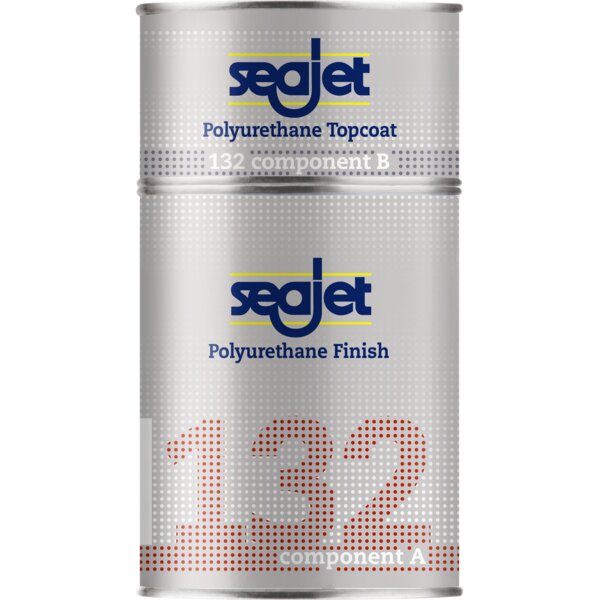
Seajet 132 Polyurethane Topcoat is a high-performance, two-component polyurethane enamel designed as an ultimate performance topcoat for long-term gloss and colour retention. It forms a very tough, durable and abrasion-resistant film, providing a long-lasting decorative and protective finish on suitably primed GRP, wood and steel surfaces.
Thanks to its high solids content and optimised application properties, Seajet 132 delivers a smooth, high-gloss finish with excellent colour stability, whether applied by spray, brush or roller.
Main features
- Two-component polyurethane system for superior durability and resistance.
- Ultimate gloss and colour retention for long-term aesthetic performance.
- Tough, abrasion-resistant film that withstands mechanical wear.
- Versatile application methods: airspray, brush or roller (airless spray not advised).
- Direct-to-GRP option: can be applied directly to suitably prepared fibreglass, or over Seajet 117 Multipurpose Epoxy Primer for a more even colour.
- Wide colour range: Pure white, cream, oyster white, mid blue, navy blue, black, signal red, racing green (availability may vary).
- Optimised drying: surface dry in about 2 hours and hard dry in about 8 hours at 20 °C (30 µm dry film thickness).
- High theoretical spreading rate of approximately 16.3 m²/L per coat at 30 µm DFT.
Technical specifications
- Product type: Two-pack polyurethane topcoat.
- Recommended use: Final topcoat over suitable primers and substrates.
- Components: Base and hardener (two-pack product).
- Mixing ratio (by volume): Base 75 : Hardener 25.
- Pack size: 1 L set.
- Colours: Pure white, cream, oyster white, mid blue, navy blue, black, signal red, racing green.
- Volume solids: 49 % ±2.
- VOC (theoretical): 433 g/L.
- Flash point: 43 °C.
- Recommended film thickness per coat:
- Theoretical spreading rate: 16.3 m²/L at 30 µm DFT.
- Application methods: Airspray, brush, roller (airless spray not advised).
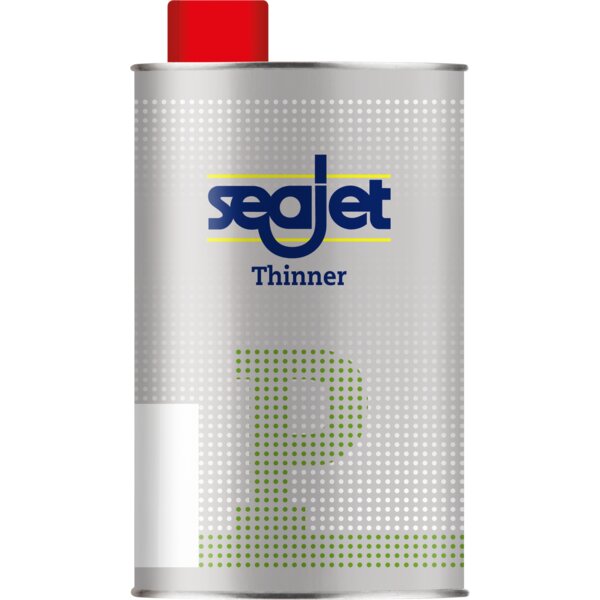
- Recommended thinner: Seajet Thinner P.
- Thinning: 15–25 % by volume (depending on paint and substrate temperature).
- Spray data (airspray):
- Nozzle tip: 1.4–1.8 mm.
- Paint output pressure: 3 bar.
- Application conditions:
- Ambient temperature: min. 5 °C – max. 35 °C.
- Product temperature: min. 5 °C – max. 35 °C.
- Substrate temperature: min. 7 °C – max. 35 °C.
- Maximum relative humidity: 80 % RH.
- Drying and overcoating at 20 °C (30 µm DFT):
- Surface dry: approx. 2 hours.
- Hard dry: approx. 8 hours.
- Minimum overcoating interval: 24 hours.
- Pot life: approx. 6 hours.
- Induction time: not required.
- Suitable substrates: Suitably primed GRP (fibreglass), wood, steel.
- Preceding coating: Seajet 117 Multipurpose Epoxy Primer.
- Subsequent coating: Seajet 132 Polyurethane Topcoat (multi-coat system).
- Shelf life: Minimum 3 years at 20 °C (in unopened containers).
- Storage temperature: 0–40 °C, in a dry, cool, well-ventilated place away from direct sunlight and sources of heat and ignition.
Applications and use cases
- High-gloss finishing system on suitably primed GRP, wood and steel structures.
- Durable topcoat where long-term colour and gloss retention are required.
- Repair and maintenance projects over existing coatings in good condition, after appropriate surface preparation.
Surface preparation and application guidance
- Surfaces in poor condition: Remove old paint layers by sanding or stripping.
- Existing paint in good condition or GRP:
- Clean the surface thoroughly.
- Wash down with fresh water and allow to dry.
- Sand with P180–P280 abrasive paper.
- Clean the surface with a tack rag.
- GRP (fibreglass):
- May be coated directly with Seajet 132 Polyurethane Topcoat after preparation, or
- First apply Seajet 117 Multipurpose Epoxy Primer as an undercoat to obtain an even colour.
- Wood, steel and aluminium: Must be primed with appropriate primers before application of Seajet 132.
- Number of coats: Apply a minimum of two coats of Seajet 132 Polyurethane Topcoat.
- Intercoat sanding: Sand between coats with P320–P400 abrasive paper for a smoother finish and remove dust with a tack rag.
- Application by brush/roller:
- Use a short hair mohair or foam roller suitable for polyurethanes, followed by brushing out with a soft, long-haired, good quality brush to level the film.
- When using brush or roller, additional coats may be required to reach the specified dry film thickness.
- Environmental conditions: Avoid painting when damp or in direct sunlight. Dry mornings are recommended.
Mixing instructions
- Stir the base thoroughly.
- Add the hardener to the base while mixing (75:25 by volume).
- Stir well until a homogeneous mixture is obtained.
- Add Seajet Thinner P as required (15–25 % by volume) and mix thoroughly.
- Use the mixed paint within the indicated pot life.
FAQ
How many coats of Seajet 132 Polyurethane Topcoat should I apply?
Apply a minimum of two coats. When using brush or roller, additional coats may be needed to achieve the specified dry film thickness.
Can I apply Seajet 132 directly onto fibreglass?
Yes. Seajet 132 Polyurethane Topcoat can be applied directly to suitably prepared GRP (fibreglass), or over Seajet 117 Multipurpose Epoxy Primer if a more even colour is required.
Which thinner should I use and how much?
Use Seajet Thinner P. The typical thinning range is 15–25 % by volume, depending on paint and substrate temperature.
What is the recommended drying time before recoating?
At 20 °C and 30 µm dry film thickness, the minimum overcoating interval is 24 hours.
Is airless spray application recommended?
No. Airless spray is not advised as an application method for this product.
What are the ideal application conditions?
Apply between 5–35 °C ambient temperature (product 5–35 °C, substrate 7–35 °C) with a maximum relative humidity of 80 % and avoid damp conditions or direct sunlight.
How should I prepare existing coatings in good condition?
Clean the surface, wash with fresh water, allow to dry, sand with P180–P280 abrasive paper and wipe with a tack rag before applying Seajet 132.
What is the shelf life of Seajet 132 Polyurethane Topcoat?
The product has a minimum shelf life of 3 years at 20 °C in unopened containers stored correctly.
Can I use Seajet 132 on wood or steel?
Yes, provided the wood or steel is first primed with appropriate primers. Seajet 117 Multipurpose Epoxy Primer is specified as a preceding coat.
What should I do if I need more detailed technical performance data?
Consultar ficha técnica del fabricante.
Section 14 – Transport information
- UN number / ID number: UN 1263.
- Proper shipping name: PAINT.
- Transport hazard class: Class 3 (flammable liquid).
- Packing group: III.
- Hazard identification number (ADR): 30.
- Marine pollutant: No.
- Transport condition notes: Always transport in securely closed containers, upright and secured. Ensure personnel know what to do in case of accident or spillage.
Section 8 – Personal protective measures
The following key precautions are derived from the product safety data information and should be observed when handling and applying Seajet 132 Polyurethane Topcoat.
Exposure controls and ventilation
- Provide adequate ventilation using local exhaust and general extraction to keep vapour and particulate levels below occupational exposure limits.
- During spraying inside confined or spray booth areas, where ventilation alone cannot control exposure, use a compressed air-fed respirator until solvent vapour and particulates have fallen below exposure limits.
- Avoid dry sanding where possible; use wet sanding to minimise dust. If dry sanding, cutting or welding on the dry film cannot be avoided, use suitable respiratory protection.
Respiratory protection
- When there is a risk of exceeding exposure limits, use a respirator conforming to EN 140 fitted with a combined particulate and vapour filter to EN 14387, with an assigned protection factor of at least 10 (e.g. A2P3).
Hand protection
- Use chemical-resistant gloves tested to EN 374 for repeated or prolonged contact.
- Nitrile gloves offer good protection during spray application.
- Viton gloves offer good protection for intense solvent contact (e.g. immersion).
- Inspect gloves regularly and replace at the first sign of damage; follow the glove manufacturer’s instructions on use, storage and maintenance.
- Use PE gloves as under-gloves in high exposure or uncertain chemical conditions.
Eye and face protection
- Wear safety eyewear tested to EN 166, designed to protect against liquid splashes.
Skin and body protection
- Wear protective clothing and footwear that are anti-static and resistant to solvents.
- Use clothing made of natural fibre or high-temperature-resistant synthetic fibre.
General safety and hygiene measures
- This product is a flammable liquid and vapour; keep away from sparks, open flames and all ignition sources. Do not smoke in the work area.
- Avoid skin and eye contact and avoid inhalation of vapours and spray mist.
- Do not eat, drink or smoke during use. Wash hands and exposed skin thoroughly after handling.
- Prevent release to drains or watercourses.
- Dispose of paint residues and contaminated containers as hazardous waste according to local regulations (e.g. waste code 08 01 11* for waste paint and varnish containing organic solvents or other hazardous substances).
*Contenido generado por IA.