What is Intergard 5000 Part A Kit Indivisible and why choose it?
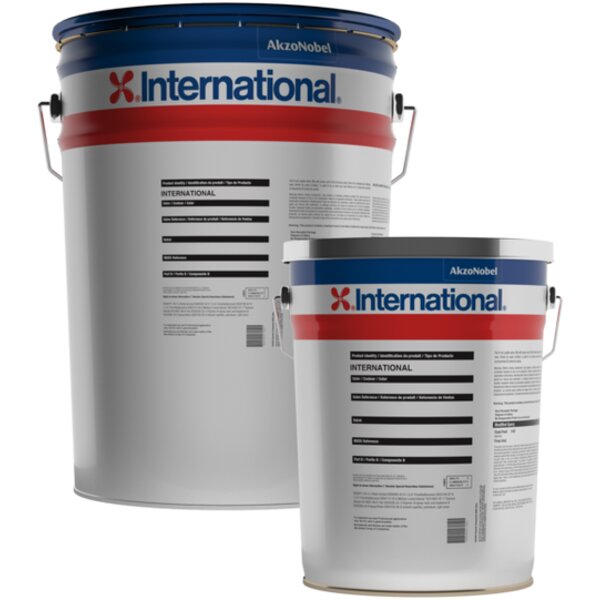
Intergard 5000 Part A Kit Indivisible is the aluminium pigmented base component (Part A) of a two-component, epoxy anticorrosive coating system from International Marina. Designed as a high-solids, tar-free, surface-tolerant universal primer, it forms part of the Intergard 5000 system for demanding marine and industrial environments. When correctly mixed with its dedicated curing agent, it provides durable corrosion protection on newbuilds, maintenance and repair projects, and on-board maintenance, including areas that may be damp but are drying.
Main features
- Two-component epoxy system: Part A aluminium base to be mixed with the specified curing agent (Part B) for interior and exterior use.
- High volume solids primer: Overall Intergard 5000 system offers 82% ±2% volume solids for reduced solvent content and high film build.
- Surface-tolerant: Can be applied over mechanically prepared shop primers or properly grit blasted, hydroblasted, or mechanically cleaned steel surfaces.
- Damp-surface tolerant: Intergard 5000 can be applied to damp but drying substrates (not wet or with standing water).
- Aluminium finish: Part A supplied as aluminium (silver) colour to form the first coat in two-coat schemes.
- Semi-gloss appearance: The full system cures to a semi-gloss finish.
- Flexible application methods: Suitable for airless spray, brush and roller (brush/roller recommended for smaller areas).
- Certified performance when part of approved schemes: Including fire resistance (surface spread of flame, fire propagation, smoke and toxicity) and suitability for food contact for carriage of grain.
- For professional and industrial use: Intended for use by trained applicators under appropriate safety and handling procedures.
Technical specifications
- Product type: Epoxy anticorrosive primer (Part A of two-component system)
- Colour (Part A): KBA501 – Aluminium (silver)
- Finish (system): Semi-gloss
- Curing agent (Part B): KBA505
- Mix ratio (A:B): 4 parts by volume Part A to 1 part by volume Part B
- Volume solids (mixed system): 82% ±2% (ISO 3233:1998)
- Typical dry film thickness: 150 microns dry (183 microns wet)
- Permitted dft range: 125–350 microns dry (152–427 microns wet), depending on end use
- Theoretical coverage: 5.47 m²/litre at 150 microns dft (allow for practical losses)
- Application methods: Airless spray (recommended), brush, roller
- Airless spray tip size: 0.45–0.66 mm (18–26 thou)
- Airless spray pressure at tip: not less than 190–246 kg/cm² (2700–3500 psi)
- Thinner/cleaner: International GTA220 (thinning not recommended, up to 5% by volume only in exceptional circumstances, subject to local legislation)
- Flash point (typical): Part A 32°C; Part B 58°C; Mixed 33°C
- Induction time: Not required
- Pot life (mixed paint):
- 5°C: 2 hours
- 15°C: 100 minutes
- 25°C: 75 minutes
- 35°C: 30 minutes
- Drying and overcoating (substrate temperature / touch dry / hard dry / walk-on / before flooding):
- 5°C: 9 h / 36 h / 44 h / 3 days
- 15°C: 6 h / 16 h / 21 h / 2 days
- 25°C: 3.5 h / 7 h / 7 h / 24 h
- 35°C: 2 h / 4 h / 5 h / 12 h
- Overcoating intervals with selected International products (minimum / maximum at 5°C–35°C):
- Intergard 5000 over itself: 36 h–3 months (5°C), 16 h–2 months (15°C), 7 h–1 month (25°C), 4 h–21 days (35°C)
- Other listed compatible topcoats and intermediates include Interbond 501, Intercryl 700 (internal areas), Interfine 629HS, Intergard 1735 (internal areas), Intergard 263, Intergard 269, Intershield 851, Interthane 990.
- VOC (mixed product as supplied):
- 220 g/L (EPA Method 24)
- 152 g/kg of liquid paint (EU Solvent Emissions Directive 1999/13/EC)
- Unit size (Part A + Part B kit): 20 L unit: Part A 16 L (20 L pack); Part B 4 L (5 L pack)
- Typical shipping weight (20 L unit): 34.7 kg
- Shelf life: Minimum 12 months at 25°C in dry, shaded conditions away from heat and ignition sources (subject to re-inspection thereafter)
- Service classification: Marine coatings; for professional use only
- Safety classification (Part A): Flam. Liq. 3, Skin Irrit. 2, Eye Irrit. 2, Skin Sens. 1, STOT RE 2, Aquatic Chronic 3
Applications and use cases
Intended uses
- Newbuilding: Primary or universal primer over mechanically prepared shop primers or blasted steel in shipyards and industrial fabrication.
- Maintenance and repair: For refurbishment of existing structures following appropriate surface preparation by abrasive blasting, hydroblasting or mechanical methods.
- On-board maintenance: Suitable for on-board touch-up and maintenance in marine environments, including internal areas where compatible overcoats are specified.
Typical substrates and preparation
- Steel at newbuild:
- Remove weld spatter; smooth weld seams and sharp edges.
- Repair areas of shop primer damage by blast cleaning to Sa2½ (ISO 8501-1:2007) or power tooling to Pt3 (JSRA SPSS:1984).
- Intact, approved shop primers must be clean, dry and free from soluble salts and contamination.
- Unapproved shop primers: fully remove by blast cleaning to Sa2½.
- Major refurbishment:
- Fresh-water wash to remove dirt and contamination.
- Remove oil and grease to SSPC-SP1 (solvent cleaning).
- Abrasive blast to Sa2 (ISO 8501-1:2007) or hydroblast to International Paint standard HB2M/H.
- Repair / On Board Maintenance (OBM):
- Mechanically clean corrosion to St3 (ISO 8501-1:2007) or hydroblast to HB2M/H.
- Abrade surrounding intact coatings and feather edges.
- North American marine standards (alternative): SSPC-SP10 instead of Sa2½; SSPC-SP11 instead of Pt3 or St3; SSPC-SP6 instead of Sa2.
Application conditions
- Mixing: Material is supplied as two containers forming a complete unit. Always mix a full unit in the supplied proportions.
- Agitate Part A (base) with a power agitator.
- Add the entire contents of Part B (curing agent) to Part A and mix thoroughly with a power agitator.
- Recommended temperature of material for application: 25–30°C before mixing and application.
- Substrate temperature limits:
- Do not apply or cure below 5°C.
- Substrate temperature should not exceed 40°C.
- Damp-surface tolerance: Can be applied to damp, drying surfaces but not to wet surfaces, standing water or droplets. If water collects at the bottom of a finger-marked “V” on the surface, it is too wet and must be dried before coating.
- Flooding/immersion: The coating can continue curing once immersed in water, but early immersion may slow cure and produce soft films. Observe the “Before Flooding” times.
- Two-coat schemes: When Intergard 5000 is used as a two-coat system, Intergard 5000 Aluminium must always be applied as the first coat.
- Compatibility: Do not use Intergard 5000 to maintain or overcoat one-component coatings.
Cleaning and work stoppages
- Do not allow mixed paint to remain in hoses, guns or spray equipment.
- Flush all equipment thoroughly with International GTA220 after use and during prolonged stoppages.
- Once a unit is mixed it should not be resealed; for long interruptions, start again with freshly mixed units.
- Dispose of surplus material and empty containers in accordance with applicable regulations.
Frequently Asked Questions (FAQ)
-
Is Intergard 5000 Part A suitable for both interior and exterior use?
Yes. The Intergard 5000 system (Part A plus its curing agent) is described as a two-component coating for interior and exterior use.
-
Can I apply Intergard 5000 over a damp surface?
Yes, it can be applied over a damp but drying surface. It must not be applied over wet surfaces, standing water or droplets. If water beads at the bottom of a finger-drawn “V” on the surface, the area is too wet and must be dried before coating.
-
What mixing ratio should I use for Part A and Part B?
The required mixing ratio is 4 parts by volume of Part A to 1 part by volume of Part B. Always mix a complete unit as supplied.
-
Which thinner and cleaner can be used with this product?
International GTA220 is specified as the thinner and cleaner. Thinning is not recommended and should only be done in exceptional circumstances, up to a maximum of 5% by volume and in compliance with local environmental regulations.
-
At what temperatures can I apply Intergard 5000?
The product will not cure adequately below 5°C, and the substrate temperature should not exceed 40°C. For optimum application, bring the material to 25–30°C before mixing and application.
-
How long can I wait before overcoating Intergard 5000?
Minimum and maximum overcoating intervals depend on temperature and the chosen overcoat. For example, overcoating Intergard 5000 with itself ranges from 36 hours–3 months at 5°C, 16 hours–2 months at 15°C, 7 hours–1 month at 25°C, and 4 hours–21 days at 35°C.
-
Can Intergard 5000 be applied by brush or roller?
Yes, but brush and roller application are recommended for small areas only, and multiple coats may be required to achieve the specified film thickness. Thinning may be required.
-
Is Intergard 5000 classified as hazardous?
Yes. Part A is classified as a flammable liquid that can cause skin and eye irritation, may cause an allergic skin reaction, may cause damage to organs through prolonged or repeated exposure, and is harmful to aquatic life with long lasting effects.
-
Is this product suitable for consumer use?
No. The safety data sheet states that Intergard 5000 Aluminium Part A is for professional use only.
Section 14 – Transport information
The following transport data apply to Intergard 5000 Aluminium Part A as classified in the safety data sheet:
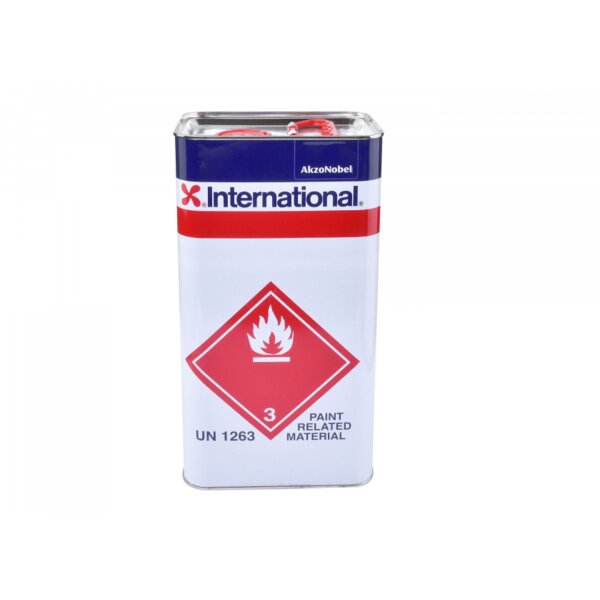
- UN number / ID number: UN1263
- UN proper shipping name: PAINT
- Transport hazard class: Class 3 (flammable liquids)
- Packing group: III
- Environmental hazards: Not classified as environmentally hazardous for transport (ADR/RID, IMDG, IATA: No)
- ADR/RID additional information: Tunnel code (D/E)
- IMDG additional information: Emergency schedules F-E, S-E
- Special precautions for user: Within user’s premises, always transport in closed, upright and secure containers. Ensure personnel know what to do in case of accident or spillage.
- Transport in bulk according to IMO instruments: Not applicable.
Section 8 – Personal protective measures
The safety data sheet for Intergard 5000 Aluminium Part A specifies the following personal protection and exposure control measures, to be selected and implemented as part of a risk assessment:
Engineering controls and hygiene
- Use only with adequate ventilation. Apply process enclosures or local exhaust ventilation to keep airborne concentrations below occupational exposure limits and below explosive limits.
- Use explosion-proof ventilation and equipment where there is a risk of flammable vapours.
- Wash hands, forearms and face thoroughly after handling, before eating, drinking, smoking and at the end of the work period.
- Contaminated work clothing should not leave the workplace and should be washed before reuse.
- Ensure eyewash stations and safety showers are close to the workstation.
Eye and face protection
- Wear chemical splash goggles or equivalent eye protection complying with approved standards whenever there is a risk of exposure to splashes, mists, gases or dusts.
Hand protection
- Wear chemical-resistant, impervious gloves complying with an approved standard whenever handling the product.
- For prolonged or frequently repeated contact, gloves with protection class 6 (breakthrough time > 480 minutes according to EN374) are recommended. Suggested materials: Viton or nitrile, thickness ≥ 0.38 mm.
- For brief contact, gloves with protection class ≥ 2 (breakthrough time > 30 minutes according to EN374) are recommended. Suggested material: nitrile, thickness ≥ 0.12 mm.
- Replace gloves regularly and immediately if damaged. The effective protection time can be reduced by physical or chemical damage or poor maintenance.
Body and other skin protection
- Select protective clothing based on the tasks and risks involved, and have it approved by a specialist before use.
- Where there is risk of ignition from static electricity, wear anti-static protective clothing (overalls, boots and gloves) conforming to EN 1149.
- Use appropriate protective footwear and any additional skin protection measures as indicated by the workplace risk assessment.
Respiratory protection
- Select a respirator that meets an appropriate standard or certification, based on the hazard and potential exposure, and use it within a formal respiratory protection program.
- Where local exhaust ventilation does not adequately control airborne contaminants, wear a respirator conforming to EN140 fitted with an A/P2 filter or better.
- Dry sanding, flame cutting and welding of the dry paint film can generate hazardous dust and fumes; wet sanding/flatting should be used where possible, and respiratory protection must be provided if exposure cannot be otherwise controlled.
Environmental exposure controls
- Check emissions from ventilation and process equipment to ensure compliance with environmental protection legislation.
- Where necessary, fit fume scrubbers, filters or modify process equipment to reduce emissions to acceptable levels.
Contenido generado por IA