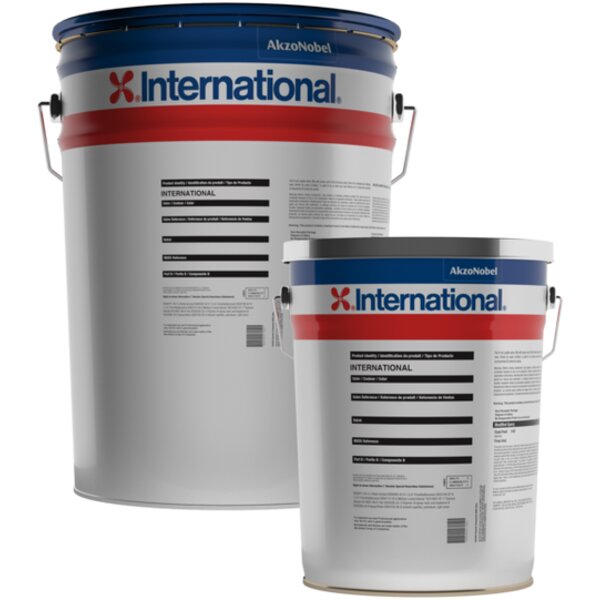
What is Intergard 475HS Indivisible Kit and why choose it
Intergard 475HS is a low VOC, high solids, high build, two-component epoxy coating designed to provide excellent barrier protection as part of anti-corrosive coating systems. Supplied as an indivisible kit (Base Part A + Curing Agent Part B), it is suitable for both new construction and maintenance projects on correctly primed steel. The micaceous iron oxide (MIO) pigmented variant in Light Grey improves long-term overcoating properties and is often used as a shop-applied “travel coat” before final topcoating on site.
This coating is ideal where durable corrosion protection, high film build and controlled VOC emissions are required, including offshore structures, petrochemical plants, pulp and paper mills and bridges.
Main features
- High build barrier epoxy: Recommended dry film thickness of 100–200 microns (4–8 mils) in a single coat for enhanced barrier protection.
- High solids, low VOC: Approx. 80% volume solids with typical VOC values of 207 g/L (EPA Method 24), 92 g/kg (EU Solvent Emissions Directive) and 159 g/L (Chinese GB23985).
- Two-component system: Supplied as Base (Part A) and Curing Agent (Part B); mixed 3:1 by volume.
- MIO Light Grey pigmentation: Micaceous iron oxide variant in Light Grey MIO enhances overcoating window and mechanical durability.
- Matt finish: Provides a non-reflective, low-gloss appearance.
- Versatile application methods: Can be applied by airless spray, conventional air spray, brush or roller.
- Wide temperature application range: Usable from -5°C (23°F) to 40°C (104°F) with defined drying and overcoating intervals; optional elevated-temperature curing agent available.
- Compatible within multi-coat systems: Designed for use over approved primers (e.g. Intercure, Intergard, Interzinc ranges) and under durable topcoats from the Interfine or Interthane series.
- Not for continuous immersion: Specifically not designed for continuous water immersion service.
Technical characteristics
General product data
- Product type: Epoxy, two-component, high build barrier coat.
- Colour: Light Grey MIO and a selected range of colours (kit supplied here as MIO Light Grey).
- Gloss level: Matt.
- Volume solids: Approx. 80%.
Recommended film thickness and coverage
- Typical dry film thickness (DFT): 100–200 microns (4–8 mils).
- Corresponding wet film thickness (WFT): 125–250 microns (5–10 mils).
- Theoretical coverage: 6.40 m²/litre at 125 microns DFT (257 sq.ft/US gallon at 5 mils DFT), based on stated volume solids.
- Practical coverage: Will be lower; allow for appropriate loss factors depending on surface profile, application method and conditions.
Mixing and pot life (indivisible kit)
- Composition: Supplied as two-pack unit – Base (Part A) and Curing Agent (Part B). The full kit is designed to be mixed and used as a single indivisible unit.
- Mix ratio (by volume): 3 parts Part A : 1 part Part B.
- Mixing procedure:
- Agitate Base (Part A) with a power agitator.
- Add entire contents of Curing Agent (Part B) to Part A.
- Mix thoroughly with a power agitator until uniform.
- Working pot life (approximate):
- -5°C (23°F): 3 hours
- 5°C (41°F): 3 hours
- 15°C (59°F): 2.5 hours
- 25°C (77°F): 2 hours
- Once mixed, the kit should be used within the stated pot life and not resealed.
Drying and overcoating
- Touch dry / hard dry (standard curing agent):
- -5°C (23°F): Touch dry 150 min; hard dry 48 h.
- 5°C (41°F): Touch dry 90 min; hard dry 16 h.
- 10°C (50°F): Touch dry 80 min; hard dry 14 h.
- 15°C (59°F): Touch dry 75 min; hard dry 10 h.
- 25°C (77°F): Touch dry 60 min; hard dry 5 h.
- Overcoating interval with recommended topcoats (standard curing agent):
- -5°C (23°F): Minimum 48 h; Maximum Extended.
- 5°C (41°F): Minimum 16 h; Maximum Extended.
- 10°C (50°F): Minimum 13–14 h; Maximum Extended.
- 15°C (59°F): Minimum 10 h; Maximum Extended.
- 25°C (77°F): Minimum 5 h; Maximum Extended.
- Overcoating interval with elevated-temperature curing agent:
- 25°C (77°F): Touch dry 90 min; hard dry 6 h; minimum overcoat 6 h; maximum Extended.
- 40°C (104°F): Touch dry 60 min; hard dry 2 h; minimum overcoat 2 h; maximum Extended.
- Maximum overcoating intervals are shorter when polysiloxane topcoats are used.
Application methods and equipment
- Suitable substrates: Correctly primed steel surfaces.
- Approved primers (examples): Intercure 200; Intergard 251, 251HS, 269; Interzinc 22 (may require mist or tie coat), 315, 52, 52E, 2280 (may require mist or tie coat).
- Suitable topcoats (examples): Intergard 740; Interfine 629HS, 878, 979; Interthane 990, 990E; Intergard 475HS (self-priming over itself).
- Application methods:
- Airless spray: Recommended for achieving maximum film build in a single coat. Typical tip range 0.53–0.63 mm (21–25 thou); minimum 190 kg/cm² (2702 psi) fluid pressure.
- Conventional air spray: Recommended gun DeVilbiss MBC or JGA with air cap 704 or 765 and fluid tip E; may require multiple cross-spray passes to reach target thickness.
- Brush: Suitable for small areas and stripe coating; typically 75 microns (3 mils) DFT achievable per coat.
- Roller: Suitable; typically 75 microns (3 mils) DFT achievable per coat.
- Thinner: International GTA007. Thinning is normally not required; if used, do not exceed limits set by local environmental legislation.
- Cleaner: International GTA822 (or International GTA415, depending on region). Used for equipment cleaning and flushing during work stoppages.
- Surface preparation:
- All substrates must be clean, dry and free from contamination, prepared in accordance with ISO 8504.
- Primed steel: repair breakdown areas by abrasive blast (e.g. Sa2½ / SSPC-SP6) or power tool cleaning (SSPC-SP11), then patch-prime before applying Intergard 475HS.
- Metallic zinc primers: ensure surface is fully cured, clean, dry and free from zinc salts before overcoating.
- Application conditions:
- Surface temperature at least 3°C (5°F) above dew point.
- Provide adequate ventilation, especially in confined spaces.
- Low temperatures and/or high humidity during or immediately after application can lead to incomplete cure and intercoat adhesion issues.
- For applications below 15°C (59°F) or wet film thicknesses ≤150 microns (6 mils), addition of around 5% GTA007 thinner can improve film appearance and sprayability.
Regulatory and physical data
- Resin type: Epoxy.
- Specific gravity: Approx. 2.1 kg/L (17.5 lb/gal) for Part A (typical value from regional data sheet).
- Flash point (typical): Part A 34°C (93°F); Part B 31°C (88°F); mixed paint 33°C (91°F).
- VOC (typical):
- 1.72 lb/gal (207 g/L) – EPA Method 24.
- 92 g/kg – EU Solvent Emissions Directive (2010/75/EU).
- 159 g/L – Chinese National Standard GB23985.
- Shelf life (typical at 25°C / 77°F): Part A 18 months; Part B 12 months, stored in dry, shaded conditions away from heat and ignition; subject to re-inspection thereafter.
- Intended users: For professional applicators in industrial environments only.
Applications and use cases
- Offshore and marine structures: Used as a high build barrier coat over approved primers to protect steel in harsh offshore environments.
- Petrochemical plants: Suitable for structural steel and process areas requiring robust anti-corrosive systems.
- Pulp and paper mills: Provides durable barrier protection in aggressive industrial atmospheres.
- Bridges and infrastructure: Applied as an intermediate or build coat in multi-coat systems for long-term corrosion protection.
- Maintenance coating: Can be over-applied to correctly prepared, previously coated surfaces as part of refurbishment schemes, respecting specified overcoating intervals.
- New construction: Commonly applied in fabrication shops; the MIO variant is frequently used as a “travel coat” before final site-applied topcoats.
FAQ
1. What type of product is Intergard 475HS Indivisible Kit?
It is a high build, high solids, low VOC, two-component epoxy barrier coating supplied as an indivisible kit (Part A + Part B) for professional industrial use.
2. On which substrates can it be applied?
It is designed for correctly primed steel surfaces. Suitable primers include selected Intercure, Intergard and Interzinc products listed in the system compatibility guidelines.
3. Can Intergard 475HS be used in immersion service?
No. This product is not designed for continuous water immersion.
4. What is the recommended thickness per coat?
The typical dry film thickness is 100–200 microns (4–8 mils) per coat, corresponding to 125–250 microns (5–10 mils) wet.
5. How is the kit mixed?
Mix the full contents of Part B into Part A at 3:1 by volume. Agitate Part A first, then add all of Part B and mix thoroughly using a power agitator. Use all mixed material within the specified pot life.
6. Which application methods are recommended?
Airless spray is recommended to achieve maximum film build in one coat. Conventional air spray, brush and roller are also suitable but may require multiple coats to reach the specified thickness.
7. Does the coating change colour outdoors?
Like all epoxy systems, Intergard 475HS will chalk and discolour on exterior exposure to UV light. This does not adversely affect its anti-corrosive performance but a durable polyurethane or polysiloxane topcoat is recommended where appearance is important.
8. What thinner and cleaner should be used?
International GTA007 is the recommended thinner (usually not required). International GTA822 (or GTA415, depending on region) is recommended for equipment cleaning and flushing.
9. Is special ventilation required?
Yes. The product contains solvents and should only be applied with adequate ventilation, especially in confined spaces, to control vapour levels and ensure safe curing.
10. Who is this kit intended for?
According to the safety data sheet, Intergard 475HS is intended for use only by professional applicators in industrial environments.
Section 14 – Transport information
According to the safety data sheet, the product is classified for transport as follows (ADR/RID, IMDG, IATA):
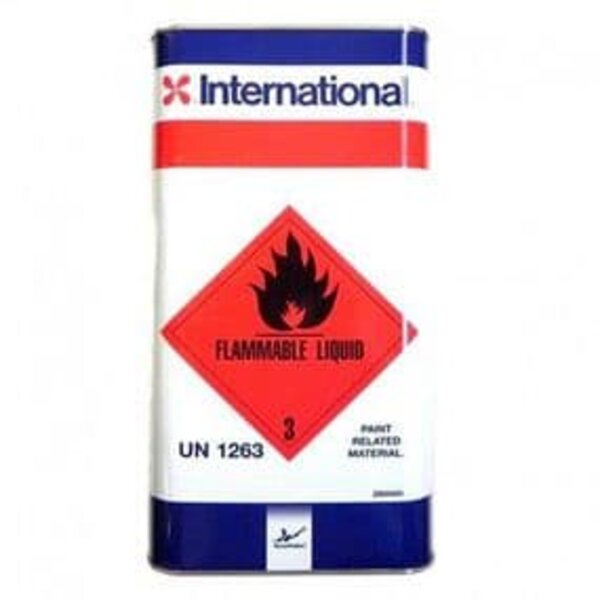
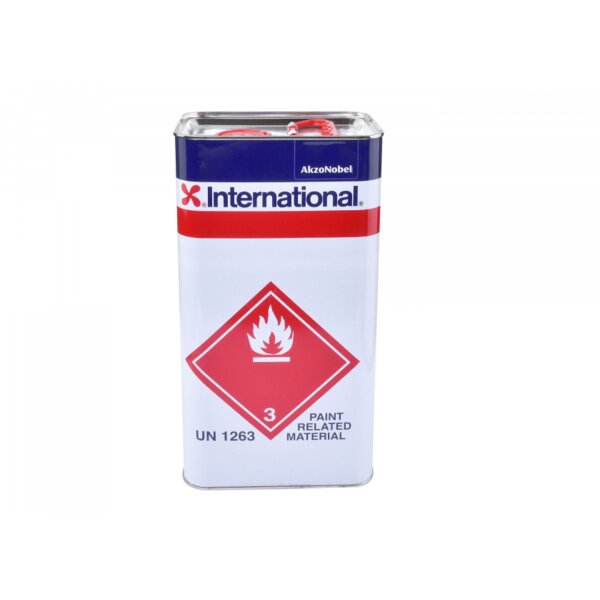
- UN number / ID number: UN1263
- UN proper shipping name: PAINT
- Transport hazard class: Class 3 (Flammable liquid)
- Packing group: III
- Environmental hazards: Not classified as marine pollutant in the provided data.
- ADR/RID tunnel code: (D/E)
- IMDG emergency schedules: F-E, S-E
- Special precautions for user: Within user’s premises, always transport in closed, upright and secure containers. Ensure personnel know the actions to take in case of accident or spillage.
- Transport in bulk according to IMO instruments: Not applicable.
Section 8 – Personal protective measures
The safety data sheet specifies the following personal protective equipment and exposure controls for handling and applying Intergard 475HS MIO Light Grey Part A as part of the kit. Similar precautions should be applied to the mixed product, following site risk assessment.
Engineering and hygiene controls
- Use only with adequate ventilation and, where necessary, local exhaust ventilation or process enclosure to keep airborne concentrations below occupational exposure limits and below lower explosion limits.
- Use explosion-proof ventilation and electrical equipment in areas where vapours may be present.
- Wash hands, forearms and face thoroughly after handling, before eating, drinking or smoking and at the end of the work shift.
- Remove contaminated work clothing and protective equipment before entering eating areas; wash contaminated clothing before reuse.
- Ensure emergency eyewash stations and safety showers are located close to the work area.
Eye and face protection
- Wear chemical splash goggles or equivalent eye protection complying with approved standards whenever there is a risk of splashes, mists or aerosols.
Hand protection
- Use chemical-resistant, impervious gloves complying with EN374 (or equivalent) when handling the product.
- For prolonged or frequently repeated contact, gloves with protection class 6 (breakthrough time > 480 minutes) are recommended. Suggested materials: Viton or nitrile with thickness ≥ 0.38 mm.
- For brief contact, gloves with protection class ≥ 2 (breakthrough time > 30 minutes) are recommended. Suggested material: nitrile with thickness ≥ 0.12 mm.
- Replace gloves regularly and immediately if damaged; note that performance may be reduced by physical or chemical damage or poor maintenance.
Skin and body protection
- Wear suitable protective clothing based on task and risk assessment, approved by a safety specialist.
- Where there is a risk of ignition from static discharge, wear anti-static protective clothing (coveralls, boots and gloves) conforming to EN 1149 or equivalent.
- Select appropriate footwear and any extra skin protection measures according to local risk assessment.
Respiratory protection
- Where ventilation is inadequate, wear a respirator conforming to EN140 fitted with an A/P2 filter or better, selected and used under an appropriate respiratory protection programme.
- Dry sanding, flame cutting or welding of the dry paint film may generate hazardous dust and fumes; wet sanding/flatting should be used where possible. If exposure cannot be controlled by extraction, suitable respiratory protection is required.
Environmental exposure control
- Emissions from ventilation or process equipment must be checked to comply with environmental legislation; scrubbers, filters or engineering modifications may be required to reduce emissions.
- Spills and residues should not be allowed to enter drains or watercourses.
*Contenido generado por IA