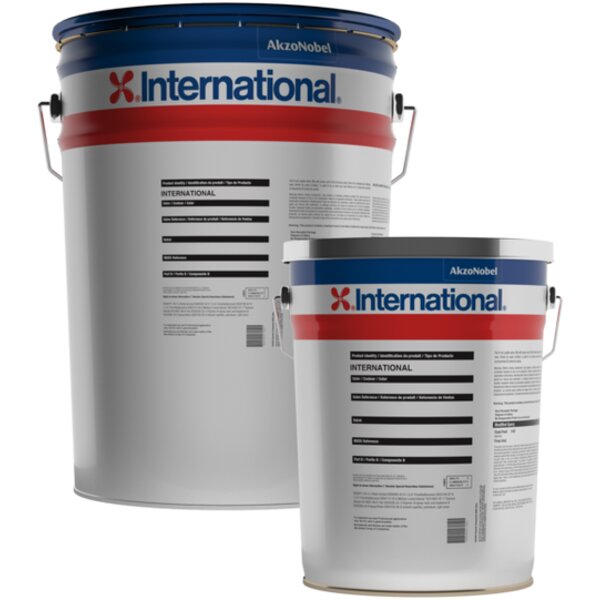
What is Intergard 269 Part A and why choose it?
INTERGARD 269 PART A INDIVISIBLE KIT from International Marina is the base component of a fast drying, two-pack epoxy holding primer and tie coat. Designed for professional and industrial use, it protects properly prepared steel and other compatible substrates before the application of a wide range of high performance coating systems. The primer is suitable for both immersed and atmospheric exposure, can be overcoated after extended weathering periods and is compatible with controlled cathodic protection, making it a versatile choice for shipyards, marine maintenance, repair yards and heavy industry.
Main features
- Two-component epoxy system: Part A (base) is combined with Part B curing agent to form a durable epoxy primer / tie coat.
- Quick drying: At 25°C (77°F) the coating is typically touch dry in about 30 minutes and hard dry in 8 hours.
- Extended overcoating window: Suitable for overcoating after prolonged periods of weathering, reducing the need for reblasting before application of subsequent coats.
- Blast holding primer: Acts as a holding primer for abrasive blast cleaned steel, helping to maintain surface preparation quality until full coating systems are applied.
- Tie coat over zinc primers: Can be used over freshly applied zinc primers to help prevent zinc salt formation during weathering and to reduce pinholing in subsequent high build coatings.
- Immersed and atmospheric service: Suitable for use in immersed areas (including selected tank lining schemes) and external exposed structures.
- Multiple application methods: Can be applied by airless spray, conventional spray, brush or roller (latter two recommended for small areas).
- Professional-grade protection: Formulated for newbuilding, maintenance and on-board maintenance under demanding marine and industrial conditions.
Technical characteristics
Product type and composition
- Generic type: Epoxy primer / tie coat.
- System: Two-pack (Part A base + Part B curing agent).
- Colour (typical for the primer system): Red (code EGA088) and black variants are documented. Specific shade depends on the kit supplied.
- Finish: Matt / not applicable for sheen.
Key application data
- Volume solids: 47% ±2% (ISO 3233:1998).
- Typical dry film thickness: 40 microns (1.6 mils) dry, approximately 85 microns (3.4 mils) wet.
- Theoretical coverage: 11.80 m²/litre at 40 microns DFT (or 471 ft²/US gallon at 1.6 mils) at stated volume solids. Allow appropriate loss factors.
- Mixing ratio: 4 parts by volume Part A to 1 part by volume Part B.
- Induction time: Not required.
- Typical application methods: Airless spray, conventional spray, brush or roller.
- Recommended thinner: International GTA220 (do not exceed limits set by local environmental legislation).
- Recommended cleaner: International GTA822 or GTA220.
Drying and pot life
- Touch dry (ISO 9117/3:2010):
- 41°F (5°C): approx. 45 minutes
- 50°F (10°C): approx. 40 minutes
- 77°F (25°C): approx. 30 minutes
- 95°F (35°C): approx. 20 minutes
- Hard dry (ISO 9117-1:2009):
- 41°F (5°C): approx. 24 hours
- 50°F (10°C): approx. 16 hours
- 77°F (25°C): approx. 8 hours
- 95°F (35°C): approx. 2 hours
- Pot life (working time after mixing):
- 41°F (5°C): approx. 20 hours
- 50°F (10°C): approx. 17 hours
- 77°F (25°C): approx. 8 hours
- 95°F (35°C): approx. 3 hours
- Minimum overcoating intervals with selected products (typical):
- Intershield 300 / Intertuf 262 / Intertuf 362: 24 h at 41°F, 17 h at 50°F, 6 h at 77°F or 95°F (extended maximum).
- Intershield 300HS: minimum 24 h at 41°F, 17 h at 50°F, 6 h at 77°F or 95°F; maximum 6 months (all temperatures listed).
- Interthane 990 / Interthane 990E: minimum 24 h at 41°F, 17 h at 50°F, 6 h at 77°F or 95°F; maximum 14 days (7 days at 95°F for 990/990E).
Regulatory and physical data
- Product weight (mixed): Approx. 1.53 kg/litre (12.8 lb/gal) as stated for Intergard 269.
- Flash point: Part A 79°F (26°C); Part B 77°F (25°C); mixed 79°F (26°C) (closed cup).
- VOC (as supplied):
- Approx. 450 g/l (3.75–3.76 lb/US gal) by EPA Method 24.
- Approx. 293 g/kg of liquid paint as supplied (EU Solvent Emissions Directive).
- Approx. 420 g/l (3.50 lb/US gal) under Chinese National Standard GB23985.
- Density (Part A Black example): approx. 1.671 g/cm³ (DIN EN ISO 2811-1).
- Viscosity (Part A Black example): kinematic 71 mm²/s at room temperature; 119 mm²/s at 40°C (DIN EN ISO 3219).
- Shelf life (typical kits): Part A 12 months minimum at 25°C (77°F); Part B 18 months minimum at 25°C (77°F), subject to reinspection. Store in dry, shaded conditions away from heat and ignition sources.
System compatibility (selection)
- Suitable primers under Intergard 269: Interzinc 22, Interzinc 52 and other specified zinc primers where recommended.
- Recommended intermediates / topcoats (examples from available data): Intercure 200HS, Intercure 420, Interfine 629HS, Interfine 878, Interfine 979, Intergard 251, Intergard 345, Intergard 475HS, Intergard 740, Interseal 670HS, Interthane 870, Interthane 990, Interthane 990E, Interzone 505, Interzone 954, Interzone 1000, Intershield 300, Intershield 300HS, Intertuf 262, Intertuf 362.
- Tank lining holding primer (selected linings): Interline 984, Interline 925P, Interline 955 for specified cargoes such as crude/water mixes and refined hydrocarbon cargoes.
Applications and use cases
As a blast holding primer
- Applied to steelwork prepared by abrasive blasting, maintaining the cleaned surface before application of full coating systems.
- Suitable for steel structures exposed in immersed conditions (for example, water ballast tanks when part of an approved scheme) and atmospheric environments (hull, topsides, deck structures, external steelwork).
- For ballast tanks, steel should typically be blast cleaned to Sa2½ (ISO 8501-1:2007). For other areas, Sa2 is generally used as a minimum standard according to the marine specification.
- Intergard 269 may also be applied to surfaces prepared by ultra high pressure hydroblasting to standard HB2, with controlled flash rust grades (for example HB2L or HB2M depending on area).
As a tie coat over zinc primers
- Applied over clean, dry zinc primers within their specified overcoating intervals to help prevent zinc salt build-up during weathering.
- Recommended to be thinned 15–25% with International GTA220 when applied over zinc silicate primers to improve penetration and reduce pinholing of subsequent high build coats.
- Used prior to a range of Intershield, Intertuf, Interthane and Interline systems in marine service.
Typical sectors
- Marine: Newbuildings, maintenance and repair, on-board maintenance of hulls, decks, topsides, water ballast tanks and selected cargo tanks.
- Offshore and industrial: Structural steel, process equipment and pipework requiring a fast drying blast holding primer compatible with high-performance epoxy, polyurethane or polysiloxane topcoats.
FAQ
-
Is this a complete paint or only one component?
INTERGARD 269 PART A INDIVISIBLE KIT is the base component of a two-pack epoxy system. It must always be mixed with the appropriate Part B curing agent in the specified 4:1 volume ratio before application.
-
On which substrates can Intergard 269 be used?
It is intended primarily for properly prepared steel, including abrasive blast cleaned steel and hydroblasted steel. It is also documented for use over compatible zinc primers and, in some specifications, can be applied to aluminium substrates after suitable preparation.
-
Can it be used in immersion service?
Yes. When used as part of an approved scheme, Intergard 269 functions as a holding primer in immersed areas such as water ballast tanks and selected cargo tanks, and can be overcoated with specified tank linings (for example selected Interline products).
-
What is the minimum surface preparation required?
For immersion service in ballast tanks, steel is typically prepared to Sa2½ (ISO 8501-1:2007). For non-ballast areas, Sa2 may be used as a minimum. All surfaces must be clean, dry and free from contamination such as oil, grease, salts and dust.
-
How is the product applied?
Application is usually by airless spray or conventional spray. Brush and roller are recommended for small areas only, where multiple coats may be required to achieve the specified film thickness.
-
How long after blasting can I wait before applying Intergard 269?
The steel should be coated before significant oxidation occurs. If oxidation or contamination develops between blasting and coating, the surface must be re-prepared to the specified standard before applying the primer.
-
Does Intergard 269 comply with VOC regulations?
The VOC values are reported according to EPA Method 24, the EU Solvent Emissions Directive and Chinese National Standard GB23985. Actual compliance will depend on local legislation and the complete coating scheme.
-
Is the product suitable for areas carrying grain or where fire performance is required?
When used as part of an approved scheme, Intergard 269 has certifications for food contact in the carriage of grain, and fire resistance including surface spread of flame and Marine Equipment Directive compliance. Suitability always depends on the complete system and specification.
Section 14 – Transport information
The following transport data are taken from the safety data sheet for Intergard 269 Part A (typical values for this product family):
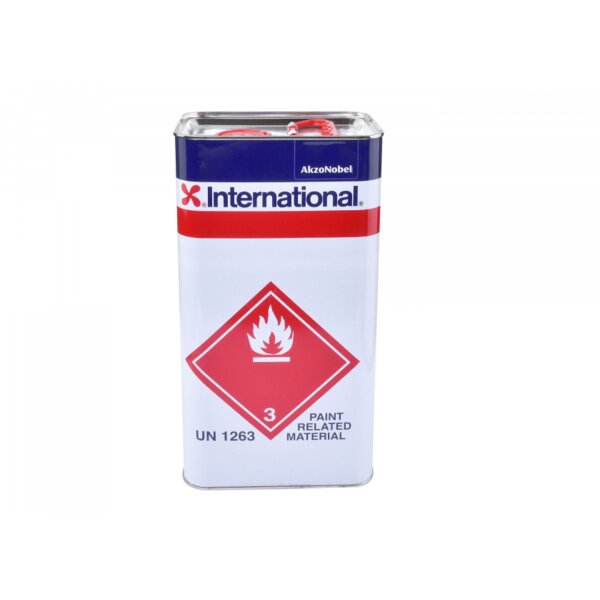
- UN number (ADR/RID, IMDG, IATA): UN1263
- Proper shipping name: PAINT
- Transport hazard class: Class 3 (flammable liquids)
- Packing group: III
- Environmental hazards: Not classified as a marine pollutant in the SDS consulted.
- ADR/RID tunnel restriction code: (D/E)
- IMDG emergency schedules: F-E, S-E
- Special precautions for users: Within user premises, always transport in closed containers kept upright and secure. Ensure personnel transporting the product know what to do in the event of an accident or spillage.
- Transport in bulk according to IMO instruments: Not applicable.
Section 8 – Personal protective measures
According to the Intergard 269 Part A safety data sheet, the product is classified as a flammable liquid that can cause skin irritation, serious eye damage, respiratory irritation and possible organ damage through prolonged or repeated exposure. Appropriate individual protection is therefore essential during handling and application.
Recommended personal protective equipment (PPE)
- General measures: Use only with adequate ventilation or local exhaust. Avoid inhalation of vapour, spray or mist and prevent contact with eyes, skin and clothing. Eating, drinking and smoking should be prohibited in application areas.
- Hand protection:
- Chemical resistant, impervious gloves complying with an approved standard.
- For prolonged or frequently repeated contact, gloves with protection class 6 (breakthrough time > 480 minutes according to EN374) are recommended; suggested materials: Viton or nitrile, minimum thickness ≥ 0.38 mm.
- For brief contact, gloves with protection class 2 or higher (breakthrough time > 30 minutes according to EN374) may be used; suggested material: nitrile, minimum thickness ≥ 0.12 mm.
- Gloves should be replaced regularly and whenever damage or degradation is observed.
- Eye and face protection:
- Chemical splash goggles and/or face shield conforming to an approved standard, especially where splashing or spray is likely.
- If inhalation hazards exist and a full-face respirator is used, this may also provide eye protection when correctly fitted.
- Respiratory protection:
- Where exposure limits may be exceeded or ventilation is inadequate, wear a respirator conforming to EN140 with a type A/P2 filter or better, selected within an appropriate respiratory protection program.
- Dry sanding, flame cutting or welding on the dry coating can generate hazardous dust and fumes; use wet methods where possible and appropriate respiratory protection if exposure cannot be otherwise controlled.
- Body protection:
- Protective clothing selected according to the task and risks, approved by a safety specialist.
- Where ignition from static electricity is a risk, use anti-static protective clothing as per EN 1149 (for example, anti-static overalls, boots and gloves).
- Other skin protection: Appropriate footwear and additional protective measures (such as chemical resistant aprons or sleeves) should be chosen based on the specific application conditions.
- Hygiene measures: Wash hands, forearms and face thoroughly after handling and before breaks. Remove contaminated clothing and PPE before entering eating areas and launder before reuse. Ensure availability of eye wash stations and safety showers close to the work area.
*Contenido generado por IA