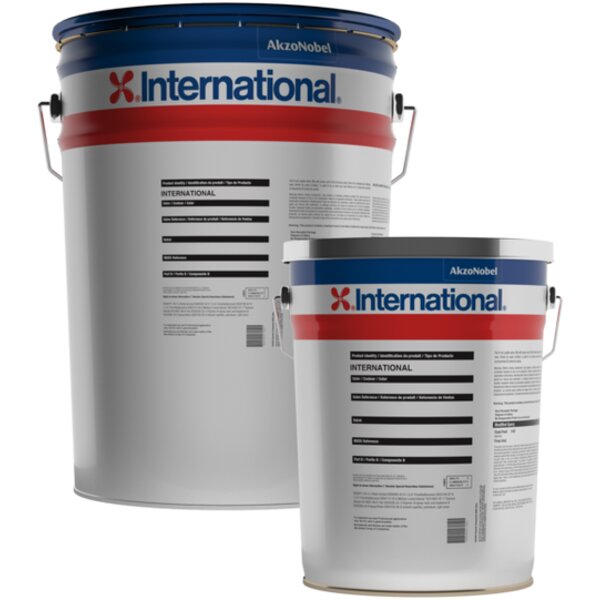
What is Intergard 263 Part A Indivisible Kit and why choose it
Intergard 263 Part A Indivisible Kit is the base component of a two-pack, tar-free epoxy tie coat developed for professional marine use. When mixed with its dedicated curing agent (Part B FAA262), it forms a matt epoxy intermediate layer designed to be applied between anticorrosive primers and either antifouling systems or cosmetic topcoats. This tie coat ensures maximum adhesion and long-term performance on the external shell areas of vessels and can also be used as a sealer over Tributyltin (TBT) antifoulings.
Its balanced solids content, controlled film build and proven compatibility with a wide range of International marine primers and topcoats make it suitable for demanding applications in newbuilding, maintenance and repair, and on-board maintenance.
Main features
- Two-pack epoxy system: Part A base to be mixed with Part B curing agent (FAA262) in a 4:1 volume ratio.
- Tar-free formulation: Modified epoxy technology without coal tar, for modern marine specifications.
- High adhesion tie coat: Applied between anticorrosive primers and antifoulings or cosmetic finishes to secure system integrity on hull exteriors.
- TBT antifouling sealer: Acts as a barrier to Tributyltin (TBT) leaching from underlying TBT antifouling coatings when applied at 100 µm dry film thickness (ASTM D5108-96 modified).
- Versatile application methods: Suitable for airless spray, brush and roller (brush/roller recommended only for small areas or touch-up).
- Matt finish: Provides an even, low-gloss surface ideal for subsequent antifouling or polyurethane topcoats.
- Professional-grade performance: Intended for use by trained applicators in industrial and marine environments.
Technical specifications
- Product type: Two-pack, tar-free epoxy tie coat (Part A base component)
- Brand: International Marine Coatings
- Colour range (Part A): FAJ034 Light Grey; FAJ035 Buff (Buff not available in North America; other colours may be available in specific countries)
- Finish/Sheen: Matt
- Curing agent: Part B FAA262
- Mix ratio: 4 parts by volume Part A : 1 part by volume Part B
- Volume solids: 57% ± 2% (ISO 3233:1998)
- Typical film thickness: 100 µm dry (approx. 175 µm wet)
- Theoretical coverage: 5.7 m²/litre at 100 µm dry film thickness (loss factors must be allowed for)
- Method of application: Airless spray (preferred for full film build); brush and roller for small areas only
- Flash point (mixed system): Part A 45°C; Part B 21°C; mixed 38°C
- Product density (Part A): Approx. 1.513–1.533 g/cm³
- VOC (as supplied):
- 445 g/L (EPA Method 24)
- 306 g/kg of liquid paint as supplied (EU Solvent Emissions Directive 1999/13/EC)
- 420 g/L (Chinese National Standard GB23985)
- Touch dry times (mixed coating, ISO 9117/3:2010):
- -5°C: 24 h
- 5°C: 12 h
- 25°C: 6 h
- 35°C: 4 h
- Hard dry times (ISO 9117-1:2009):
- -5°C: 72 h
- 5°C: 24 h
- 25°C: 16 h
- 35°C: 12 h
- Pot life (mixed product):
- -5°C: 12 h
- 5°C: 8 h
- 25°C: 6 h
- 35°C: 4 h
- Minimum substrate temperature for curing: 5°C (below this temperature curing is inadequate; see Limitations)
- Minimum substrate temperature for application: Can be applied down to -15°C (special procedures required below -5°C)
- Recommended thinner: International GTA220 (thinning normally not required)
- Recommended cleaners: International GTA220, GTA822 or GTA415
- Airless spray data: Tip range 0.46–0.66 mm (18–26 thou); minimum fluid pressure 176 kg/cm² (approx. 2500 psi) at the tip
- Induction time: Not required
- Unit/pack sizes (indivisible kits):
- 20 L kit: Part A 16 L in 20 L can; Part B 4 L in 5 L can
- 5 US gallon kit: Part A 4 US gal in 5 US gal can; Part B 1 US gal in 1 US gal can
- Typical 20 L unit weight (mixed kit): approx. 30.44 kg
- Shelf life (unopened): 18 months at 25°C; store in dry, shaded conditions away from heat and ignition sources
Applications and uses
Primary applications
- Tie coat for hull exteriors: Applied between epoxy anticorrosive primers and antifouling or cosmetic topcoats on outside shell areas of vessels to maximise system adhesion and durability.
- TBT antifouling sealer: When applied at 100 µm dry film thickness, forms a barrier to TBT leaching from existing TBT-based antifouling systems.
- Newbuilding: Used in approved hull coating schemes over suitable International primers such as Intergard 343, Intershield 300, Intershield 803, Intertuf 262 and Intertuf 362.
- Maintenance and repair: Suitable for maintenance dockings and on-board maintenance, including spot repair when used in the Intertuf 262 / Intergard 263 system on selected existing coatings.
System compatibility
- Typical primers (epoxy anticorrosives over which Intergard 263 may be applied):
- Intergard 343
- Intershield 300
- Intershield 803
- Intertuf 262
- Intertuf 362
- Intergard 787
- Interzinc 22 (mist coat may be required)
- Interzinc 52
- Example compatible topcoats (over Intergard 263, subject to overcoating intervals and regional specifications):
- Antifoulings: Intersmooth 7460HS SPC, Intersmooth 7465HS SPC, Intersmooth 7465Si SPC, Intersmooth 7475Si SPC, Interswift 6800HS, Intercept 7000, Intercept 8500 LPP, Interspeed 6200 and 6400, Intertuf 203, Intercept 7670 SPC.
- Cosmetic/urethane finishes: Intergard 740, Interthane 870, Interthane 990, Interthane 990E, Intersheen 579.
- Specialty systems: Intersleek 717 (subject to regional restrictions, e.g. only over Intergard 263 in Korea).
Substrate and repair uses
- Substrate: Designed primarily for correctly prepared and primed steel surfaces.
- Spot repair system: In combination with Intertuf 262, can be used for local repair of existing epoxy, coal tar epoxy, chlorinated rubber, vinyl tar and tar-free vinyl coatings, with feathered overlaps kept to a minimum. Not suitable for bituminous substrates.
- Upgrade system: Intertuf 262 / Intergard 263 can be used to upgrade existing epoxy, coal tar epoxy and chlorinated rubber systems. Not suitable for upgrading vinyl tar, tar-free vinyl or bituminous systems.
FAQ
1. What does “indivisible kit” mean for Intergard 263 Part A?
The kit is supplied as matched Part A and Part B containers that must be mixed in full, in the 4:1 volume ratio provided. Partial mixing is not recommended, as it can lead to incorrect curing and performance.
2. Can Intergard 263 be applied by brush and roller?
Yes. Brush and roller application are suitable for small areas only, such as touch-ups or difficult access zones. Multiple coats may be required to achieve the specified 100 µm dry film thickness.
3. At what temperatures can I apply and cure the product?
Intergard 263 may be applied to substrates down to -15°C; however, applications below -5°C require special procedures. For proper curing, the coating should not be expected to cure adequately below 5°C, and the steel temperature should be at least 3°C above the dew point.
4. Which thinner should I use, and is thinning always necessary?
The recommended thinner is International GTA220. Thinning is normally not required and should only be carried out within local environmental limits and when advised (for example, in extreme conditions).
5. How should the surface be prepared before applying Intergard 263?
Surfaces must be clean, dry and free from contamination. High-pressure fresh water washing or fresh water washing (as appropriate) should be used to remove salts and contaminants, along with solvent cleaning to SSPC-SP1 to remove oil and grease. Intergard 263 must always be applied over an appropriate epoxy anticorrosive primer within its specified overcoating interval.
6. Is Intergard 263 suitable for bituminous coatings?
No. The Intertuf 262 / Intergard 263 system is not suitable for the repair or upgrading of bituminous substrates.
7. Does the product chalk or discolour in exterior exposure?
Like all epoxies, Intergard 263 may chalk and discolour when exposed to weathering. This does not necessarily affect its role as a tie coat but should be considered when used beneath cosmetic finishes.
8. How should I store unopened Intergard 263 kits?
Store in a dry, cool, well-ventilated area, away from direct sunlight, heat and ignition sources. Keep containers tightly closed and upright. At 25°C, the typical shelf life is 18 months, after which re-inspection is recommended.
Section 14 – Transport information
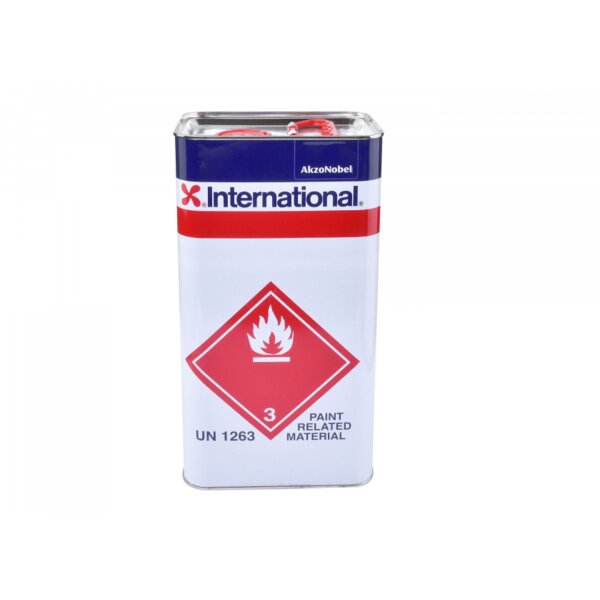
- UN number / ID number: UN1263
- Proper shipping name: PAINT
- Transport hazard class: Class 3 (flammable liquid)
- Packing group: III
- Environmental hazards:
- Classified as environmentally hazardous / marine pollutant in bulk.
- Environmentally hazardous / marine pollutant mark is not required when transported in pack sizes ≤ 5 L or ≤ 5 kg.
- Typical entries by mode:
- ADR/RID: UN1263, PAINT, Class 3, PG III, environmentally hazardous, Tunnel code (D/E)
- IMDG: UN1263, PAINT, Class 3, PG III, Marine Pollutant (reaction product: bisphenol-A-(epichlorhydrin); epoxy resin; Solvent naphtha (petroleum), light arom.); Emergency schedules F-E, S-E
- IATA: UN1263, PAINT, Class 3, PG III
- Special precautions for user: During transport within a user’s premises, always move the product in closed, upright and secure containers. Ensure personnel involved in transport know what to do in case of an accident or spillage.
- Transport in bulk according to IMO instruments: Not applicable.
Section 8 – Personal protective measures
Intergard 263 Part A contains organic solvents and epoxy resins and is classified as flammable, irritating to skin and eyes, a skin sensitiser and harmful to the aquatic environment. The following individual protection measures are indicated in the safety data sheet and are intended for professional users.
Engineering controls
- Use only with adequate ventilation.
- Employ local exhaust ventilation or process enclosures to keep airborne concentrations below applicable limits and below lower explosive limits.
- Use explosion-proof ventilation and electrical equipment.
General hygiene measures
- Eating, drinking and smoking are prohibited in areas where the product is handled.
- Wash hands, forearms and face thoroughly after handling, before eating or smoking, and after the work shift.
- Remove contaminated clothing and protective equipment before entering eating areas and wash contaminated clothing before reuse.
- Ensure eyewash stations and safety showers are located close to work areas.
Eye and face protection
- Wear chemical splash goggles that comply with an approved standard when there is a risk of splashes, mists or vapours.
- If risk assessment indicates, a higher level of protection may be required.
Hand protection
- Use chemical-resistant, impervious gloves complying with EN374 or equivalent.
- For prolonged or frequently repeated contact: gloves with protection class 6 (breakthrough time > 480 minutes), recommended materials: Viton or nitrile, thickness ≥ 0.38 mm.
- For brief contact: protection class 2 or higher (breakthrough time > 30 minutes), recommended material: nitrile, thickness ≥ 0.12 mm.
- Replace gloves regularly and immediately if damaged. The user should confirm glove suitability for the specific working conditions.
Body and skin protection
- Wear protective clothing selected according to task and risk assessment.
- When there is a risk of ignition from static electricity, use anti-static protective clothing including overalls, boots and gloves that comply with EN 1149 requirements.
- Use appropriate footwear and any additional skin protection measures as determined by the risk assessment.
Respiratory protection
- Where ventilation is inadequate or where spray application produces mists and vapours, wear a respirator conforming to EN140 with type A/P2 filter or better, selected as part of a formal respiratory protection programme.
- For operations such as dry sanding, flame cutting or welding of the dry film, wet methods should be used where possible. If exposure cannot be controlled by ventilation, suitable respiratory protection is required.
Environmental exposure controls
- Emissions from process equipment and ventilation systems must comply with applicable environmental protection regulations.
- If necessary, use fume scrubbers, filters or engineering modifications to reduce emissions to acceptable levels.
Contenido generado por IA