What is Epifanes Rapidcoat and why choose it?
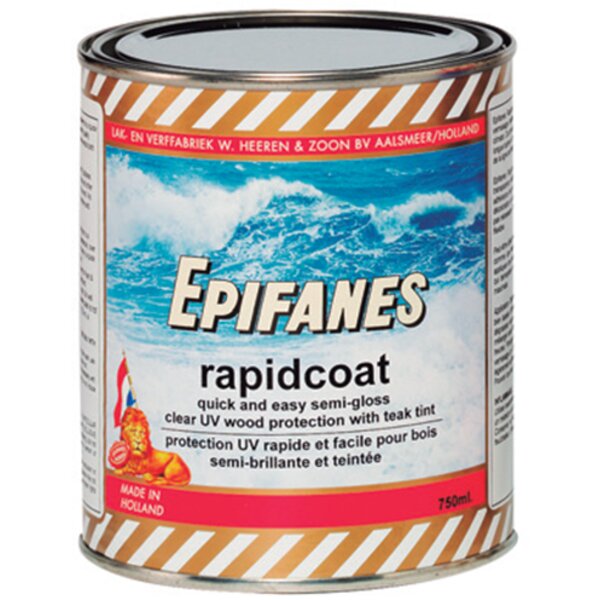
Epifanes Rapidcoat is a lightly tinted, quick and easy semi-gloss wood finish with a built-in UV filter. Based on urethane and alkyd resins, it is designed as a durable alternative to traditional semi-gloss varnish systems on interior and exterior wood above the waterline. Rapidcoat bonds well to teak and other oily woods, helps camouflage colour differences, prevents discoloration and emphasizes the natural grain while offering excellent water resistance, UV protection and long-term durability.
Main features
- Lightly tinted semi-gloss finish in a light teak tone that enhances and evens out wood colour.
- UV-protective film that helps prevent discoloration and degradation of wood exposed to sunlight.
- Excellent adhesion to teak and other oily woods, as well as intact one- and two-component varnish systems.
- Fast and easy application by brush or conventional air spray; no sanding absolutely required between coats for build-up.
- Water-resistant and durable coating providing maximum durability and longevity above the waterline.
- Versatile system component that can be used alone, as a rapid grain-filling base for Epifanes Clear Gloss Varnish, Epifanes Woodfinish Gloss or Epifanes Rubbed Effect Varnish, or for maintenance over existing varnish systems.
- Semi-gloss appearance that reduces surface imperfections and glare compared to high gloss.
Technical specifications
- Type: Oxidative drying wood finish.
- Base: Urethane resin / alkyd resin.
- Colour: Light teak tone.
- Gloss level: Semi-gloss.
- Density: 0.894 kg/dm³ (at 20 °C).
- Viscosity: 25 seconds, DIN-cup 4 mm (kinematic viscosity at 20 °C).
- Solids content: approx. 42–43.4% by volume.
- VOC level/content: approx. 505–508 g/L (about 56.6% VOC by weight).
- Packing size: 750 ml.
- Shelf life: Approx. 3 years in closed container, stored in a dark location between 5–25 °C.
- Recommended wet film thickness per coat: 60–70 µm (≈ 20–25 µm dry).
- Theoretical coverage: Approx. 14 m² per litre at 25 µm dry film thickness (about 150 sq ft per litre).
- Drying times at 20 °C / 65% RH and 30 µm dry film thickness:
- Dust dry: approx. 1 hour.
- Sandable: approx. 2 hours.
- Recoatable: approx. 5–6 hours.
- Number of coats (typical system): 5–6 coats Rapidcoat, total 6 coats in the system.
- Drying time per coat at 18 °C / 65 °F: approx. 5–6 hours.
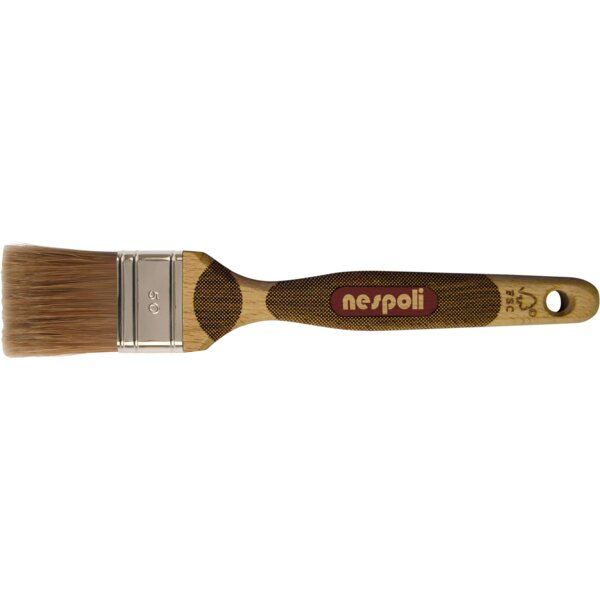
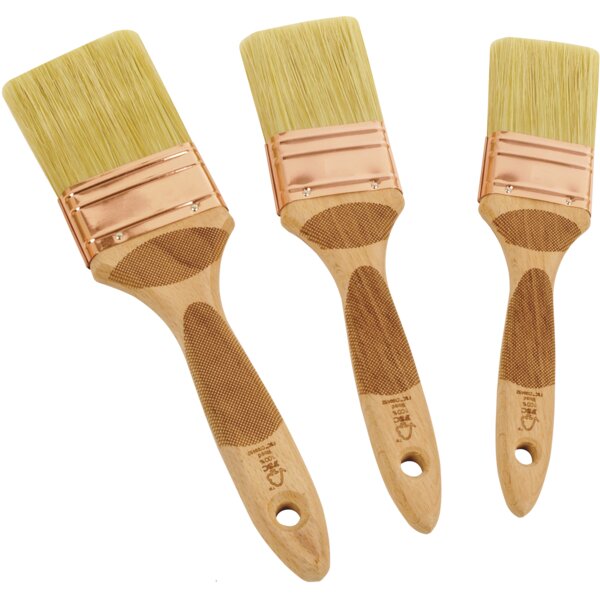
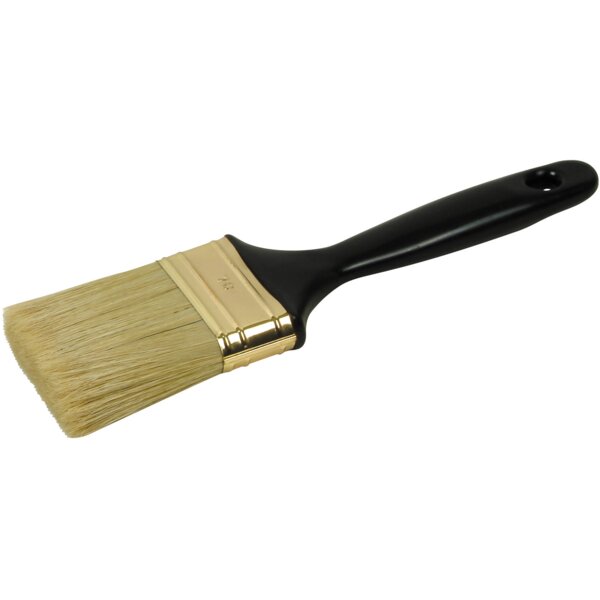
- Application tools: Soft, long-haired brush (oval or full style) and conventional air spray (airless not advised).
- Thinner for brush applications: Epifanes Brushthinner for Paint & Varnish (0–5%).
- Thinner for air spray applications: Epifanes Spraythinner for Paint & Varnish (5–10%).
- Air spray parameters:
- Nozzle: 1.3–1.5 mm.
- Pressure: 2–3 bar.
- Viscosity for spraying: 16–20 s, DIN-cup 4 mm.
- Recommended sanding between coats: Not absolutely required; for smoother finish sand each coat with P280–320 dry.
Applications and use cases
Field of application
- Full UV-resistant system on all interior and exterior woodwork above the waterline.
- Especially suited for use on teak and other oily wood species.
- As a quick-drying grain-filling coat prior to Epifanes Clear Gloss Varnish, Epifanes Woodfinish Gloss or Epifanes Rubbed Effect Varnish.
- Maintenance coating over intact, well-adhering one- and two-component varnish systems, regardless of brand.
Substrate conditions
- Bare wood: Dry, degreased and sanded; moisture content in the wood less than 15%.
- Previously coated surfaces: Well cleaned, degreased, sanded and intact one- or two-component varnish systems with good adhesion.
Application conditions and recommendations
- Application temperature: Minimum 8 °C, maximum 28 °C.
- Relative air humidity: Minimum 50%, maximum 75%.
- Stir well before use.
- Do not over-brush and do not apply wet-on-wet.
- Avoid excessive wet films to prevent curtains and drying problems.
- Avoid varnishing in direct sunlight or in strong wind to prevent rapid solvent loss and reduced flow.
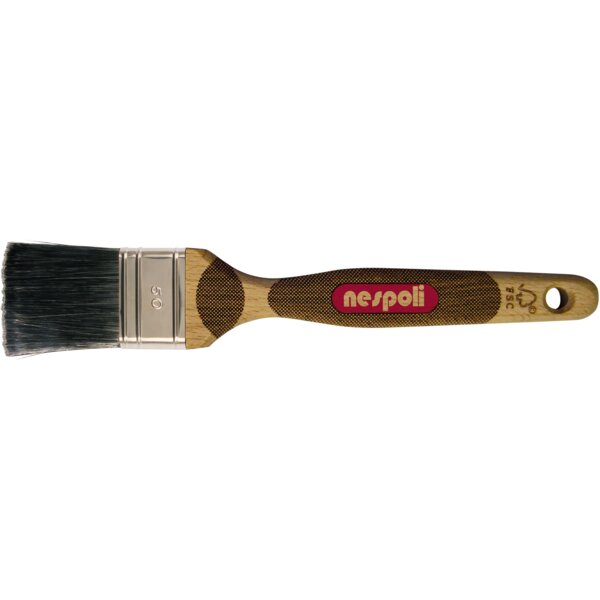
- Use only soft, long-bristled, clean and dry brushes of good quality.
Recoating and system build-up
- Recoatable with:
- Epifanes Clear Varnish
- Epifanes Woodfinish Gloss
- Epifanes Rubbed Effect Varnish
- Epifanes Rapidclear
- When overcoating Rapidcoat with the above gloss finishes, sand the last Rapidcoat coat with P220 dry.
- When overcoating Rapidcoat with Rapidclear, sand the final Rapidcoat coat with P280–320 dry.
- For high gloss finishing with Epifanes Clear Gloss Varnish, Epifanes Woodfinish Gloss or Epifanes Rubbed Effect Varnish, sand the last Rapidcoat coat with P220 first.
FAQ
-
Is Epifanes Rapidcoat a varnish?
Rapidcoat is described as a semi-gloss varnish alternative based on urethane and alkyd resins. It provides similar protective and decorative properties but is optimized for quick and easy application.
-
On which surfaces can I use Rapidcoat?
It is intended for interior and exterior woodwork above the waterline, particularly teak and other oily woods, and can also be applied over intact one- and two-component varnish systems after proper cleaning and sanding.
-
Do I need to sand between coats?
Sanding between coats is not absolutely required for adhesion, but for a smoother finish it is recommended to sand each coat with P280–320 dry.
-
How many coats are recommended?
The product information sheet indicates applying 5–6 coats of Rapidcoat, with a total of 6 coats in the system. More coats are optional.
-
What thinning rates should I use?
For brush application use Epifanes Brushthinner for Paint & Varnish at 0–5%. For conventional air spray use Epifanes Spraythinner for Paint & Varnish at 5–10%.
-
How long should I wait before recoating?
At 20 °C and 65% relative humidity, Rapidcoat is typically recoatable after approximately 5–6 hours per coat at 30 µm dry film thickness.
-
Can Rapidcoat be used as a base for high-gloss varnishes?
Yes. It can be used as a quick-drying grain-filling base under Epifanes Clear Gloss Varnish, Epifanes Woodfinish Gloss or Epifanes Rubbed Effect Varnish, following the specified sanding steps.
-
What hazards are associated with this product?
According to the safety data sheet, Epifanes Rapidcoat is a flammable liquid (Flam. Liq. 3, H226), may cause drowsiness or dizziness (STOT SE 3, H336), and is harmful to aquatic life with long lasting effects (Aquatic Chronic 3, H412). Repeated exposure may cause skin dryness or cracking (EUH066). It should be kept away from ignition sources and out of reach of children, and used only with adequate ventilation and appropriate personal protective equipment.
Section 14 – Transport information
- UN number or ID number: UN1263.
- UN proper shipping name (ADR): 1263 PAINT.
- UN proper shipping name (IMDG / IATA): PAINT.
- Transport hazard class: Class 3 (F1) – Flammable liquids.
- Labels: 3.
- Packing group: III.
- Marine pollutant: No.
- Special precautions for user: Warning: Flammable liquids.
- Kemler hazard identification number: 30.
- EMS code (IMDG): F-E, S-E.
- Stowage category (IMDG): A.
- Limited quantities (ADR / IMDG): 5 L.
- Excepted quantities (EQ): Code E1 – maximum 30 ml per inner packaging, 1000 ml per outer packaging.
- Transport category (ADR): 3.
- Tunnel restriction code (ADR): D/E.
- Maritime bulk transport according to IMO instruments: Not applicable.
- UN model regulation: UN 1263 PAINT, 3, III.
Section 8 – Personal protective measures
The following information on personal protection is taken from the safety data sheet for Epifanes Rapidcoat and should be observed during handling and application.
General protective and hygiene measures
- Do not eat, drink, smoke or sniff while working with the product.
- Immediately remove all soiled or contaminated clothing.
- Wash hands before breaks and at the end of work.
Respiratory protection
- In case of brief exposure or low pollution, use a suitable respiratory filter device.
- In case of intensive or longer exposure, use a self-contained respiratory protective device independent of ambient air.
- Recommended filter type: Filter AX.
- A half-face mask for organic vapours and solvents according to EN140 type A1 or A2 is recommended.
Hand protection
- Wear protective gloves that are impermeable and resistant to the product.
- Because the mixture contains several substances, the exact glove material must be selected based on penetration time, diffusion rates and degradation, in consultation with the glove manufacturer.
- For permanent contact up to a maximum of 15 minutes, gloves made of butyl rubber (BR) are indicated as suitable.
- For splash protection, gloves made of the following materials are indicated as suitable:
- Chloroprene rubber, glove thickness > 0.7 mm, penetration time > 60 min according to EN374.
- Nitrile rubber, glove thickness > 0.3 mm, penetration time > 60 min according to EN374.
- The exact breakthrough time must be obtained from and observed according to the glove manufacturer.
Eye and face protection
- Wear tightly sealed safety goggles.
Body protection
- Use a suitable protective suit to avoid skin contact.
Contenido generado por IA