What is 545 Epoxy Anti‑Corrosive Primer Base and why choose it?
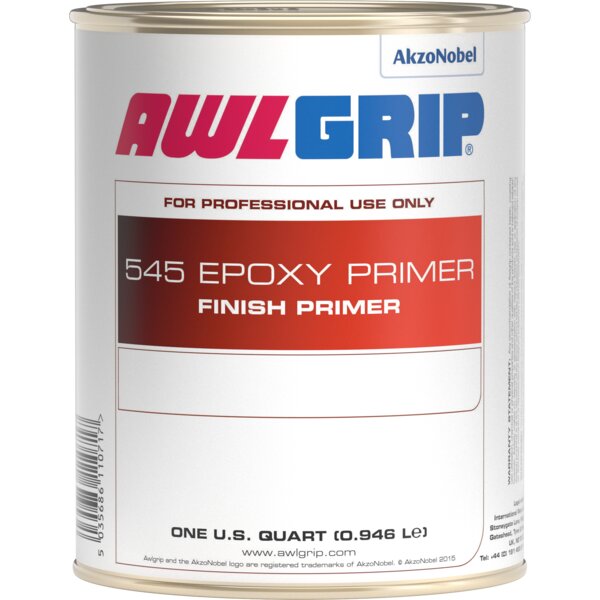
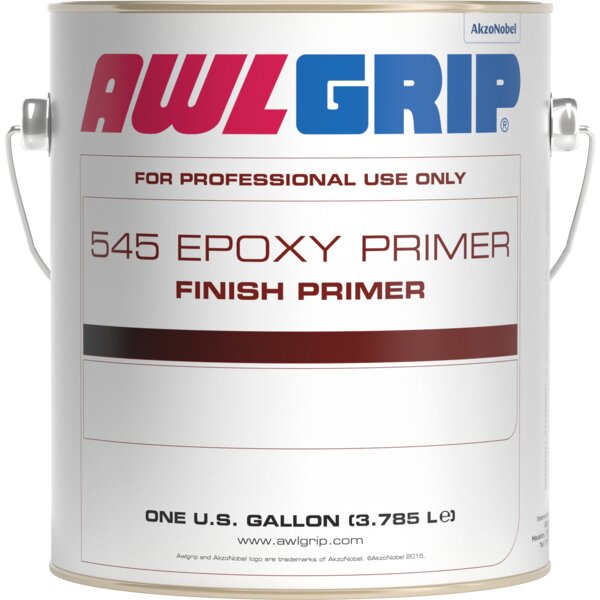
545 Epoxy Anti‑Corrosive Primer Base from Awlgrip is a two-component epoxy polyamide primer designed to provide outstanding corrosion resistance and adhesion on marine and industrial substrates. Used with the D3001 converter, it seals undercoats and surfacing primers before topcoating and can be applied by spray, brush or roller, both above and below the waterline. Its dual-purpose formulation simplifies systems, delivers long-term protection and prepares the surface for high-performance Awlgrip finishes.
Main features
- Anti-corrosive epoxy system: Two-component epoxy polyamide primer offering excellent corrosion protection on steel and aluminium substrates.
- Multi-substrate adhesion: Formulated for use on steel, aluminium, wood, GRP/gelcoat and fiberglass.
- Dual-purpose sealer: Seals both undercoats and surfacing primers in a single product prior to application of Awlgrip topcoats and epoxy surfacers.
- Above and below the waterline: Suitable for use on areas exposed to immersion as well as topsides and superstructures.
- Flexible application methods: Can be applied by air-atomized spray, conventional or airless spray, as well as brush and roller.
- Optimized film build: Recommended to apply three coats to reach a minimum dry film thickness (DFT) of 50–75 µm after sanding.
- Compatible system: Can be overcoated with Awlgrip and Awlgrip HS topcoats, Awlcraft 2000, Awlcraft 3000, Awlcraft SE, Awlgrip HDT, and Awlgrip epoxy surfacers including Awlquik, Epoxy Surfacing Primer, High Build and Ultra Build.
- Professional-grade performance: Intended for interior and exterior use in professional, industrial and marine refit or newbuild applications.
Technical characteristics
Product type and components
- Type: Epoxy polyamide primer.
- Base (this product): 545 Epoxy Primer Base D8001 (White) or D1001 (Grey).
- Converter: D3001 Converter.
- Reducers: T0006 (spray), T0031 (brush/roller).
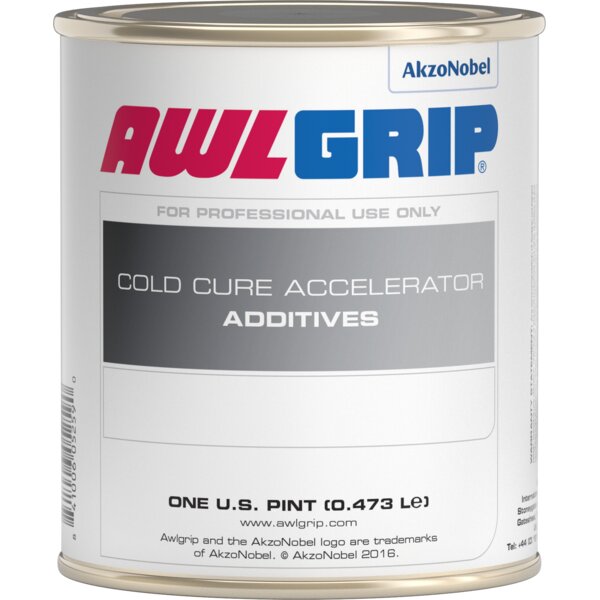
- Optional accelerator: COLD CURE Accelerator M3066 (for brush/roller use below 25 °C).
Physical data
- Volume solids (unthinned): 40 %.
- Specific gravity: 1.25.
- Colour: Base white or grey (converter is colourless liquid).
- State: Liquid.
Packaging
- Available packs: 1 US Quart and 1 US Gallon (base).
- Additional packaging from technical sheet: 3.78 L and 0.95 L packs (regional availability may vary).
Coverage and film thickness
- Application methods: Brush, roller or air-atomized spray.
- Number of coats (typical): 3 coats.
- Recommended wet film thickness (WFT) per coat: 87 µm (3.4 mil) by brush, roller or air-atomized spray.
- Recommended DFT per coat: 35 µm (1.4 mil).
- Maximum DFT per coat: 45 µm (1.8 mil).
- Theoretical coverage per coat at recommended DFT: 11.6 m²/L (472.6 ft²/US gal).
- Minimum total DFT after sanding: 50–75 µm (2–3 mil); an additional coat may be needed to reach this film build.
- Note: Coverage values are based on 100 % theoretical transfer efficiency. Actual coverage will depend on equipment, thinning, technique, part geometry and conditions.
Recommended film thickness (alternative technical sheet)
- Wet film thickness: 175–250 µm in 2–3 coats (spray application).
- Dry film thickness: 50–75 µm total.
VOC information (product as supplied, without reducer)
- OD1001 Grey Base: 413 g/L; 3.45 lb/gal; 274 g/kg; 0.27 lb/lb.
- OD8001 White Base: 414 g/L; 3.46 lb/gal; 272 g/kg; 0.27 lb/lb.
- OD3001 Converter: 622 g/L; 5.19 lb/gal; 631 g/kg; 0.63 lb/lb.
- 545 Epoxy Primer (mixed base + converter): 518 g/L; 4.32 lb/gal; 414 g/kg; 0.41 lb/lb.
- Note: All VOC data is theoretical; actual values can vary between colours and batches and when measured by standard methods.
Recoatability and drying times
Values below are typical and can vary with film thickness, ventilation and conditions.
- Touch dry:
- 15 °C (59 °F): 3 hours.
- 25 °C (77 °F): 2 hours.
- 35 °C (95 °F): 30 minutes.
- Hard dry:
- 15 °C: 10 hours.
- 25 °C: 6 hours.
- 35 °C: 3 hours.
- Pot life (mixed product):
- 15 °C: 16 hours.
- 25 °C: 16 hours.
- 35 °C: 8 hours.
- Recoat windows with 545 Epoxy Primer, Awlcraft and Awlgrip products (brush/roller systems):
- 15 °C: Minimum 16 hours, maximum 24 hours.
- 25 °C: Minimum 12 hours, maximum 24 hours.
- 35 °C: Minimum 8 hours, maximum 24 hours.
- Recoat windows with 545 Epoxy Primer Spray over itself:
- 15 °C: Minimum 2 hours, maximum 24 hours.
- 25 °C: Minimum 60 minutes, maximum 24 hours.
- 35 °C: Minimum 60 minutes, maximum 24 hours.
- After 24 hours: Sanding is required before recoating; sanding is recommended in all cases to improve adhesion and appearance.
Mixing and reduction
- Mix ratio (base:converter): 1:1 by volume.
- Induction time after mixing: 15 minutes.
Spray application (air-atomized)
- Reducer: T0006.
- Recommended thinning: 0–25 % with T0006.
- Mixing example from Spanish technical sheet: 1 L base + 1 L D3001 converter, reduced 25 % with 0.5 L T0006 (overall 1:1:½ by volume).
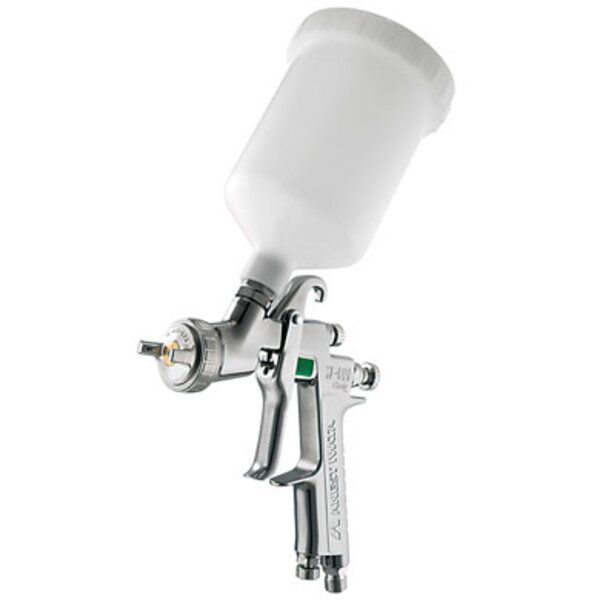
- Typical spray setup (air-atomized):
- Fluid tip: 1.00–1.40 mm (39–55 thou).
- Fluid pressure: 1.8–2.2 bar (26–32 psi).
- Fluid flow rate: 180–280 cc/min.
- Atomizing air pressure: 1.8–2.2 bar (26–32 psi).
- Alternative equipment guidance: Conventional or airless spray can also be used; example setups include Graco or Binks equipment with appropriate tips and pressures.
Brush and roller application
- Reducer: T0031 Brushing Reducer.
- Recommended thinning: 5–10 % with T0031.
- Optional accelerator: Below 24–25 °C, COLD CURE Accelerator M3066 may be used to maintain drying and cure times.
Environmental and temperature limitations
- Do not apply when the substrate temperature is less than 3 °C (5 °F) above the dew point.
- Do not apply to surfaces hotter than 41 °C (105 °F).
- Ambient temperature during application and cure should be between 13 °C (55 °F) and 41 °C (105 °F).
Surface preparation
Preparation methods must ensure the surface is clean, dry, and free from contaminants such as wax, grease, oil, and dust. Testing on a non-critical area is advised before full-scale work.
- GRP / Gelcoat / Fiberglass: Remove all surface contamination (waxes, mould-release agents, dirt, grease, etc.). Sand with P150–P220 grit paper.
- Steel: Grit blast to white metal in accordance with SSPC-SP10 (Sa 2½) to produce a 2–3 mil (50–75 µm) blast profile.
- Aluminium: Grind with 36-grit disc or blast to bright, clean aluminium. The metal must be bright silver and completely free of grey oxidation, with a 2–3 mil (50–75 µm) surface profile.
- Wood: Wood must be clean and dry. Sand with 80–120 grit paper, blow off sanding dust using clean, dry compressed air, and wipe with clean rags.
- Wood sealing step: For wood substrates, first apply a light spray coat of 545 Epoxy Primer reduced 40 % with T0006 and allow to cure for 12–16 hours before proceeding with full build coats.
Applications and use cases
- Marine newbuild and refit: Provides a corrosion-resistant, well-adhered base for Awlgrip topside and deck systems on steel, aluminium, GRP and wood yachts or commercial vessels.
- Below-waterline protection: Suitable as an epoxy primer below the waterline prior to appropriate subsequent coatings.
- Superstructures and topsides: Delivers a smooth, sandable substrate for high-gloss Awlgrip topcoats on hulls, cabins and superstructures.
- Interior structures: Used as a corrosion-resistant primer on interior steel and aluminium components in engine rooms, bilges and structural framing.
- Epoxy surfacing systems: Acts as a sealer over Awlgrip High Build, Ultra Build and Epoxy Surfacing Primer before final fairing and topcoating.
- Professional industrial coating: Two-component coating for interior and exterior use in professional and industrial environments where solventborne epoxy systems are acceptable.
FAQ – 545 Epoxy Anti‑Corrosive Primer Base
-
On which substrates can 545 Epoxy Primer be used?
It is suitable for steel, aluminium, wood and GRP/gelcoat/fiberglass surfaces that have been correctly cleaned and mechanically prepared.
-
Can it be used below the waterline?
Yes. 545 Epoxy Primer can be applied both above and below the waterline when part of a compatible Awlgrip system.
-
What is the correct mixing ratio?
Mix one part 545 Epoxy Primer Base with one part D3001 Converter by volume. Allow 15 minutes induction before application.
-
Which reducers should I use?
Use T0006 Spray Reducer for spray application and T0031 Brushing Reducer for brush or roller application, following the thinning ranges indicated in the technical data.
-
How many coats are typically required?
Three coats at around 35 µm DFT per coat are recommended to achieve the minimum total DFT of 50–75 µm after sanding.
-
When can I sand and overcoat?
At 25 °C, 545 Epoxy Primer is typically touch dry in 2 hours and hard dry in 6 hours. Overcoating windows vary from 60 minutes to 24 hours depending on temperature and method; after 24 hours, sanding is required before recoating.
-
Is 545 Epoxy Primer suitable for consumer DIY use?
The safety data sheet indicates it is a professional two-component coating. Users must be familiar with handling flammable solventborne epoxies and follow all safety and PPE recommendations.
-
What environmental conditions are required during application?
Ambient temperature should be between 13 °C and 41 °C, and the substrate must be at least 3 °C above the dew point and not hotter than 41 °C.
-
What topcoats are compatible?
It can be overcoated with 545 Epoxy Primer (self), Awlcraft 2000, Awlcraft 3000, Awlcraft SE, Awlgrip Topcoat, Awlgrip HDT, and Awlgrip epoxy surfacers such as Awlquik, Epoxy Surfacing Primer, High Build and Ultra Build.
-
What should I use to clean equipment?
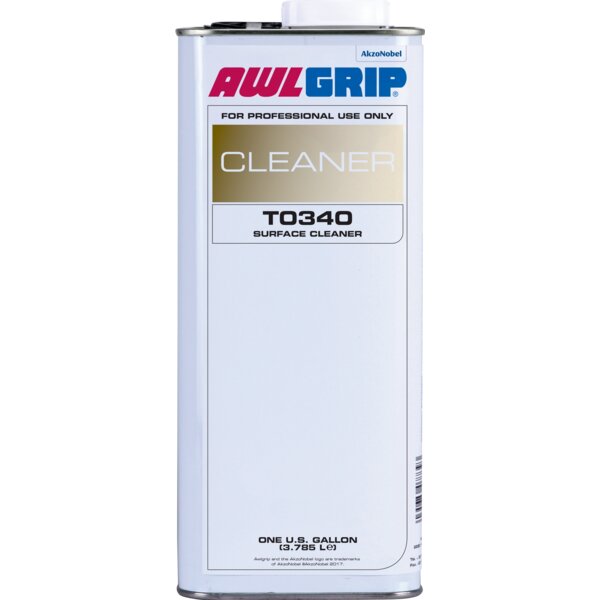
Recommended cleaners are T0002 and T0006, as indicated in the technical sheet.
Section 14 – Transport information
The mixed 545 Epoxy Primer system (including converter) is classified for transport as follows:
- UN number (ADR/RID, IMDG, IATA): UN1263.
- Proper shipping name: PAINT.
- Transport hazard class: Class 3 (flammable liquid).
- Packing group: II.
- Environmental hazards: Not classified as environmentally hazardous for transport.
- ADR/RID additional information: Special provisions 640 (C); Tunnel code (D/E).
- IMDG additional information: Emergency schedules F‑E, S‑E.
- Special precautions for user: Within user premises, always transport in closed, upright and secure containers. Ensure personnel transporting the product know what to do in case of accident or spillage.
- Bulk transport according to IMO instruments: Not applicable.
Section 8 – Individual protection measures
The following personal protective equipment (PPE) and exposure controls derive from the Safety Data Sheet for 545 Epoxy Primer Converter (D3001). They apply when mixing and applying the 545 Epoxy Primer system and when exposure to vapours, mists or liquid is possible. A site-specific risk assessment should always be carried out.
Engineering controls and hygiene
- Use only with adequate ventilation. Employ local exhaust, process enclosures or other engineering controls to keep airborne concentrations below statutory limits and below the lower explosive limit.
- Use explosion-proof ventilation and electrical equipment.
- Wash hands, forearms and face thoroughly after handling, before eating, drinking or smoking and at the end of the work period.
- Remove contaminated work clothing and protective equipment before entering eating areas; wash contaminated clothing before reuse.
- Ensure eye-wash stations and safety showers are located close to work areas.
Eye and face protection
- Wear safety eyewear complying with an approved standard whenever there is a risk of splashes, mists or vapours.
- Where contact is possible, use chemical splash goggles providing full eye protection.
Hand protection
- Wear chemical-resistant, impervious gloves that comply with relevant standards whenever handling the mixed product or converter.
- For prolonged or frequently repeated contact, a glove with protection class 6 (breakthrough time > 480 minutes according to EN374) is recommended. Suggested materials: Viton® or nitrile with thickness ≥ 0.38 mm.
- For brief contact, a glove with protection class 2 or higher (breakthrough time > 30 minutes according to EN374) is recommended. Suggested material: nitrile with thickness ≥ 0.12 mm.
- Replace gloves regularly and immediately if any damage or degradation is observed, as performance can be reduced by physical or chemical attack or poor maintenance.
Skin and body protection
- Select protective clothing based on the tasks performed and associated risks; consult a specialist where necessary.
- Where there is a risk of ignition due to static electricity, wear antistatic protective clothing. For highest protection, clothing should include antistatic overalls, boots and gloves compliant with EN 1149.
- Use appropriate footwear and any additional skin protection measures as determined by the risk assessment.
Respiratory protection
- When ventilation is inadequate, select a respirator conforming to EN140 fitted with an A/P2 filter or better, based on the assessed hazard and exposure potential.
- Respirators must be used within a formal respiratory protection program, including fit testing and user training.
- Dry sanding, flame cutting or welding of the dry paint film can generate hazardous dust and fumes; whenever possible, use wet sanding/flatting and local exhaust. If exposure cannot be adequately controlled, use suitable respiratory protection.
Environmental exposure controls
- Check emissions from ventilation systems and process equipment to ensure they comply with environmental protection requirements.
- Where necessary, use fume scrubbers, filters or process modifications to reduce emissions.
*Contenido generado por IA