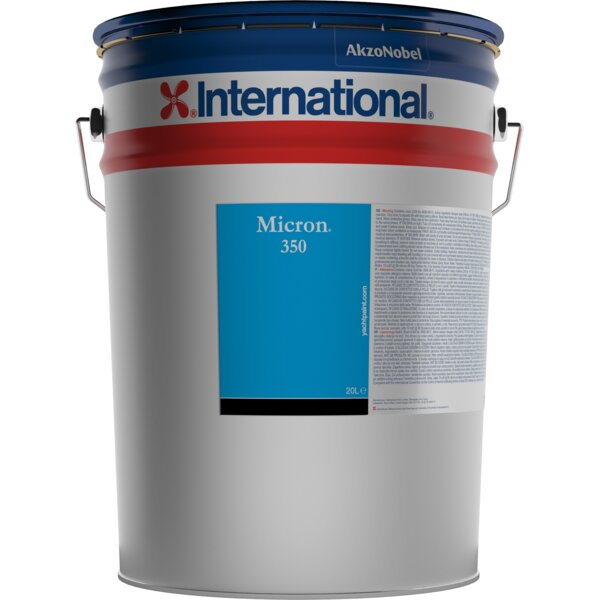
What is Epoxy A/F Tie Coat Base and why choose it?
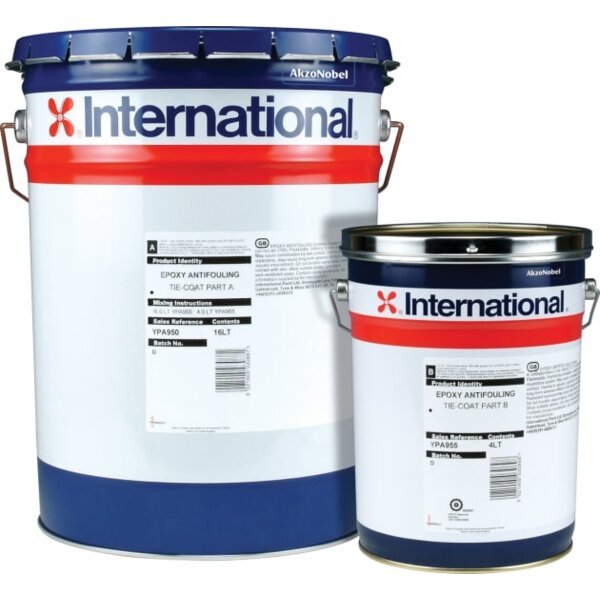
Epoxy A/F Tie Coat Base by International Náutica is a two-pack, tar-free epoxy tie coat designed to act as a high-performance adhesion layer between anticorrosive primers, antifouling coatings and certain polyurethane topcoats. Used as part of the Global Yacht standard specification, it helps ensure a reliable coating system on both newbuild and maintenance & repair projects, while extending the antifouling overcoating interval up to 5 days.
Main features
- Two-pack epoxy system: supplied as Part A (base) and Part B (converter/curing agent YPA955) mixed 4:1 by volume.
- Tar-free formulation: epoxy tie coat without tar, suitable where tar-containing products are not allowed.
- Adhesion bridge: designed as a tie coat between anticorrosive primers, antifoulings and some polyurethane topcoats to maximise system adhesion and durability.
- For newbuild and M&R: suitable for use on new constructions as well as maintenance and repair projects.
- Extended antifouling overcoating window: antifouling can typically be applied up to 5 days after Epoxy Tiecoat under the specified conditions.
- Controlled drying times: predictable touch-dry, hard-dry and pot life values across 5–35°C (41–95°F).
- High solids content: 57% volume solids for efficient film build.
- Light grey matt finish: colour YPA950 Light Grey with a matt appearance for good visibility between coats.
Technical specifications
- Product type: two-pack, tar-free epoxy tie coat
- Brand: International Náutica
- Colour: YPA950 – Light Grey
- Finish: Matt
- Specific gravity: 1.4
- Volume solids: 57%
- Mix ratio: 4 volumes Part A to 1 volume Part B
- Converter/curing agent: YPA955
- Typical shelf life: 2 years
- VOC (as supplied): 445 g/L (EPA Method 24)
- VOC (EU Solvent): 306 g/kg (EU Solvent Emissions Directive 1999/13/EC)
- Available unit sizes: 5 L, 20 L (for other sizes: Consultar ficha técnica del fabricante.)
Drying and overcoating information
- Substrate temperature 5°C (41°F)
- Hard dry: 24 hours
- Touch dry: 12 hours
- Pot life: 8 hours
- Substrate temperature 15°C (59°F)
- Hard dry: 20 hours
- Touch dry: 8.5 hours
- Pot life: 7 hours
- Substrate temperature 25°C (77°F)
- Hard dry: 16 hours
- Touch dry: 6 hours
- Pot life: 6 hours
- Substrate temperature 35°C (95°F)
- Hard dry: 12 hours
- Touch dry: 4 hours
- Pot life: 4 hours
Overcoating intervals (minimum/maximum)
Substrate temperature 5°C (41°F)
- Awlcraft 3000: 36 hours – 5 days
- Epoxy Tiecoat: 36 hours – 42 days
- Interior Finish 750: 36 hours – 5 days
- International/Interlux Antifouling: 24 hours – 8 days
- Micron 350, Micron 99, Micron Extra, Micron Extra 2, Micron Extra EU, Trilux 33, Ultra 300, Uni-Pro 250: 24 hours – 8 days
Substrate temperature 15°C (59°F)
- Awlcraft 3000: 18 hours – 5 days
- Epoxy Tiecoat: 18 hours – 35 days
- Interior Finish 750: 18 hours – 5 days
- International/Interlux Antifouling: 15 hours – 6 days
- Micron 350, Micron 99, Micron Extra, Micron Extra 2, Micron Extra EU, Trilux 33, Ultra 300, Uni-Pro 250: 15 hours – 6 days
Substrate temperature 25°C (77°F)
- Awlcraft 3000: 12 hours – 5 days
- Epoxy Tiecoat: 12 hours – 28 days
- Interior Finish 750: 12 hours – 5 days
- International/Interlux Antifouling: 12 hours – 5 days
- Micron 350, Micron 99, Micron Extra, Micron Extra 2, Micron Extra EU, Trilux 33, Ultra 300, Uni-Pro 250: 12 hours – 5 days
Substrate temperature 35°C (95°F)
- Awlcraft 3000: 8 hours – 5 days
- Epoxy Tiecoat: 8 hours – 14 days
- Interior Finish 750: 8 hours – 5 days
- International/Interlux Antifouling: 8 hours – 3 days
- Micron 350, Micron 99, Micron Extra, Micron Extra 2, Micron Extra EU, Trilux 33, Ultra 300, Uni-Pro 250: 8 hours – 3 days
Applications and typical uses
- Yacht and boat hull systems: used as part of the International Global Yacht specification as a tie coat between Interprime 450 anticorrosive primer and a range of antifouling products or selected polyurethane topcoats.
- Newbuilding projects: provides a controlled, high-adhesion epoxy layer in new construction where long overcoating windows are beneficial.
- Maintenance & repair: suitable for refit and repair work where existing anticorrosive systems are being overcoated with fresh antifouling or compatible finishes.
- Interior and exterior two-component coating systems: identified use as a two-component coating for both interior and exterior service, when used within an appropriate coating scheme.
Surface preparation and application
- Use in accordance with standard Global Yacht specifications.
- All substrates must be clean, dry and free from oil, grease, soluble contaminants and other foreign matter.
- Perform high-pressure fresh water wash (or fresh water wash as appropriate) to remove contaminants.
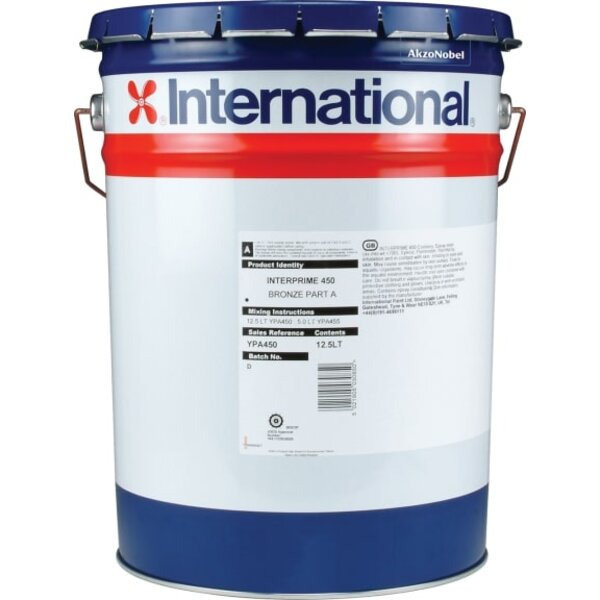
- Epoxy Tiecoat must always be applied over Interprime 450.
- The Interprime 450 surface must be dry, free of oil, grease, salt etc. and overcoated within the specified overcoating interval of the primer.
Mixing, thinning and cleaning
- Mixing: use a power agitator to thoroughly mix each component separately and then the combined mix.
- Thinning: thinning is not recommended. International GTA220 may be used only in exceptional circumstances, up to a maximum of 5% by volume.
- Cleaner: International GTA220 is to be used for equipment cleaning only.
Application methods
- Airless spray: total output fluid pressure at the spray tip not less than 2500 psi (176 kg/cm²). Recommended tip size 0.46–0.66 mm (18–26 thou).
- Brush or roller: suitable for small areas; multiple coats may be required to achieve the specified dry film thickness.
Covers and film thickness
- Number of coats: 1 (subject to achieving the specified DFT)
- Theoretical coverage: 5.7 m²/L per coat
- Recommended DFT per coat: 100 microns dry
- Recommended WFT per coat: 175 microns wet
FAQ
-
1. What is the main function of Epoxy A/F Tie Coat Base?
It acts as a tar-free epoxy tie coat between anticorrosive primers, antifoulings and some polyurethane topcoats, improving adhesion and overall system performance.
-
2. On which primer should it be applied?
Epoxy Tiecoat should always be applied over Interprime 450, within the overcoating interval specified for that primer.
-
3. How many coats are normally required?
The technical data specify 1 coat, provided the recommended dry film thickness of 100 microns is achieved.
-
4. Can I thin Epoxy Tiecoat?
Thinning is not recommended. International GTA220 may be used only in exceptional circumstances, up to 5% by volume.
-
5. Which application methods are suitable?
It can be applied by airless spray, brush or roller. Airless spray requires a minimum 2500 psi (176 kg/cm²) fluid pressure and a 0.46–0.66 mm tip.
-
6. What is the pot life?
Pot life is 8 hours at 5°C, 7 hours at 15°C, 6 hours at 25°C and 4 hours at 35°C.
-
7. What is the shelf life of the product?
The typical shelf life is 2 years when stored correctly between 5°C and 35°C and kept in firmly closed containers out of direct sunlight.
-
8. Which antifoulings can be applied over Epoxy Tiecoat?
The data sheet lists International/Interlux Antifouling, Micron 350, Micron 99, Micron Extra, Micron Extra 2, Micron Extra EU, Trilux 33, Ultra 300 and Uni-Pro 250, within the stated overcoating intervals.
-
9. Is Epoxy Tiecoat suitable for both interior and exterior use?
Yes. The safety data sheet identifies it as a two-component coating for interior and exterior use when used within an appropriate system.
-
10. On which substrates can it be used?
Compatibility depends on the full coating system. For specific substrate recommendations: Consultar ficha técnica del fabricante.
Section 14 – Transport information
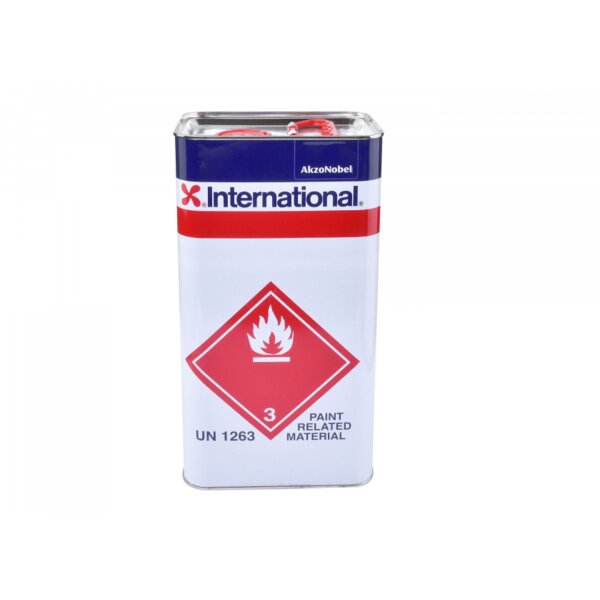
- UN number / ID number: UN1263
- UN proper shipping name: PAINT
- Transport hazard class: Class 3 (flammable liquid)
- Packing group: III
- Environmental hazards: classified as environmentally hazardous; marine pollutant components include reaction product: bisphenol-A-(epichlorhydrin) epoxy resin and solvent naphtha (petroleum), light arom.
- ADR/RID: Class 3, Packing Group III, UN1263 PAINT. Environmentally hazardous substance mark not required when transported in packages ≤5 L or ≤5 kg. Tunnel code: D/E.
- IMDG: Class 3, Packing Group III, UN1263 PAINT. Marine pollutant. Emergency schedules: F-E, S-E. Marine pollutant mark not required for packages ≤5 L or ≤5 kg.
- IATA: Class 3, Packing Group III, UN1263 PAINT. The environmentally hazardous substance mark may appear if required by applicable transport regulations.
- Special precautions for user: within user’s premises, always transport in closed containers that are upright and secured. Ensure personnel transporting the product know what to do in case of accident or spillage.
Section 8 – Personal protective measures
Engineering controls and hygiene
- Use only with adequate ventilation; employ process enclosures and/or local exhaust ventilation to keep airborne concentrations below any recommended limits and below the lower explosive limit.
- Use explosion-proof ventilation equipment and non-sparking tools. Take precautions against electrostatic discharge.
- Wash hands, forearms and face thoroughly after handling and before eating, drinking or smoking.
- Contaminated work clothing should not leave the workplace and should be washed before reuse.
- Ensure eyewash stations and safety showers are close to work areas.
Eye and face protection
- Wear chemical splash goggles complying with an approved standard when there is a risk of exposure to liquid splashes, mists, gases or dusts.
Hand protection
- Wear chemical-resistant, impervious gloves compliant with relevant standards when handling the product.
- For prolonged or frequently repeated contact, gloves with protection class 6 (breakthrough time > 480 minutes according to EN374) are recommended; suggested materials: Viton or nitrile with thickness ≥ 0.38 mm.
- For brief contact, gloves with protection class ≥ 2 (breakthrough time > 30 minutes according to EN374) are recommended; suggested material: nitrile with thickness ≥ 0.12 mm.
- Replace gloves regularly and whenever damage or deterioration is observed.
Skin and body protection
- Select protective clothing based on the tasks and risks and have it approved by a specialist.
- Where there is a risk of ignition from static electricity, wear anti-static protective clothing (for example, anti-static overalls, boots and gloves) complying with EN 1149.
- Use appropriate footwear and any additional skin protection measures as required by the risk assessment.
Respiratory protection
- Select a respirator that meets the appropriate standards based on the assessed exposure.
- Wear a respirator conforming to EN140 with an A/P2 filter or better where ventilation is inadequate.
- During dry sanding, flame cutting or welding of the dry paint film, use wet methods where possible; if exposure cannot be avoided, use suitable respiratory protection.
Environmental exposure control
- Check emissions from ventilation and process equipment to ensure compliance with environmental legislation.
- Where needed, use fume scrubbers, filters or engineering modifications to reduce emissions to acceptable levels.
*Contenido generado por IA