What it is and why choose it
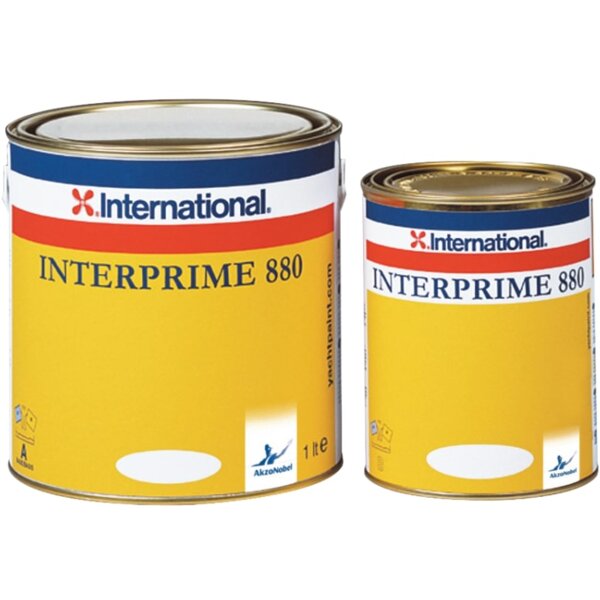
INTERPRIME 880 PART A by International Náutica is the base component of a two-pack epoxy surfacer designed as a high-performance undercoat for polyurethane topcoats such as Perfection and Perfection Pro. Formulated for use across a wide temperature window (5°C to 35°C), it provides an excellent, sandable foundation on a wide range of marine substrates. Its anti-corrosive properties allow sanding back to bare metal, and the simple 1:1 mixing ratio with converter YPA883 makes on-board and yard application straightforward and repeatable.
INTERPRIME 880 PART A can be applied over compatible epoxy primers and fillers (such as Interfill 830 and 833) and on correctly prepared composite/GRP, primed metal and wood, delivering an even, matte epoxy surface that maximises gloss and appearance of subsequent high-gloss finishes.
Main features
- Two-component epoxy surfacer for high-performance finishing systems.
- Wide application temperature range from 5°C to 35°C without the need for additional accelerator.
- Anti-corrosive properties allow complete sanding back to the metal substrate where required.
- Easy 1:1 mixing ratio by volume with converter/hardener YPA883.
- Excellent base for polyurethane topcoats, enhancing gloss and visual quality of finishes like Perfection and Perfection Pro.
- Improved sanding characteristics for fairing and surface levelling.
- Multi-substrate compatibility: composites/GRP, suitably primed metal and wood.
- Matte finish to optimise visual control of surface preparation and fairing.
Technical specifications
- Product type: Two-component epoxy primer/surfacer for finishes.
- Brand: International Náutica.
- Product name: INTERPRIME 880 PART A (to be mixed 1:1 with YPA883).
- Colour options: YPA884 Off White, YPA885 Blue Grey.
- Finish: Matte.
- Density: 1.18.
- Volume solids: 41%.
- Mix ratio (Part A : Part B YPA883): 1:1 by volume (as supplied).
- Converter/hardener: YPA883.
- Typical shelf life: 2 years.
- VOC content: 503 g/l.
- Pack sizes (mixed): 2 L (mixed), 8 L (mixed).
- Recommended dry film thickness (DFT) per coat: 100 microns dry.
- Recommended wet film thickness (WFT) per coat: 244–250 microns wet.
- Theoretical coverage: 4 m²/L at 250 microns WFT.
- Maximum number of coats per day: up to 2 coats of Interprime 880.
- Application methods: Airless spray and conventional spray (brush/roller for touch-up).
Drying and overcoating information (mixed system)
- Touch dry:
- 5°C: 3 hours
- 15°C: 2 hours
- 23°C: 50 minutes
- 35°C: 35 minutes
- Pot life (usable time after mixing):
- 5°C: 24 hours
- 15°C: 19 hours
- 23°C: 9.5 hours
- 35°C: 6 hours
- Overcoating with Interprime 880 (self overcoat): Min. 1 hour / Max. 7 days at 5–35°C.
- Overcoating with Perfection / Perfection Pro: Min. 1 hour / Max. 7 days at 5–35°C.
- Overcoating with Interspray 900:
- 5°C: 1–3 days
- 15°C: 16 hours–1 day
- 23°C: 8 hours–1 day
- 35°C: 8 hours–1 day
- At humidity > 75%: increase minimum to 3 days for all temperatures.
- Overcoating with Reaction Lacquer:
- 5°C: 1–3 days
- 15°C: 16 hours–1 day
- 23°C: 8 hours–1 day
- 35°C: 8 hours–1 day
Recommended application conditions
- Product temperature: between 5°C and 35°C.
- Ambient temperature: between 5°C (40°F) and 40°C (104°F).
- Substrate temperature: between 5°C (41°F) and 40°C (104°F).
- Do not use below: 5°C.
- Maximum coats per day: 2 coats of Interprime 880.
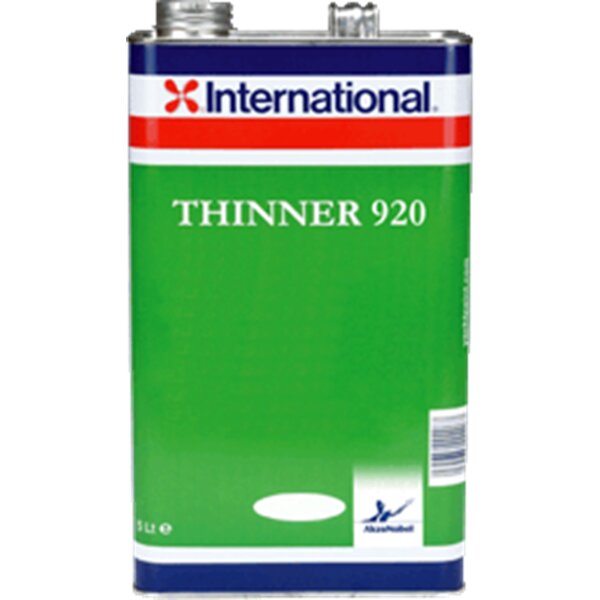
- Compatible thinner/solvents: YTA910, YTA915, YTA920, YTA925 (according to temperature range as specified).
Applications and use cases
Suitable substrates
- Steel / aluminium: over Interprime 820 and epoxy fillers Interfill 830/833 where required.
- Wood: over an initial coat of Interprime 820 (first coat of Interprime 880 to be thinned).
- Gelcoat / composite (GRP): degreased and sanded surfaces.
- Epoxy fillers: such as Interfill 830 and 833, properly sanded.
- Existing epoxy primers: cleaned and sanded epoxy primer systems.
Typical marine uses
- Fairing and surfacing topsides and superstructures before high-gloss polyurethane finishing.
- Refit and repair work on steel, aluminium, wood and composite yachts where improved sanding and fairing are required.
- Intermediate epoxy layer over compatible epoxy primers to build film thickness and optimise corrosion protection prior to topcoating.
- Direct application over epoxy fillers (Interfill 830/833) to achieve a uniform, sandable surface ready for finish coats.
Surface preparation (summary)
- Steel / aluminium: Apply Interprime 820, fair with Interfill 830/833 as needed, sand with 60–120P for profile, then prime with Interprime 820 or Interprime 880 and sand with 280–320P.
- Wood: Prime with Interprime 820 and sand with 280–320 grit before applying Interprime 880 (first coat thinned).
- Gelcoat / composite: Degrease with solvent and clean cloths, sanding with 80–180 grit.
- Epoxy fillers: Sand with 60–120 grit, prime with Interprime 820 or 880, then sand with 280–320 grit.
- Existing epoxy primers: Solvent wipe with frequent cloth changes, sand with 180 grit followed by 280–320 grit; apply maximum two coats of Interprime 880 per day.
- All substrates: Remove all blasting and sanding residues with clean compressed air and brushing or vacuum.
Application methods and key parameters
- General: Mix Part A and Part B thoroughly at 1:1 by volume, agitating each component well before blending. Apply the number of coats needed, observing overcoating intervals.
- Airless spray:
- Pressure: approx. 165 bar / 2400 psi (fluid outlet).
- Tip size: 0.38–0.48 mm (15–19 thou).
- Recommended to add around 5% thinner.
- Avoid pressures below 100 bar / 1500 psi to maintain film appearance and performance.
- Conventional spray:
- Atomising pressure: 2.1–4.08 bar (30–60 psi) at the gun.
- Pressure pot (6 ft hose): 8–10 psi.
- Nozzle size: 1.4–1.8 mm.
- Thinning: 5–15% (minimum 5% recommended with larger nozzles). Thinning > 15% can reduce dry film thickness below 100 microns.
- Brush / roller: Suitable for touch-up and small areas.
- Ventilation and humidity control: Apply in a dry, well-ventilated environment to aid solvent release and curing.
FAQ
-
What type of product is INTERPRIME 880 PART A?
It is the base component of a two-pack epoxy primer/surfacer designed for high-performance finishing systems, to be mixed 1:1 by volume with converter YPA883.
-
On which substrates can it be used?
On composites/GRP, suitably primed metal (steel and aluminium), wood, epoxy fillers (Interfill 830/833) and existing epoxy primers, provided surfaces are correctly prepared as specified.
-
Which topcoats are compatible?
It is an excellent base for polyurethane topcoats such as Perfection and Perfection Pro, and can also be overcoated with products like Interspray 900 and Reaction Lacquer within the specified overcoating intervals.
-
Is an accelerator required at low temperatures?
No. Within the wide application temperature range of 5°C to 35°C (40°F–95°F) no additional accelerator is required.
-
How many coats can I apply in one day?
A maximum of two coats of Interprime 880 should be applied per day.
-
Can it be applied over one-component products?
No. It must not be used over single-component products.
-
What is the recommended dry film thickness per coat?
Approximately 100 microns dry (about 244–250 microns wet) per coat.
-
What thinners should be used and when?
Use YTA910 or YTA915 at 5–21°C, YTA920 at 21–35°C. YTA910 can also be used for equipment cleaning. YTA925 is only for temperatures of 30°C or higher and may be combined with up to 5% YTA920 as a slower thinner.
-
How should the surface be prepared before application?
Surfaces must be clean, dry, degreased and correctly sanded. Specific preparation steps vary for steel/aluminium, wood, gelcoat/composites, epoxy fillers and epoxy primers as detailed in the product information.
-
Where can I find additional detailed technical data?
Consultar ficha técnica del fabricante.
Section 14 – Transport information
The following information is derived from the product’s transport classification and handling recommendations for the Interprime 880 system:
- UN number: UN1263.
- Proper shipping name (ADR/RID, IMDG, IATA): Paint / Pinturas.
- Transport hazard class: Class 3 (flammable liquids).
- Packing group: II.
- Marine pollutant: No indication of classification as marine pollutant in the supplied text.
- Special provisions (ADR/RID): Special provision 640 (C); Tunnel restriction code (D/E).
- Emergency schedules (IMDG): EmS F-E, S-E.
- Bulk transport under IMO instruments: Not applicable.
- On-site transport precautions: Always transport in closed containers, kept upright and secure. Ensure personnel transporting the product know what to do in case of an accident or spillage.
- General storage and transport handling: Containers must have safety closures and remain in the original, tightly closed packaging as supplied until use. Avoid exposure to air, extreme temperatures and direct sunlight; keep between 5°C and 35°C in a cool, dry, well-ventilated place.
Section 8 – Individual protection measures
The following personal protective equipment and exposure controls are specified for handling the Interprime 880 system (including PART A and PART B):
Exposure controls and workplace hygiene
- Use only with adequate ventilation, supported by local exhaust where necessary to keep vapour concentrations below occupational exposure limits.
- Use explosion-proof ventilation and electrical equipment where flammable vapours may be present.
- Prohibit eating, drinking and smoking in areas where the product is handled or stored.
- Wash hands, forearms and face thoroughly after handling chemicals and before eating, smoking or using the restroom.
- Remove contaminated clothing and protective equipment before entering eating areas; wash contaminated garments before reuse.
- Ensure eye-wash stations and safety showers are available close to the work area.
Eye and face protection
- Use safety goggles or face protection compliant with approved standards when there is a risk of splashes, spray, mist or vapour exposure.
- Recommended: chemical splash goggles providing protection against liquid splashes.
Hand protection
- Wear impervious, chemical-resistant gloves conforming to EN374 or equivalent.
- For frequent or prolonged contact, use class 6 protective gloves (breakthrough time > 480 minutes) such as Viton or nitrile, thickness ≥ 0.38 mm.
- For brief contact, use class 2 or higher gloves (breakthrough time > 30 minutes), such as nitrile gloves with thickness ≥ 0.12 mm.
- Replace gloves regularly and immediately if damaged or showing signs of degradation.
- Selection of gloves must consider specific workplace conditions and be confirmed within the user’s risk assessment.
Body and skin protection
- Select protective clothing according to the task and associated risks; clothing choice should be approved by a specialist.
- Where ignition risk from electrostatic charges exists, wear antistatic protective clothing, including coveralls, boots and gloves with antistatic properties (see EN 1149 for requirements).
- Use appropriate protective footwear and any additional skin protection required based on local risk assessment.
Respiratory protection
- Where ventilation is insufficient or exposure limits may be exceeded, use respiratory protection that meets relevant standards.
- Recommended: half-mask respirator compliant with EN140 fitted with A/P2 or better filters for organic vapours and particulates.
- Dry sanding, flame cutting or welding of dry paint films generates hazardous dust and fumes; wet sanding or wet abrading is preferable. If extraction ventilation is not possible, suitable respiratory protection must be worn.
Environmental exposure controls
- Check emissions from ventilation and process equipment to ensure compliance with environmental legislation.
- Use fume scrubbers, filters or process modifications where needed to reduce emissions to acceptable levels.
- Prevent product and contaminated rinse water from entering drains, waterways or soil.
Contenido generado por IA