What it is and why choose it
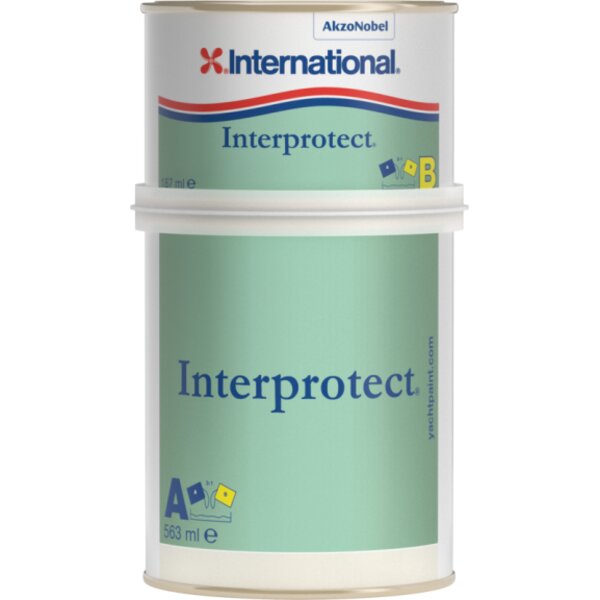
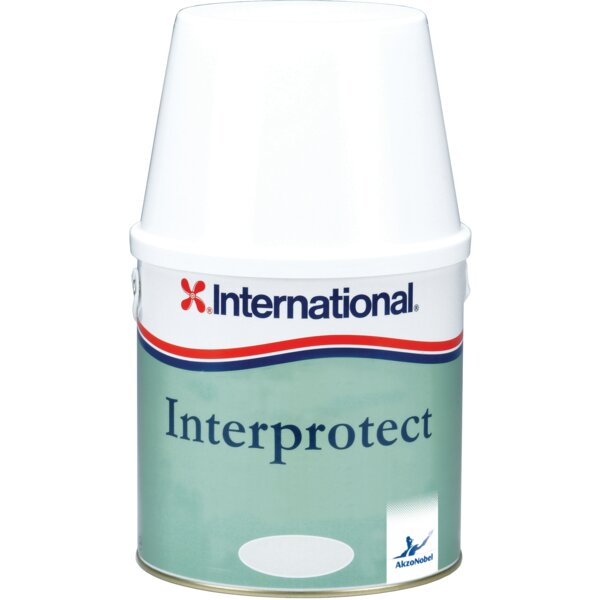
INTERPROTECT BASE PART A by International Náutica is the base component of a two-pack, quick-drying epoxy primer system designed for high performance protection on marine substrates. When mixed with its dedicated curing agent YPA404, it delivers excellent anticorrosive protection, works as an antifouling tie-coat over epoxy primers and offers good abrasion resistance on steel, aluminium and bare wood.
Main features
- Two-component epoxy primer base for exterior use.
- Quick drying, easy to apply by brush or roller.
- Excellent anticorrosive protection for properly prepared substrates.
- Acts as an antifouling tie-coat over epoxy primers.
- Good abrasion resistance for demanding marine environments.
- Matt finish for optimal adhesion of subsequent coats.
- Usable on steel, aluminium and alloy, lead and bare wood; suitable over epoxy primers.
- Compatible with a wide range of International antifoulings and topcoat systems when overcoated within the specified time windows.
Technical specifications
- Product type: High performance epoxy primer (base component of a two-pack system).
- Finish: Matt.
- Specific gravity: 1.4.
- Volume solids: 45%.
- Mix ratio: 3:1 by volume (Base : Curing Agent YPA404).
- Curing agent / converter: YPA404.
- Typical shelf life: 2 years.
- VOC (as supplied): 464 g/L.
- Available pack sizes: 750 ml, 2.5 L, 5 L, 20 L (not all sizes available in all countries).
- Colour (mixed system): White.
- Flash point (mixed system): 23°C (closed cup, Pensky-Martens).
- Boiling point (mixed system): 119°C.
- Density (mixed system): 1.589 g/cm³.
- Viscosity (mixed system): 220 mm²/s at room temperature; 350 mm²/s at 40°C (DIN EN ISO 3219).
- Recommended dry film thickness per coat: 50 microns by brush.
- Recommended wet film thickness per coat: 111 microns by brush.
- Number of coats (by brush/roller): 1–5 depending on substrate and end use.
- Theoretical coverage: 9.1 m²/L per coat by brush.
- Practical coverage: 8.1 m²/L per coat by brush.
Drying and overcoating times (mixed system)
Drying – substrate temperature:
- 5°C: Touch dry 4 h; Immersion 24 h; Pot life 10 h.
- 15°C: Touch dry 2 h; Immersion 18 h; Pot life 5 h.
- 25°C: Touch dry 1 h; Immersion 12 h; Pot life 3 h.
- 35°C: Touch dry 30 min; Immersion 8 h; Pot life 2 h.
Typical overcoating windows (brush/roller application): minimum / maximum times after last coat of Interprotect, depending on substrate temperature:
- B-Free Tiecoat: 15°C: 5 h–2 days; 25°C: 3 h–2 days; 35°C: 2 h–2 days.
- Danboline: 5°C: 2–4 days; 15°C: 24 h–2 days; 25°C: 12–24 h; 35°C: 6–12 h.
- Interfill 830: 15°C: 36 h–3 months; 35°C: 24 h–3 months.
- Interprotect over Interprotect: 5°C: 10 h–6 months; 15°C: 5 h–6 months; 35°C: 2 h–6 months.
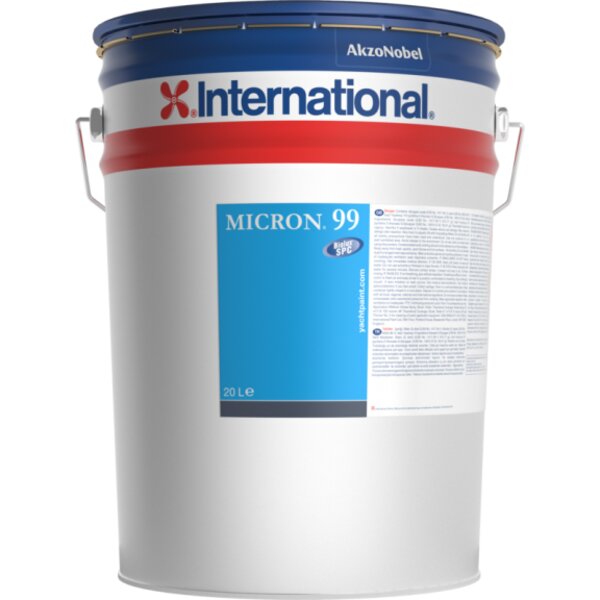
- Micron 350 / Micron 99 / One UP / Trilux 33: 5°C: 10–24 h; 15°C: 5–9 h; 25°C: 3–7 h; 35°C: 1–5 h.
- Perfection Pro Undercoat: 5°C: 10 h–5 days; 15°C: 5 h–3 days; 25°C: 3 h–2 days; 35°C: 2 h–24 h.
- Watertite: 15°C: 36 h–3 months; 25°C: 24 h–3 months; 35°C: 24 h–3 months.
If maximum overcoating times are exceeded, sand with 180–220 grade wet or dry paper before recoating.
Applications and use cases
Suitable substrates and compatibility
- Steel: Degrease, then gritblast to Sa 2½ (near-white metal). If gritblasting is not possible, grind with 24–36 grit to clean, bright metal with 50–75 micron anchor pattern.
- Aluminium: Degrease and sand with 24–120 grade aluminium-compatible paper. Coarser grades are recommended for best adhesion. Prime with a recommended International primer within 8 hours where specified in coating schemes.
- Zinc / Galvanised steel: Degrease and sand with 60–120 grade paper, clean thoroughly and dry completely. Prime as soon as possible (within 8 hours) with a recommended International primer.
- Stainless steel: Light gritblast to a 50 micron profile, clean thoroughly and dry completely, then prime promptly (within 8 hours) with a recommended International primer.
- Lead: Degrease, then sand with 120 grade paper or use a power wire brush, clean thoroughly and dry. Prime with a recommended International primer as soon as possible (within 8 hours).
- Bare wood: Sand smooth with 80–180 then 280 grade paper. Remove sanding dust by brushing, dusting or wiping. If wiped with solvent, allow to dry completely before applying products recommended for direct-to-wood application.
- Compatibility: Can be used on all suitably prepared substrates and epoxy primers. Suitable for stainless steel trim tabs and stern drive gear. Not to be applied over any conventional one-pack coatings. Not suitable on bronze or mixed alloy propellers.
Recommended number of coats
- Steel / Aluminium / Alloy: 4–5 coats.
- Lead: 5 coats.
- Wood: 3 coats.
- As tie-coat over Interprime 820: 1 coat.
Application method and conditions
- Application methods: Brush, roller.
- Mixing: Stir or shake individual components thoroughly. Add YPA404 curing agent to the base, stir, and leave for 10 minutes to allow bubbles to disperse.
- Fillers: If filling is required, apply an appropriate filler after the first coat of Interprotect has been applied.
- Temperature limits (application and curing):
- Do not use below 5°C.
- Ambient temperature: 5–35°C.
- Product temperature: 10–35°C.
- Substrate temperature: 5–35°C.
- For maximum performance, curing temperature should be above 10°C / 50°F.
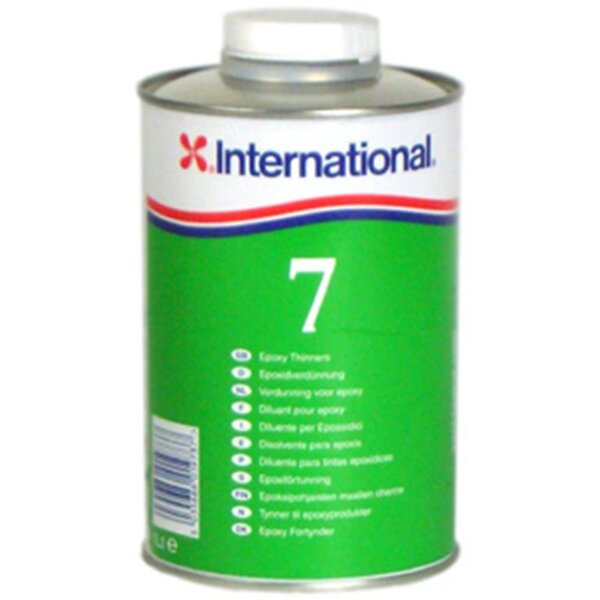
- Thinners: YTA061 Thinner No.7 GTA220.
- Equipment cleaner: GTA822.
- Important: Do not apply when there is a risk of condensation forming on the substrate.
FAQ
-
What type of product is INTERPROTECT BASE PART A?
It is the base component of a two-pack epoxy primer system for exterior use, designed to provide high performance anticorrosive and abrasion-resistant protection.
-
On which substrates can I use it?
It can be used on suitably prepared steel, aluminium and alloys, zinc/galvanised steel, stainless steel, lead and bare wood, as well as over existing epoxy primers. It must not be applied over one-pack products and is not suitable for bronze or mixed alloy propellers.
-
How do I mix the base with the curing agent?
Mix 3 parts base to 1 part curing agent YPA404 by volume. Stir or shake each component thoroughly, add the curing agent to the base, stir and leave for 10 minutes to allow bubbles to disperse.
-
What is the recommended film thickness and coverage?
The recommended dry film thickness is 50 microns per coat by brush, corresponding to approximately 111 microns wet. Theoretical coverage is 9.1 m²/L per coat by brush, with practical coverage around 8.1 m²/L per coat.
-
What are the minimum and maximum overcoating times?
Overcoating times depend on substrate temperature and the next product. For example, at 15°C Interprotect can generally be overcoated with many antifoulings after 5 hours and up to 9 hours, while another coat of Interprotect can be applied between 5 hours and 6 months. Always follow the specific overcoating table; if maximum times are exceeded, sand with 180–220 grade paper.
-
Can it be used as a tie-coat before antifouling?
Yes. Interprotect functions as an antifouling tie-coat over epoxy primers and is compatible with multiple International antifoulings when applied within the stated overcoating windows.
-
What temperatures are suitable for application?
Application is recommended when ambient temperature is between 5°C and 35°C, product temperature between 10°C and 35°C, and substrate temperature between 5°C and 35°C. Do not use below 5°C or when condensation may form.
-
How should leftovers and empty containers be disposed of?
Do not pour paint into watercourses or drains. Allow paints to harden before disposal and arrange disposal of remainders in consultation with the relevant authorities. Empty containers or liners should be recycled or disposed of via approved routes and must not be discarded through normal municipal waste without permit.
-
Is it suitable for consumer/DIY use?
The safety data sheet specifies that the product is for professional use only and identifies it as a two-component coating for exterior use.
-
What is the typical shelf life?
When stored correctly, the typical shelf life is 2 years.
Section 14 – Transport information
The mixed Interprotect system, including INTERPROTECT BASE PART A packaged for transport, is classified as follows:
- UN number / ID number: UN1263.
- UN proper shipping name: PAINT.
- Transport hazard class: 3 (flammable liquid).
- Packing group: III.
- Environmental hazards: Not classified as a marine pollutant in the supplied information.
- ADR/RID additional information: Tunnel code (D/E).
- IMDG additional information: Emergency schedules F-E, S-E.
- Special precautions for users: Within user premises, always transport in closed containers that are upright and secure. Persons transporting the product should know what to do in case of accident or spillage.
Storage recommendations during transport and warehousing:
- Avoid exposure to air and extremes of temperature.
- Maintain storage temperature between 5°C/41°F and 35°C/95°F.
- Keep containers securely closed and out of direct sunlight.
Section 8 – Individual protection measures
According to the safety data sheet for Interprotect White (mixed system including BASE PART A), the following personal protective equipment (PPE) and controls are recommended when handling and applying the product:
Engineering and hygienic measures
- Use only with adequate ventilation; employ local exhaust or process enclosures to keep airborne levels below occupational exposure limits.
- Use explosion-proof ventilation and electrical equipment where there is a risk of flammable vapour.
- Wash hands, forearms and face thoroughly after handling, before eating, drinking or smoking, and at the end of the work period.
- Contaminated work clothing should not leave the workplace and must be washed before reuse.
- Ensure that eyewash stations and safety showers are close to the workstation.
Eye and face protection
- Wear safety eyewear complying with an approved standard.
- Where there is a risk of splashes, mist or spray, use chemical splash goggles and/or a face shield.
- If inhalation hazards exist, a full-face respirator may be required instead of goggles.
Hand protection
- Wear chemical-resistant, impervious gloves complying with an approved standard whenever handling the product.
- For prolonged or frequently repeated contact, use gloves with protection class 6 (breakthrough time > 480 minutes according to EN374). Recommended materials: Viton or nitrile, thickness ≥ 0.38 mm.
- For brief contact, use gloves of protection class 2 or higher (breakthrough time > 30 minutes according to EN374). Recommended material: nitrile, thickness ≥ 0.12 mm.
- Replace gloves regularly and immediately if damaged. Glove performance may be reduced by physical or chemical damage or poor maintenance.
Skin and body protection
- Wear suitable protective clothing selected according to the task and risks, approved by a specialist.
- Where there is risk of ignition from static electricity, use anti-static protective clothing including overalls, boots and gloves (refer to EN 1149 for requirements).
- Use appropriate footwear and any additional skin protection as required by the specific operation.
Respiratory protection
- Based on the hazard and exposure potential, wear a respirator meeting the appropriate standard.
- A respirator conforming to EN140 with type A/P2 filter or better is recommended.
- Dry sanding, flame cutting or welding of the dry paint film will produce hazardous dust or fumes; wet sanding/flatting should be used wherever possible. If local exhaust ventilation is insufficient, use suitable respiratory protective equipment.
Environmental exposure controls
- Emissions from ventilation or work process equipment should be monitored to ensure compliance with environmental legislation.
- Where necessary, use fume scrubbers, filters or engineering modifications to reduce emissions.
*Contenido generado por IA