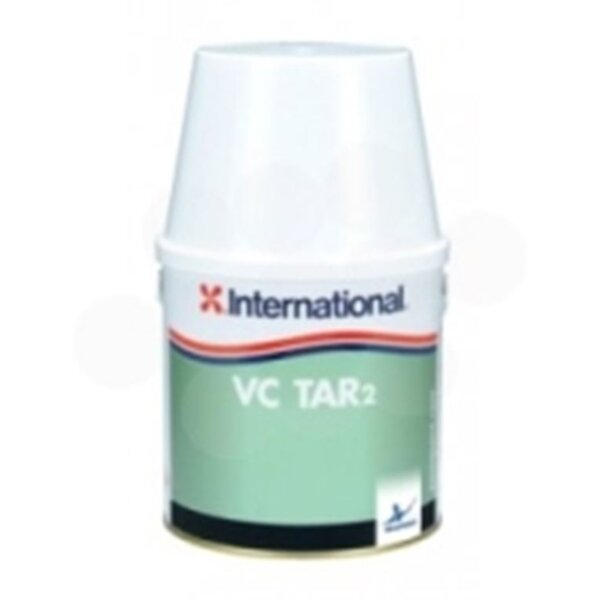
What is VC TAR 2 and why choose it?
VC TAR 2 from International Náutica is a two-component epoxy primer designed specifically for below-waterline protection. Used together as Part A (epoxy base) and Part B (curing agent), it provides an excellent barrier against osmosis on GRP hulls and long-lasting anticorrosive protection on steel, aluminium/alloy and lead substrates. Its self-levelling formulation delivers a smooth, semi-gloss finish that is ideal as a primer base for all VC antifoulings.
The product is easy to apply, can be overcoated within hours and does not require sanding between coats, helping to speed up yard time while delivering a high-performance protective system.
Main features
- High-performance epoxy barrier – provides osmosis protection and treatment for GRP hulls below the waterline.
- Anticorrosive primer – protects steel, aluminium/alloy and lead surfaces in underwater service.
- Self-levelling finish – flows out to give an excellent, smooth semi-gloss surface ready for VC antifoulings.
- Fast recoating – overcoatable within hours depending on temperature, enabling multiple coats in a single day.
- No sanding between coats – saves labour and helps maintain film integrity when recoating within the specified interval.
- Dual colour options – available in Off White (YEA728) and Black (YEA729), with VC Tar2 Part B curing agent (YEA730).
- Durable epoxy system – fully cures in about 5 days, forming a hard, scratch-resistant coating.
- For professional and consumer use – suitable for GRP boat owners as well as professional yards and industrial users, always below the waterline.
Technical specifications
Applications and use cases
1. Osmosis protection on new or sound GRP
- Clean and fully degrease the hull with Super Cleaner.
- Sand with 240-grade wet or dry paper, rinse with fresh water and allow to dry.
- Check hull moisture levels following the meter manufacturer’s guidance; further advice can be obtained from an independent surveyor.
- Apply 3–5 coats of VC TAR 2 for a robust water barrier before applying the chosen VC antifouling.
2. Osmosis treatment on affected GRP hulls
- Remove existing paint back to the gelcoat.
- Cut open, clean and sand out all blisters and damaged areas.
- Allow the hull to dry out (typically around 6–8 weeks in autumn). Where possible, maintain a high-temperature / low-moisture environment to speed drying.
- Fill all craters with Watertite epoxy filler only (substitute fillers, particularly polyester-based, are stated as not suitable) and sand smooth.
- Apply 7 coats of VC TAR 2 to rebuild a strong epoxy barrier prior to antifouling. Consultation with a qualified marine surveyor is recommended where doubt exists.
3. Steel and iron underwater structures
- Prepare by grit-blasting to Sa 2½; use an angle grinder on smaller areas.
- Apply a minimum of 4 coats of VC TAR 2 to provide anticorrosive protection below the waterline.
4. Aluminium and alloy hulls or appendages
- Clean and degrease thoroughly with Super Cleaner.
- Mechanically abrade with aluminium-compatible abrasive paper or low-pressure grit blast using aluminium oxide.
- Apply at least 4 coats of VC TAR 2 as part of the below-waterline coating system.
5. Lead keels and ballast
- Clean and degrease with Super Cleaner.
- Rub down using an emery cloth or power wire brush, rinse with fresh water and dry.
- Apply a minimum of 3 coats of VC TAR 2 before antifouling or further build coats.
6. General application guidance
- Stir each component separately before mixing; pour the curing agent (under the "hat" in the can) into the base and mix thoroughly.
- Allow mixed product to stand for at least 15 minutes for air bubbles to disperse.
- For optimum flow, apply between 15 minutes and 4 hours after mixing.
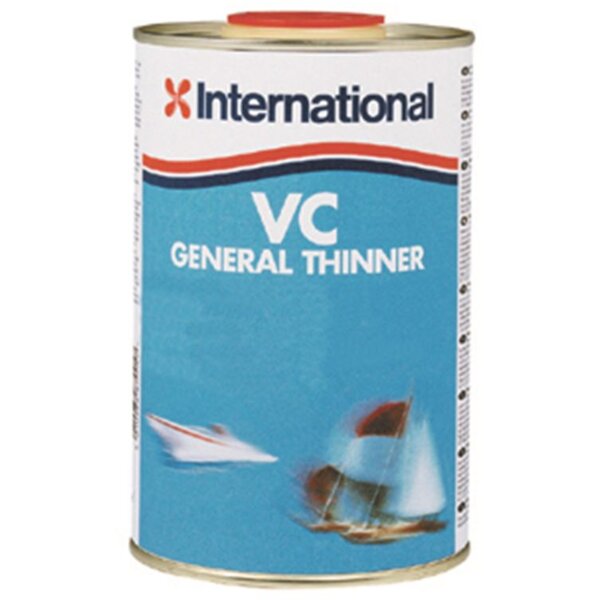
- Up to 5% VC General Thinner can be added to ease application by brush, roller or airless spray; 20–30% is used for conventional spray.
- Do not use below 5°C, above 35°C or when condensation may form on the substrate.
- Use only below the waterline; not recommended for topsides or areas permanently above water.
- Launch the boat in line with the recommended launch time of the antifouling applied over VC TAR 2.
- In dusty environments, light sanding may be required before overcoating to ensure adhesion and surface appearance.
FAQ – VC TAR 2
-
Is VC TAR 2 suitable for use above the waterline?
No. All documentation specifies that VC TAR 2 is for use below the waterline only.
-
Can I apply VC TAR 2 over existing antifouling?
No. On previously painted surfaces it is indicated only over aged two-component coatings. It is not to be used over old antifoulings.
-
Do I need to sand between coats?
When recoated within the specified minimum and maximum overcoating intervals, sanding is not required. If the maximum interval is exceeded, a light sanding is recommended before overcoating.
-
How many coats are needed for full osmosis treatment?
For osmosis treatment on GRP after full drying and filling, the guidance is to apply 7 coats of VC TAR 2.
-
What temperatures are acceptable during application?
Product, ambient and substrate temperatures should be between 5°C and 35°C, with substrate at least 1°C above the dew point. Do not apply when there is a risk of condensation.
-
Which thinner and cleaner should I use?
The specified thinner and cleaner is VC General Thinner. It can be used up to 5% for application and for equipment cleaning; 20–30% is recommended for conventional spray.
-
How long does the mixed product remain usable (pot life)?
Approximate pot life is 24 hours at 5°C, 12 hours at 15°C and 8 hours at 23°C.
-
When is the coating fully cured?
VC TAR 2 typically takes about 5 days to fully cure. The surface may not be fully scratch-resistant before this time.
-
How should I dispose of leftover VC TAR 2?
Remainders cannot be disposed of through municipal waste or poured into watercourses. They must be handled via authorised waste facilities in consultation with the relevant authorities. Allow paints to harden before disposal where practicable.
-
Is VC TAR 2 classified as hazardous?
Yes. Both components are classified as flammable liquids with additional health and environmental hazard classifications. Appropriate handling, PPE and storage conditions are required (see sections below).
Section 14 – Transport information (summary)
VC TAR 2 Part A – Off White base
- UN number: UN1263
- Proper shipping name: PAINT
- Transport hazard class: 3 (flammable liquid)
- Packing group: III
- Environmental hazards: Not classified as environmentally hazardous for transport.
- Additional ADR/RID information: Tunnel code (D/E)
- IMDG: Emergency schedules F-E, S-E
VC TAR 2 Part B – Curing agent
- UN number: UN3469
- Proper shipping name (ADR/RID): PINTURAS INFLAMABLES, CORROSIVAS (PAINT, FLAMMABLE, CORROSIVE)
- Transport hazard classes: 3 (flammable liquid) with subsidiary risk 8 (corrosive)
- Packing group: III
- Environmental hazards: Classified as environmentally hazardous for transport; however, the environmentally hazardous substance mark is not required for packages ≤ 5 L or ≤ 5 kg.
- IMDG: Emergency schedules F-E, S-C; marine pollutant component includes fatty acids, C18-unsaturated dimers/oligomers with tall-oil fatty acids and triethylenetetramine.
General transport precautions for both components
- Always transport in securely closed containers that are upright and properly secured.
- Keep away from heat, hot surfaces, sparks, open flames and other sources of ignition.
- Ensure that personnel involved in transport know what to do in case of an accident or spillage.
Section 8 – Personal protective measures and exposure controls
Both VC TAR 2 Part A and Part B are classified as flammable liquids with additional health hazards (including skin irritation, serious eye damage/irritation, possible sensitisation and specific target organ toxicity). When handling, mixing or applying the product, especially by spray, appropriate engineering controls and personal protective equipment are required.
Engineering controls
- Use only with adequate ventilation.
- Employ local exhaust ventilation, process enclosures or other engineering controls to keep airborne concentrations below statutory exposure limits.
- Use explosion-proof electrical and ventilation equipment to prevent ignition of flammable vapours.
General hygiene measures
- Prohibit eating, drinking and smoking in areas where the product is handled, stored or processed.
- Wash hands, forearms and face thoroughly after handling and before breaks.
- Remove contaminated clothing and protective equipment before entering eating areas; wash contaminated clothing before reuse.
- Ensure that eyewash stations and safety showers are located close to the work area.
Eye and face protection
- Wear chemical splash goggles meeting an approved standard when risk assessment indicates potential exposure to liquid splashes, spray, mist or vapour.
- For higher-risk operations (e.g. spraying), use goggles plus a face shield or a full-face respirator.
Hand protection
- Use chemical-resistant, impervious gloves complying with EN374 or equivalent.
- For prolonged or frequent contact, gloves with protection class 6 (breakthrough time > 480 minutes) are recommended. Suggested materials: Viton or nitrile rubber, thickness ≥ 0.38 mm.
- For brief contact, at least protection class 2 (breakthrough time > 30 minutes) is recommended. Suggested material: nitrile, thickness ≥ 0.12 mm.
- Replace gloves regularly and immediately if damaged, degraded or contaminated inside.
Skin and body protection
- Select protective clothing based on the specific task and risk level, approved by a safety specialist.
- When there is a risk of ignition from static electricity, use anti-static protective clothing (e.g. coveralls, boots and gloves with antistatic properties) as referenced in EN 1149.
- Use appropriate protective footwear and, where necessary, additional skin protection such as sleeves or aprons.
Respiratory protection
- Where ventilation is insufficient to maintain vapour or mist levels below exposure limits, wear a respirator conforming to EN140 with filter type A/P2 or better.
- Respirators must be used within a formal respiratory protection programme that includes fit testing and training.
- When dry sanding, flame cutting or welding on fully cured coatings, hazardous dusts and fumes may be generated. Wet sanding/flatting is preferred. If exposure cannot be controlled by local extraction, use suitable respiratory protection.
Environmental exposure controls
- Check emissions from ventilation or process equipment to ensure compliance with environmental legislation.
- Where necessary, fit fume scrubbers, filters or modify process equipment to reduce emissions to acceptable levels.
*Contenido generado por IA