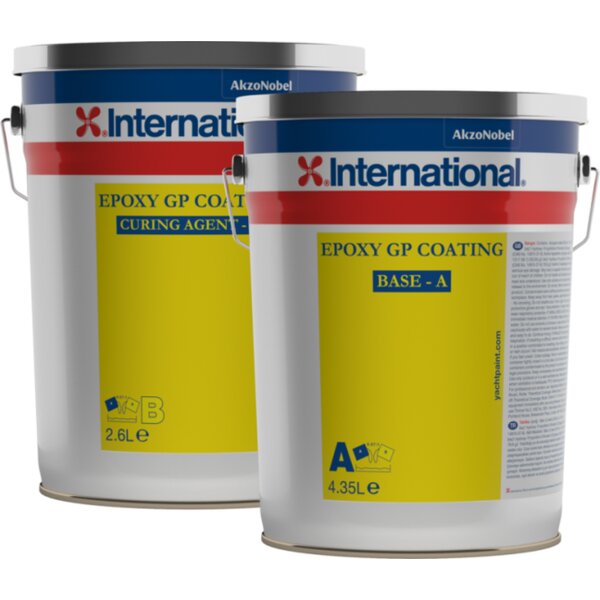
What Epoxy GP Coating Part A is and why choose it
Epoxy GP Coating Part A from International Náutica is the base component of a two-pack epoxy primer system designed for pre-treated steel, aluminium and dimensionally stable marine plywood. When mixed with its dedicated converter IPB112, it delivers a matt, high-solids epoxy coating with an unlimited recoat window for two-component products, making it especially suitable for professional yacht building and maintenance where flexible overcoating schedules are essential.
Main features
- Two-component epoxy primer for steel, aluminium, marine plywood and GRP (fibreglass) surfaces.
- Unlimited recoat window for compatible two-pack products within a controlled environment (up to 6 months without sanding in booth conditions).
- Matt finish in IPB110 White and IPB164 Grey (pale grey, approx. RAL 7035).
- High volume solids (46%) for efficient film build and coverage.
- Multiple application methods: airless spray, conventional spray, brush and roller.
- Wide application temperature range from 10°C to 35°C for product, substrate and ambient conditions.
- Compatible with extensive epoxy and polyurethane systems such as Epoxy Finishing Filler, Interfill range, Interprime, Interprotect (Professional), Interthane 870/990 and Perfection undercoats.
- Professional-grade corrosion protection as part of a complete International system for yachts and marine structures.
Technical specifications
- Product type: Two-component epoxy primer (Part A base component).
- Brand: International Náutica.
- Product name: Epoxy GP Coating Part A.
- Colour options: IPB110 White, IPB164 Grey (Pale Grey, approx. RAL 7035).
- Finish: Matt.
- Density: 1.33.
- Volume solids: 46%.
- Mixing ratio (with IPB112 converter):
- By volume: 100 parts Component A : 15 parts Component B.
- By weight: 100 parts Component A : 10 parts Component B.
- Converter / hardener: IPB112.
- Typical shelf life: 2 years.
- VOC content: 468 g/l.
- Pack sizes: 5 l and 20 l.
Drying and pot life (mixed product)
Pot life (useful application time): 8 hours (note: pot life decreases as temperature and mix volume increase).
- At 10°C (50°F)
- Touch dry: 2 hours.
- Hard dry: 48 hours.
- At 15°C (59°F)
- Touch dry: 1 hour.
- Hard dry: 24 hours.
- At 25°C (77°F)
- Touch dry: 1 hour.
- Hard dry: 12 hours.
- At 35°C (95°F)
- Touch dry: 1 hour.
- Hard dry: Consultar ficha técnica del fabricante.
Drying times vary with application method and the quantity and type of thinner added.
Overcoating intervals (guidance)
Substrate temperature vs. minimum/maximum overcoating times for common International epoxy fillers, primers, undercoats and polyurethane finishes:
- 10°C (50°F): Minimum 48 hours; maximum: unlimited ("ext") for listed compatible products.
- 15°C (59°F): Minimum 24 hours; maximum: unlimited.
- 25°C (77°F): Minimum 16 hours; maximum: unlimited.
- 35°C (95°F): Minimum 16 hours; maximum: unlimited.
The maximum overcoating time without sanding in booth conditions is 6 months; the surface must be clean, dry and free from dust and grease. Do not clean with solvents.
Recommended film thickness and coverage
- Recommended DFT per coat:
- 60 microns dry with brush or roller.
- 100 microns dry with spray gun.
- Recommended WFT per coat:
- 130 microns wet with brush or roller.
- 217 microns wet with spray gun.
- Theoretical coverage:
- 7.6 m²/l by brush or roller.
- 4.5 m²/l by airless spray.
- Practical coverage (approx.):
- 6.9 m²/l by brush or roller.
- 3.4 m²/l by airless spray.
Application methods and thinning
- Airless spray
- Thinning: 5–15% with Thinner No. 7 at 23°C.
- Nozzle size: 0.48 mm / 19 thou.
- Pressure: 140–160 bar.
- Conventional spray gun
- Thinning: 5–15% with Thinner No. 7 at 23°C.
- Nozzle size: 2.0–2.2 mm / 80–86 thou.
- Pressure: 3–4 bar.
- Brush
- Thinning: 0–5% with Thinner No. 7 at 23°C.
- Roller
- Thinning: 0–5% with Thinner No. 7 at 23°C.
- Cleaner for tools and equipment: Thinner No. 7 or Oplosser Degreaser.
Environmental and application conditions
- Ambient temperature during application: 10–35°C.
- Substrate temperature: 10–35°C and at least 3°C above dew point to avoid condensation.
- Product temperature for use: 10–35°C.
- Maximum relative humidity during curing: 80%.
- Ventilation: adequate ventilation is required, especially in confined spaces, to remove solvent vapours and assist curing.
Applications and use cases
Recommended substrates
- Steel (with or without compatible shop primer).
- Aluminium (pre-treated and degreased).
- Dimensionally stable marine plywood.
- GRP / fibreglass (degreased and cleaned).
Surface preparation
Steel
- Remove all rust, dust, oil, grease and contamination; ensure the surface is dry.
- Blast clean to near-white metal Sa 2½ (ISO 8501-1). Remove residues by clean, dry air blast and brushing; vacuuming is recommended for best results.
- If blasting is not possible, prepare using rotary wire brushes (radial/rotaflex) or abrasive discs grade 24 to achieve surface preparation grade St3, then remove dust.
Steel with shop primer
- Shop primer must be in good condition and compatible with the selected paint system.
- Shop primer must be applied over a clean Sa 2½ surface.
- Exterior: weld seams, rusted areas, burn marks and other damaged areas in the shop primer must be blasted to Sa 2½. Intact shop primer should receive a sweep blast.
- Interior: weld seams, rusted areas, burn marks and other damage in the shop primer must be repaired by rotary wire brush or abrasive disc. Confirm the surface is completely clean.
Aluminium
- Exterior:
- Clean the surface with Super Cleaner, then rinse thoroughly with fresh water.
- Grit blast with dry, fine, non-metallic abrasive media.
- Apply the first coat of Epoxy GP Coating as soon as possible after preparation.
- Alternative: chemical treatment for aluminium, after degreasing, cleaning and sanding with aluminium oxide paper grade 24–80 or equivalent.
- Interior:
- Clean with Super Cleaner, preferably with high-pressure water, then rinse with fresh water.
- Repeat cleaning if necessary until the surface is fully clean and free of any grease.
Marine plywood
- Degrease with Oplosser Degreaser or Wipedown Solvent 600.
- Completely remove sanding dust, as it will reduce adhesion.
- Sand with 150–180 grit abrasive.
- Degrease again with Oplosser or Wipedown Solvent 600 using clean cloths.
- Always degrease tropical woods with Oplosser Degreaser.
Fibreglass (GRP)
- Thoroughly degrease GRP surface with Oplosser Degreaser or 600 Wipedown Solvent.
- Remove all dust and contaminants to prevent adhesion problems.
Mixing and thinning
- Stir Component A thoroughly with a stir stick until homogeneous.
- Use a mixer driven by an air-motor or explosion-proof electric motor.
- Add Component B (curing agent) while stirring and continue until a fully homogeneous mix is obtained.
- If the paint is too viscous (e.g. at low temperatures), add small quantities of Thinner No. 7 after both components are completely mixed to adjust viscosity according to conditions and application method.
Use cases
- New-build yachts and commercial vessels where a robust epoxy primer is required on steel or aluminium hulls and superstructures.
- Refit and repair work where existing shop primers or prepared metal substrates need an epoxy base before fillers, high-build primers, undercoats or polyurethane topcoats.
- Marine plywood structures such as decks, bulkheads and superstructures requiring epoxy priming.
- GRP components needing epoxy priming within an International coating system.
- Long lay-up periods: hulls treated with Epoxy GP Coating and left for extended periods should receive 2 coats of at least 80 microns DFT each when brought back into service.
FAQ – Epoxy GP Coating Part A
1. What substrates can I apply Epoxy GP Coating on?
It is compatible with pre-treated steel (with or without shop primer), aluminium, dimensionally stable marine plywood and GRP (fibreglass).
2. What is the correct mixing ratio for Epoxy GP Coating Part A?
Mix 100 parts of Component A with 15 parts of Component B by volume (or 100 parts A : 10 parts B by weight) using converter IPB112.
3. How long can I wait before overcoating Epoxy GP Coating?
At 10–35°C, minimum overcoating times range from 16 to 48 hours depending on temperature. The maximum overcoating time without sanding in booth conditions is 6 months, provided the surface is clean, dry and free from dust and grease.
4. Which application methods are allowed?
The product can be applied by airless spray, conventional spray gun, brush or roller, following the recommended thinning levels and nozzle/pressure settings.
5. What is the recommended film thickness per coat?
60 microns dry (130 microns wet) when applied by brush/roller, and 100 microns dry (217 microns wet) when applied by spray gun.
6. What are the ideal application conditions?
Ambient, substrate and product temperatures should all be between 10°C and 35°C, with the substrate at least 3°C above the dew point. Relative humidity should not exceed 80%, and adequate ventilation is required.
7. How should I prepare aluminium surfaces?
Clean with Super Cleaner, rinse with fresh water, then grit blast with dry, fine, non-metallic abrasive. Alternatively, chemically treat the aluminium after degreasing and sanding with aluminium oxide paper grade 24–80.
8. How long is the shelf life of Epoxy GP Coating?
The typical storage time is 2 years when kept in tightly closed containers between 5°C and 35°C, in a cool, dry place away from direct sunlight.
9. What should I use to clean tools and equipment?
Use Thinner No. 7 or Oplosser Degreaser to clean application equipment immediately after use.
10. Can I thin the product for brush or roller application?
Yes. For brush or roller application, up to 5% Thinner No. 7 at 23°C can be added if required to adjust viscosity.
Section 14 – Transport information
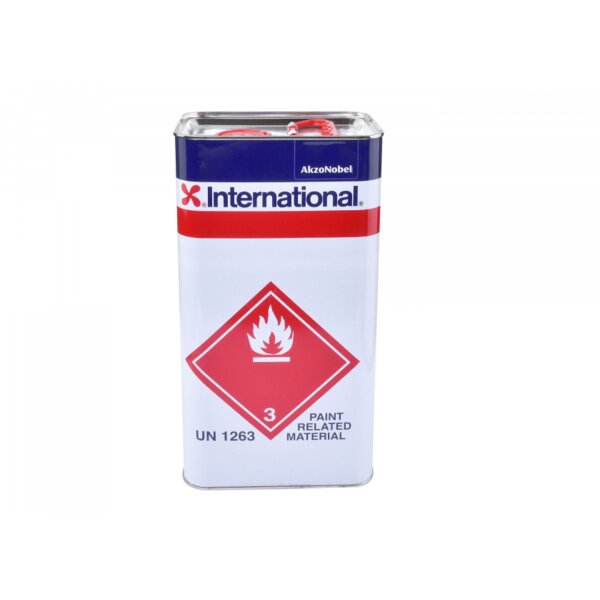
- UN number (ADR/RID, IMDG, IATA): UN1263.
- UN proper shipping name: Paint / Pinturas.
- Transport hazard class: Class 3 (flammable liquids).
- Packing group: III.
- Marine pollutant: No.
- ADR/RID tunnel restriction code: D/E.
- IMDG emergency schedules: F-E, S-E.
- Transport and storage containers: The product must be stored in containers with safety closures during transport and storage, kept in their original, closed packaging until use.
- On-site transport: Always transport in closed, upright and secure containers. Ensure personnel know what to do in the event of an accident or spill.
Section 8 – Personal protective measures
General safety recommendations
- Avoid all contact with skin and eyes. Epoxy GP Coating can cause dermatitis and serious eye damage.
- Do not eat, drink or smoke in application or mixing areas.
- Use only with adequate ventilation; in confined spaces, mechanical ventilation is necessary to remove vapours and support curing.
Personal protective equipment (PPE)
- Eye and face protection: Wear chemical splash goggles and/or a face shield compliant with approved standards to protect against liquid splashes and spray mist.
- Hand protection: Use chemical-resistant, impermeable gloves:
- For frequent or prolonged contact: protection class 6 (breakthrough time > 480 minutes according to EN374). Recommended materials: Viton or nitrile, thickness ≥ 0.38 mm.
- For short, occasional contact: protection class 2 or higher (breakthrough time > 30 minutes according to EN374). Recommended: nitrile gloves, thickness ≥ 0.12 mm.
- Replace gloves regularly and immediately if any damage or degradation is observed.
- Skin and body protection:
- Wear protective overalls or coveralls to protect the skin.
- Where ignition risks from electrostatic charges are present, use antistatic protective clothing (for example, garments compliant with EN 1149), including antistatic boots and gloves.
- Respiratory protection:
- When adequate ventilation cannot be guaranteed, wear a respirator compliant with EN140 fitted with an A/P2 filter or better.
- During sanding of dry films, cutting or welding, harmful dust and fumes can be generated. Wet sanding is preferable; if exposure cannot be avoided, use suitable respiratory protection.
- Hygiene measures:
- Wash hands, forearms and face thoroughly after handling and before eating, smoking or using the washroom.
- Remove contaminated clothing and PPE before entering eating areas and wash contaminated garments before reuse.
- Ensure eye-wash stations and safety showers are close to work areas.
*Contenido generado por IA