What is Mirror Polishing Paste PX 200 and why choose it
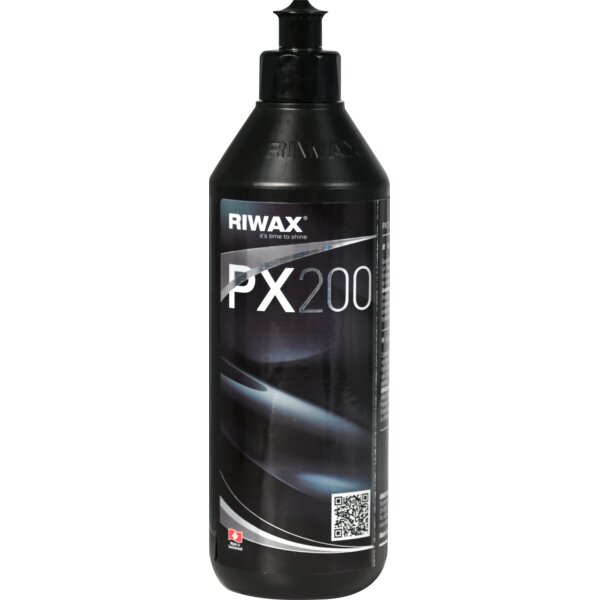
Riwax MIRROR POLISHING PASTE PX 200 is a professional-grade, fine abrasive polishing paste designed to remove light paint defects and deliver a deep, mirror-like gloss in a single step. It is particularly suitable for automotive exterior paint correction and is intended for use with polishing machines by detailing professionals and trained users. Information about performance and application is based on the manufacturer’s technical literature, but some details may not be fully verified; always check the official technical data sheet and safety data sheet before use.
Main features
- Mirror polishing effect: Formulated as a mirror polishing abrasive paste that restores high gloss to automotive paint surfaces.
- Fine defect removal: Removes fine scratches, halos, light patina and typical car‑wash marks in a single operation, according to manufacturer information.
- One-step finish in detailing: Can be used as a one-step polish for vehicle reconditioning when only light defects are present (information not fully verified for all paint systems).
- Machine application: Optimised for rotary and dual-action polishers in combination with a white polishing pad or medium foam pad.
- Deep, high gloss: Leaves a deep shine and clear finish, ideal as the finishing step after heavier compounding or for maintenance polishing.
- Part of the PX professional system: Positioned as the fine polishing step between PX 100 (cutting compound) and PX 300 (protective wax or sealant) in the Riwax PX line.
- Professional-only product: Classified by the distributor as a product for professional use, requiring proper technique and safety measures.
Technical specifications
The following data are taken from the manufacturer’s published technical sheet or product information and are provided for guidance only. They may not be exhaustive or fully up to date; always refer to the latest official technical data sheet and safety data sheet for definitive values.
- Product type: Mirror polishing abrasive paste (fine polishing paste).
- Consistency: Viscous paste.
- Intended use: Removing fine scratches, halos and patina from automotive paint; reduction of car‑wash marks in one operation (not verified for all substrates).
- Application method: By machine polisher (rotary or dual‑action/orbital); a white polishing pad or medium foam pad is recommended.
- Recommended speed range: Approx. 900–1400 rpm for rotary machines (value based on technical sheet; verify in the latest documentation).
- Typical package size: 500 g container (information may vary by market).
- Storage temperature: Approx. +5 °C to +30 °C, in tightly closed original container, protected from frost, moisture and direct sunlight.
- Approximate shelf life: At least 2 years from production date when correctly stored (non‑binding indication from technical sheet).
- Explosion limits (vapours, indicative): Lower approx. 0.5 vol %, upper approx. 8.0 vol % (indicative values; not a substitute for the official safety data sheet).
- ADR transport classification (manufacturer statement): Not classified as dangerous goods under ADR according to the technical sheet; always confirm against the current safety data sheet and local transport regulations.
Applications and use cases
- Automotive exterior detailing: Paint correction of passenger cars, vans and light commercial vehicles where only fine defects, wash marring or holograms are present.
- Finishing step after heavy compounding: Used after a more aggressive compound (e.g. PX 100 or similar) to refine the finish, remove remaining micro‑marring and enhance gloss.
- One-step polishing on moderate defects: Where paint is in generally good condition with only light swirls or car‑wash marks, PX 200 can be used as a single polishing step before applying a separate protection product (wax, sealant or coating).
- Dark and sensitive paints: Commonly used as a finishing polish on dark-coloured paints to reduce holograms and improve depth of colour (performance can vary; test on a small inconspicuous area first).
- Professional bodyshops and detailing studios: Designed for workshops needing reproducible, high‑gloss results in a controlled process with machine polishers.
FAQ
-
Is PX 200 suitable for all types of automotive paint?
PX 200 is described by the manufacturer as suitable for automotive topcoats in general. However, compatibility with every specific paint system (OEM, refinish, soft or very hard clear coats) is not fully verified. Always perform a small test area and consult the official technical data sheet and paint manufacturer recommendations.
-
Can PX 200 be applied by hand?
The product is primarily intended for machine application (rotary or dual‑action polishers). Hand application may be possible for very small areas, but cut and gloss performance have not been formally verified for manual use.
-
Do I need to use PX 100 before PX 200?
Not necessarily. PX 200 is designed as a fine polishing paste. For deeper scratches and heavier defects, the manufacturer suggests using a cutting compound (such as PX 100) first, then refining with PX 200. On lightly marked paint, PX 200 alone may be sufficient as a one‑step polish, depending on the condition of the surface.
-
Should I apply wax or sealant after PX 200?
Yes, it is generally recommended to protect the polished surface. The manufacturer proposes following PX 200 with a dedicated protection product (for example, a wax or sealant such as PX 300). This step is important to maintain gloss and help protect the paint. Specific durability claims depend on the chosen protection product and are not verified here.
-
Can PX 200 remove deep scratches or sanding marks?
PX 200 is a fine polishing paste aimed at light defects such as wash marring and minor scratches. For deeper scratches or sanding marks, a heavier cutting compound is usually required first. The exact defect removal range of PX 200 is not fully specified in publicly available data, so results will vary by paint hardness and pad choice.
-
On which tools and pads does PX 200 work best?
Technical documentation describes use with a rotary polisher or dual‑action/orbital machine and a white polishing pad or medium polishing foam. Specific pad sizes and machine models are not critical, but you should follow the tool manufacturer’s guidelines and adjust speed and pressure according to your test results.
-
What are the recommended machine speeds?
The technical sheet indicates a typical rotary speed range of approximately 900–1400 rpm. These values are indicative and not a substitute for the latest official instructions; always check updated documentation and adapt to the specific machine, pad and paint.
-
How should I store PX 200?
Store tightly closed in the original container, in a cool, dry place, protected from frost and direct sunlight. The technical sheet suggests a storage temperature of about +5 °C to +30 °C and an approximate shelf life of at least 2 years from production when correctly stored. These are indicative values and should be confirmed in the latest official documentation.
-
Is PX 200 classified as dangerous goods for transport?
The manufacturer’s technical sheet indicates that the product is not classified as dangerous goods under ADR. This information may change with regulatory updates or different formats, so you must confirm against the current safety data sheet and applicable transport regulations in your region.
-
Where can I find complete safety information?
Complete and legally relevant safety information, including hazard classification, exposure limits and recommended protective equipment, is only available in the official safety data sheet (SDS) issued by Riwax or its authorised distributors. Always consult the latest SDS before handling or transporting the product.
Section 14 – Transport information
The following transport-related information is based on the manufacturer’s technical sheet and is provided as a non‑binding summary. It does not replace the official safety data sheet or applicable legislation.
- ADR / RID (road and rail in Europe): The technical sheet indicates “ADR: none”, which means the product is not classified as dangerous goods under ADR in the referenced version. This status is not independently verified here and may vary by packaging, formulation updates or jurisdiction.
- UN number, proper shipping name, hazard class, packing group: Because the product is indicated as non‑dangerous for ADR in the technical sheet, no UN number or hazard class is assigned in that document. For other transport modes (IMDG, IATA, ADN), you must consult the current safety data sheet.
- Environmental hazards: No specific environmental transport classification is provided in the consulted technical sheet. This absence of data does not guarantee that the product has no environmental impact; refer to the SDS and local regulations.
- Special precautions for user: Even when not regulated as dangerous goods, the product should be transported in closed, upright containers, protected from extreme temperatures, frost and direct sunlight, and secured to prevent leaks. This is a general recommendation and not product‑specific regulatory advice.
- Regulatory note: Transport classifications can change following regulatory updates, new test data or formulation changes. Always check the most recent official safety data sheet and national transport rules before shipping or transporting the product.
Section 8 – Individual protection measures
Detailed, binding information on exposure controls and personal protective equipment (PPE) for MIRROR POLISHING PASTE PX 200 is only available in its official safety data sheet (Section 8: Exposure controls/personal protection). The technical sheet consulted does not list complete PPE requirements. The points below are therefore general, non‑product‑specific recommendations for handling polishing pastes in a professional workshop and must not replace the official SDS:
- General hygiene measures (generic guidance): Work in well‑ventilated areas, avoid eating, drinking or smoking during use, and wash hands and exposed skin thoroughly after handling. These measures are standard practice but not specific to this product.
- Respiratory protection (to be confirmed in SDS): Under normal machine polishing in adequately ventilated areas, respiratory protection may not always be necessary. However, where mist, aerosol or vapour can accumulate, or in confined spaces, a suitable respirator may be required as indicated in the official SDS. The exact type of respirator cannot be specified here without the SDS.
- Hand protection (to be confirmed in SDS): The use of suitable protective gloves is generally advisable when handling polishing chemicals to reduce skin contact. The appropriate glove material and breakthrough time for PX 200 must be taken from the official SDS; they are not verified in the consulted documents.
- Eye and face protection (to be confirmed in SDS): When machine polishing, splashes or sling from pads are possible. As a generic recommendation, safety glasses or a face shield should be considered. The exact protection level required for PX 200 must be confirmed in the SDS.
- Skin and body protection (to be confirmed in SDS): Wearing suitable work clothing or coveralls is commonly recommended in detailing and bodyshop environments. Any specific requirement for PX 200 (for example, chemical‑resistant apron) can only be confirmed in the SDS.
- Engineering controls (to be confirmed in SDS): Use local exhaust ventilation or general workshop ventilation as appropriate to minimise exposure to mists and vapours. The official SDS will indicate if special ventilation or exposure limits apply.
- Spill and cleanup considerations (generic): In case of accidental release, avoid spreading the product, contain with absorbent material and collect according to workshop procedures. Disposal and detailed instructions must follow the SDS and local regulations.
Because individual protection requirements depend on local regulations, workplace conditions and the most recent safety evaluation of the product, it is essential to obtain and follow the current official safety data sheet for MIRROR POLISHING PASTE PX 200 before use.
*Contenido generado por IA