What Epifanes Nautiforte Yacht Paint is and why choose it
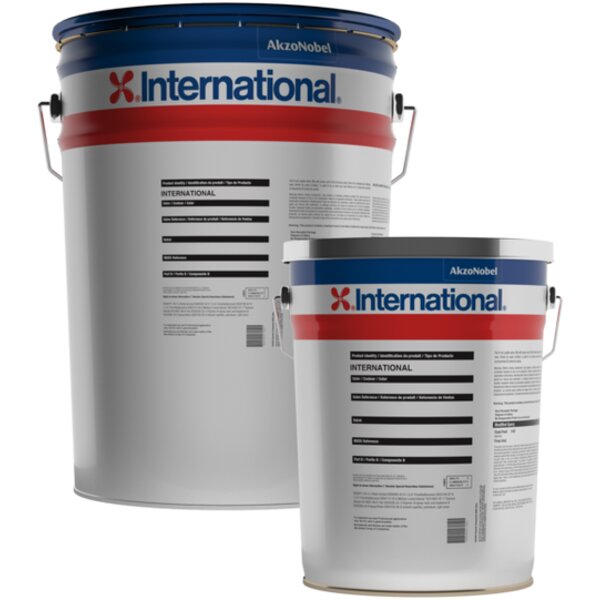
Epifanes Nautiforte Yacht Paint is a one-component, high gloss, non-yellowing yacht coating based on a siliconized alkyd resin. It is designed for durable gloss retention with minimal dirt pickup and offers high hiding power thanks to its blend of high-quality pigments. Suitable for new builds and maintenance, it can be used over a wide range of properly primed substrates above the waterline.
This yacht paint is formulated for easy application by brush, roller or spray within a broad temperature and humidity window, making it a practical solution for professional users looking for a reliable, long-lasting topside finish.
Main features of Epifanes Nautiforte Yacht Paint
- Non-yellowing high gloss finish: Siliconized resin technology provides long-term gloss and colour stability.
- Durable surface with low dirt retention: Smooth, hard film reduces dirt fixation and simplifies cleaning.
- High coverage: Theoretical coverage of about 14 m² per litre at 40 µm dry film thickness.
- Versatile substrate compatibility: For wood, steel, aluminium and GRP when used with appropriate primers.
- Maintenance-friendly: Suitable for overcoating intact one- and two-component paint systems above the waterline, regardless of brand.
- Easy application: Can be applied by longhaired soft brush, roller or spray, with good flow characteristics when applied under the recommended conditions.
- One-component system: Oxidative drying single-pack coating, simplifying application and equipment cleaning.
- Available colours: White and Cream #24 (other colours: Consultar ficha técnica del fabricante.).
Technical specifications
- Type: Oxidative drying one-component yacht paint
- Base: Siliconized alkyd resin
- Gloss level: High gloss
- Colours: White, Cream #24
- Density at 20 °C: approx. 1.20 g/cm³ (depending on colour)
- Viscosity: approx. 35 seconds (ISO-cup 6 mm) / kinematic viscosity at 20 °C 35 s (ISO 6 mm)
- Solids content (by volume): 55 ± 2 vol. %
- Solids content (VB% 1h150 °C): approx. 69.3 %
- VOC level (product): approx. 307 g/l (about 25.6–25.68 %)
- Organic solvent content: approx. 30.7–30.8 %
- Recommended wet film thickness: 70–80 µm per coat
- Recommended dry film thickness: approx. 40–45 µm per coat
- Theoretical coverage: approx. 14 m²/l at 40 µm dry film thickness
- Drying times at 65% RH and 40 µm dry film thickness:
- 10 °C: dust dry 3 h / sandable & recoatable 36 h
- 15 °C: dust dry 2 h / sandable & recoatable 24 h
- 20 °C: dust dry 1 h / sandable & recoatable 18 h
- 25 °C: dust dry 45 min / sandable & recoatable 12 h
- Application temperature (ambient): minimum 8 °C – maximum 30 °C
- Relative humidity during application: 50–85 %
- Maximum temperature difference between paint and surface: 3 °C
- Flash point: approx. 40 °C
- Auto-ignition temperature: approx. 240 °C
- Explosion limits (vapour/air): approx. 0.6–7 Vol %
- Packaging: 750 ml; white also available in 2000 ml
- Shelf life: approx. 3 years in unopened containers stored dry between 5–30 °C
- Brush thinner: Epifanes Brushthinner for Paint & Varnish or good quality white spirit
- Spray thinner: Epifanes Spraythinner for Paint & Varnish or denatured alcohol (where specified)
- General thinning: Thinning ratio depends on product temperature and working area; avoid overthinning.
- Recommended spray settings (guideline): thinning 5–15 %, nozzle 1.2–1.5 mm, pressure 2–3 bar, viscosity 20–22 s DIN-cup 4 mm
- Hazard classification (CLP): Flam. Liq. 3 (H226, flammable liquid and vapour), Skin Sens. 1 (H317, may cause an allergic skin reaction), STOT SE 3 (H336, may cause drowsiness or dizziness)
Applications and recommended systems
Fields of use
- New systems above the waterline on:
- Wood
- Steel
- Aluminium
- GRP (in combination with appropriate primer)
- Maintenance coating for existing, intact one- and two-component paint systems above the waterline, regardless of brand.
Recommended primers
- All substrates: Epifanes Multi Marine Primer or Epifanes Undercoat
- Wood: Epifanes Woodprimer
- New aluminium: Epifanes Washprimer AQ (do not sand)
After curing, each primer coat should be sanded with P180–220 before applying finishing coats.
Surface preparation and application
- Bare GRP:
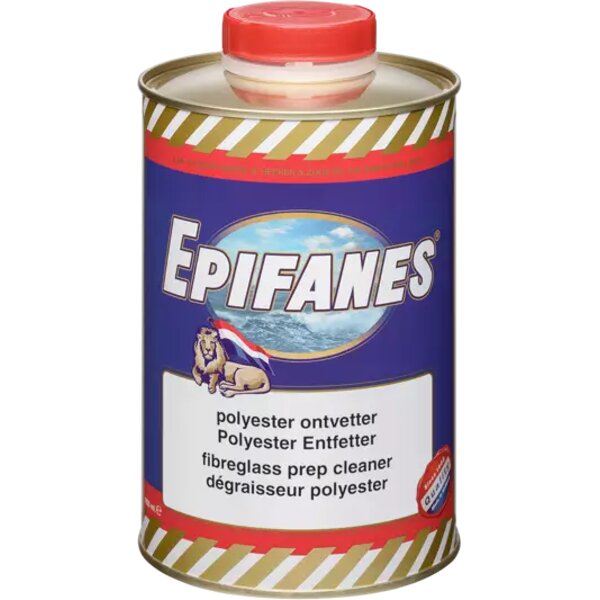
- Clean and degrease with Epifanes Fibreglass Prep Cleaner.
- Sand with P220–240.
- Bare wood:
- Clean, dry and degrease with Epifanes Spraythinner for Paint & Varnish.
- Sand with P220–240.
- Bare steel:
- Clean, dry, free of corrosion and degrease with Epifanes Cleaning Solution.
- Sand with P60.
- Existing paintwork:
- Ensure the existing coating is well bonded, dry and degreased with Epifanes Spraythinner for Paint & Varnish.
- Sand with P220–240.
System build-up
- GRP: 1–2 primer coats (as specified), followed by 3 full-bodied coats of Epifanes Nautiforte Yacht Paint.
- Steel: approx. 3 primer coats, followed by 3 full-bodied coats of Epifanes Nautiforte Yacht Paint.
- Wood: 1–2 primer coats, then 3 finishing coats of Epifanes Nautiforte Yacht Paint.
- Aluminium: 1–2 primer coats, then 3 finishing coats of Epifanes Nautiforte Yacht Paint.
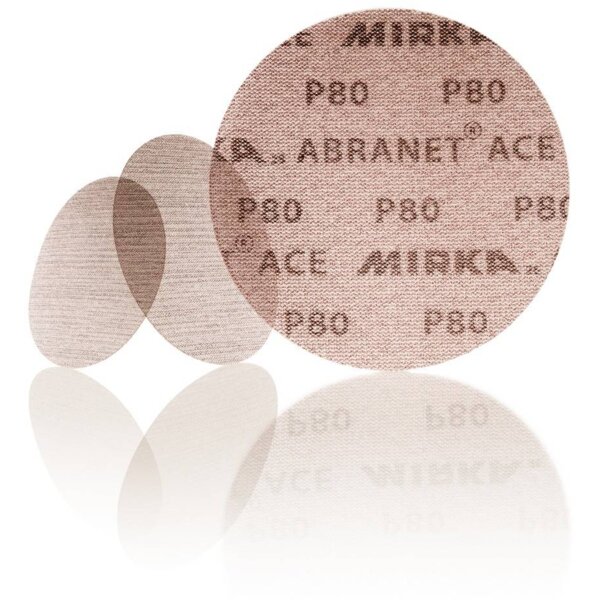
Between coats of Epifanes Nautiforte Yacht Paint, allow sufficient drying time (see drying table), then lightly sand by hand with P400 or Scotch-Brite before recoating. Do not apply wet-on-wet.
Application guidelines
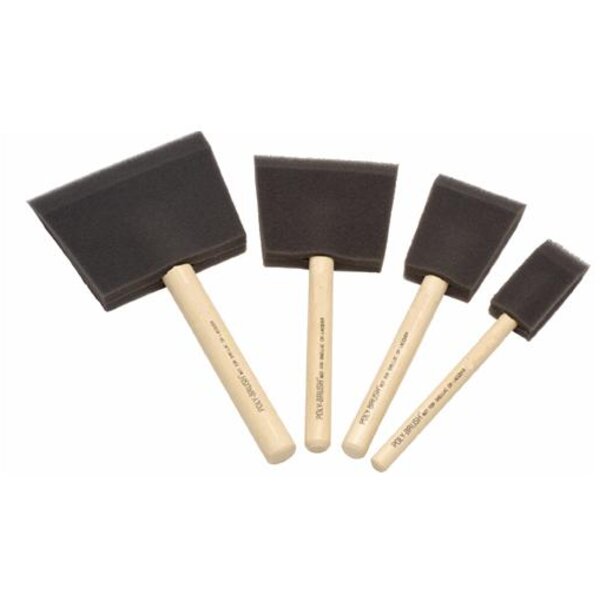
- Apply with a longhaired soft brush, roller or spray.
- Distribute the paint evenly; do not retip unnecessarily.
- Avoid excessive wet film thickness to prevent curtains and drying problems, especially on horizontal surfaces.
- Do not paint in direct sunlight or strong wind to avoid rapid solvent loss and reduced flow.
- If the product “pulls” or is difficult to apply, up to approx. 10% Epifanes Brushthinner for Paint & Varnish may be added.
Compatibility with other Epifanes products
- Epifanes Mono-urethane Yacht Paint
- Epifanes Non-skid Deck Coating
- Epifanes Yacht Enamel
- Epifanes Satin Finish
- Epifanes Flat Black
- Epifanes Waterline Paint
FAQ – Epifanes Nautiforte Yacht Paint
-
Is Epifanes Nautiforte Yacht Paint suitable below the waterline?
No. The product information specifies use above the waterline only.
-
On which substrates can I apply Epifanes Nautiforte Yacht Paint?
It can be used on wood, steel, aluminium and GRP when properly primed, and on intact existing one- and two-component paint systems above the waterline.
-
How many finishing coats are recommended?
After the appropriate primer system, three full-bodied coats of Epifanes Nautiforte Yacht Paint are recommended.
-
Do I need to sand between coats?
Yes. After each coat has fully dried, lightly sand by hand with P400 or Scotch-Brite before applying the next coat.
-
What is the drying time before recoating at 20 °C?
At 20 °C and 65% relative humidity, Nautiforte Yacht Paint is typically dust-dry in about 1 hour and sandable/recoatable after about 18 hours at 40 µm dry film thickness.
-
Which thinners should I use?
For brushing, use Epifanes Brushthinner for Paint & Varnish or good quality white spirit. For spray application, use Epifanes Spraythinner for Paint & Varnish or denatured alcohol as indicated.
-
Can I overcoat Epifanes Nautiforte with other Epifanes finishes?
Yes, it can be combined within systems that include Epifanes Mono-urethane Yacht Paint, Non-skid Deck Coating, Yacht Enamel, Satin Finish, Flat Black and Waterline Paint, following the recommended system build-up.
-
How should I store unopened cans?
Store in a dry room, in tightly closed original containers, at 5–30 °C. Under these conditions, the typical shelf life is about 3 years.
-
Is Epifanes Nautiforte Yacht Paint flammable?
Yes. It is classified as a flammable liquid (Flam. Liq. 3, H226) with a flash point of approximately 40 °C.
-
Does the product have any health hazard classifications?
Yes. It is classified as Skin Sens. 1 (H317, may cause an allergic skin reaction) and STOT SE 3 (H336, may cause drowsiness or dizziness). Always follow the recommended protective measures.
Section 14 – Transport information
- UN number / ID number: UN1263
- UN proper shipping name: PAINT (ADR: 1263 PAINT)
- Transport hazard class: Class 3 – Flammable liquids (ADR, IMDG, IATA)
- Label: 3
- Packing group: III
- Environmental hazards: Marine pollutant – No
- Hazard identification number (Kemler code): 30
- EMS number (IMDG): F-E, S-E
- Stowage category (IMDG): A
- ADR tunnel restriction code: D/E
- Limited quantities (ADR/IMDG): 5 L
- Excepted quantities (ADR/IMDG/IATA): Code E1 (maximum 30 ml per inner packaging, 1000 ml per outer packaging)
- Special remarks (ADR): Packaging < 450 L may be exempt as viscous substances according to ADR 2.2.3.1.5.
- UN Model Regulation description: UN 1263 PAINT, 3, III
Section 8 – Individual protective measures
When handling Epifanes Nautiforte Yacht Paint, follow the safety recommendations from the Safety Data Sheet:
General hygiene measures
- Immediately remove all soiled or contaminated clothing.
- Wash hands before breaks and at the end of work.
- Avoid contact with skin and eyes and avoid breathing vapours or spray mist.
Respiratory protection
- Ensure good ventilation/exhaust at the workplace.
- For short or low exposure, use an appropriate breathing filter device.
- For intensive or prolonged exposure, use a breathing apparatus independent of the surrounding air.
- A half-face mask for organic vapours and solvents according to EN140 type A1 or A2 is recommended.
Hand protection
- Wear protective gloves that are impermeable and resistant to the product.
- Due to missing specific tests, no single glove material can be recommended for all conditions; select gloves based on breakthrough times, diffusion rates and degradation.
- For permanent contact up to a maximum of 15 minutes, butyl rubber (BR) gloves are indicated as suitable.
- For splash protection, gloves made of the following are suitable (according to EN374):
- Chloroprene, thickness > 0.7 mm, breakthrough time > 60 min
- Nitrile rubber, thickness > 0.3 mm, breakthrough time > 60 min
- The exact breakthrough time must be obtained from the glove manufacturer and observed in use.
Eye and face protection
- Wear tightly sealed safety goggles to protect against splashes and spray.
Additional safety notes
- The product is a flammable liquid and vapour; keep away from heat, hot surfaces, sparks, open flames and other ignition sources. No smoking.
- Prevent formation of aerosols and ensure adequate ventilation during spraying or brushing.
- Warning: hazardous respirable droplets may be formed when sprayed. Do not breathe spray or mist.
Contenido generado por IA