What is Interline 2981 Part A and why choose it?
Interline 2981 Part A is the base component of a solvent free, two component epoxy phenolic tank lining system designed for professional and industrial use. When mixed with its dedicated curing agent (Part B) it forms a high build, chemically resistant coating that provides corrosion protection to the internal surfaces of steel storage tanks and pipelines containing crude oil and a limited range of hydrocarbon products. The system is formulated with 100% volume solids, delivering thick, durable films in a single or multi-coat application and is suitable for service in crude oil up to 60°C (140°F).
Main features
- Solvent free epoxy phenolic system: 100% volume solids for high build linings without solvent emissions.
- Internal tank and pipe protection: Developed for the internal lining of steel storage tanks and pipelines containing crude oil and selected hydrocarbon products.
- Temperature resistance: Suitable for crude oil service up to 60°C (140°F).
- High film thickness capability: 300–600 microns on walls and up to 1,000 microns as a single coat on tank floors.
- High solids grey finish: Supplied in grey with a non-applicable gloss level, optimised for inspection and service performance.
- Abrasive blast application system: Designed to be applied over correctly blasted steel substrates to Sa2½ / SSPC-SP10.
- Airless or plural component application: Compatible with airless spray and plural component airless spray equipment for efficient application of thick films.
- Self-overcoating: Interline 2981 should only be overcoated with itself, ensuring system compatibility.
Technical specifications
Product composition and appearance
- Product type: Epoxy phenolic tank lining (Part A of a two component system).
- Colour: Grey.
- Gloss level: Not applicable.
- Volume solids: 100%.
- Product weight: 1.57 kg/litre (13.1 lb/gal).
- Flash point (Part A): 84°C (183°F) closed cup.
Recommended film thickness and coverage
- Typical dry film thickness (walls): 300–600 microns (12–24 mils) when used as an unreinforced system.
- Typical dry film thickness (tank floors): 400–1,000 microns (16–40 mils) as a single coat system.
- Theoretical coverage: 2.50 m²/litre at 400 microns DFT; 100 sq.ft/US gallon at 16 mils DFT, based on stated volume solids.
- Practical coverage: Allow appropriate loss factors.
Drying and overcoating times (enclosed tank conditions)
Overcoating with Interline 2981 (self-overcoating) under enclosed tank conditions:
- At 5°C (41°F): Touch dry 40 h; hard dry 66 h; minimum overcoat 36 h; maximum overcoat 6 months.
- At 10°C (50°F): Touch dry 24 h; hard dry 31 h; minimum overcoat 24 h; maximum overcoat 6 months.
- At 25°C (77°F): Touch dry 9 h; hard dry 12 h; minimum overcoat 6 h; maximum overcoat 6 months.
- At 40°C (104°F): Touch dry 3 h; hard dry 4.5 h; minimum overcoat 2 h; maximum overcoat 6 months.
Return to service (after full cure)
- 5°C (41°F): 21 days.
- 10°C (50°F): 10 days.
- 25°C (77°F): 5 days.
- 40°C (104°F): 3 days.
Surface preparation
- All surfaces must be clean, dry and free from contamination.
- Prepare steel substrates by abrasive blast cleaning to Sa2½ (ISO 8501-1:2007) or SSPC-SP10.
- Recommended surface profile: 75–100 microns (3–4 mils), sharp and angular.
- Apply Interline 2981 before steel re-oxidation; any oxidised areas must be reblasted to the specified standard.
- Surface defects revealed by blasting should be ground, filled or treated appropriately.
- For self-overcoating, the existing Interline 2981 surface must be fresh water washed and dried before the next coat.
- Where VOC regulations allow, a holding primer of Intergard 269 may be used at 25–40 microns (1.0–1.6 mils) DFT to hold the blast for up to 6 months in semi-protected tank interiors. Intergard 269 must be clean, dry and intact and used within 6 months of application.
Mixing and application
- Components: Part A (base) and Part B (curing agent) supplied as a unit.
- Mix ratio: 3 parts Part A : 1 part Part B by volume. Always mix a complete unit in the proportions supplied.
- Mixing method:
- Agitate Base (Part A) with a power agitator.
- Agitate Curing Agent (Part B) with a power agitator.
- Combine entire contents of Part B into Part A and mix thoroughly with power agitation.
- Working pot life: 35 minutes at 25°C (77°F); 15 minutes at 40°C (104°F).
- Thinning: Do not thin (DO NOT THIN).
- Recommended application methods: Airless spray; plural component airless spray.
- Airless spray parameters: Tip range 0.53–0.68 mm (21–27 thou); minimum fluid pressure at tip 211 kg/cm² (3000 psi).
- Brush: Suitable for stripe coats only.
- Roller: Not suitable.
- Cleaner: International GTA853 (or GTA415) for flushing and cleaning equipment.
- Work stoppages: Do not allow mixed material to remain in hoses, gun or spray equipment. Thoroughly flush with GTA853 during breaks. Mixed units should not be resealed; after prolonged stoppages, resume with freshly mixed units.
Application conditions and quality control
- Bring paint to at least 20°C (68°F) before application.
- Stripe coat heavily pitted areas by brush to ensure good wetting of the surface.
- Steel temperature must be at least 3°C (5°F) above dew point and not below 5°C (41°F).
- Low temperatures and/or high humidity during or immediately after application may lead to incomplete cure and surface contamination, affecting intercoat adhesion.
- After hard cure, measure dry film thickness with a suitable non-destructive magnetic gauge to verify minimum system DFT.
- The cured film should be free from pinholes, runs, sags, drips, inclusions and other defects; any deficiencies must be corrected and rechecked before placing the lining into service.
System compatibility
- Primers (where permitted by VOC regulations): Intergard 269 as a holding primer on blasted steel.
- Topcoats: Interline 2981 should only be topcoated with itself and must not be overcoated with other products.
Regulatory and environmental data
- VOC content: 112 g/kg (EU Solvent Emissions Directive 2010/75/EU).
- Classification: Causes skin irritation (Skin Irrit. 2, H315); causes serious eye irritation (Eye Irrit. 2, H319); may cause an allergic skin reaction (Skin Sens. 1, H317); toxic to aquatic life with long lasting effects (Aquatic Chronic 2, H411).
- The mixture does not contain substances assessed to be PBT or vPvB according to Regulation (EC) No. 1907/2006, Annex XIII.
Packaging and storage
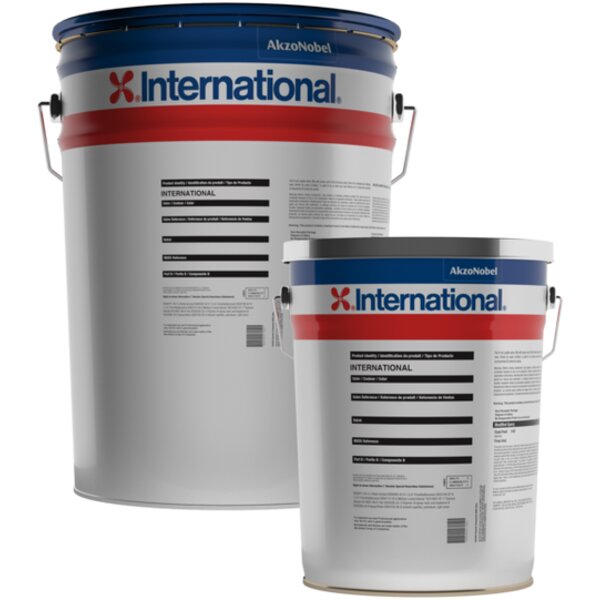
- Unit size: 18 litre kit.
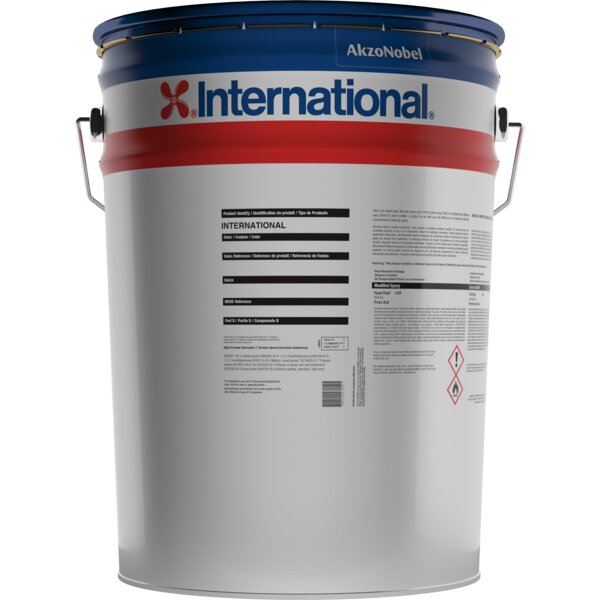
- Part A volume/pack: 13.5 litres in 20 litre container.
- Part B volume/pack: 4.5 litres in 5 litre container.
- Typical shipping weight (18 litre unit): Part A 23.92 kg; Part B 4.59 kg.
- Shelf life: 12 months at 25°C (77°F), subject to re-inspection thereafter.
- Storage conditions: Store in dry, shaded conditions away from sources of heat and ignition. Keep containers tightly closed in original packaging.
Applications and use cases
- Crude oil storage tanks: Internal lining for steel tanks storing crude oil at temperatures up to 60°C (140°F).
- Hydrocarbon product tanks: Corrosion protection for tanks containing a limited range of hydrocarbon products, as specified for Interline 2981 systems.
- Steel pipelines: Internal lining of steel pipes carrying crude oil or compatible hydrocarbon services.
- High build tank floors: Single-coat high thickness lining (400–1,000 microns) for tank bottoms where enhanced protection is required.
FAQ – Interline 2981 Part A
1. What is Interline 2981 Part A used for?
Interline 2981 Part A is the base component of a solvent free epoxy phenolic tank lining system used for corrosion protection of the internal surfaces of steel storage tanks and pipelines containing crude oil and a limited range of hydrocarbon products.
2. Can Interline 2981 be used on substrates other than steel?
The product information specifies application to correctly prepared steel substrates. Consultar ficha técnica del fabricante.
3. What surface preparation is required before application?
Steel surfaces must be abrasive blast cleaned to Sa2½ (ISO 8501-1:2007) or SSPC-SP10 with a sharp, angular profile of 75–100 microns. Contamination such as oil and grease must be removed in accordance with SSPC-SP1 solvent cleaning.
4. Do I need a primer under Interline 2981?
Interline 2981 is generally applied directly to correctly prepared steel. Where VOC regulations allow, Intergard 269 may be used as a holding primer at 25–40 microns DFT to protect the blast prior to lining application.
5. How is Interline 2981 mixed?
Part A (base) and Part B (curing agent) are supplied as a unit and must be mixed in the supplied proportions: 3 parts Part A to 1 part Part B by volume. Always mix a full unit using mechanical agitation.
6. What are the recommended application methods?
The product is designed for application by airless spray or plural component airless spray. Brush may be used for stripe coats only; roller application is not suitable.
7. When can the lined tank be returned to service?
Minimum return-to-service times depend on temperature: typically 21 days at 5°C, 10 days at 10°C, 5 days at 25°C and 3 days at 40°C, after the coating has fully cured.
8. Can Interline 2981 be overcoated with other paints?
No. Interline 2981 should only be topcoated with itself and should not be overcoated with other materials.
9. What is the VOC level of Interline 2981?
The VOC content is 112 g/kg in accordance with the EU Solvent Emissions Directive (Council Directive 2010/75/EU).
10. Who should apply Interline 2981?
The product is intended for use only by professional applicators in industrial situations, following the guidance in the technical data sheet and Safety Data Sheet and complying with all relevant health, safety and environmental regulations.
Section 14 – Transport information
- UN number / ID: UN3082.
- Proper shipping name (ADR/RID, IMDG, IATA): ENVIRONMENTALLY HAZARDOUS SUBSTANCE, LIQUID, N.O.S. (reaction product: bisphenol-A-(epichlorhydrin); epoxy resin, Reaction mass of 2,2'-[methylenebis(2,1-phenyleneoxymethylene)]bis(oxirane) and 2,2'-[methylenebis(4,1-phenyleneoxymethylene)]bis(oxirane) and 2-({2-[4-(oxiran-2-ylmethoxy)benzyl]phenoxy}methyl)oxirane).
- Transport hazard class: Class 9.
- Packing group: III.
- Environmental hazards: Classified as hazardous to the environment; marine pollutant for IMDG. Contains epoxy resin components listed as marine pollutants.
- Small package exemption: Not regulated as a dangerous good when transported in sizes of ≤5 litres or ≤5 kg, provided packaging meets the general provisions of the relevant transport codes.
- Special precautions for user: Transport within user’s premises in closed, upright and secure containers. Ensure personnel involved in transport know the actions required in case of an accident or spillage.
- Transport in bulk according to IMO instruments: Not applicable.
Section 8 – Individual protection measures
General hygiene measures
- Wash hands, forearms and face thoroughly after handling chemical products, before eating, smoking and using the lavatory and at the end of the working period.
- Use appropriate techniques to remove potentially contaminated clothing. Contaminated work clothing should not leave the workplace and must be washed before reuse.
- Ensure eyewash stations and safety showers are close to work areas.
- Eating, drinking and smoking must be prohibited in areas where the product is handled, stored or processed.
Eye and face protection
- Wear chemical splash goggles complying with an approved standard whenever there is a risk of exposure to liquid splashes, mists, gases or dusts.
Hand protection
- Wear chemical-resistant, impervious gloves complying with an approved standard.
- For prolonged or frequently repeated contact, use gloves with protection class 6 (breakthrough time > 480 minutes, EN374). Recommended materials: Viton or nitrile, thickness ≥ 0.38 mm.
- For brief contact, use gloves with protection class 2 or higher (breakthrough time > 30 minutes, EN374). Recommended material: nitrile, thickness ≥ 0.12 mm.
- Replace gloves regularly and whenever there are signs of damage or deterioration. The user must confirm that selected gloves are suitable for the specific working conditions.
Skin and body protection
- Select personal protective clothing and footwear based on the specific task and associated risks; choices should be approved by a specialist before handling the product.
- Ensure additional skin protection where there is a risk of splashes, contamination or prolonged contact.
Respiratory protection
- Based on the hazard and potential for exposure, use a respirator that meets the appropriate standards or certifications.
- Wear a respirator conforming to EN140 with type A/P2 filter or better when ventilation is inadequate or when spraying generates vapors, spray or mist.
- Dry sanding, flame cutting or welding of the dry paint film will produce dust and/or hazardous fumes; use wet methods where possible. If exposure cannot be controlled by local exhaust ventilation, suitable respiratory protective equipment is required.
Environmental exposure controls
- Emissions from ventilation or process equipment must be checked to ensure compliance with environmental protection legislation.
- Where necessary, use fume scrubbers, filters or engineering modifications to reduce emissions to acceptable levels.
*Contenido generado por IA