What it is and why choose it
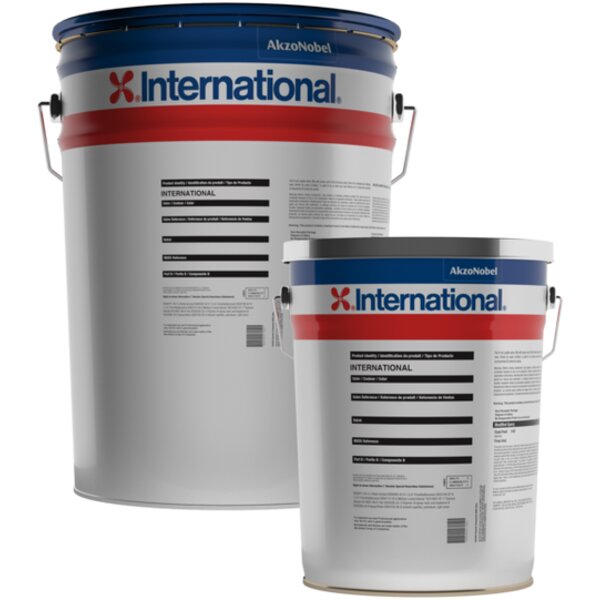
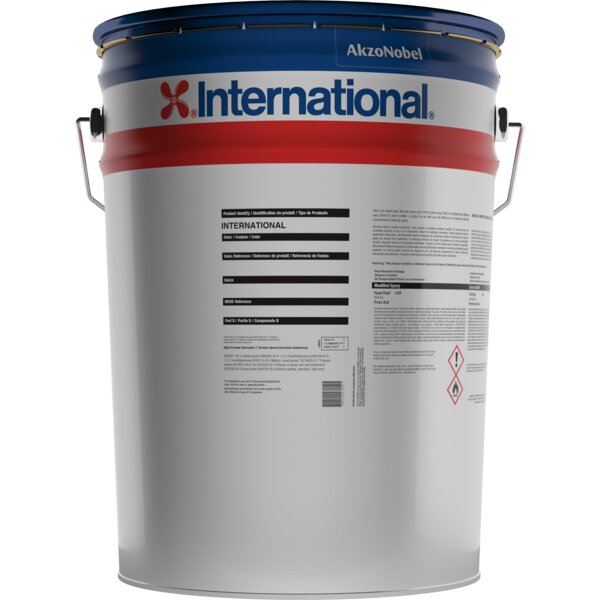
INTERLINE 975 PART A INDIVISIBLE KIT by International Marina is the base component of Interline 975, a light-coloured, solvent free, pure epoxy tank coating. When mixed with its dedicated curing agent (Part B THA972) it forms a high performance lining specifically developed for potable water tanks, suitable both for newbuilding and maintenance and repair projects. The system delivers 100% volume solids, zero VOC and durable internal protection for steel tanks where resistance to stored potable water is essential.
Main features
- Solvent free pure epoxy – 100% volume solids, designed to minimise solvent emissions (0 g/L VOC as supplied).
- Potable water tank performance – high performance tank coating for the carriage and storage of potable water, with external certifications for potable water service when used as part of approved schemes.
- Light colours for easy inspection – available in white (THA970-White) and buff (THA971-Buff) for improved visibility inside tanks.
- High build in a single application – typical dry film thickness of 300 microns in one coat using airless spray.
- Efficient coverage – theoretical spreading rate of 3.33 m²/litre at 300 microns DFT (allow appropriate loss factors).
- Controlled curing characteristics – defined touch dry, hard dry and walk-on times across a wide temperature range (10°C to 35°C) to assist planning of tank entry and overcoating.
- Zero added thinner – product is supplied ready for use and should not be thinned.
- Professional grade kit – supplied as an indivisible unit of Part A (base) and Part B (curing agent) to ensure correct mix ratio on site.
Technical specifications
- Product type: Solvent free epoxy tank coating (base component).
- Colour Part A: THA970-White (also available in THA971-Buff according to product information).
- Curing agent (Part B): THA972.
- Mix ratio (by volume): 2.20 parts Part A to 1 part Part B.
- Volume solids: 100%.
- Typical dry film thickness: 300 microns (300 microns wet).
- Theoretical coverage: 3.33 m²/litre at 300 microns DFT (allow appropriate loss factors).
- Recommended application methods: Airless spray (recommended); brush and roller for small areas only, multiple coats may be required to achieve specified film thickness.
- Flash point (typical): Part A >101°C; Part B >101°C; mixed >101°C (closed cup, Pensky-Martens).
- Drying and handling (substrate temperature):
- 10°C: Touch dry 22 h; hard dry 45 h; walk-on time 48 h; pot life 90 min.
- 15°C: Touch dry 19 h; hard dry 32 h; walk-on time 42 h; pot life 80 min.
- 25°C: Touch dry 9 h; hard dry 17 h; walk-on time 24 h; pot life 60 min.
- 35°C: Touch dry 8 h; hard dry 10 h; walk-on time 12 h; pot life 35 min.
- Overcoating intervals with Interline 975 (guidance, tank conditions dependent):
- 10°C: minimum 36 h, maximum 28 days.
- 15°C: minimum 24 h, maximum 28 days.
- 25°C: minimum 16 h, maximum 14 days.
- 35°C: minimum 7 h, maximum 14 days.
- VOC: 0 g/L as supplied (EPA Method 24); 0 g/kg of liquid paint as supplied (EU Solvent Emissions Directive 1999/13/EC).
- Supplied form: Two containers supplied as a single kit; always mix a complete unit as delivered.
- Storage: Minimum 12 months at 25°C. Store in dry, shaded conditions away from sources of heat and ignition.
Applications and use cases
- Potable water tanks (marine and industrial) – high performance internal lining for tanks carrying cold potable water, including marine potable water tanks when applied according to Interline 975 potable water tank guidelines.
- Newbuilding projects – specified for new steel tanks where a solvent free, light coloured epoxy lining is required with controlled DFT and overcoating windows.
- Maintenance and repair – refurbishment of existing potable water tanks after appropriate surface preparation to Sa2½ (ISO 8501-1:2007) and profile 75–100 microns.
- Steel tank internals – internal lining where solvent emissions must be minimised and high-build, single coat application by airless spray is beneficial.
FAQ
-
What type of coating is INTERLINE 975 PART A?
It is the base component of Interline 975, a light coloured, solvent free, pure epoxy tank coating for potable water service.
-
Can it be used in potable water tanks?
Yes. The complete Interline 975 system is described as a high performance tank coating for potable water tanks and holds potable water certifications when used as part of approved schemes.
-
What is the correct mixing ratio with Part B?
Mix 2.20 parts by volume of Part A with 1 part by volume of curing agent Part B (THA972). Always mix a full supplied unit.
-
Do I need to thin the product before application?
No. Thinning is not recommended and the product should not be thinned.
-
Which application methods are recommended?
Airless spray is recommended for main areas. Brush and roller are suitable only for small areas or touch-up and may require multiple coats.
-
What is the typical film thickness and coverage?
The typical dry film thickness is 300 microns, giving a theoretical coverage of 3.33 m²/litre at that DFT, before loss factors.
-
What is the pot life after mixing?
Pot life ranges from about 90 minutes at 10°C to 35 minutes at 35°C. Once mixed, the material must be used within the stated pot life.
-
Is the kit divisible?
No. The material is supplied as two containers forming a single kit and should always be mixed and used as a complete unit in the delivered proportions.
Section 14 – Transport information
Based on the Safety Data Sheet for Interline 975 White Part A:
- UN number: UN3082.
- Proper shipping name: ENVIRONMENTALLY HAZARDOUS SUBSTANCE, LIQUID, N.O.S. (reaction product: bisphenol-A-(epichlorhydrin); epoxy resin).
- Transport hazard class: 9.
- Packing group: III.
- Environmental hazards: Classified as hazardous to the aquatic environment; marine pollutant for sea transport.
- Small packaging exemption: Not regulated as a dangerous good when transported in pack sizes ≤5 L or ≤5 kg, provided the packaging meets the applicable provisions.
- On-site transport advice: Always transport in closed, upright and secure containers. Ensure personnel transporting the material know what to do in case of accident or spillage.
Section 8 – Individual protection measures
Always follow the Safety Data Sheet and local regulations. Key recommendations from Section 8 of the SDS for Interline 975 White Part A include:
- General hygiene – wash hands, forearms and face thoroughly after handling and before eating, drinking or smoking. Remove contaminated clothing and protective equipment before entering eating areas.
- Eye/face protection – wear chemical splash goggles or other eye protection complying with an approved standard where there is risk of splashes, mists or vapours.
- Hand protection – wear chemical-resistant, impervious gloves complying with an approved standard. For prolonged or frequently repeated contact, gloves with protection class 6 (breakthrough time >480 minutes according to EN374) are recommended; suggested materials include Viton or nitrile with minimum thickness 0.38 mm. For brief contact, nitrile gloves with minimum thickness 0.12 mm and protection class ≥2 are recommended. Replace gloves regularly and if damaged.
- Skin and body protection – select suitable protective clothing based on the task and risks (for example, chemical resistant overalls) and have it approved by a specialist before use.
- Respiratory protection – if airborne concentrations cannot be adequately controlled by ventilation, wear a respirator conforming to EN140 with type A/P2 filter or better. Dry sanding, flame cutting or welding of the dried coating may generate hazardous dusts and fumes; wet methods or suitable respiratory protection should be used.
- Environmental controls – emissions from ventilation or process equipment should be checked to ensure compliance with environmental protection requirements; fume scrubbers or filters may be required.
*Contenido generado por IA*