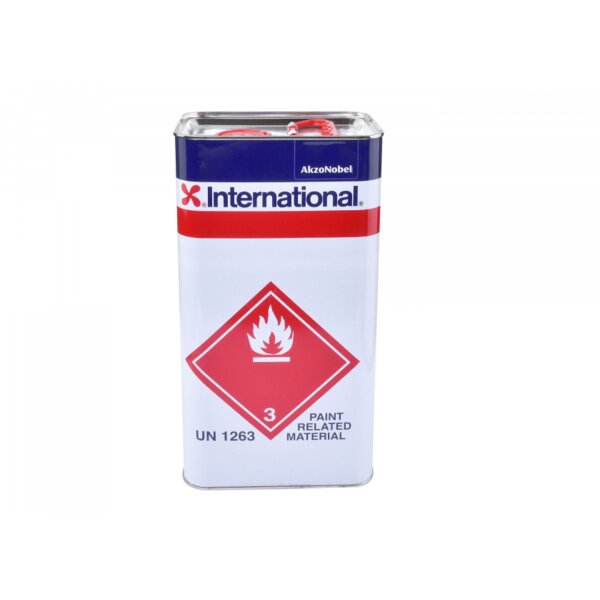
What is Interline 704 Part A Indivisible Kit and why choose it?
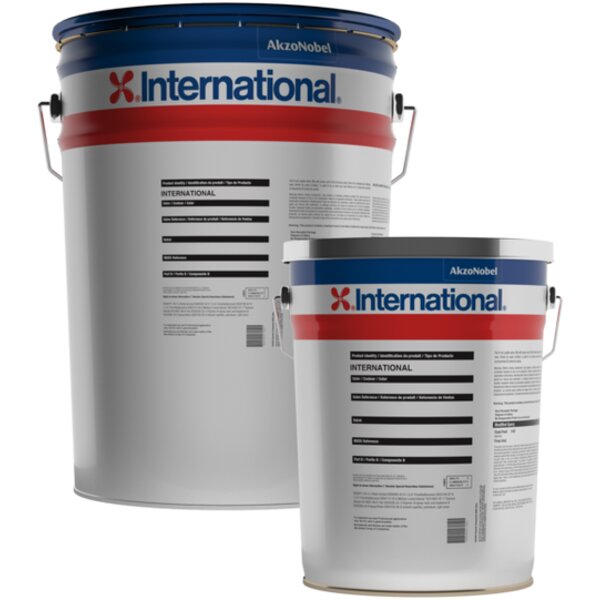
INTERLINE 704 PART A INDIVISIBLE KIT is the base component (Part A) of Interline 704, a two-pack epoxy cargo tank coating from International Marine Coatings. When mixed with its dedicated curing agent (Part B THA703), it forms an FDA-compliant epoxy lining designed for cargo tanks carrying a wide range of products, including clean and dirty petroleum, vegetable and animal oils, caustic soda and seawater ballast. It is suitable for both newbuilding and maintenance and repair projects where reliable chemical and corrosion protection is essential.
This kit is supplied as an indivisible unit to ensure the correct base volume for accurate mixing with Part B, helping to maintain film build, performance and regulatory compliance.
Main features
- Two-component epoxy tank coating – Part A base to be mixed with curing agent THA703.
- FDA compliant for liquid and dry foodstuffs when used as part of an approved system.
- Extensive cargo resistance – suitable for tanks carrying over 2000 cargoes, including petroleum products, vegetable and animal oils, caustic soda and seawater ballast.
- Semi-gloss finish for easier cleaning and inspection.
- Multiple colour options within the Interline 704 range (THA700 Pink, THA701 White, THA702 Grey).
- High volume solids (53% ±2%) to achieve specified film thickness with fewer coats.
- Application flexibility – designed primarily for airless spray, with brush and roller recommended for small areas and touch-up.
- Recognised corrosion control coating for tanks (LR certification) and approved for carriage of grain (NOHH) when used as part of an approved scheme.
Technical specifications
- Product type: Epoxy cargo tank coating, Part A (base component).
- Brand: International Marine Coatings.
- Colours (Interline 704 system): THA700 Pink, THA701 White, THA702 Grey.
- Finish: Semi-gloss.
- Mixing ratio: 3.50 parts by volume Part A to 1 part by volume Part B (THA703).
- Volume solids: 53% ±2% (ISO 3233:1998).
- Typical dry film thickness: 125 microns (236 microns wet).
- Theoretical coverage: 4.24 m²/litre at 125 microns DFT (before loss factors).
- Application methods: Airless spray (recommended); brush and roller for small areas only.
- Recommended airless spray tip: 0.64–0.69 mm (25–27 thou) with minimum 211 kg/cm² (3000 psi) fluid pressure at tip.
- Conventional spray: Not recommended.
- Thinner: International GTA220 (thinning normally not required; must comply with local legislation).
- Cleaner: International GTA822.
- Flash point (Part A): 24°C.
- Flash point (Part B): 23°C.
- Flash point (mixed): 26°C.
- Induction time (mixed paint): 30 minutes at temperatures below 25°C.
- Pot life (mixed): 9 h at 5°C; 9 h at 10°C; 5 h at 25°C; 3 h at 35°C.
- Touch dry (approx.):
- 5°C: 6 h
- 10°C: 5 h
- 25°C: 3 h
- 35°C: 60 min
- Hard dry (approx.):
- 5°C: 24 h
- 10°C: 20 h
- 25°C: 8 h
- 35°C: 6 h
- Overcoating interval with Interline 704 (min/max):
- 5°C: 36 h / 35 days
- 10°C: 24 h / 32 days
- 25°C: 9 h / 21 days
- 35°C: 7 h / 14 days
- Minimum curing temperature: Product will not cure adequately below 5°C; for maximum performance, curing temperature should be above 10°C.
- VOC (as supplied):
- 425 g/l (EPA Method 24)
- 333 g/kg of liquid paint (EU Solvent Emissions Directive 1999/13/EC)
- 381 g/l (Chinese National Standard GB23985)
- Unit size (typical): 20 l unit containing 15.56 l Part A (20 l pack) and 4.44 l Part B (5 l pack). For availability of other unit sizes: Consultar ficha técnica del fabricante.
- Approximate unit shipping weight: 20 l unit: 30.71 kg.
- Shelf life:
- Minimum 12 months at temperatures up to 25°C.
- Minimum 6 months at temperatures above 25°C (subject to reinspection).
- Storage conditions: Store in dry, shaded conditions away from heat and ignition sources. Keep containers tightly closed.
Applications and use cases
Typical environments
- Cargo tanks on marine vessels handling clean and dirty petroleum products.
- Tanks for vegetable and animal oils.
- Tanks exposed to caustic soda.
- Seawater ballast tanks.
- Grey water and cargo tanks where Interline 704 application guidelines are followed.
Project types
- Newbuilding: Application to freshly blasted steel cargo tanks prepared in accordance with Worldwide Marine Specifications.
- Major refurbishment: Recoating of existing cargo tanks after full abrasive blast cleaning to Sa 2½ (ISO 8501-1:2007) or SSPC-SP10 in North America.
- Localized repair: Small-area repairs and stripe coats using brush or roller (power-tool preparation Pt3 / SSPC-SP11 in minor areas, as agreed with the manufacturer).
Surface preparation overview
- All surfaces must be clean, dry and free from contamination.
- High-pressure fresh-water wash to remove salts and loose contamination.
- Abrasive blast cleaning to Sa 2½ (ISO 8501-1:2007) with sharp, angular profile of 50–100 microns.
- Apply Interline 704 before any visible oxidation. If oxidation occurs, reblast affected areas.
- Optional holding primer: Interline 982 at 40 microns DFT before oxidation occurs, or maintain blast standard using dehumidification.
Mixing and application notes
- Material is supplied in two containers as a complete unit; mix the full kit only.
- Agitate Part A thoroughly with a power agitator.
- Add entire contents of Part B to Part A and mix thoroughly; respect the 30-minute induction time at temperatures below 25°C.
- Do not reseal mixed units; for prolonged stoppages, restart with freshly mixed material.
- Apply only when surface temperature is at least 3°C above the dew point and preferably when material temperature is 21–27°C.
- This product is not suitable for curing below 5°C; for best performance, ambient and steel temperatures should be above 10°C.
FAQ – Interline 704 Part A Indivisible Kit
-
Is this product food-contact compliant?
Yes. When used as part of an approved Interline 704 system, it is FDA compliant for liquid and dry foodstuffs and approved for carriage of grain under the relevant certification.
-
Can I purchase or use Part A separately from Part B?
Part A is supplied as an indivisible kit intended to be mixed with the specified curing agent (Part B THA703) at a fixed 3.5:1 volume ratio. It is not designed for use on its own.
-
What is the recommended application method?
Airless spray is recommended for full-scale application. Brush and roller may be used for small areas and touch-up, but multiple coats can be required to achieve the specified film thickness.
-
At what temperatures can I apply and cure Interline 704?
Do not apply if the steel temperature is below 5°C or less than 3°C above the dew point. For maximum performance, curing temperatures should be above 10°C.
-
How long can I wait between coats?
At 25°C, the minimum overcoating interval with Interline 704 is 9 hours and the maximum is 21 days. At lower or higher temperatures the intervals change; see the technical data for the full table.
-
What thinner and cleaner should I use?
International GTA220 is specified as thinner (normally not required), and International GTA822 is recommended for cleaning spray equipment and for flushing lines during work stoppages.
-
Does the product have high VOC content?
The VOC content as supplied is typically 425 g/l (EPA Method 24) and 333 g/kg according to the EU Solvent Emissions Directive.
-
What surface preparation standard is required?
Cargo tank steel must be abrasive blast cleaned to Sa 2½ (ISO 8501-1:2007) with 50–100 microns profile. In North America, SSPC-SP10 may be used as an equivalent.
-
Is conventional spray application allowed?
No. Application by conventional spray is not recommended for this product.
-
How should I store unused Part A kits?
Store in unopened original containers, in a dry, shaded, well-ventilated area away from heat and ignition sources, within the specified temperature and shelf-life limits.
Section 14 – Transport information
- UN number (ADR/RID, IMDG, IATA): UN1263.
- Proper shipping name: PAINT.
- Transport hazard class: 3 (flammable liquid).
- Packing group: III.
- Environmental hazards: Not classified as hazardous to the environment for transport purposes.
- ADR/RID tunnel restriction code: D/E.
- IMDG emergency schedules: F-E, S-E.
- Special precautions for user: Within user premises, always transport in closed, upright and secure containers and ensure personnel know what to do in case of accident or spillage.
Section 8 – Personal protective measures
This product is classified as a flammable liquid that can cause skin irritation, serious eye damage, respiratory irritation and possible organ damage after prolonged or repeated exposure. Appropriate personal protective equipment (PPE) and engineering controls are essential during handling and application.
Engineering and hygiene controls
- Use only with adequate ventilation and, where necessary, local exhaust ventilation or process enclosures to keep airborne concentrations below occupational exposure limits and below lower explosion limits.
- Use explosion-proof ventilation and electrical equipment.
- Wash hands, forearms and face thoroughly after handling and before eating, drinking or smoking.
- Remove contaminated clothing and protective equipment before entering eating areas and wash contaminated garments before reuse.
- Ensure eyewash stations and safety showers are located close to the work area.
Eye and face protection
- Wear chemical splash goggles and/or a face shield meeting an approved standard when there is a risk of splashes, mists or vapors.
- If inhalation risk is high, a full-face respirator may be required instead of separate goggles.
Hand protection
- Use chemical-resistant, impermeable gloves compliant with relevant standards (such as EN374) whenever handling the product.
- For prolonged or frequently repeated contact, gloves with protection class 6 (breakthrough time > 480 minutes) are recommended. Suggested materials: Viton or nitrile, thickness ≥ 0.38 mm.
- For brief contact, gloves with protection class ≥ 2 (breakthrough time > 30 minutes) are recommended. Suggested material: nitrile, thickness ≥ 0.12 mm.
- Replace gloves regularly and immediately if damaged.
Skin and body protection
- Wear protective clothing appropriate to the task, approved by a safety specialist.
- Where ignition from static electricity is a risk, use anti-static protective clothing (for example, anti-static overalls, boots and gloves) in accordance with EN 1149 design principles.
- Select suitable protective footwear and additional skin protection based on the specific job and associated risks.
Respiratory protection
- Where ventilation is insufficient or exposure limits may be exceeded, wear a respirator conforming to EN140 with an A/P2 filter or better.
- Dry sanding, flame cutting or welding of the dry coating can generate hazardous dust and fumes; use wet methods where possible. If exposure cannot be controlled by ventilation, use suitable respiratory protection.
Environmental exposure control
- Check emissions from ventilation and process equipment to ensure compliance with environmental legislation.
- Where necessary, install fume scrubbers, filters or apply engineering modifications to reduce emissions.
*Contenido generado por IA