What is Interline 850 Part A and why choose it?
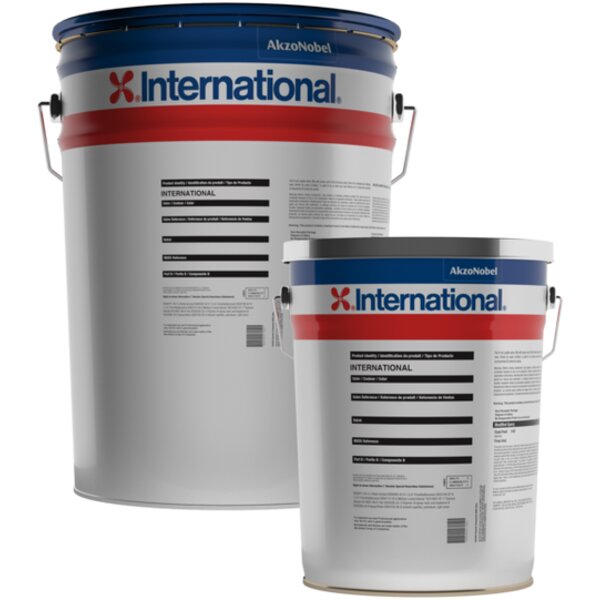
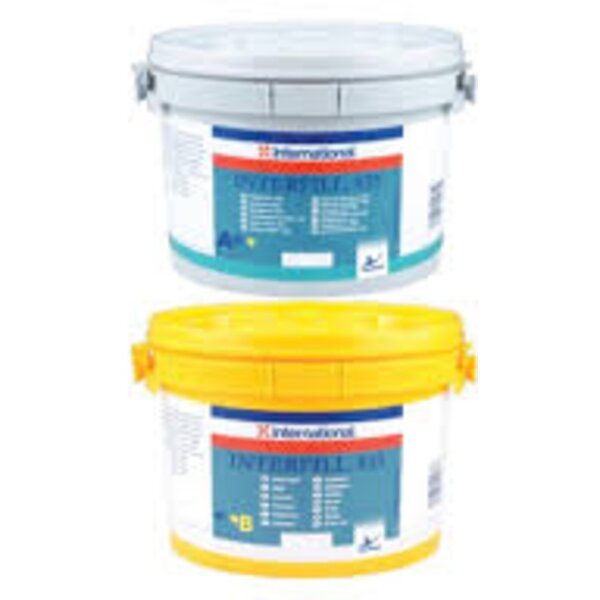
INTERLINE 850 PARTE A INDIVISIBLE KIT from International Marina is the base component of a two-pack, high-solids epoxy phenolic tank coating designed for demanding marine and industrial environments. When mixed with its dedicated curing agent (Part B TLA856), it provides a durable lining that is specifically approved for the carriage of potable water and suitable for both newbuilding projects and maintenance and repair.
This coating is engineered for high volume solids, controlled film build and reliable curing across a wide temperature range, offering a practical solution for protecting tanks and internal steel surfaces where performance, safety and regulatory compliance are critical.
Main features
- Two-pack epoxy phenolic system: Part A base to be mixed with curing agent Part B (TLA856) before application.
- High solids content: 76% ±2% volume solids (ISO 3233:1998) for efficient film build and reduced solvent content.
- Potable water approval: Approved as a tank coating for the carriage of potable water when used as part of an approved scheme.
- Marine-focused formulation: Intended for use in marine tanks at newbuilding or during maintenance and repair operations.
- Dedicated colours for inspection and service: Available as TLA850 White and TLA851 Grey.
- Controlled film thickness: Typical dry film thickness of 125 microns (164 microns wet).
- Good theoretical coverage: 6.08 m²/litre at 125 microns dft (before loss factors).
- Flexible application methods: Suitable for airless spray (recommended), as well as roller and brush for small areas.
- Proven drying performance: Defined touch-dry, hard-dry and pot life values from 10°C to 35°C.
- Regulated VOC levels: VOC values compliant with key international methods and directives.
- Designed for blast-cleaned steel: Requires high standard surface preparation for optimum performance.
Technical specifications
Product type and components
- Type: Epoxy phenolic tank coating (two-pack, high solids).
- Part A (this product): Base component, white or grey depending on code.
- Part B (curing agent): TLA856.
- Mix ratio: 4.00 volumes Part A to 1 volume Part B.
- Finish/Sheen: Not applicable.
Physical properties
- Colour: TLA850-White, TLA851-Grey.
- Volume solids: 76% ±2% (ISO 3233:1998).
- Typical dry film thickness (DFT): 125 microns.
- Typical wet film thickness (WFT): 164 microns.
- Theoretical coverage: 6.08 m²/litre at 125 microns DFT (allow appropriate loss factors).
- Flash point (Part A): 42°C.
- Flash point (Part B): 54°C.
- Flash point (mixed product): 43°C.
- Induction period: 15 minutes at temperatures below 15°C.
Drying and pot life
| Substrate temperature |
Touch dry
(ISO 9117/3:2010) |
Hard dry
(ISO 9117-1:2009) |
Pot life |
| 10°C |
9 hours |
24 hours |
3 hours |
| 15°C |
8 hours |
20 hours |
2 hours |
| 25°C |
5 hours |
8 hours |
60 minutes |
| 35°C |
3 hours |
5 hours |
30 minutes |
Overcoating intervals with Interline 850
| Substrate temperature |
Minimum overcoat time |
Maximum overcoat time |
| 10°C |
24 hours |
30 days |
| 15°C |
20 hours |
30 days |
| 25°C |
8 hours |
30 days |
| 35°C |
5 hours |
21 days |
Note: Overcoating information is provided as guidance only and may vary with tank configuration, ventilation and local conditions.
VOC data
- VOC (as supplied): 225 g/l (EPA Method 24).
- VOC (EU Solvent Emissions Directive 1999/13/EC): 143 g/kg of liquid paint as supplied.
- VOC (Chinese National Standard GB23985): 172 g/l.
Unit sizes and storage
- Standard unit (metric): 20 litre kit (Part A 16 L pack; Part B 4 L pack). Typical unit weight 33.33 kg.
- Standard unit (US): 5 US gallon kit (Part A 4 US gal pack; Part B 1 US gal pack). Typical unit weight 69.1 lb.
- Shelf life: Minimum 12 months at temperatures up to 25°C, subject to reinspection thereafter.
- Storage conditions: Store in dry, shaded conditions away from sources of heat and ignition. Keep containers closed.
Application details
- Method of application: Airless spray (recommended), roller, brush.
- Airless spray: Tip range 0.53–0.68 mm (21–27 thou); total fluid pressure at tip not less than 176 kg/cm² (2500 psi).
- Conventional spray: Not recommended.
- Brush/Roller: For small areas only; multiple coats may be required to achieve specified film thickness.
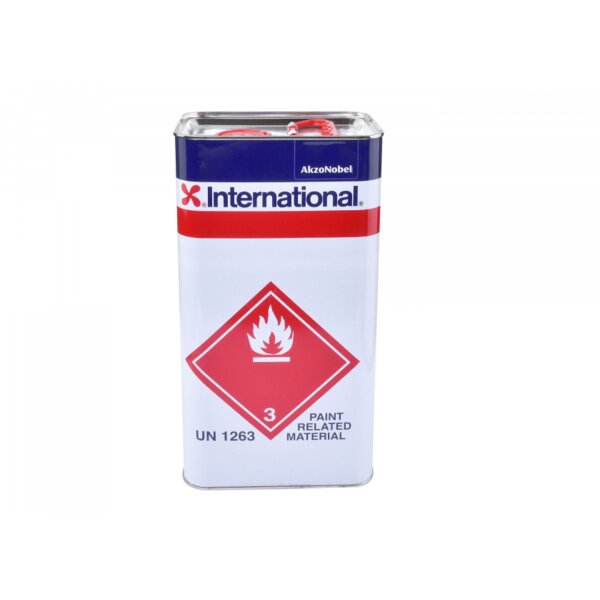
- Thinner: International GTA220, GTA415. Thinning is not normally required and must not exceed limits set by local legislation.
- Cleaner: International GTA415 or GTA853.
- Mixing:
- Agitate Part A with a power agitator.
- Add the full contents of Part B to Part A and mix thoroughly with a power agitator.
- Induction time: Allow 15 minutes at temperatures below 15°C before application.
- Work stoppages and cleaning: Do not leave material in hoses or spray equipment. Flush thoroughly with GTA415/GTA853 during breaks and at the end of the shift.
Surface preparation (steel tanks)
- All surfaces must be clean, dry and free from oil, grease, soluble contaminants and other foreign matter (SSPC-SP1 solvent cleaning as appropriate).
- Newbuilding:
- Remove weld spatter and smooth weld seams and sharp edges where necessary.
- Blast clean weld seams and damaged areas to Sa2½ (ISO 8501-1:2007) or power tool clean to Pt3 (JSRA SPSS:1984).
- Prepare intact shop primer by abrasive blast cleaning to Sa2½.
- Recommended surface profile: sharp, angular 50–100 microns.
- Apply primer or Interline 850 before oxidation occurs; if oxidation appears, reblast to specified standard.
- Major refurbishment:
- Remove weld spatter and smooth weld seams and sharp edges where necessary.
- Abrasive blast cleaning to Sa2½ (ISO 8501-1:2007) is mandatory.
- Recommended surface profile: 50–100 microns, sharp and angular.
- Apply Interline 850 before steel re-oxidises; reblast oxidised areas as required.
- Repairs: Consult International Paint for specific recommendations.
- North America (alternative standards): SSPC-SP10 may be used instead of Sa2½; SSPC-SP11 instead of Pt3.
Application conditions and limitations
- For cargo tanks, do not apply below 10°C.
- For potable water tanks, application is permitted on steel temperatures down to 5°C (consult for specific cure schedules).
- Substrate temperature must be at least 3°C above the dew point.
- For optimum application properties, bring material to 21–27°C before mixing and application (unless otherwise instructed).
- Drying times and overcoating intervals may be influenced by tank design, film thickness and ventilation.
- Tanks should be adequately flushed with potable water prior to filling. Discolouration during washing (for example from Cu²⁺ or Fe³⁺ ions) does not affect coating performance.
Certifications
- Potable water – carriage approvals (when part of an approved scheme):
- Folkehelseinstituttet, Norway – Carriage of potable water.
- AS/NZS 4020:2005 – Certification for tanks greater than 40,000 mm²/Lt.
- TÜV, Singapore – Carriage of potable water (BS6920:2000).
- Approvals may depend on formulation and manufacturing site.
Applications and use cases
- Potable water tanks: Lining for tanks approved for carriage of potable water, where hygienic performance and compliance with international standards are required.
- Marine cargo tanks: Epoxy phenolic protection of internal tank surfaces in marine vessels, subject to the specified temperature limitations and system design.
- Newbuilding projects: Tank lining during construction of new vessels or installations, applied over correctly prepared shop-primed or bare steel.
- Maintenance and repair: Refurbishment of existing tank linings after full blast cleaning to Sa2½ and correction of surface defects.
- Interior and exterior steel structures (professional/industrial): As a two-component protective coating where the properties of an epoxy phenolic system are required, within the limitations and approvals stated.
FAQ – Interline 850 Part A
1. What is supplied in the INTERLINE 850 PARTE A INDIVISIBLE KIT?
The kit is a two-pack system consisting of Part A (base) and Part B (curing agent TLA856). They are supplied as matched units (for example, 16 L Part A plus 4 L Part B in a 20 L kit).
2. Can Interline 850 be used in potable water tanks?
Yes. When used as part of an approved coating system, Interline 850 is certified for the carriage of potable water by several authorities, including Folkehelseinstituttet (Norway), AS/NZS 4020:2005 for tanks greater than 40,000 mm²/Lt, and TÜV Singapore (BS6920:2000).
3. What surface preparation is required before application?
Steel surfaces must be clean, dry and free of contamination. For newbuilding and major refurbishment, abrasive blast cleaning to Sa2½ (ISO 8501-1:2007) with a sharp, angular profile of 50–100 microns is required. Oxidised areas must be reblasted.
4. Which application method is recommended?
Airless spray is recommended to achieve the specified film thickness. Brush and roller may be used for small areas or touch-up, understanding that multiple coats may be necessary.
5. At what temperatures can I apply Interline 850?
For cargo tanks, do not apply below 10°C. For potable water tanks, application is allowed down to 5°C steel temperature. In all cases, the steel surface must be at least 3°C above the dew point.
6. What is the pot life of the mixed product?
Pot life depends on temperature: approximately 3 hours at 10°C, 2 hours at 15°C, 60 minutes at 25°C and 30 minutes at 35°C.
7. Does the coating discolour when flushed?
Some discolouration may occur during washing, depending on the ionic content of the water (for example Cu²⁺ or Fe³⁺). This does not affect coating performance.
8. How should equipment be cleaned after use?
Flush spray and application equipment immediately after use with International GTA415 or GTA853. Do not allow mixed material to remain in hoses or guns.
9. Is conventional spray application allowed?
Application by conventional spray is not recommended for this product.
10. What is the shelf life and how should the product be stored?
The minimum shelf life is 12 months at temperatures up to 25°C, subject to reinspection thereafter. Store in dry, shaded conditions away from heat and ignition sources, with containers tightly closed.
Section 14 – Transport information
- UN number (ADR/RID, IMDG, IATA): UN1263.
- UN proper shipping name: PAINT.
- Transport hazard class: Class 3 (flammable liquid).
- Packing group: III.
- Environmental hazards:
- Classified as environmentally hazardous for transport.
- ADR/RID: Environmentally hazardous substance mark not required when transported in packs ≤5 L or ≤5 kg.
- IMDG: Marine pollutant; mark not required for packs ≤5 L or ≤5 kg.
- IATA: Environmentally hazardous substance mark may appear if required by other regulations.
- Listed marine pollutants: reaction product bisphenol-A-(epichlorhydrin) epoxy resin, Phenol polymer with formaldehyde, glycidyl ether (for IMDG).
- ADR tunnel restriction code: (D/E).
- Special precautions for user: Within user premises, always transport in closed, upright and secure containers. Ensure personnel transporting the product know the procedures in case of accident or spillage.
- Transport in bulk according to IMO instruments: Not applicable.
Section 8 – Personal protective measures
The following information summarises key individual protection and exposure control measures described in the safety data sheet for Interline 850 White Part A.
Engineering and workplace controls
- Use only with adequate ventilation.
- Apply process enclosures and local exhaust ventilation to keep airborne concentrations below occupational exposure limits and below lower explosive limits.
- Use explosion-proof ventilation and electrical equipment.
- Ensure eyewash stations and safety showers are located close to work areas.
General hygiene measures
- Wash hands, forearms and face thoroughly after handling, before eating, smoking or using the lavatory and at the end of the working period.
- Remove contaminated clothing and protective equipment before entering eating areas; wash contaminated clothing before reuse.
- Do not eat, drink or smoke in areas where the product is handled or stored.
Eye and face protection
- Wear chemical splash goggles complying with an approved standard whenever there is risk of splashes, mists, gases or dusts.
Hand protection
- Use chemical-resistant, impervious gloves complying with relevant standards.
- For prolonged or frequently repeated contact, use gloves with protection class 6 (breakthrough time >480 minutes according to EN374). Recommended materials: Viton or nitrile, thickness ≥ 0.38 mm.
- For brief contact, use gloves with protection class 2 or higher (breakthrough time >30 minutes). Recommended material: nitrile, thickness ≥ 0.12 mm.
- Replace gloves regularly and whenever damage, degradation or contamination is observed.
- The user must verify that the selected glove type is appropriate for the specific working conditions.
Body and skin protection
- Wear suitable protective clothing selected according to the task and associated risks, and approved by a specialist.
- Where there is a risk of ignition due to static electricity, use anti-static protective clothing (for example anti-static overalls, boots and gloves) as per EN 1149.
- Wear appropriate footwear and additional skin protection measures as required.
Respiratory protection
- Select a respirator meeting the appropriate standards based on hazard and exposure assessment.
- Recommended: respirator conforming to EN140 with type A/P2 filter or better.
- Dry sanding, flame-cutting or welding of the dry paint film can generate hazardous dust and fumes. Wet sanding is preferred; if exposure cannot be avoided via local exhaust ventilation, use suitable respiratory protection.
Environmental exposure controls
- Check emissions from ventilation and process equipment to ensure compliance with environmental regulations.
- Where necessary, install fume scrubbers, filters or modify process equipment to minimise emissions.
*Contenido generado por IA