What it is and why choose it
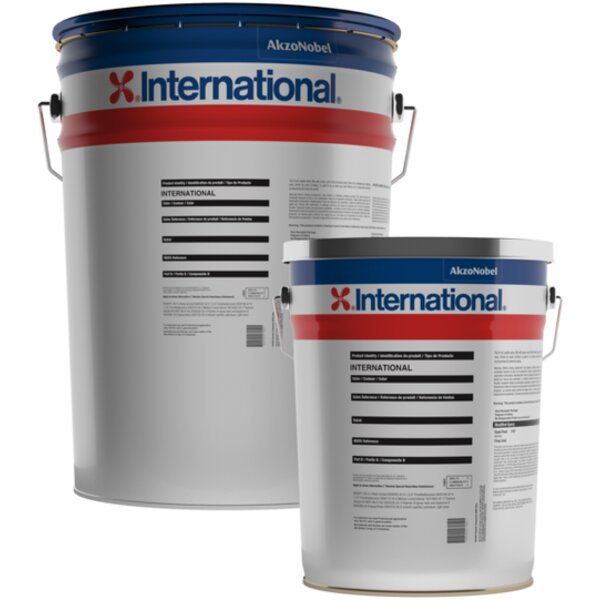
Intergard 7600 Part A (Indivisible Kit) is a light-coloured, pure epoxy universal primer designed for marine environments. It provides good abrasion resistance and anticorrosive protection and is suitable for application at low substrate temperatures down to -5°C. When mixed with its dedicated curing agent (Part B KUA764) it forms a two-component coating for interior and exterior use on vessels in newbuilding, maintenance and repair, or on-board maintenance.
This primer can be applied directly over mechanically prepared, approved shop primers and is compatible with controlled cathodic protection systems. It holds multiple marine certifications for fire performance and food-contact grain carriage, making it suitable for a broad range of professional marine specifications.
Main features
- Pure epoxy universal primer: Epoxy technology for durable corrosion protection in immersed and non-immersed areas.
- Low-temperature application: Can be applied to substrates as cold as -5°C (with appropriate consideration for overcoating and full cure of the complete system).
- Abrasion resistance: Formulated to resist mechanical wear in demanding marine environments.
- Direct-to-shop-primer application: Suitable for application over mechanically prepared, intact and approved shop primers.
- Wide use range: For new construction, major refurbishment, maintenance and on-board maintenance.
- Colour range (Part A): Red Aluminium (KUA760), Red (KUA761), Grey (KUA763), Grey Aluminium (KUA765), Black (KUA769), Off White (KUA766).
- High volume solids: 68% ±2% (ISO 3233:1998) for good film build.
- Versatile application methods: Airless spray, brush or roller.
- Certified performance: Fire resistance and grain carriage approvals when used in approved schemes.
- Two-component system: Supplied as Part A (resin) to be mixed with Part B (curing agent) KUA764 in a fixed mix ratio.
Technical specifications
- Product type: Pure epoxy universal primer (two-component when mixed with Part B).
- Brand: International Marina.
- Part: Intergard 7600 Part A (indivisible kit).
- Typical use: Two-component coating for interior and exterior marine use as a universal primer.
- Volume solids: 68% ±2% (ISO 3233:1998).
- Typical dry film thickness: 125 microns dry (184 microns wet).
- Dry film thickness range: 100 – 200 microns dry (147 – 294 microns wet), depending on end use.
- Theoretical coverage: 5.44 m²/litre at 125 microns DFT (loss factors must be considered).
- Application methods: Airless spray (recommended), brush, roller.
- Finish/sheen: Not applicable.
- Curing agent (Part B): KUA764.
- Mix ratio: 3 parts by volume Part A : 1 part by volume Part B (mix full units only).
- Flash point (typical): Part A 28°C; Part B 27°C; mixed 29°C.
- Recommended thinner: International GTA220 (thinning normally not required).
- Recommended cleaner: International GTA822.
- Density (Part A Red): 1.719 g/cm³ (DIN EN ISO 2811-1).
- Viscosity (Part A Red): Kinematic 169 mm²/s at room temperature; 291 mm²/s at 40°C (DIN EN ISO 3219).
Drying and pot life (mixed product)
- Substrate -5°C:
- Touch dry: 4 h (ISO 9117/3:2010)
- Hard dry: 25 h (ISO 9117-1:2009)
- Pot life: 6 h
- Substrate 5°C:
- Touch dry: 3 h
- Hard dry: 16 h
- Pot life: 5 h
- Substrate 25°C:
- Touch dry: 60 min
- Hard dry: 3 h
- Pot life: 2 h
- Substrate 35°C:
- Touch dry: 50 min
- Hard dry: 2 h
- Pot life: 50 min
Overcoating (guidance only)
Minimum and maximum overcoating intervals depend on substrate temperature and chosen topcoat. Examples (substrate temperature -5°C / 5°C / 25°C / 35°C):
- Intergard 7600 over Intergard 7600 (immersed areas): Min 25 / 16 / 3 / 2 h; Max 2 months at all listed temperatures.
- Intergard 7600 over Intergard 7600 (non-immersed areas): Min 25 / 16 / 3 / 2 h; Max 6 months at all listed temperatures.
- Selected compatible overcoats (examples): Interfine 691, Interfine 979, Intergard 263, Intergard 269, Intergard 276, Intergard 410 (immersed and non-immersed), Intergard 740, Interlac 665, Intersheen 579, Interthane 990/990E.
- With Intersleek 731: Overcoating above 15°C; at 15°C, minimum 5 h and maximum 48 h.
- With Intersleek 737: Overcoating above 10°C; at 10°C, minimum 5 h and maximum 48 h.
Before overcoating, Intergard 7600 should be high-pressure fresh-water washed and/or solvent washed if necessary to remove surface contamination.
VOC data (as supplied)
- EPA Method 24: 298 g/l.
- EU Solvent Emissions Directive (1999/13/EC): 203 g/kg of liquid paint.
- Chinese National Standard GB23985: 272 g/l.
- VOC values are typical and may vary with colour and normal manufacturing tolerances.
Unit size and storage
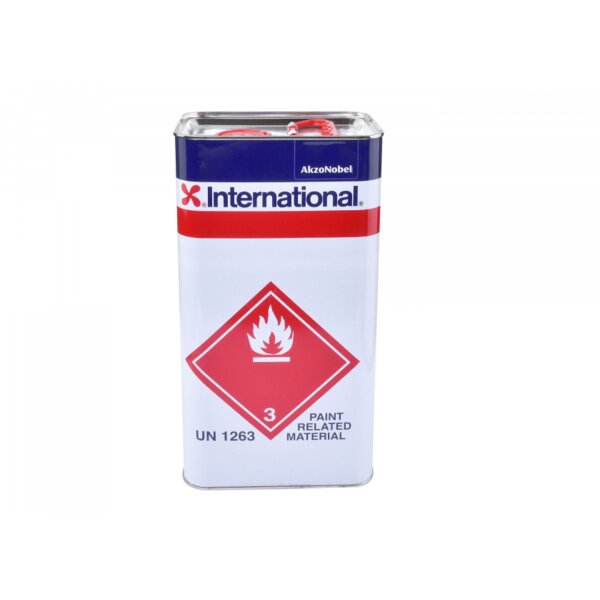
- Standard kit size: 20 litre unit (Part A 15 L in a 20 L pack + Part B 5 L in a 5 L pack).
- Typical unit shipping weight: 32 kg (for 20 L unit).
- Shelf life: 15 months at 25°C, subject to re-inspection thereafter.
- Storage conditions: Store in dry, shaded conditions away from sources of heat and ignition. Keep containers tightly closed.
Applications and use cases
- Newbuilding: Universal epoxy primer for hull, topsides and other steel structures, applied over approved shop primers after appropriate surface preparation.
- Maintenance and Repair / Major Refurbishment: Abrasive blast or hydroblasted surfaces brought to the specified standard (e.g. Sa2 or HB2) before priming with Intergard 7600.
- On-board maintenance: Local repairs by airless spray or brush/roller on small areas, building to the specified film thickness with multiple coats if required.
- Immersed and non-immersed zones: Suitable as a primer for underwater hull, above-water areas and topsides when used in approved coating systems.
- Areas requiring certified performance: When used as part of an approved scheme, the product can contribute to compliance with fire resistance and grain carriage requirements.
Surface preparation (summary)
- General: All surfaces must be clean, dry and free from contamination. High-pressure fresh water wash to remove salts, oil, grease and soluble contaminants (SSPC-SP1 solvent cleaning as reference).
- Newbuilding:
- Remove weld spatter, smooth weld seams and sharp edges.
- Damaged shop primer and weld areas: blast clean to Sa2½ (ISO 8501-1:2007) or power tool to Pt3 (JSRA SPSS:1984).
- Approved intact shop primers: clean, dry and free from soluble salts.
- Unapproved shop primers: remove by blast cleaning to Sa2½; in some cases sweep blasting to an International Paint standard (e.g. AS2 or AS3) may be acceptable.
- Major refurbishment:
- Abrasive blast to Sa2 (ISO 8501-1:2007). If oxidation occurs prior to coating, reblast to the specified standard.
- Alternatively, hydroblasting to International Paint HB2 or slurry blasting to SB2, where flash rust is no worse than HB2M or SB2M.
- North America (marine): SSPC-SP10 may be used in place of Sa2½; SSPC-SP6 in place of Sa2; SSPC-SP11 in place of Pt3.
Application guidance (mixed material)
- Mixing:
- Supplied in two containers as a unit. Always mix a complete unit in the supplied proportions.
- Agitate Base (Part A) with a power agitator.
- Add entire contents of Curing Agent (Part B) to Part A and mix thoroughly with power agitation.
- Airless spray (recommended):
- Tip range: 0.66 – 0.79 mm (26 – 31 thou).
- Total output fluid pressure at the spray tip: not less than 211 kg/cm² (3000 psi).
- Brush/Roller: Recommended for small areas only; multiple coats may be needed to achieve the specified film thickness.
- Environmental conditions:
- Apply in good weather.
- Surface temperature must be at least 3°C above the dew point.
- For optimum properties, bring material to 21–27°C before mixing and application (unless specified otherwise).
- Work stoppages and cleaning:
- Do not allow material to remain in hoses, gun or spray equipment.
- Flush equipment thoroughly with GTA822 after use and during prolonged stoppages.
- Do not exceed pot life limitations.
FAQ
-
Is Intergard 7600 Part A suitable for low-temperature application?
Yes. When mixed with Part B, Intergard 7600 can be applied to substrates down to -5°C. However, overcoating at low temperatures may require higher temperatures for subsequent coats to fully cure.
-
Can I apply this primer directly over existing shop primer?
Yes, provided the shop primer is approved, intact, clean, dry and free from soluble salts and contaminants. Damaged or unapproved shop primer must be blast cleaned or treated to the specified standards before application.
-
What mixing ratio should I use?
The required mix ratio is 3 volumes of Part A to 1 volume of Part B (KUA764). Always mix complete units supplied by the manufacturer.
-
Which application method is recommended for large areas?
Airless spray is recommended for large areas. Brush and roller application are suitable for small areas and may require multiple coats to reach the specified film thickness.
-
Does Intergard 7600 have any fire or food-contact approvals?
When used as part of an approved scheme, the product has certifications for fire resistance (Marine Equipment Directive compliant, surface spread of flame, smoke and toxicity) and food contact for carriage of grain.
-
What is the theoretical coverage?
The theoretical coverage is 5.44 m²/litre at 125 microns dry film thickness, without allowance for loss factors.
-
How should the surface be prepared before application?
Surfaces must be clean, dry and free from contamination, with salts, oil and grease removed by high-pressure fresh water wash and solvent cleaning. Blast or hydroblast to the specified standard (e.g. Sa2½, Sa2, HB2, SB2) depending on the situation.
-
Can I weld through or on top of the coated steel?
Welding or flame cutting on metal coated with this product will generate dust and fumes. Appropriate personal protective equipment and local exhaust ventilation are required.
-
What is the shelf life of the kit?
When stored correctly at 25°C in unopened containers, the shelf life is 15 months, subject to re-inspection thereafter.
-
Is thinning required?
Thinning with GTA220 is not normally required. If thinning is considered under extreme conditions, do not exceed limits set by local environmental legislation.
Section 14 – Transport information
- UN number / ID number: UN1263.
- UN proper shipping name: PAINT.
- Transport hazard class: Class 3 (flammable liquid).
- Packing group: III.
- Environmental hazards: Not classified as a marine pollutant in the data provided.
- ADR/RID additional information: Tunnel code (D/E).
- IMDG additional information: Emergency schedules F-E, S-E.
- Special precautions for users: Within user’s premises, always transport in closed containers kept upright and secure. Ensure that personnel transporting the product know what to do in the event of an accident or spillage.
- Transport in bulk according to IMO instruments: Not applicable.
Section 8 – Individual protection measures
Intergard 7600 Part A is classified as a flammable liquid that causes skin irritation, can cause serious eye damage and may cause an allergic skin reaction. Appropriate personal protective equipment (PPE) and engineering controls are essential during handling and application.
Engineering controls and hygiene
- Use only with adequate ventilation; apply local exhaust or process enclosure where necessary.
- Ventilation and engineering controls must keep airborne contaminants below recommended limits and prevent flammable atmospheres.
- Use explosion-proof ventilation and electrical equipment in hazardous areas.
- Wash hands, forearms and face thoroughly after handling and before eating, drinking or smoking.
- Contaminated work clothing should not leave the workplace and must be washed before reuse.
- Ensure eyewash stations and safety showers are close to the work area.
Eye and face protection
- Wear chemical splash goggles and/or a face shield that meet an approved standard whenever there is a risk of splashes, mists or vapors.
- If inhalation hazards exist, a full-face respirator may be required instead of goggles.
Hand protection
- Wear chemical-resistant, impervious gloves complying with an approved standard.
- For prolonged or frequently repeated contact: use gloves with protection class 6 (breakthrough time > 480 minutes according to EN374). Recommended materials: Viton or nitrile, thickness ≥ 0.38 mm.
- For brief contact: use gloves with protection class 2 or higher (breakthrough time > 30 minutes according to EN374). Recommended material: nitrile, thickness ≥ 0.12 mm.
- Inspect and replace gloves regularly, especially if damaged. Performance can be reduced by physical/chemical damage or poor maintenance.
Body and other skin protection
- Select protective clothing based on the task and associated risks; approval by a specialist is recommended.
- When there is a risk of ignition from static electricity, wear anti-static protective clothing (overalls, boots and gloves) compliant with EN 1149.
- Use suitable protective footwear and any additional skin protection required by the risk assessment.
Respiratory protection
- Where ventilation is inadequate or exposure limits may be exceeded, wear a respirator conforming to EN140 with type A/P2 filter or better, selected as part of a formal respiratory protection program.
- Dry sanding, flame cutting and welding of dry paint films will generate hazardous dust and fumes. Wet methods are preferred; if not possible, appropriate respiratory protection and local exhaust ventilation are required.
Environmental exposure controls
- Emissions from ventilation and process equipment must comply with local environmental protection legislation.
- Where necessary, use fume scrubbers, filters or engineering modifications to reduce emissions.
Contenido generado por IA