What is Intercure 200 Part A and why choose it?
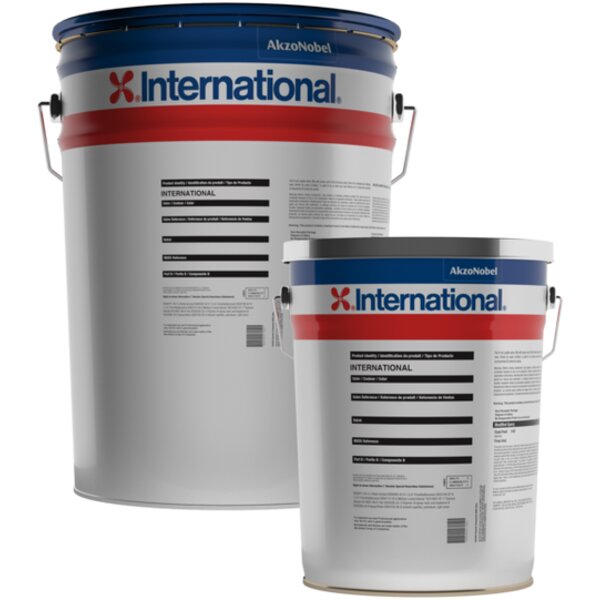
Intercure 200 Part A is the base component of a two-component rapid recoat epoxy primer, based on zinc phosphate and micaceous iron oxide and formulated with proprietary polymer technology. When correctly mixed with its curing agent (Part B) it provides a high-solids, low-VOC protective primer for steelwork, designed for fast curing and overcoating even at low temperatures.
This system is intended for demanding protective coating projects where productivity and corrosion protection are both critical. It is suitable for use as a shop or site primer, with overcoating typically possible within 3 hours in most climates, helping to speed up fabrication and maintenance schedules.
Main features
- Two-component rapid recoat epoxy primer: Part A is mixed with Part B in a 3:1 volume ratio to create a high-performance epoxy coating.
- Fast cure and overcoating: Overcoatable within 1–3 hours in typical temperatures (see drying schedule), supporting high throughput in fabrication shops and rapid maintenance work on site.
- Performs at low temperatures: Designed to cure and be overcoated rapidly even under low temperature conditions; capable of curing below 0°C, with application restrictions (see below).
- High solids, low VOC: 67% volume solids with VOC values of 2.67 lb/gal (320 g/L) by EPA Method 24, 213 g/kg (EU Solvent Emissions Directive) and 297 g/L (Chinese National Standard GB23985).
- Robust anti-corrosive pigmentation: Zinc phosphate and micaceous iron oxide pigmentation for long-term steel protection in aggressive environments.
- Good film integrity over time: At 75 microns dry film thickness, the coating can typically be overcoated after up to 6 months’ exposure, provided it is properly cleaned and any mechanical damage repaired.
- Versatile application methods: Can be applied by airless spray, conventional air spray, brush or roller.
- Low temperature and chemical service suitability: Preferred in systems for chemical environments where zinc-rich materials may be attacked in acidic or alkaline conditions.
- System compatibility: Compatible with a wide range of recommended primers and topcoats/intermediate coats from the International Protective Coatings range.
Technical characteristics
Appearance and basic data
- Colour: Limited colour range available.
- Finish: Matt.
- Volume solids: 67%.
- Typical dry film thickness (DFT): 75–100 microns (3–4 mils).
- Typical wet film thickness (WFT): 112–149 microns (4.5–6 mils).
- Theoretical coverage: 8.93 m²/L at 75 microns DFT; 358 sq.ft/US gallon at 3 mils DFT (stated volume solids).
- Practical coverage: Allow for appropriate loss factors depending on application conditions and equipment.
- Product weight (mixed): 1.6 kg/L (13.4 lb/gal).
- Flash point (typical): Part A 27°C (81°F); Part B 28°C (82°F); mixed 27°C (81°F).
Drying and overcoating times (typical)
Drying times and minimum overcoating intervals with recommended topcoats depend on temperature:
- At 5°C (41°F): Touch dry 40 minutes; hard dry 4.5 hours; minimum overcoat 3 hours; maximum overcoat extended.
- At 15°C (59°F): Touch dry 30 minutes; hard dry 3 hours; minimum overcoat 2 hours; maximum overcoat extended.
- At 25°C (77°F): Touch dry 20 minutes; hard dry 2 hours; minimum overcoat 1 hour; maximum overcoat extended.
- At 40°C (104°F): Touch dry 15 minutes; hard dry 30 minutes; minimum overcoat 30 minutes; maximum overcoat extended.
Maximum overcoating intervals are shorter when using polysiloxane topcoats.
Pot life (working pot life after mixing)
- 5°C (41°F): 6 hours
- 15°C (59°F): 3 hours
- 25°C (77°F): 2 hours
- 40°C (104°F): 45 minutes
Mixing and application
- Components: Part A (base) and Part B (curing agent), supplied as a unit.
- Mixing ratio: 3 parts Part A : 1 part Part B by volume. Always mix a complete unit in the proportions supplied.
- Mixing method:
- Agitate Part A with a power agitator.
- Add the entire contents of Part B to Part A and mix thoroughly with a power agitator.
- Recommended application methods: Airless spray, air spray (pressure pot), brush, roller.
- Typical airless spray setup: Tip range 0.43–0.53 mm (17–21 thou); minimum fluid pressure at tip 176 kg/cm² (2503 psi).
- Typical conventional spray equipment: DeVilbiss MBC or JGA gun with 704 or 765 air cap and Fluid Tip E.
- Brush and roller use: Suitable for small areas only; typically 50–75 microns (2.0–3.0 mils) DFT can be achieved.
- Thinner (if required): International GTA220 or International GTA415. Thinning is normally not required and must not exceed local environmental limits.
- Cleaner: International GTA220 (or GTA415) for all application equipment.
Surface preparation
- General: All surfaces must be clean, dry and free from contamination; prepare in accordance with ISO 8504:2000.
- Oil and grease removal: Solvent cleaning to SSPC-SP1.
- Abrasive grit blasting (bare steel): Blast to Sa2½ (ISO 8501-1:2007) or SSPC-SP6 with a sharp, angular profile of 50–75 microns (2–3 mils).
- Lightly weathered blast-standard steel: Suitable for grit-blast cleaned surfaces initially to the above standard but allowed to deteriorate under good shop conditions for up to 7–10 days (may fall to Sa2, but must be free of loose powdery deposits).
- Shop-primed steel: Weld seams and damaged areas to be grit blast cleaned to Sa2½ or SSPC-SP6. Overall grit sweep blasting may be necessary if the shop primer shows extensive breakdown or if it was applied over shot-blasted surfaces.
- Surface temperature: Must always be at least 3°C (5°F) above the dew point.
Product characteristics and limitations
- Preferred for use in chemical environments where zinc-rich materials may be attacked in acidic or alkaline conditions.
- Over-application should be avoided; excessively thick films may reduce topcoat adhesion after ageing and may suffer cohesive film splitting if subsequent coats are also over-applied.
- Capable of curing at temperatures below 0°C (32°F), but should not be applied below 0°C (32°F) where ice formation on the substrate is possible.
- Only thin with recommended International GTA thinners; alternative thinners, especially those containing ketones, can severely inhibit curing.
- Not available in pale and pastel shades due to rapid discoloration; like all epoxies, it will chalk in exterior exposure. These effects do not impair anti-corrosive performance.
- In C1 and C2 corrosive environments (ISO 12944), small damaged areas and welds may be repaired by hand or power tool cleaning.
- Not intended as a primer for steelwork subjected to immersion conditions.
- Can be used as a primer on suitably prepared alternative substrates such as stainless steel and alloys (subject to International Protective Coatings guidance).
- Absolute adhesion of topcoats to aged Intercure 200 is lower than to fresh material but adequate for the specified end use.
System compatibility
- Recommended primers beneath Intercure 200:
- Interzinc 22 (a mist coat or tie coat may be required).
- Recommended topcoats/intermediate coats over Intercure 200:
- Intercure 420
- Interfine 979
- Intergard 475HS
- Intergard 740
- Interseal 670HS
- Interthane 990
- Interthane 990E
- Interzone 1000
- Interzone 954
Packaging, weight and storage (Part A)
- Typical pack sizes (kit-related):
- 20 litre unit: Part A supplied in 15 L can (shipping weight 29.1 kg).
- 4 US gallon unit: Part A supplied in 3 US gal can (shipping weight 49.8 lb).
- Shelf life: Minimum 12 months at 25°C (77°F), subject to re-inspection thereafter.
- Storage conditions: Store in dry, shaded conditions, away from sources of heat and ignition. Keep containers tightly closed.
Applications and use cases
Typical environments
- Offshore installations and marine structures.
- Chemical and petrochemical plants.
- Industrial buildings and structural steelwork.
- Pulp and paper mills.
- Power plants.
- Bridges and other exposed steel infrastructure.
Application scenarios
- Shop primer for new steel: Fast overcoating (within 3 hours in most conditions) helps increase productivity and throughput in fabrication shops.
- On-site maintenance coating: Rapid curing allows quick return to service during repair and maintenance campaigns.
- Chemical environment systems: Used in systems for environments where zinc-rich primers may be attacked by acidic or alkaline exposure.
- Alternative substrates: Can be used, with appropriate preparation and system design, on stainless steel and alloy substrates.
FAQ
-
What is Intercure 200 Part A?
It is the base component of Intercure 200, a two-component rapid recoat epoxy zinc phosphate/micaceous iron oxide primer. Part A must be mixed with the dedicated curing agent (Part B) before use.
-
What mix ratio should I use?
The product must be mixed 3 parts Part A to 1 part Part B by volume. Always mix complete units in the proportions supplied.
-
How soon can I overcoat Intercure 200?
At 25°C (77°F) the minimum overcoating interval is 1 hour. At 15°C (59°F) it is 2 hours and at 5°C (41°F) it is 3 hours. At 40°C (104°F) the minimum is 30 minutes.
-
Can it be applied at very low temperatures?
Intercure 200 can cure at temperatures below 0°C (32°F), but it should not be applied when the substrate temperature is below 0°C (32°F) if there is any risk of ice forming on the surface.
-
Is it suitable for immersion service?
No. Intercure 200 is not intended for use as a primer on steelwork that will be subjected to immersion conditions.
-
Which application methods are recommended?
Airless spray is recommended for most work. Conventional air spray, brush and roller are suitable for small areas, with brush and roller typically achieving 50–75 microns (2.0–3.0 mils) DFT.
-
Do I need to thin the product?
Thinning is normally not required. If necessary under extreme conditions, only use International GTA220 or GTA415 and do not exceed limits set by local environmental legislation.
-
What surface preparation is required?
Bare steel should be abrasive grit blast cleaned to Sa2½ (ISO 8501-1:2007) or SSPC-SP6 with a 50–75 micron (2–3 mil) angular profile. Shop-primed steel may require local or overall grit sweep blasting depending on the condition of the shop primer.
-
Is the product low VOC?
Yes. VOC values are 2.67 lb/gal (320 g/L) by EPA Method 24, 213 g/kg under the EU Solvent Emissions Directive, and 297 g/L under Chinese National Standard GB23985.
-
Does Intercure 200 change appearance outdoors?
Yes. It is not available in pale or pastel shades due to a tendency to discolor rapidly, and like all epoxies it will chalk on exterior exposure. These phenomena are not detrimental to anti-corrosive performance.
Section 14 – Transport information
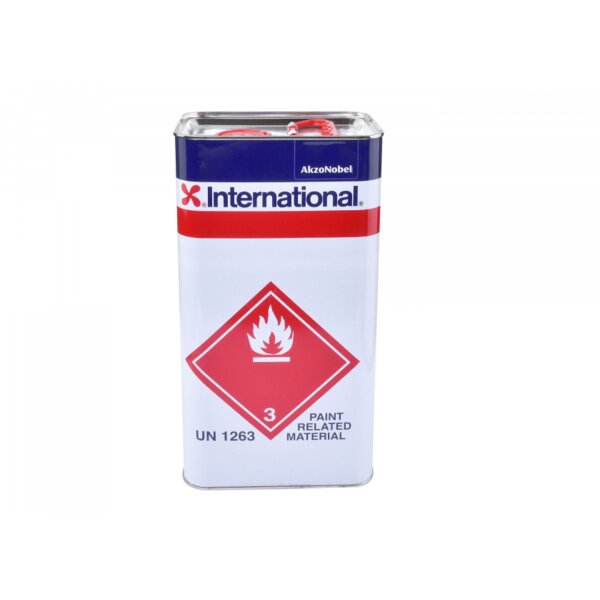
- UN number / ID number: UN1263.
- UN proper shipping name: PAINT.
- Transport hazard class: Class 3 (flammable liquid).
- Packing group: III.
- Environmental hazards: Classified as hazardous to the environment for transport purposes (marine pollutant / environmentally hazardous substance). Key components: trizinc bis(orthophosphate); Reaction mass of 2,2'-[methylenebis(2,1-phenyleneoxymethylene)]bis(oxirane) and related epoxy species.
- ADR/RID: Class 3, Packing Group III, UN1263 PAINT. Environmentally hazardous substance mark is not required when transported in packages of ≤5 L or ≤5 kg. Tunnel code D/E.
- IMDG: Class 3, Packing Group III, UN1263 PAINT. Marine pollutant. Emergency schedules: F-E, S-E. Marine pollutant mark is not required for packages ≤5 L or ≤5 kg.
- IATA: Class 3, Packing Group III, UN1263 PAINT. The environmentally hazardous substance mark may appear if required by other transport regulations.
- Special precautions for user: Transport within the user’s premises only in closed, upright and secure containers. Ensure personnel know what to do in case of accident or spillage.
- Transport in bulk according to IMO instruments: Not applicable.
Section 8 – Personal protective measures
Intercure 200 Part A is classified as a flammable liquid that causes skin irritation, may cause an allergic skin reaction, causes serious eye damage, may cause organ damage through prolonged or repeated exposure, and is toxic to aquatic life with long lasting effects. Appropriate personal protective equipment (PPE) and safe working practices are essential.
General hygiene and engineering controls
- Use only with adequate ventilation, employing local exhaust or process enclosure to keep airborne concentrations below occupational exposure limits and below the lower explosive limit.
- Use explosion-proof ventilation and electrical equipment in areas where the product is handled or sprayed.
- Do not eat, drink or smoke where the product is handled or stored. Wash hands, forearms and face thoroughly after handling and before breaks.
- Remove contaminated clothing and protective equipment before entering eating areas; wash contaminated garments before reuse.
- Ensure eyewash stations and safety showers are close to the work area.
Eye and face protection
- Wear safety eyewear complying with an approved standard when there is risk of splashes, spray or mist.
- Recommended protection, unless a higher level is indicated by risk assessment: chemical splash goggles and/or face shield.
- If inhalation hazards exist, a full-face respirator may be required instead of goggles.
Hand protection
- Use chemical-resistant, impervious gloves complying with EN374 or equivalent when handling the product.
- For prolonged or frequently repeated contact: gloves with protection class 6 (breakthrough time > 480 minutes), e.g. Viton or Nitrile, thickness ≥ 0.38 mm.
- For brief contact: gloves with protection class 2 or higher (breakthrough time > 30 minutes), e.g. Nitrile, thickness ≥ 0.12 mm.
- Replace gloves regularly and immediately if damaged; performance can be reduced by physical/chemical damage or poor maintenance.
Skin and body protection
- Wear suitable protective clothing selected according to the task and risks, approved by a specialist.
- Where risk of ignition from static electricity exists, use anti-static protective clothing including coveralls, boots and gloves, in accordance with EN 1149.
- Wear appropriate protective footwear and any additional skin protection needed for the specific work situation.
Respiratory protection
- Select a respirator that meets appropriate standards or certifications, based on hazard and exposure potential.
- Use a respirator conforming to EN140 with type A/P2 filter or better when ventilation is inadequate or during spraying.
- Dry sanding, flame cutting or welding of dry paint film can produce hazardous dust and fumes; wet sanding/flatting is preferred. If exposure cannot be avoided by extraction, use suitable respiratory protection.
Environmental exposure controls
- Check emissions from ventilation and process equipment to ensure compliance with environmental regulations.
- Where required, use fume scrubbers, filters or engineering modifications to reduce emissions to acceptable levels.
- Prevent uncontrolled release to drains, watercourses or soil.
*Contenido generado por IA