What is Interprime 538 and why choose it?
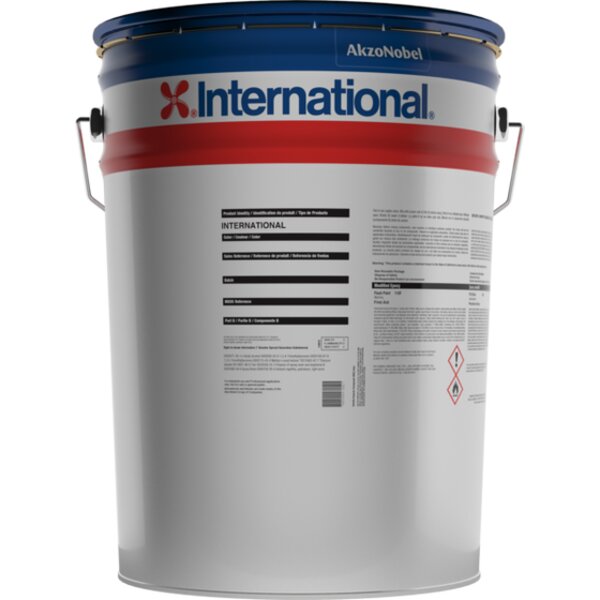
Interprime 538 is a one-pack alkyd zinc phosphate primer designed for the corrosion protection of internal steelwork in newbuilding projects. Formulated with an anticorrosive zinc phosphate pigment and a high volume solids content of 57% ±2%, it provides a durable protective basecoat for subsequent finishing systems. It is suitable for application by airless spray, conventional spray, brush or roller and is optimised for use within standard Worldwide Marine Specifications.
Available in red, grey and white (CPA536-Red, CPA537-Grey, CPA538-White), Interprime 538 offers reliable adhesion and steel protection as part of approved marine coating schemes, with fire-resistance certifications when used in appropriate systems.
Main features
- Single-pack alkyd primer – no mixing ratio or curing agent required for ease of use on site or in the yard.
- Zinc phosphate anticorrosive pigment – enhances corrosion resistance of internal structural steel.
- For internal steelwork at newbuilding – general purpose conventional primer for interior structural steel; not recommended for external steelwork.
- Multi-method application – can be applied by airless spray, conventional spray, brush or roller.
- High volume solids – 57% ±2% (ISO 3233:1998) to achieve specified dry film thickness with efficient coverage.
- Typical system film build – 80 microns dry (140 microns wet) for robust protection.
- Fire-resistance certifications (as part of approved schemes):
- Fire Resistance – Surface Spread of Flame (Exova Warringtonfire).
- Fire Resistance – Marine Equipment Directive compliant.
- Compatible with multiple topcoats – overcoating options include Interlac 542, Interlac 665 and Intertherm 891, with extended overcoating intervals.
- Good drying performance – touch dry from 30 minutes at 35°C to 4 hours at -5°C; hard dry from 2 to 7 days depending on temperature.
- Controlled VOC levels – typical VOC values declared for compliance with EU and Chinese regulations.
Technical specifications
- Type: One pack alkyd primer containing zinc phosphate anticorrosive pigment.
- Intended use: General purpose conventional primer for internal steelwork at newbuilding.
- Colours: CPA536-Red, CPA537-Grey, CPA538-White.
- Volume solids: 57% ±2% (ISO 3233:1998).
- Typical dry film thickness: 80 microns dry (140 microns wet).
- Theoretical coverage: 7.13 m²/litre at 80 microns DFT (loss factors must be considered).
- Finish/Sheen: Not applicable.
- Mix ratio: Not applicable (single pack, no Part B curing agent).
- Flash point: 35°C (single pack, closed cup).
Drying and overcoating (substrate temperature)
- Touch dry (ISO 9117/3:2010):
- -5°C: 4 hours
- 5°C: 60 minutes
- 25°C: 45 minutes
- 35°C: 30 minutes
- Hard dry (ISO 9117-1:2009):
- -5°C: 7 days
- 5°C: 5 days
- 25°C: 3 days
- 35°C: 2 days
- Overcoating (minimum / maximum, "ext" = extended) – guidance values:
- With Interlac 542:
- -5°C: min 48 h / ext
- 5°C: min 48 h / ext
- 25°C: min 24 h / ext
- 35°C: min 16 h / ext
- With Interlac 665:
- -5°C: min 48 h / ext
- 5°C: min 48 h / ext
- 25°C: min 24 h / ext
- 35°C: min 16 h / ext
- With Intertherm 891:
- -5°C: min 48 h / ext
- 5°C: min 48 h / ext
- 25°C: min 24 h / ext
- 35°C: min 16 h / ext
- Note: If outside exposure of the primer exceeds 28 days, the surface must be freshwater washed to extend the maximum overcoating interval.
Application details
- Method of application:
- Airless spray – recommended. Tip range 0.46–0.53 mm (18–21 thou); total fluid pressure at spray tip not less than 176 kg/cm² (2500 psi).
- Conventional spray – suitable, using appropriate proprietary equipment; thinning may be required.
- Brush – suitable; multiple coats may be required to achieve specified system DFT.
- Roller – suitable; multiple coats may be required to achieve specified system DFT.
- Mixing: Being a one-pack coating, material must be thoroughly mixed with a power agitator before application.
- Thinner: International GTA004. Thinning is not normally required; do not thin beyond local environmental limits.
- Cleaner: International GTA004.
- Work stoppages and cleanup: Flush all equipment thoroughly with GTA004. Filter material if viscosity has increased or surface skinning is present in partially filled containers.
Surface preparation
- Use in accordance with standard Worldwide Marine Specifications.
- All surfaces must be clean, dry and free from contamination.
- High pressure fresh water wash (or fresh water wash, as appropriate) to remove oil, grease, soluble salts and contaminants according to SSPC-SP1 solvent cleaning.
- Newbuilding:
- Remove weld spatter, smooth weld seams and sharp edges where necessary.
- Clean welds and damaged shop primer by power tooling to Pt3 (JSRA SPSS:1984).
- North American marine use: SSPC-SP3 may be used in place of St3 (ISO 8501-1:2007) where appropriate.
Regulatory VOC data
- VOC (calculated): 348 g/L.
- VOC (EU Solvent Emissions Directive, Council Directive 1999/13/EC): 226 g/kg of liquid paint as supplied.
- VOC (Chinese National Standard GB23985): 342 g/L.
- Values are typical and may vary with colour and normal manufacturing tolerances.
Unit size, weight and storage
- Unit size: 20 L (pack 20 L / volume 20 L).
- Typical unit shipping weight: 32.8 kg (20 L unit).
- Shelf life: Minimum 24 months at 25°C; subject to reinspection thereafter.
- Storage conditions: Store in dry, shaded conditions away from sources of heat and ignition. Keep containers tightly closed.
Applications and use cases
- Marine and offshore newbuilds – internal structural steel in engine rooms, machinery spaces, void spaces and internal hull areas, as part of approved marine coating schemes.
- Industrial new constructions – interior structural steelwork in facilities where an alkyd zinc phosphate primer is specified.
- Fire performance-focused systems – projects requiring primers within coating systems that hold Surface Spread of Flame and Marine Equipment Directive fire-resistance approvals (when used as part of the certified scheme).
Limitations: This product should not be used on external steelwork. Apply only in good weather with steel temperature at least 3°C above the dew point. Material should be at 21–27°C prior to mixing and application for optimum properties, unless otherwise specified.
FAQ
1. What type of primer is Interprime 538?
Interprime 538 is a single-pack alkyd zinc phosphate primer designed for general purpose use on internal structural steel, particularly in marine and industrial newbuilding applications.
2. Can Interprime 538 be used on exterior steel?
No. The technical data specifically states that this product should not be used on external steelwork.
3. Which application methods are recommended?
It can be applied by airless spray (recommended), conventional spray, brush or roller. Brush and roller application may require multiple coats to achieve the specified dry film thickness.
4. What surface preparation is required?
Surfaces must be clean, dry and free from contamination. Use high pressure fresh water or fresh water washing plus SSPC-SP1 solvent cleaning. New steel should have weld spatter removed and edges smoothed, with damaged shop primer power tooled to Pt3 (JSRA SPSS:1984).
5. How long should I wait before overcoating?
Minimum overcoating times depend on temperature and chosen topcoat. As a guide, with Interlac 542, 665 or Intertherm 891, minimum overcoating is 48 hours at -5°C or 5°C, 24 hours at 25°C and 16 hours at 35°C, with extended maximum intervals.
6. Is thinning required?
Thinning is not normally required. If needed for extreme conditions, International GTA004 thinner may be used, within the limits of local environmental legislation.
7. Is the product flammable?
Yes. Interprime 538 is a flammable liquid with a flash point of 35°C and is classified as a Flammable Liquid Category 3. Keep away from heat, hot surfaces, sparks and open flame.
8. What health hazards are associated with this product?
According to the Safety Data Sheet, vapours may cause drowsiness or dizziness and the product may cause skin dryness or cracking with repeated exposure. It is harmful to aquatic life with long-lasting effects. Avoid inhalation and skin contact and follow the recommended protective measures.
9. What should I do if welding or flame cutting is required on coated steel?
Welding or flame cutting on metal coated with this product will generate dust and fumes. Appropriate personal protective equipment and adequate local exhaust ventilation are required. In North America, work should comply with ANSI/ASC Z49.1 “Safety in Welding and Cutting”.
10. What is the recommended storage condition and shelf life?
Store unopened containers in a dry, shaded area away from sources of heat and ignition. At 25°C, the minimum shelf life is 24 months, after which the product should be reinspected.
Section 14 – Transport information
- UN number / ID number: UN1263.
- UN proper shipping name: PAINT.
- Transport hazard class: Class 3 (flammable liquid).
- Packing group: III.
- Environmental hazards: Not classified as dangerous for the environment for transport purposes.
- ADR/RID:
- UN1263, PAINT, Class 3, Packing Group III.
- Tunnel code: (D/E).
- IMDG:
- UN1263, PAINT, Class 3, Packing Group III.
- Emergency schedules: F-E, S-E.
- IATA:
- UN1263, PAINT, Class 3, Packing Group III.
- Special precautions for user: Within user’s premises, always transport in closed, upright and secure containers. Ensure transport personnel know the emergency procedures in case of accident or spillage.
- Transport in bulk according to IMO instruments: Not applicable.
Section 8 – Personal protective measures
All work with this product must comply with relevant national health, safety and environmental regulations. Based on the Safety Data Sheet, the following controls and PPE are recommended.
Engineering controls and hygiene
- Use only with adequate ventilation; employ local exhaust ventilation or process enclosures to keep airborne concentrations below occupational exposure limits and below lower explosive limits.
- Use explosion-proof ventilation and electrical equipment.
- Wash hands, forearms and face thoroughly after handling, before eating, drinking or smoking and at the end of the work period.
- Remove contaminated clothing and protective equipment before entering eating areas; wash contaminated clothing before reuse.
Eye and face protection
- Wear safety eyewear complying with an approved standard when there is a risk of splashes, mists, gases or dusts.
- As a minimum, safety glasses with side shields are recommended when contact is possible.
Hand protection
- Wear chemical-resistant, impervious gloves that comply with EN374 or equivalent.
- For prolonged or frequently repeated contact, gloves of protection class 6 (breakthrough time > 480 minutes) are recommended; suitable materials include Viton or nitrile with thickness ≥ 0.38 mm.
- For brief contact, gloves of protection class ≥ 2 (breakthrough time > 30 minutes) are recommended; nitrile gloves with thickness ≥ 0.12 mm are suggested.
- Replace gloves regularly and immediately if damaged; effectiveness may be reduced by physical or chemical damage or poor maintenance.
Skin and body protection
- Select protective clothing based on the specific task and associated risks.
- Where there is a risk of ignition from static electricity, use anti-static protective clothing; for maximum protection this should include anti-static overalls, boots and gloves (refer to EN 1149 for requirements).
- Use appropriate footwear and additional skin protection as required and approved by a safety specialist.
Respiratory protection
- Where ventilation is insufficient to maintain exposure below limits, wear a respirator conforming to EN140 with type A/P2 filter or better, as part of a structured respiratory protection programme.
- Dry sanding, flame cutting and welding of the dry paint film produce dust and fumes; use wet methods where possible. If exposure cannot be controlled by local exhaust, use suitable respiratory protection.
Environmental protection
- Avoid release to the environment. Emissions from ventilation or process equipment must comply with environmental protection legislation.
- Prevent spills from entering drains, waterways and soil. Dispose of wastes and containers via authorised contractors in accordance with applicable regulations.
Contenido generado por IA