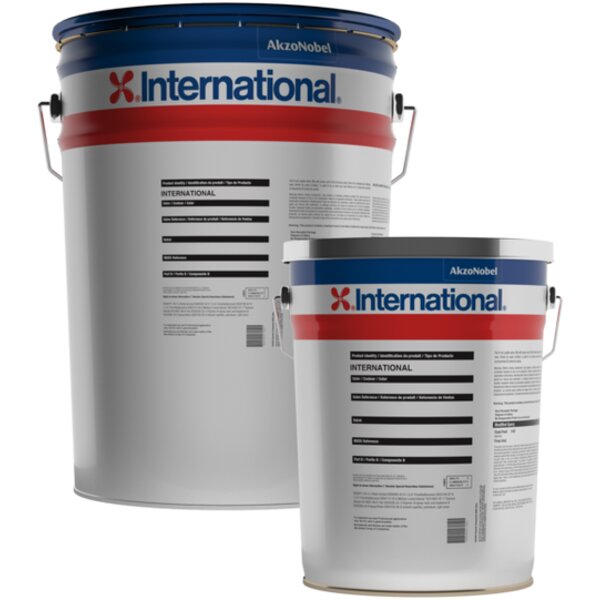
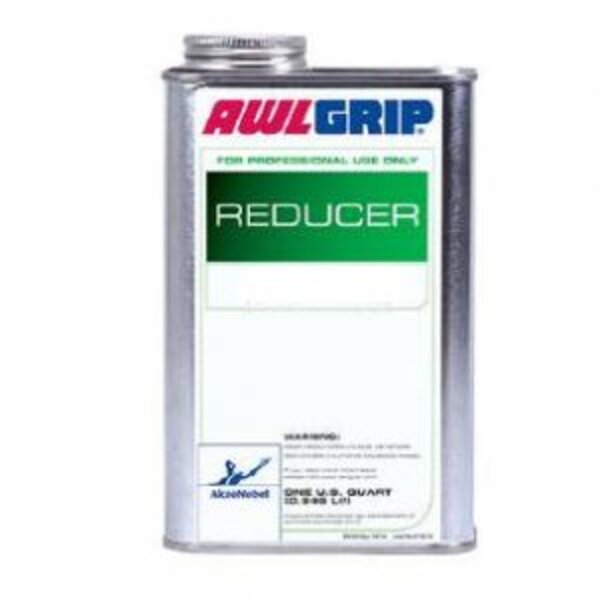
What INTERZINC 72 PART A INDIVISIBLE KIT is and why choose it
INTERZINC 72 Grey Part A is the base component of Interzinc 72, a two-component, metallic zinc-rich epoxy primer designed to deliver excellent corrosion resistance. With 90% zinc by weight in the dry film and 60% volume solids, it provides long-term protection for steel either as a single-coat system or as the primer within high-performance coating systems. Supplied for professional and industrial use, it is suitable for both interior and exterior applications where robust anti-corrosive performance is essential.
Main features
- Metallic zinc-rich epoxy primer with 90% zinc by weight in the dry film for excellent anti-corrosion performance.
- Two-component system (Part A base plus curing agent Part B) for factory or site application.
- High solids content of 60% by volume, supporting high film build and efficient coverage.
- Versatile application methods: airless spray, air spray, brush or roller.
- Fast drying with touch-dry times from 20 to 45 minutes depending on temperature and hard-dry times from 45 minutes to 6 hours.
- Excellent overcoating flexibility: can be overcoated with a wide range of high-performance topcoats such as Intercure, Intergard, Interseal, Intersheen, Intertuf and Interzone systems.
- Designed for aggressive environments, including offshore structures, refineries, petrochemical and chemical plants, power stations, bridges and pulp and paper plants.
- Approved to multiple specifications, including BS5493 (1977) DF & KP1B, BS4652:1995 and British Gas Specification PA9 and PA10.
- Classified as a flammable liquid (Category 3) and very toxic to aquatic life with long-lasting effects; intended for professional use only.
Technical specifications
- Product type: Epoxy zinc-rich primer (base component, Part A).
- Colour: Grey.
- Gloss level: Matt.
- Volume solids: 60%.
- Recommended dry film thickness (DFT): 50–75 microns (2–3 mils).
- Corresponding wet film thickness (WFT): 83–125 microns (3.3–5 mils).
- Theoretical coverage: 8 m²/litre at 75 microns DFT; 321 sq.ft/US gallon at 3 mils DFT (allow appropriate loss factors).
- Mix ratio (by volume): 4 parts Base (Part A) : 1 part Curing Agent (Part B).
- Working pot life after mixing: approx. 12 h at 10°C, 10 h at 15°C, 8 h at 25°C, 5 h at 40°C.
- Touch-dry times: 45 min (10°C); 35 min (15°C); 25 min (25°C); 20 min (40°C).
- Hard-dry times: 6 h (10°C); 4 h (15°C); 90 min (25°C); 45 min (40°C).
- Minimum overcoating interval with recommended topcoats: 8 h (10°C); 6 h (15°C); 4 h (25°C); 2 h (40°C).
- Maximum overcoating interval: Extended (no specific limit stated).
- Minimum system dry film thickness for anti-corrosive performance: 40 microns.
- Minimum DFT when used before water immersion: 65 microns (2.5 mils).
- Surface profile (blast cleaned steel): 40–75 microns (1.5–3.0 mils) recommended.
- Density (mixed product): 2.77 kg/litre (23.1 lb/gal).
- Flash point (typical): Part A 32°C (90°F); Part B 33°C (91°F); mixed 32°C (90°F).
- VOC: 149 g/kg (EU Solvent Emissions Directive, Council Directive 2010/75/EU).
- Storage temperature and shelf life (Part A): minimum 12 months at 25°C (77°F) in dry, shaded conditions away from heat and ignition; subject to re-inspection thereafter.
- Pack size for Part A in indivisible kit: 10 litre unit (8 litre Part A in 10 litre can; Part B 2 litre in 2.5 litre can).
Applications and uses
Intended uses
- As a factory or site-applied primer in high-performance coating systems.
- Corrosion protection of steel in aggressive environments, including:
- Offshore structures.
- Refineries.
- Petrochemical and chemical plants.
- Power stations.
- Bridges.
- Pulp and paper plants.
Surface preparation and application conditions
- Steel preparation:
- All surfaces must be clean, dry and free from contamination.
- Prepare steel in accordance with ISO 8504:2000.
- Abrasive blast clean to Sa2½ (ISO 8501-1:2007) or SSPC-SP6.
- Recommended surface profile: 40–75 microns (1.5–3.0 mils).
- Shop-primed steel:
- Suitable over freshly applied zinc silicate shop primers on unweathered steel.
- If the zinc shop primer shows extensive breakdown or heavy zinc corrosion products, an overall sweep blast is required.
- Other shop primer types are not suitable for overcoating and must be completely removed by abrasive blasting.
- Welds and damaged areas must be blast cleaned to Sa2½ or SSPC-SP6.
- Environmental conditions:
- Surface temperature must be at least 3°C (5°F) above dew point.
- The product will not cure adequately below 5°C (41°F).
- For maximum performance, ambient curing temperatures should be above 10°C (50°F).
- Application methods: airless spray (recommended), air spray (pressure pot), brush and roller (suitable for small areas; typically 40–50 microns DFT per coat).
- Thinning and cleaning:
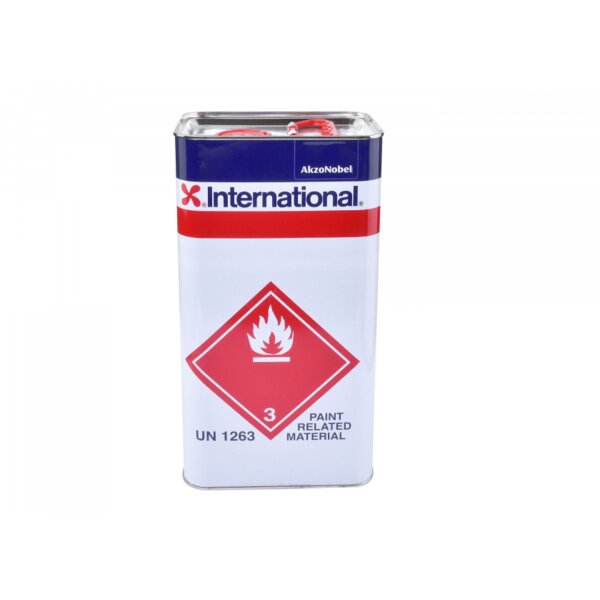
- Thinner: International GTA220 (do not thin more than allowed by local environmental legislation).
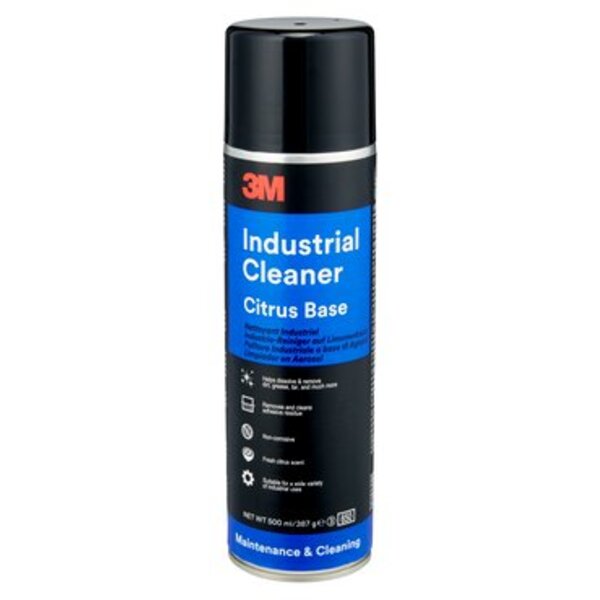
- Cleaner: International GTA822.
- To achieve a uniform film at 40 microns DFT, around 10% thinning with International thinners may be required.
- Do not allow material to remain in hoses or spray equipment; flush thoroughly with International GTA822 after use.
- Overcoating:
- Over-application increases minimum overcoating and handling times and may adversely affect long-term overcoating properties.
- Excessive film thickness can lead to splitting when overcoated with high-build systems.
- If weathered before topcoating, all zinc salts must be removed prior to applying approved topcoats.
- Not suitable for exposure in acidic or alkaline environments.
System compatibility
Interzinc 72 can be overcoated with a wide range of high-performance topcoats, including:
- Intercure 200, Intercure 420, Intercure 422
- Intergard 251, Intergard 269, Intergard 400, Intergard 405, Intergard 410, Intergard 411, Intergard 475HS
- Interseal 670HS
- Intersheen 73
- Intertuf 708
- Interzone 505, Interzone 954
FAQ
-
What type of product is INTERZINC 72 Grey Part A?
It is the base component of a two-component, metallic zinc-rich epoxy primer containing 90% zinc by weight in the dry film.
-
Where can this primer be used?
It is designed for protecting steel in aggressive environments such as offshore structures, refineries, petrochemical and chemical plants, power stations, bridges and pulp and paper plants.
-
What surface preparation is required before application?
Steel should be abrasive blast cleaned to Sa2½ (ISO 8501-1:2007) or SSPC-SP6 with a profile of 40–75 microns. Surfaces must be clean, dry and free from contamination.
-
Which application methods are recommended?
Airless spray is recommended for most work. Air spray, brush and roller can be used, with brush and roller being suitable for small areas and typically giving 40–50 microns DFT per coat.
-
What is the minimum dry film thickness for effective corrosion protection?
A minimum system dry film thickness of 40 microns is required for good anti-corrosive performance, and 65 microns is required where the system will be subjected to water immersion.
-
Is INTERZINC 72 suitable for acidic or alkaline environments?
No. The product is not suitable for exposure in acid or alkaline environments.
-
How flammable is the product?
It is classified as a flammable liquid, Category 3, with a typical flash point of 32°C. It should be kept away from heat, hot surfaces, sparks, open flames and all ignition sources.
-
Is the product hazardous to the environment?
Yes. It is very toxic to aquatic life with long-lasting effects and must not be allowed to enter drains or watercourses.
-
Who is allowed to use this product?
The safety data sheet specifies that it is for professional use only, in industrial or professional environments.
Section 14 – Transport information
- UN number / ID number: UN1263.
- Proper shipping name: PAINT.
- Transport hazard class: Class 3 (flammable liquid).
- Packing group: III.
- Environmental hazards: Classified as environmentally hazardous; very toxic to aquatic life with long-lasting effects.
- Marine pollutant (IMDG): Yes – contains zinc powder – zinc dust (stabilized) and zinc oxide.
- ADR/RID notes: Environmentally hazardous substance mark is not required for pack sizes ≤ 5 L or ≤ 5 kg. Tunnel code: D/E.
- IMDG notes: Marine pollutant mark not required for sizes ≤ 5 L or ≤ 5 kg. Emergency schedules: F-E, S-E.
- IATA notes: Environmentally hazardous substance mark may appear if required by other transport regulations.
- Special precautions for user: Within user premises, always transport in closed, upright and secure containers. Ensure personnel transporting the product know what to do in case of an accident or spillage.
Section 8 – Personal protective measures
The following information summarises key personal protection requirements from the safety data sheet for INTERZINC 72 Grey Part A. Selection of PPE must always be based on a site-specific risk assessment.
General hygiene measures
- Wash hands, forearms and face thoroughly after handling, before eating, smoking, using the lavatory and at the end of the working period.
- Remove contaminated clothing and protective equipment before entering eating areas.
- Contaminated work clothing should not be taken out of the workplace; wash before reuse.
- Ensure eyewash stations and safety showers are located close to the work area.
Eye and face protection
- Use safety eyewear complying with an approved standard when risk assessment indicates potential exposure to splashes, mists, gases or dusts.
- If contact is possible, wear chemical splash goggles.
Hand protection
- Wear chemical-resistant, impervious gloves complying with an approved standard.
- For prolonged or frequently repeated contact, use gloves with protection class 6 (breakthrough time > 480 minutes according to EN374); recommended materials: Viton® or nitrile, thickness ≥ 0.38 mm.
- For brief contact, use gloves with protection class 2 or higher (breakthrough time > 30 minutes according to EN374); recommended material: nitrile, thickness ≥ 0.12 mm.
- Replace gloves regularly and immediately if damaged. Performance can be reduced by physical or chemical damage or poor maintenance.
Skin and body protection
- Select body protection based on the specific task and risks, and have it approved by a specialist before use.
- When there is a risk of ignition from static electricity, wear anti-static protective clothing (e.g. anti-static overalls, boots and gloves) conforming to EN 1149.
- Use appropriate footwear and any additional skin protection measures as required by the risk assessment.
Respiratory protection
- Use only with adequate ventilation and explosion-proof extraction where required.
- Based on the hazard and potential for exposure, wear a respirator conforming to EN140 with type A/P2 filter or better.
- Respirators must be used within a respiratory protection programme ensuring correct selection, fitting and training.
- Dry sanding, flame cutting or welding of the dry film produces hazardous dust and fumes; wet sanding is preferred. If exposure cannot be controlled by local exhaust, suitable respiratory protection must be used.
Environmental exposure controls
- Emissions from ventilation or process equipment must be checked for compliance with environmental legislation.
- Fume scrubbers, filters or engineering modifications may be necessary to reduce emissions.
*Contenido generado por IA