What is INTERCHAR 1120 and why choose it?
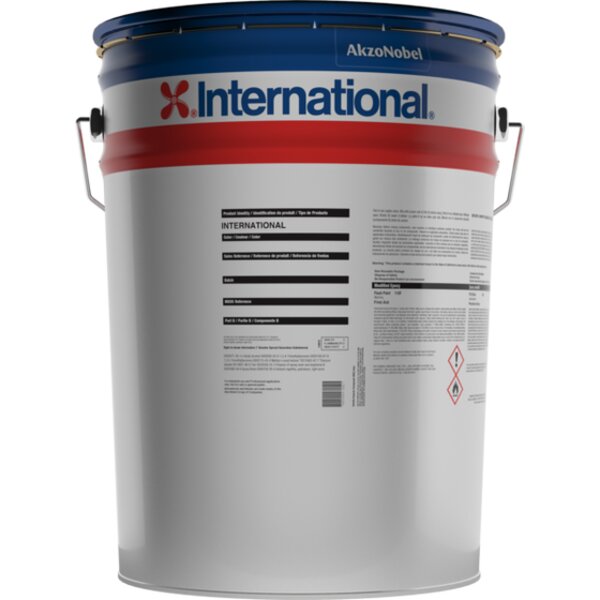
INTERCHAR 1120 from International Marina is a single-component, borate- and chlorine-free, water borne intumescent coating designed for on-site application to interior exposed structural steel. It provides cellulosic fire protection for beams, columns and hollow sections in interior environments. This low VOC system has been independently fire tested for up to 3-hour fire ratings in accordance with ASTM E119/UL263, BS 476 20-22, EN 13381-8 and GB 14907, and is CE marked with European Technical Approval ETA-11/0045.
Supplied in white matt finish, INTERCHAR 1120 combines high volume solids with airless spray application to achieve the required film thickness efficiently. It is intended for professional and industrial use to protect structural steelwork where certified cellulosic fire resistance, low emissions and waterborne technology are required.
Main features
- Single-component water borne intumescent: ready to use, no on-site mixing ratio required. The coating must be thoroughly mixed with a power agitator before application.
- Interior cellulosic fire protection: designed for interior exposed structural steel, providing fire resistance up to 3 hours as tested to ASTM E119/UL263, BS 476 20-22, EN 13381-8 and GB 14907.
- Low VOC formulation: VOC content 0.16 lb/gal (20 g/L) by EPA Method 24 and 0 g/kg according to the EU Solvent Emissions Directive.
- Certified and approved: CE marked with European Technical Approval ETA-11/0045 and listed by UL for use in Conditioned Interior Space and Interior General Purpose conditions without a topcoat.
- High volume solids: 68% ± 3% by volume (ISO 3233, BCF Guidance Method) for efficient film build and coverage.
- Flexible application methods: suitable for airless spray (recommended for maximum film build), brush and roller (for small areas and repairs).
- Compatible systems: approved for use over a wide range of anti-corrosive primers and with multiple optional topcoats from the International range.
- Water borne technology: equipment is cleaned with clean water; organic solvents are not required for thinning or cleaning.
- Designed for interior exposure only: approved for interior environments classified to ISO 12944. Not designed for frequent water immersion or soaking.
Technical specifications
General product data
- Type: Water borne intumescent coating
- Component count: Single component
- Colour: White
- Gloss level: Matt
- Intended use: Cellulosic fire protection of interior exposed structural steel (beams, columns, hollow sections)
- Use category: Professional and industrial use
Physical properties
- Volume solids: 68% ± 3% (ISO 3233, BCF Guidance Method)
- Typical dry film thickness (DFT): 300 to 700 microns (12 to 28 mils)
- Corresponding wet film thickness: 441 to 1029 microns (17.6 to 41.2 mils)
- Density / product weight: 1.4 kg/L (11.7 lb/gal)
- pH: 8 (100% w/w)
- Viscosity: Kinematic 249 mm²/s at room temperature; 350 mm²/s at 40°C (DIN EN ISO 3219)
- Colour: White
- Odour: Odourless
Coverage and consumption
- Theoretical coverage: 0.97 m²/L at 700 microns DFT using the stated volume solids
- Theoretical coverage (US units): 39 sq.ft/US gallon at 28 mils DFT using the stated volume solids
- Practical coverage: Allow appropriate loss factors depending on application conditions and complexity.
- Required film thickness: Dependent on the specified fire rating.
Drying and overcoating
All drying times are quoted for 700 microns (28 mils) DFT and assume good air flow.
| Substrate / air temperature |
Touch dry |
Hard dry |
Minimum overcoating interval (self) |
Maximum overcoating interval (self) |
| 10°C (50°F) |
5 hours |
6 hours |
16 hours |
Extended |
| 15°C (59°F) |
4 hours |
5 hours |
12 hours |
Extended |
| 25°C (77°F) |
2 hours |
4 hours |
6 hours |
Extended |
| 40°C (104°F) |
1 hour |
3 hours |
3 hours |
Extended |
- Minimum overcoating interval with topcoats: 24 hours.
Application parameters
- Recommended application methods: Airless spray (preferred), brush, roller.
- Airless spray tip range: 0.43 to 0.53 mm (17 to 21 thou)
- Minimum fluid pressure at tip: Not less than 175 kg/cm² (2489 psi)
- Brush application: Suitable for small areas and repairs; multiple coats are necessary to achieve the required DFT.
- Roller application: Suitable for small areas only; typically 100 to 300 microns (4.0 to 12.0 mils) DFT per coat.
- Thinner: Normally not required.
- Cleaner: Clean water (do not use organic solvents).
Surface preparation and compatible systems
- Substrate condition: All steel surfaces must be clean, dry and free from contamination, assessed and treated in accordance with ISO 8504:2000.
- Oil and grease removal: SSPC-SP1 Solvent Cleaning.
- Primed steelwork: Apply only over recommended anti-corrosive coating schemes. Damaged areas should be prepared to Sa2½ / ISO 8501-1:2007 or SSPC-SP6 (abrasive blast) or SSPC-SP11 (power tool cleaning) and re-primed before applying INTERCHAR 1120.
- Metallic zinc primers: May be used provided they are overcoated first with an approved tie coat.
- Recommended tie coats for zinc primers: Intergard 269, Intergard 276.
- Example approved primers: Intercryl 525, Intercure 200, Intercure 200HS, Intergard 251, Intergard 251HS, Intergard 2509, Intergard 269, InterH2O 499, Interprime 306, Interseal 670HS, Interseal 1052. INTERCHAR 1120 may also be applied over Interzinc 52 when a suitable tie coat is used.
- Example approved topcoats: Intercryl 525, Intersheen 579, Interthane 870, Interthane 990, Interthane 990SG.
Environmental and regulatory data
- VOC (EPA Method 24): 0.16 lb/gal (20 g/L)
- VOC (EU Solvent Emissions Directive): 0 g/kg
- EU Solvent Emissions Directive: Complies with Council Directive 2010/75/EU.
- Flash point (typical): Greater than 101°C (214°F) closed cup (Pensky-Martens).
- PBT / vPvB status: The mixture does not contain substances assessed to be PBT or vPvB.
Packaging and storage
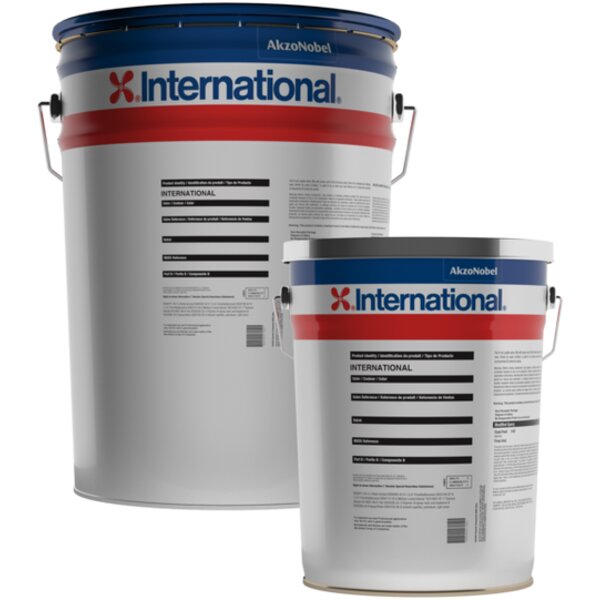
- Standard pack sizes: 20 litre; 5 US gallon.
- Typical shipping weight:
- 20 litre: 30.2 kg
- 5 US gallon: 68.3 lb
- Shelf life: Minimum 12 months at 25°C (77°F), subject to reinspection thereafter.
- Storage conditions: Store in dry, shaded conditions away from sources of heat and ignition. Protect from frost or freezing. Keep containers tightly closed and upright.
Applications and use cases
- Interior structural steel: Designed to provide cellulosic fire protection for beams, columns and hollow sections in interior environments.
- Interior exposure classifications: Approved for interior exposure environments classified to ISO 12944.
- Conditioned and general interior areas: UL listed for use in Conditioned Interior Space and Interior General Purpose conditions without a topcoat.
- Limitations:
- Not designed for frequent water immersion or soaking.
- INTERCHAR 1120 (sealed or unsealed) must be protected from pooling or running water.
- Not intended for exterior exposure where not covered by the approvals given.
FAQ
How long a fire rating can INTERCHAR 1120 achieve?
INTERCHAR 1120 has been independently fire tested for up to 3-hour cellulosic fire ratings in accordance with ASTM E119/UL263, BS 476 20-22, EN 13381-8 and GB 14907. The required dry film thickness depends on the specified fire rating.
Is INTERCHAR 1120 suitable for exterior steelwork?
INTERCHAR 1120 is designed for interior exposed structural steel in interior environments and is approved for interior exposure classifications according to ISO 12944. It is not designed for frequent water immersion or soaking and should be protected from pooling or running water.
What substrates and primers can it be applied over?
The coating is intended for primed structural steel. It should be applied over recommended anti-corrosive coating schemes on steelwork and may be used over approved epoxy metallic zinc primers when an approved tie coat (such as Intergard 269 or Intergard 276) is first applied. A range of primers and tie coats from the International Protective Coatings portfolio are approved for use with INTERCHAR 1120.
Which application methods are recommended?
Airless spray is recommended and provides maximum film build in a single coat. Brush and roller are suitable for small areas and repairs, but multiple coats are required to reach the specified DFT. Conventional air spray (pressure pot) is not recommended and standard air spray is not suitable.
How long should I wait before overcoating INTERCHAR 1120?
When overcoating with itself, the minimum interval depends on temperature (for example, 16 hours at 10°C, 6 hours at 25°C, measured at 700 microns DFT). When overcoating with approved topcoats, the minimum interval is 24 hours under the stated conditions.
What is the VOC content of INTERCHAR 1120?
The VOC content is 0.16 lb/gal (20 g/L) by EPA Method 24 and 0 g/kg according to the EU Solvent Emissions Directive, reflecting a low VOC water borne formulation.
Can INTERCHAR 1120 be cleaned or thinned with solvents?
No. Thinning is normally not required. Application equipment and any material residues should be cleaned using clean water. Organic solvents are specifically not recommended for cleaning this product.
What storage conditions are required?
Store INTERCHAR 1120 in dry, shaded conditions at or around 25°C (77°F), away from heat and ignition sources. Protect the product from frost at all times. Keep containers tightly closed and upright to prevent leakage.
Who should apply INTERCHAR 1120?
The product is intended only for use by professional applicators in industrial situations, following the guidance in the technical data sheet and safety data sheet and in compliance with relevant health, safety and environmental regulations.
Is INTERCHAR 1120 hazardous?
According to its classification, the product is harmful if swallowed, causes serious eye irritation, and is suspected of causing cancer and of damaging fertility. It contains substances that may cause allergic skin reactions. Appropriate personal protective equipment and safe handling procedures are required (see Section 8 Measures of individual protection).
Section 14: Transport information
- UN number / ID number (ADR/RID, IMDG, IATA): Not regulated.
- UN proper shipping name: Not regulated.
- Transport hazard class: Not applicable.
- Packing group: Not applicable.
- Environmental hazards: No.
- Transport within user premises: Always transport in closed containers that are upright and secure. Ensure that personnel transporting the product know what to do in the event of an accident or spillage.
- Transport in bulk according to IMO instruments: Not applicable.
Section 8: Measures of individual protection
INTERCHAR 1120 is classified as harmful if swallowed, causing serious eye irritation and suspected of causing cancer and reproductive toxicity. The following individual protection measures are specified for professional users:
General hygiene measures
- Eating, drinking and smoking are prohibited in areas where the product is handled, stored or processed.
- Wash hands, forearms and face thoroughly after handling the product, before eating, smoking and at the end of the working period.
- Remove contaminated clothing and protective equipment before entering eating areas, and wash contaminated clothing before reuse.
- Ensure that eyewash stations and safety showers are close to the workstation.
Eye and face protection
- Use safety eyewear complying with approved standards when a risk assessment indicates potential exposure to liquid splashes, mists, gases or dusts.
- Where contact is possible, chemical splash goggles are recommended.
Hand protection
- Wear chemical resistant, impervious gloves complying with an approved standard whenever handling the product, if indicated by the risk assessment.
- For prolonged or frequently repeated contact, use gloves with protection class 6 (breakthrough time greater than 480 minutes according to EN374). Recommended materials: Viton or nitrile, thickness ≥ 0.38 mm.
- For brief contact, gloves with protection class 2 or higher (breakthrough time greater than 30 minutes according to EN374) are recommended. Recommended material: nitrile, thickness ≥ 0.12 mm.
- Replace gloves regularly and whenever physical or chemical damage is observed. The user must confirm that the final glove selection is appropriate for the actual conditions of use.
Skin and body protection
- Select personal protective clothing based on the specific task and associated risks. This should be approved by a competent specialist before work begins.
- Use appropriate protective footwear and any additional skin protection measures as determined by the risk assessment.
Respiratory protection
- If operations generate dust, fumes, gas, vapour or mist and adequate ventilation cannot be ensured, wear suitable respiratory protective equipment that meets relevant standards or certifications.
- Respirators must be used in accordance with a formal respiratory protection program, including fit testing and user training.
- Dry sanding, flame cutting or welding of the dry paint film can produce hazardous dust and fumes. Wet sanding or flatting is preferred where possible. If exposure cannot be avoided by local exhaust ventilation, suitable respiratory protection must be used.
Environmental exposure controls
- Emissions from process equipment or ventilation systems should be checked to comply with environmental legislation.
- Where necessary, use fume scrubbers, filters or engineering modifications to reduce emissions to acceptable levels.
Contenido generado por IA