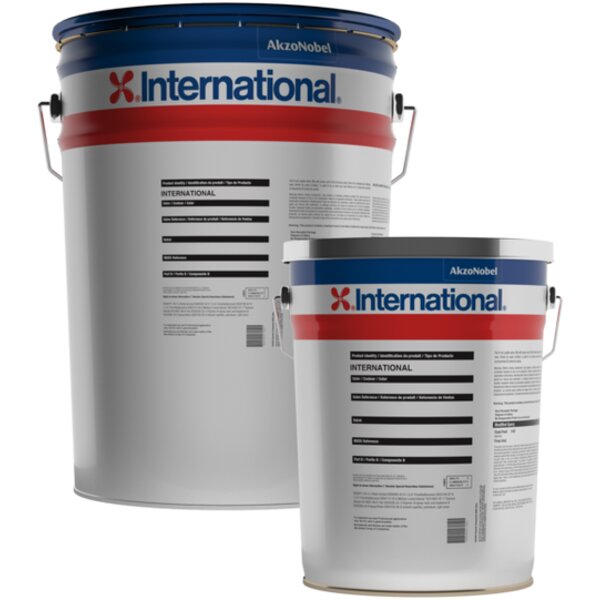
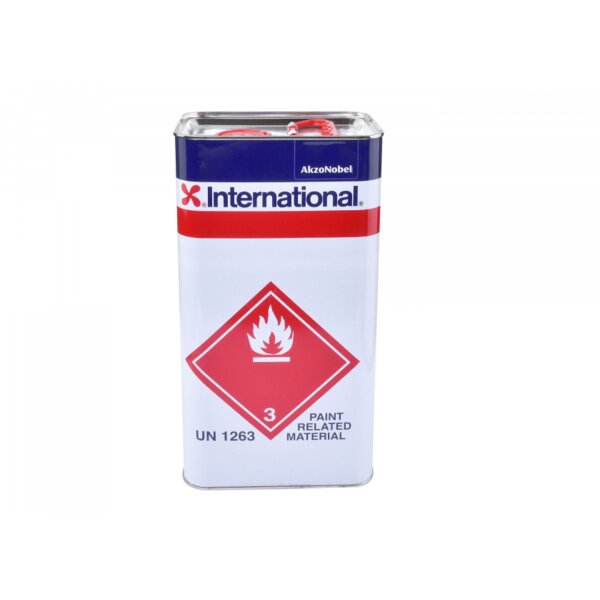
What is Intercure 3240G Part A Indivisible Kit and why choose it?
Intercure 3240G is a two-component, high solids, low VOC, fast drying polyaspartic gloss primer/finish coating designed to be applied direct to metal (DTM). As part of the International 3200 product series, it combines in a single coat the anti-corrosive performance typically associated with epoxy coatings and the high aesthetics of UV durable topcoats. When mixed with Part B, Intercure 3240G delivers rapid handling times at ambient temperatures, helping reduce application time, energy consumption and labour costs in OEM and industrial painting operations.
Main features
- Two-component polyaspartic gloss primer/finish coating.
- Single coat direct-to-metal system designed for correctly prepared substrates.
- Fast drying and rapid cure at 25°C for improved productivity and energy cost savings.
- High solids (84% ± 2% by volume) with low VOC emissions (152 g/kg).
- Gloss level of 70–80 units at 60° angle for an attractive aesthetic finish.
- Suitable for automated paint application and forced curing processes.
- Eliminates the need for costly baking ovens or solvent burners in many applications.
- Good adhesion properties on correctly prepared steel substrates.
- Designed as a single coat system to streamline coating processes.
Technical specifications
General product data
- Type: Direct to metal polyaspartic gloss primer/finish, two-component (Part A base + Part B curing agent).
- Series: International 3200 product series.
- Volume solids: 84% ± 2%.
- Gloss level: 70–80 gloss units at 60° angle.
- Designed system: Single coat application.
Film thickness and coverage
- Typical dry film thickness (DFT): 80–150 microns (3.2–6 mils).
- Typical wet film thickness (WFT): 95–179 microns (3.8–7.2 mils).
- Theoretical coverage: 7 m²/litre at 120 microns DFT and stated volume solids.
- Theoretical coverage (US units): 281 sq.ft/US gallon at 4.8 mils DFT and stated volume solids.
- Practical coverage: Allow appropriate loss factors.
- Maximum recommended DFT: Care should be taken to avoid dry film thicknesses in excess of 200 microns (8 mils), as higher thickness can increase gloss.
Drying and curing times
Drying times are determined at the stated temperature and 50% relative humidity.
- At 5°C (41°F): Touch dry 60 minutes; hard dry 3.5 hours.
- At 15°C (59°F): Touch dry 45 minutes; hard dry 2.5 hours.
- At 25°C (77°F): Touch dry 30 minutes; hard dry 2 hours.
- At 40°C (104°F): Touch dry 15 minutes; hard dry 90 minutes.
- Overcoating interval with recommended topcoats: Intercure 3240G is designed as a single coat system.
Mixing and pot life
- Components: Part A (base) and Part B (curing agent).
- Mix ratio (by volume): 4 parts Part A : 1 part Part B.
- Mixing procedure:
- Agitate Part A (base) with a power agitator.
- Add entire contents of Part B (curing agent) to Part A and mix thoroughly with a power agitator.
- Material is supplied in two containers as a unit; always mix a complete unit in the supplied proportions.
- Working pot life after mixing:
- 5°C (41°F): 3 hours.
- 15°C (59°F): 2 hours.
- 25°C (77°F): 60 minutes.
- 40°C (104°F): 45 minutes.
Application methods
- Recommended application methods:
- Airless spray.
- Air assisted airless spray.
- Air spray (pressure pot).
- Conventional air spray.
- Brush (suitable for small areas only, typically 80–100 microns DFT).
- Roller (suitable for small areas only, typically 80–100 microns DFT).
- Plural component airless spray using suitable proprietary equipment.
- Airless spray parameters:
- Tip range: 0.33–0.48 mm (13–19 thou).
- Total output fluid pressure at spray tip: not less than 176 kg/cm² (2503 p.s.i.).
- Recommended air spray equipment:
- Gun: DeVilbiss MBC or JGA.
- Air cap: 704 or 765.
- Fluid tip: E.
- Electrostatic spray: Will require an appropriate trial.
Surface preparation
- General: All surfaces must be clean, dry and free from contamination. Surfaces should be assessed and treated in accordance with ISO 8504:2000. Oil and grease should be removed in accordance with SSPC-SP1 solvent cleaning.
- Steel:
- Abrasive blast clean to a minimum of Sa2½ (ISO 8501-1:2007) or SSPC-SP6.
- If oxidation occurs between blasting and application, re-blast to the specified visual standard.
- Correct or treat any surface defects revealed by blast cleaning.
- Recommended surface profile: 40–60 microns (1.6–2.4 mils).
- Lower profiles of 20–30 microns (0.8–1.2 mils) may be used to improve overall aesthetics of the paint system.
- Application conditions:
- Surface temperature must be at least 3°C (5°F) above the dew point.
- Relative humidity during application and cure should not exceed 85%.
- Humidity above 50% may result in faster drying times.
- In confined spaces, ensure adequate ventilation.
Thinning and cleaning
- Thinner: International GTA713.
- Do not thin more than allowed by local environmental legislation.
- Do not use alternative thinners.
- Cleaner: International GTA713.
- Do not use alternative cleaners.
- Work stoppages: Do not allow material to remain in hoses, gun or spray equipment. Thoroughly flush all equipment with International GTA713. Once units of paint have been mixed they should not be resealed; after prolonged stoppages, recommence work with freshly mixed units.
- Clean up: Clean all equipment immediately after use with International GTA713. It is good practice to periodically flush out spray equipment during the working day. Dispose of surplus material and empty containers in accordance with regional regulations/legislation.
Regulatory and physical data
- Flash point (typical):
- Part A: 50°C (122°F).
- Part B: 158°C (316°F).
- Mixed: 52°C (126°F).
- Product weight: 1.53 kg/l (12.8 lb/gal).
- VOC: 152 g/kg in accordance with EU Solvent Emissions Directive (Council Directive 2010/75/EU).
- VOC note: Values are typical and provided for guidance only; they may vary depending on colour and normal manufacturing tolerances.
Pack sizes and storage
- Pack size (unit): 20 litre kit.
- Part A: 16 litre volume, 20 litre pack; typical shipping weight 28 kg.
- Part B: 4 litre volume, 5 litre pack; typical shipping weight 5.1 kg.
- Shelf life: Minimum 12 months at 25°C (77°F), subject to re-inspection thereafter.
- Storage conditions: Store in dry, shaded conditions away from sources of heat and ignition.
Applications and use cases
Intercure 3240G is intended for industrial and OEM environments where high productivity and durable, aesthetic protection are required in a single coat system. Typical uses include:
- Construction and mining heavy machinery.
- Agricultural equipment.
- Railcars.
- Transportation vehicles.
- Material handling and lifting equipment.
- Pumps, valves and gear units.
- Other small motors and machinery.
The product is particularly suited for rapid-drying applications at 20–25°C, where fast handling and high production throughput are required without force drying at elevated temperatures, helping to reduce overall energy consumption in fabrication and painting facilities.
Individual protection measures (Section 8)
Intercure 3240G is intended for use only by professional applicators in industrial situations. The following personal protection and safety measures are indicated:
- Use the product in accordance with the advice given on the Technical Data Sheet, the Safety Data Sheet (SDS) and information on the container.
- All work involving application and use must comply with relevant national Health, Safety and Environmental standards and regulations.
- When welding or flame cutting on metal coated with this product, dust and fumes will be emitted. In such cases, use appropriate personal protective equipment and ensure adequate local exhaust ventilation.
FAQ
1. What type of coating is Intercure 3240G Part A Indivisible Kit?
It is the base component (Part A) of a two-component, high solids, low VOC, fast drying polyaspartic gloss primer/finish designed for direct-to-metal, single coat applications.
2. On which substrates can Intercure 3240G be applied?
The data sheet specifies correctly prepared steel substrates that have been abrasive blast cleaned to at least Sa2½ (ISO 8501-1:2007) or SSPC-SP6 with an appropriate surface profile.
3. What surface profile is recommended before application?
A surface profile of 40–60 microns (1.6–2.4 mils) is recommended. Lower profiles of 20–30 microns (0.8–1.2 mils) can be used to improve overall aesthetics of the paint system.
4. How many coats are required?
Intercure 3240G is designed as a single coat system applied directly to correctly prepared substrates.
5. What is the typical drying time at 25°C?
At 25°C (77°F) and 50% relative humidity, the coating is typically touch dry in 30 minutes and hard dry in 2 hours.
6. Which thinner and cleaner should be used?
International GTA713 is the specified thinner and cleaner. Alternative thinners or cleaners should not be used, and thinning must not exceed limits set by local environmental legislation.
7. Can Intercure 3240G be applied by brush or roller?
Yes, brush and roller application are suitable for small areas only, with typical achievable film thicknesses of 80–100 microns (3.2–4.0 mils) dry.
8. What environmental conditions are recommended during application?
Surface temperature should be at least 3°C (5°F) above the dew point, and relative humidity should not exceed 85% during application and cure. Humidity above 50% may accelerate drying.
9. How long is the mixed paint usable?
Working pot life is approximately 3 hours at 5°C, 2 hours at 15°C, 60 minutes at 25°C and 45 minutes at 40°C.
10. What is the shelf life of the kit?
The stated shelf life is a minimum of 12 months at 25°C (77°F), subject to re-inspection thereafter, when stored in dry, shaded conditions away from heat and ignition sources.
Contenido generado por IA