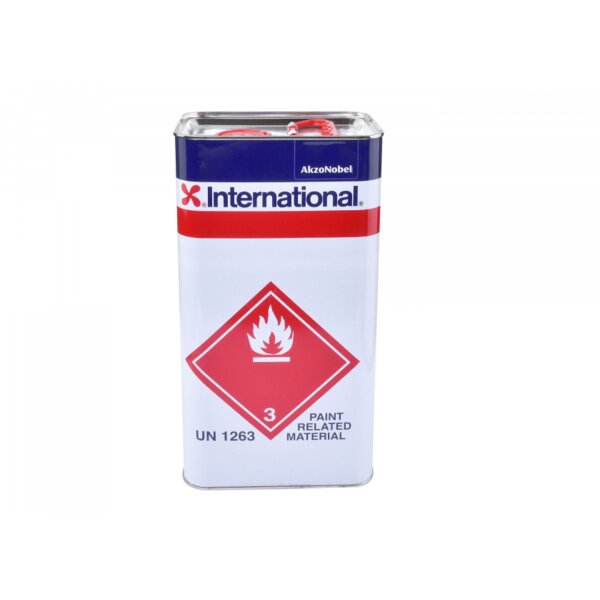
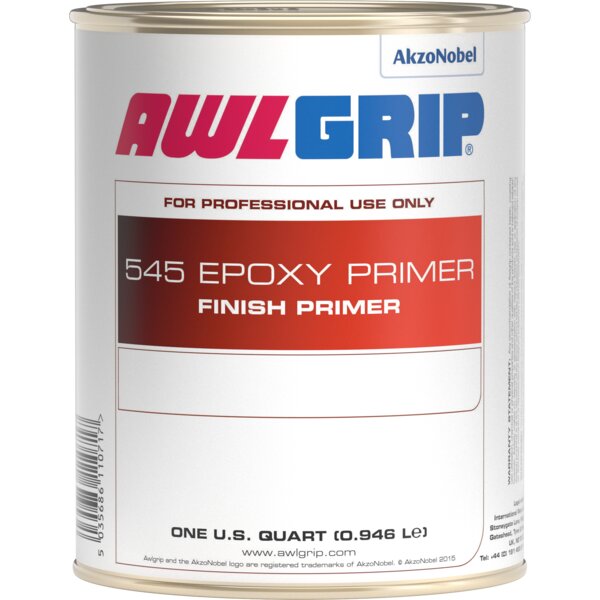
What it is and why choose it
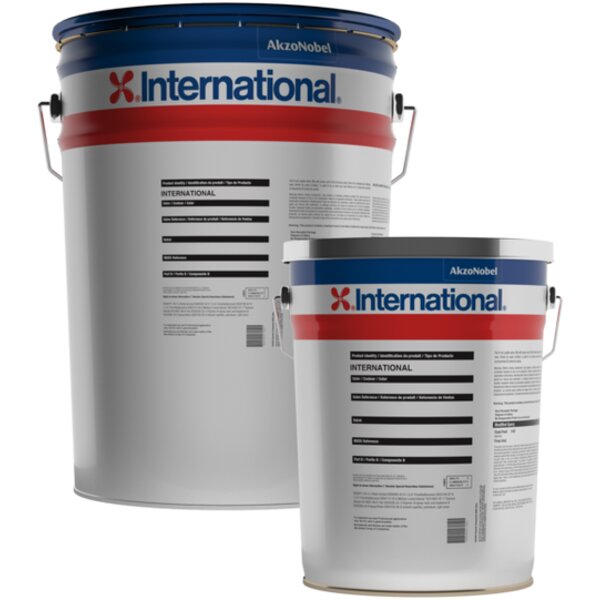
INTERTUF 362 PART A INDIVISIBLE KIT is the base component of Intertuf 362, a hard-wearing, surface-tolerant two-pack epoxy anticorrosive primer designed for marine environments. Formulated to be winter workable down to -5°C, it delivers reliable anticorrosive protection from keel to rail on newbuilding projects, maintenance and repair jobs, and on board maintenance. The coating is suitable for use with controlled cathodic protection and is engineered for long-term performance in demanding conditions.
Main features
- High performance epoxy anticorrosive primer for comprehensive protection from keel to rail.
- Two-pack system using Part A (this kit) and curing agent Part B (KHA362) mixed at 3:1 by volume.
- Surface tolerant, suitable for correctly prepared new steel, refurbished areas and compatible shop primers.
- Winter workable down to -5°C, allowing application in low temperature conditions.
- Suitable for controlled cathodic protection, supporting performance on protected hulls.
- Sheen finish in KHA323 Red and KHA322 Grey (grey available in North America only).
- High volume solids (67% ±2%) for efficient film build and reduced solvent emissions.
- Flexible application methods: airless spray (recommended), brush or roller for small areas.
- Fast drying and handling with defined touch dry and hard dry times across a wide temperature range.
- Compatible with multiple International Marine Coatings systems including Interbond 201, Intergard 263, Intergard 282, Intergard 740 and Intertuf 362 as overcoats.
Technical specifications
- Product type: Epoxy anticorrosive primer (two-pack)
- Brand: International Marine Coatings
- Colour options: KHA323 Red; KHA322 Grey (North America only)
- Finish/Sheen: Sheen
- Part B (curing agent): KHA362
- Mix ratio: 3.00 volumes Part A to 1 volume Part B
- Volume solids: 67% ±2% (ISO 3233:1998)
- Typical dry film thickness (DFT): 150 microns (corresponding to 224 microns wet film thickness)
- Theoretical coverage: 4.47 m²/litre at 150 microns DFT (allow for appropriate loss factors)
- Recommended application methods: Airless spray (recommended), brush, roller
- Airless spray tip range: 0.53–0.84 mm (21–33 thou)
- Minimum fluid pressure at tip: Not less than 176 kg/cm² (2500 psi)
- Conventional spray: Not recommended
- Thinner: International GTA220 (thinning not normally required)
- Cleaner: International GTA822 / GTA220
- Flash point (typical): Part A 25°C; Part B 24°C; Mixed 27°C
- Induction period: Not required (for temperatures below 25°C, an induction period of 30 minutes is recommended to prevent amine bloom)
Drying information
- At -5°C:
- Touch dry (ISO 9117/3:2010): 4 hours
- Hard dry (ISO 9117-1:2009): 24 hours
- Pot life: 6 hours
- At 5°C:
- Touch dry: 2.5 hours
- Hard dry: 12 hours
- Pot life: 5 hours
- At 25°C:
- Touch dry: 60 minutes
- Hard dry: 4 hours
- Pot life: 2 hours
- At 35°C:
- Touch dry: 45 minutes
- Hard dry: 2.5 hours
- Pot life: 60 minutes
Overcoating data (minimum and maximum intervals)
The following overcoating intervals are given for guidance and can vary with climate and environmental conditions.
- With Interbond 201 (Low Temperature version):
- At -5°C: min 24 hours, max 14 days
- At 5°C: min 12 hours, max 14 days
- At 25°C: min 4 hours, max 14 days
- With Intergard 263:
- At -5°C: min 24 hours, max 14 days
- At 5°C: min 12 hours, max 14 days
- At 25°C: min 4 hours, max 14 days
- At 35°C: min 2.5 hours, max 14 days
- With Intergard 282:
- At -5°C: min 24 hours, max 14 days
- At 5°C: min 12 hours, max 14 days
- At 25°C: min 4 hours, max 14 days
- With Intergard 740:
- At 5°C: min 12 hours, max 7 days
- At 25°C: min 4 hours, max 7 days
- At 35°C: min 2.5 hours, max 7 days
- With Intertuf 362:
- At -5°C: min 24 hours, max 15 days
- At 5°C: min 12 hours, max 15 days
- At 25°C: min 4 hours, max 15 days
- At 35°C: min 2.5 hours, max 15 days
VOC information
- VOC (EPA Method 24): 283 g/litre as supplied
- VOC (EU Solvent Emissions Directive 1999/13/EC): 199 g/kg of liquid paint as supplied
- VOC (Chinese National Standard GB23985): 248 g/litre
Unit size and storage
- Typical unit sizes:
- 20 litre unit: Part A 15 L (20 L pack); Part B 5 L (5 L pack)
- 4 US gallon unit: Part A 3 US gal (5 US gal pack); Part B 1 US gal (1 US gal pack)
- Typical unit shipping weight:
- 20 litre unit: 33.33 kg
- 4 US gallon unit: 56 lb
- Shelf life:
- Part A: Minimum 6 months at temperatures up to 25°C
- Part B: Minimum 12 months at 25°C, subject to reinspection thereafter
- Storage conditions: Store in dry, shaded conditions away from sources of heat and ignition. Keep unmixed material in closed containers under protected storage.
Applications and use cases
- Newbuilding:
- For use on new steel surfaces where a hard-wearing, anticorrosive primer is required.
- Compatible with intact, approved shop primers that are clean, dry and free from soluble salts and contaminants.
- Can be applied over Intergard 269 when used as a holding primer, within the specified overcoating interval.
- Maintenance and repair:
- Suitable for major refurbishment where steel is abrasive blast cleaned to Sa2 (ISO 8501-1:2007) or equivalent standards.
- May be used following hydroblasting to International Paint Hydroblasting Standard HB2 (with flash rusting no worse than HB2M) and slurry blasting to Standard SB2 (with flash rusting no worse than SB2M) on underwater hull, above water and topside areas.
- On board maintenance:
- For spot repair and upgrading of compatible existing coatings when overcoated with Intergard 263.
- Spot repair suitable substrates: epoxy, coal tar epoxy, chlorinated rubber, vinyl tar, tar-free vinyl.
- Substrates not suitable for spot repair: bituminous.
- Upgrade suitable substrates: epoxy, coal tar epoxy, chlorinated rubber.
- Substrates not suitable for upgrading: vinyl tar, tar-free vinyl, bituminous.
- Feathered overlap areas should be kept to a minimum.
- Usage conditions:
- Apply in good weather, with surface temperature at least 3°C above the dew point.
- For optimum application properties, bring material to 21–27°C before mixing and application, unless otherwise instructed.
Surface preparation (summary)
- General:
- Use in accordance with Worldwide Marine Specifications.
- All surfaces must be clean, dry and free from contamination.
- Remove oil, grease and soluble contaminants by high pressure fresh water wash or fresh water wash, followed by SSPC-SP1 solvent cleaning.
- Newbuilding steel:
- Remove weld spatter, smooth weld seams and sharp edges as necessary.
- Blast clean weld seams and damaged shop primer areas to Sa2½ (ISO 8501-1:2007) or power tool clean to Pt3 (JSRA SPSS:1984).
- Unapproved shop primers require complete removal by blast cleaning to Sa2½; in some cases sweep blasting to standards such as AS2 or AS3 may be acceptable.
- Major refurbishment:
- Abrasive blast clean to Sa2 (ISO 8501-1:2007). If oxidation occurs between blasting and application, reblast to the specified standard.
- Repair surface defects revealed by blasting by grinding, filling or other appropriate treatment.
- Hydroblasting and slurry blasting options are available for underwater hull, above water and topside areas to HB2/HB2M or SB2/SB2M standards respectively.
- North America marine standards:
- SSPC-SP10 may be used in place of Sa2½ (ISO 8501-1:2007).
- SSPC-SP6 may be used in place of Sa2 (ISO 8501-1:2007).
Mixing and application
- Mixing:
- Agitate Base (Part A) thoroughly with a power agitator.
- Combine the entire contents of Curing Agent (Part B) with Part A and mix thoroughly with a power agitator.
- Use the mixed product within the stated pot life for the relevant temperature.
- Brush application:
- Recommended for small areas only.
- Multiple coats may be required to achieve the specified film thickness.
- Roller application:
- Recommended for small areas only.
- Multiple coats may be required to achieve the specified film thickness.
- Thinning:
- Use International GTA220 if thinning is necessary; do not exceed limits set by local environmental legislation.
- Cleaning and work stoppages:
- Do not allow material to remain in hoses, guns or spray equipment.
- Thoroughly flush equipment with International GTA822/GTA220 after use or during prolonged stoppages.
- Clean all equipment immediately after use; periodically flush spray equipment depending on usage and conditions.
- Welding and cutting on coated steel:
- Welding or flame cutting on metal coated with this product will emit dust and fumes.
- Use appropriate personal protective equipment and provide adequate local exhaust ventilation.
- In North America, follow ANSI/ASC Z49.1 “Safety in Welding and Cutting”.
FAQ
-
What type of product is INTERTUF 362 PART A INDIVISIBLE KIT?
It is the base component (Part A) of Intertuf 362, a two-pack epoxy anticorrosive primer for marine use from keel to rail.
-
At what temperatures can Intertuf 362 be applied?
The product is winter workable down to -5°C and has defined drying and pot life data at -5°C, 5°C, 25°C and 35°C.
-
Which application methods are recommended?
Airless spray is recommended. Brush and roller can be used for small areas, although multiple coats may be needed to reach the specified film thickness. Conventional spray is not recommended.
-
What is the mixing ratio between Part A and Part B?
The mixing ratio is 3 parts by volume of Part A to 1 part by volume of curing agent Part B (KHA362).
-
Is Intertuf 362 suitable over existing coatings?
Yes, when used in a system with Intergard 263 it may be used for spot repair and upgrade of suitable substrates such as epoxy, coal tar epoxy and chlorinated rubber, following the preparation guidelines provided.
-
Can Intertuf 362 be used with controlled cathodic protection systems?
Yes. It is stated as suitable for use with controlled cathodic protection.
-
What surface preparation is required before application?
Surfaces must be clean, dry and free from contamination, with oil and grease removed according to SSPC-SP1. Blast cleaning or hydroblasting/slurry blasting to the specified standards is required depending on whether the job is newbuilding or refurbishment.
-
How should unused mixed paint and empty containers be handled?
Do not reseal mixed units. Dispose of surplus materials and empty containers in accordance with applicable regional regulations and legislation.
-
Does the product require an induction time before application?
An induction period is not required in general; however, to prevent amine bloom at temperatures below 25°C, an induction period of 30 minutes between mixing and application is recommended.
-
What environmental conditions are recommended during application?
Apply in good weather with the steel surface at least 3°C above the dew point, and ideally with the material temperature between 21°C and 27°C.
Section 14 – Transport information
Consultar ficha técnica del fabricante.
Section 8 – Individual protection measures
- All work with this product must comply with relevant national Health, Safety and Environmental standards and regulations.
- Before use, consult the Material Safety Data Sheet for detailed health and safety information.
- Ensure proper ventilation during application and drying to keep solvent vapour concentrations within safe limits and to protect against toxic or oxygen-deficient atmospheres.
- Use appropriate personal protective equipment to avoid skin and eye contact, including gloves, goggles, face masks and barrier creams as appropriate.
- Provide adequate local exhaust ventilation especially when welding or flame cutting on coated steel, as dust and fumes will be emitted.
- Follow all precautionary notices on container labels and safety documentation. If these instructions cannot be strictly followed, the product should not be used.
*Contenido generado por IA