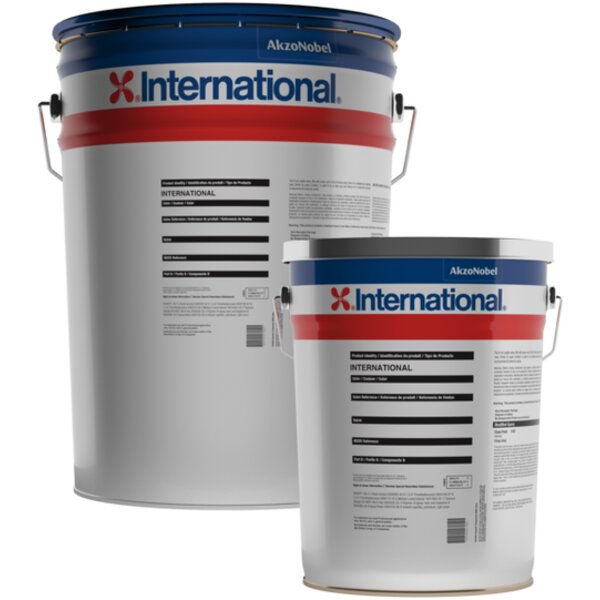
What it is and why choose it
INTERZONE 1000 PART A INDIVISIBLE KIT is the base component of Interzone 1000, a very high solids, low VOC, two-component glass flake epoxy. Designed for high build applications, it incorporates a high level of chemically resistant glass flake to provide outstanding long-term protection against corrosion, abrasion and aggressive chemicals on correctly prepared steel structures.
Used together with the dedicated curing agent (Part B), Interzone 1000 delivers excellent resistance to cathodic disbondment and is compatible with both sacrificial anode and impressed current cathodic protection systems, making it particularly suitable for sub-sea and buried steelwork as well as highly exposed splashzone areas.
Main features
- High build barrier coat: typical total system thickness of 500–1000 microns (20–40 mils) dry for heavy-duty protection.
- Very high solids, low VOC: 92% volume solids with VOC values of 0.62 lb/gal (75 g/l) according to EPA Method 24 and 70 g/kg under the EU Solvent Emissions Directive (Council Directive 2010/75/EU).
- Chemically resistant glass flake: high loading of glass flakes provides excellent resistance to corrosion, abrasion and chemical attack.
- Long-term performance in harsh environments: suitable for splashzone, sub-sea and buried conditions where high durability is critical.
- Cathodic protection compatible: excellent resistance to cathodic disbondment and compatibility with sacrificial and impressed current systems.
- Versatile application methods: can be applied by airless spray, air spray or brush, enabling use in a range of site conditions.
- Low temperature curing capability: can be applied at low temperatures with defined drying and overcoating intervals from 10°C (50°F) to 40°C (104°F).
- Non-slip deck system component: can be used as part of a non-skid deck system when combined with suitable aggregate.
Technical specifications
- Product type: glass flake epoxy (two-component system; this item is Part A – Base).
- Volume solids: 92%.
- Typical dry film thickness (system): 500–1000 microns (20–40 mils) dry, equivalent to 543–1087 microns (21.7–43.5 mils) wet.
- Theoretical coverage: 1.80 m²/litre at 500 microns DFT and stated volume solids (74 sq.ft/US gallon at 20 mils DFT).
- Recommended application methods: airless spray, air spray, brush.
- Colour range: limited range available.
- Gloss level: not applicable.
- Drying times and overcoating intervals with recommended topcoats:
- At 10°C (50°F): touch dry 14 h; hard dry 26 h; overcoat minimum 26 h, maximum 7 days.
- At 15°C (59°F): touch dry 8 h; hard dry 18 h; overcoat minimum 18 h, maximum 5 days.
- At 25°C (77°F): touch dry 5 h; hard dry 12 h; overcoat minimum 12 h, maximum 4 days.
- At 40°C (104°F): touch dry 2 h; hard dry 5 h; overcoat minimum 5 h, maximum 1 day.
- Mix ratio (A:B by volume): 3.5 parts : 1.0 part.
- Working pot life (mixed A+B): approx. 4 h at 10°C; 3 h at 15°C; 1 h at 25°C; 30 min at 40°C.
- Recommended spray data (airless): tip range 0.92–1.09 mm (36–43 thou); total output fluid pressure at tip not less than 211 kg/cm² (3000 psi).
- Recommended conventional spray equipment: DeVilbiss MBC or JGA gun; Air Cap 62; Fluid Tip AC.
- Flash point (typical): Part A 44°C (111°F); Part B >101°C (214°F); mixed 56°C (133°F).
- Product weight (mixed reference): 1.3 kg/l (10.8 lb/gal).
- Thinner: International GTA220 (or International GTA415). Do not thin more than allowed by local environmental legislation.
- Cleaner: International GTA822 or International GTA415.
- Pack sizes for Part A: 18 litre (14 litre fill in 20 litre can); 4 US gallon (3.1 US gallon fill in 5 US gallon can).
- Typical shipping weight (Part A): 22.2 kg for 18 litre unit; 42.3 lb for 4 US gallon unit.
- Shelf life (unopened, typical): minimum 24 months at 25°C (77°F), subject to re-inspection; store in dry, shaded conditions away from heat and ignition sources.
Applications and use cases
- Offshore and marine splashzone areas: protection of steel in tidal and wave-impacted zones on offshore platforms, jetties and decks where high abrasion and corrosion resistance are required.
- Sub-sea structures: long-term protection of immersed steelwork, particularly where cathodic protection systems are installed.
- Industrial infrastructure: bridges, chemical plants, pulp and paper mills and water treatment plants where severe exposure demands a high build, glass flake epoxy barrier.
- Buried steel: suitable for steelwork exposed under buried conditions (Im3 according to ISO 12944-2).
- Non-slip deck systems: used as part of a non-skid deck coating system in conjunction with appropriate aggregate.
FAQ
-
What type of product is INTERZONE 1000 PART A?
It is the base component (Part A) of Interzone 1000, a very high solids, low VOC, glass flake epoxy barrier coating for steel protection.
-
Can it be used in immersed or sub-sea conditions?
Yes. When mixed with its curing agent and correctly applied, Interzone 1000 offers long-term protection for sub-sea structures and is compatible with cathodic protection systems.
-
Which application methods are recommended?
Airless spray is recommended for maximum film build in one coat. Air spray and brush application are also suitable, although multiple passes may be needed to achieve the specified thickness.
-
What is the typical dry film thickness?
The system is designed for 500–1000 microns (20–40 mils) dry film thickness, depending on specification and service conditions.
-
What is the pot life after mixing Part A and Part B?
Working pot life ranges from about 4 hours at 10°C (50°F) down to 30 minutes at 40°C (104°F).
-
Is thinning required?
Thinning should not exceed limits set by local environmental legislation. International GTA220 (or GTA415) is the specified thinner.
-
How should equipment be cleaned?
Flush and clean all equipment immediately after use with International GTA822 or International GTA415. Do not allow mixed material to remain in hoses or guns.
-
What is the storage life of Part A?
Unopened containers have a minimum shelf life of 24 months at 25°C (77°F), stored dry, in the shade and away from heat and ignition sources.
-
Which topcoats are compatible?
Recommended topcoats include Interfine 629HS, Intergard 740, Interthane 990, Interthane 990E and Interzone 954.
-
What is the VOC content?
The product has a VOC of 0.62 lb/gal (75 g/l) by EPA Method 24 and 70 g/kg per the EU Solvent Emissions Directive.
Section 14 – Transport information
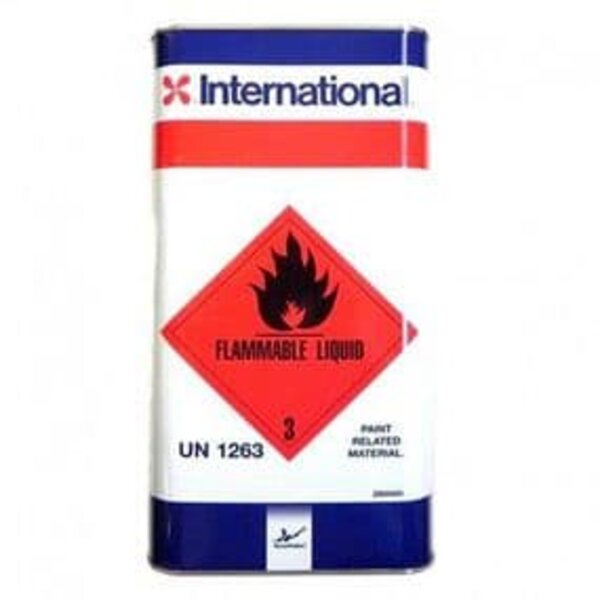
- UN shipping number (Part A – Base): UN 1263.
- UN number for curing agent (Part B, for reference): UN 1760.
- Further transport classification details: Consultar ficha técnica del fabricante.
Section 8 – Individual protection measures
- This product is intended for use only by professional applicators in industrial situations, following the guidance in the product data sheet, Safety Data Sheet and container labelling.
- All work involving application and use must comply with relevant national Health, Safety and Environmental standards and regulations.
- When welding or flame cutting on metal coated with this product, dust and fumes will be generated; appropriate personal protective equipment and adequate local exhaust ventilation are required.
- For detailed information on personal protective equipment (respiratory, eye, skin and body protection): Consultar ficha técnica del fabricante.
*Contenido generado por IA