What it is and why choose it
INTERSHIELD ONE 2 ONE PART A INDIVISIBLE KIT by International Marina is a universal, pure epoxy primer designed for on board maintenance. It is surface tolerant and works as an anticorrosive touch-up coating, delivering excellent corrosion protection even at low application temperatures. Formulated as an easy-to-use two-component system with a 1:1 mix ratio (Part A to Part B), it simplifies mixing on board and helps reduce product wastage.
When used as part of an approved coating scheme, this epoxy primer is suitable for use with controlled cathodic protection and can be incorporated into systems certified for food-contact cargoes and potable water carriage, depending on formulation and manufacturing site.
Main features
- Universal epoxy primer for OBM: Developed specifically for On Board Maintenance as a multi-purpose anticorrosive primer.
- Surface tolerant: Can be applied over properly prepared exposed steel and many aged coating systems.
- Low temperature application: Provides reliable curing and corrosion protection at low substrate temperatures (from -5°C, see drying schedule).
- Simple 1:1 mix ratio: Equal volumes of Part A and Part B for crew-friendly mixing and less risk of error.
- Versatile application methods: Suitable for airless spray, brush and roller.
- Compatible within complete systems: Can be overcoated with a range of Intergard, Intersheen, Interstores Polyurethane and Interthane finishes within defined intervals.
- Food and potable water related approvals: When used in approved schemes, tested for dry food contact, grain carriage and potable water carriage (certification dependent on formulation and manufacturing site).
- Good volume solids: High solids epoxy (approx. 65–67% by volume depending on colour) for efficient film build.
- VOC compliant formulation: VOC values below 340 g/l as supplied, in line with solvent emission directives.
Technical specifications
General data
- Product type: Two-pack pure epoxy primer, Part A of a two-component system.
- Intended uses: Universal anticorrosive primer for On Board Maintenance; suitable for use with controlled cathodic protection.
- Colours: Aluminium (IIA121) and Red (IIA122) versions available.
- Finish/Sheen: Matt (Aluminium); Semi-gloss (Red).
- Curing agent (Part B): IIA125.
- Mix ratio: 1 volume Part A : 1 volume Part B.
Film build and coverage
- Volume solids: Aluminium approx. 65% ±2% (ISO 3233:1998); Red approx. 67% ±2% (ISO 3233:1998).
- Typical dry film thickness: 75 microns.
- Typical wet film thickness: Aluminium 115 microns; Red 112 microns.
- Theoretical coverage at 75 microns DFT: Aluminium 8.67 m²/litre; Red 8.93 m²/litre (allow appropriate loss factors).
Application and curing
- Application methods: Airless spray, brush, roller. Conventional spray is not recommended.
- Airless spray tip range: 0.48–0.64 mm (19–25 thou).
- Minimum fluid pressure at tip: Not less than 211 kg/cm² (3000 psi).
- Thinner/Cleaner: International GTA220/GTA822.
- Thinning: Not normally required; if needed, do not exceed limits of local environmental legislation.
Drying and pot life (typical)
- Touch dry:
- -5°C: 6 hours
- 5°C: 4 hours
- 25°C: 3 hours
- 35°C: 60 minutes
- Hard dry:
- -5°C: 28 hours
- 5°C: 17 hours
- 25°C: 4 hours
- 35°C: 2 hours
- Pot life (mixed units):
- -5°C: 6 hours
- 5°C: 6 hours
- 25°C: 2 hours
- 35°C: 60 minutes
Overcoating intervals (typical)
Minimum and maximum overcoating times depend on substrate temperature and chosen topcoat. Examples (typical):
- With Intergard 740:
- -5°C: 30 hrs – 7 days
- 5°C: 18 hrs – 7 days
- 25°C: 6.5 hrs – 7 days
- 35°C: 4 hrs – 7 days
- With Intersheen 579:
- -5°C: 30 hrs – 2 days
- 5°C: 18 hrs – 2 days
- 25°C: 6.5 hrs – 24 hrs
- 35°C: 4 hrs – 24 hrs
- With Intershield One-2-One (immersed areas):
- -5°C: 30 hrs – 14 days
- 5°C: 18 hrs – 14 days
- 25°C: 6.5 hrs – 14 days
- 35°C: 4 hrs – 14 days
Overcoating data are for guidance only and may vary with local conditions.
VOC and regulatory data
- VOC (Aluminium): 318 g/l as supplied (EPA Method 24); 276 g/kg of liquid paint as supplied (EU Solvent Emissions Directive 1999/13/EC).
- VOC (Red): 292 g/l as supplied (EPA Method 24); 244 g/kg of liquid paint as supplied (EU Solvent Emissions Directive 1999/13/EC).
Packaging and storage
- Standard unit sizes:
- 10 litre unit: 5 L Part A + 5 L Part B.
- 2 US gallon unit: 1 US gal Part A + 1 US gal Part B.
- Typical unit shipping weight: 10 L unit approx. 13.5 kg; 2 US gal unit approx. 23 lb.
- Shelf life: 12 months at 25°C, subject to re-inspection.
- Storage conditions: Store in dry, shaded conditions away from sources of heat and ignition. Keep containers tightly closed.
Applications and use cases
- On board maintenance (OBM): Ideal for ship operators and crews needing a robust, easy-mixing primer for regular maintenance and touch-up of exposed steel.
- Exposed and corroded steel areas: Suitable for hand or power-tool cleaned steel prepared to at least St2 (ISO 8501-1:2007), with local Sa2 spot blasting where required.
- Water ballast tanks: Multiple coats of the Aluminium version form the recommended scheme for water ballast tanks, in line with applicable standards and approvals.
- Immersed areas with colour differentiation: For immersed areas, Intershield One-2-One Red is applied over Intershield One-2-One Aluminium within the specified overcoating interval, providing contrast between coats.
- Non-immersed areas: Can be part of epoxy/urethane systems for above-water structures, decks and topside areas, overcoated with approved intermediates and finishes.
- Maintenance over aged coatings: Suitable for overlapping onto most existing, sound aged coatings after proper cleaning and light abrasion where required.
FAQ
-
Is INTERSHIELD ONE 2 ONE PART A suitable for use at low temperatures?
Yes. The primer can be applied and will cure from substrate temperatures as low as -5°C, following the specified drying and overcoating times.
-
What surface preparation is required before application?
Exposed steel and corrosion areas should be hand or power tool cleaned to a minimum of St2 (ISO 8501-1:2007). Heavily corroded areas that cannot be adequately prepared this way should be spot blasted to at least Sa2.
-
Can it be applied over existing coatings?
Yes, it is suitable for overlap onto most aged coating systems. Loose or flaking coatings must be removed back to a firm edge, and the overlap zone should be abraded before application, overlapping the existing coating by 2–3 cm.
-
How should Part A and Part B be mixed?
Mix equal volumes (1:1) of Part A and Part B. Agitate each component separately with a power agitator, then combine and mix thoroughly. Once mixed, use within the specified pot life.
-
Is thinning required?
Thinning is not normally required. If needed under extreme conditions, only thin with International GTA220/GTA822, within the limits allowed by local environmental regulations.
-
Can I use conventional spray equipment?
Application by conventional spray is not recommended. Airless spray, brush or roller should be used.
-
Does the coating chalk under sunlight?
Yes. As with all epoxy-based coatings, the film will exhibit chalking on UV exposure. This is a cosmetic effect and does not necessarily affect anticorrosive performance.
-
Is the product certified for potable water or food contact?
When used as part of an approved scheme, the product has certifications including FDA compliance for dry foodstuffs, grain carriage, and potable water carriage (NSF-WRc BS6920), subject to formulation and manufacturing site.
-
What is the recommended environment for application?
Apply in good weather with the steel surface at least 3°C above the dew point and relative humidity not exceeding 85%. For best handling, bring the material to 21–27°C before mixing and application.
-
How should leftover material and containers be disposed of?
Surplus material and empty containers should be disposed of in accordance with regional regulations. Do not discharge residues into drains or waterways.
Section 14 – Transport information
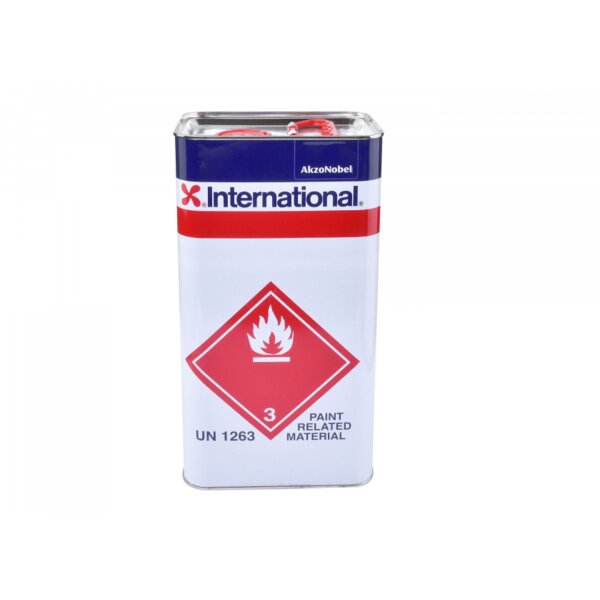
The product is classified as dangerous goods for transport.
- UN number: UN1263.
- Proper shipping name: PAINT / PINTURAS.
- Transport hazard class: Class 3 (flammable liquids).
- Packing group: III.
- Environmental hazards: Classified as hazardous to the aquatic environment. For ADR/RID and IMDG, environmentally hazardous / marine pollutant marking is required, except when transported in packages ≤5 L or ≤5 kg, where the mark is not required.
- ADR/RID: Class 3, Packing Group III; tunnel code D/E.
- IMDG: Class 3, Packing Group III; marine pollutant (contains epoxy resin and light aromatic solvent naphtha); emergency schedules F-E, S-E.
- IATA: Class 3, Packing Group III; environmentally hazardous substance mark may appear if required by other transport regulations.
- Special precautions for users: Within user premises, always transport in tightly closed, upright and secure containers. Personnel should know what to do in case of accident or spillage.
- Bulk transport (IMO instruments): Not applicable.
Section 8 – Individual protection measures
All work with this primer must comply with applicable national Health, Safety and Environmental regulations. The following measures are taken directly from the safety data sheets for Part A.
Engineering controls
- Use only with adequate ventilation.
- Apply local exhaust ventilation or area isolation where necessary to keep airborne solvent vapours below occupational exposure limits and below the lower explosive limit.
- Use explosion-proof ventilation equipment in areas where vapours may be present.
General hygiene measures
- Do not eat, drink or smoke while handling the product.
- Wash hands, forearms and face thoroughly after handling, before breaks, and at the end of the work shift.
- Remove contaminated clothing and protective equipment before entering eating areas; wash contaminated clothing before reuse.
- Ensure eyewash stations and safety showers are located close to the work area.
Eye and face protection
- Use safety goggles or a face shield providing protection against chemical splashes, compliant with approved standards.
Hand protection
- Wear chemical-resistant, impermeable gloves complying with EN374 or equivalent.
- For frequent or prolonged contact, gloves with protection class 6 (breakthrough time >480 minutes) are recommended; suggested materials: Viton or nitrile, minimum thickness ≥0.38 mm.
- For brief contact, protection class 2 or higher (breakthrough time >30 minutes) is recommended; suggested material: nitrile, minimum thickness ≥0.12 mm.
- Replace gloves regularly and immediately if any sign of degradation or damage is observed.
Body and skin protection
- Select suitable protective clothing based on the specific task and risks, approved by a safety specialist.
- Where there is a risk of ignition from electrostatic charges, wear antistatic protective clothing meeting EN 1149 requirements. For maximum protection, clothing should include antistatic coveralls, boots and gloves.
- Wear appropriate protective footwear and any additional skin protection required for the work being undertaken.
Respiratory protection
- Where ventilation is insufficient to control vapour concentrations, use a respirator that meets relevant standards as part of a formal respiratory protection programme.
- Recommended type: half-mask respirator compliant with EN140 fitted with an A/P2 (or better) filter cartridge.
- During dry sanding, flame cutting or welding on dried coatings, dusts and fumes may be generated; wet sanding or flame-free preparation is preferred. If exposure cannot be controlled by ventilation, suitable respiratory protection must be worn.
Environmental exposure controls
- Check emissions from ventilation and process equipment to ensure compliance with environmental regulations.
- Where necessary, use filters, scrubbers or process modifications to minimise emissions to air, water and soil.
*Contenido generado por IA