What INTERSHIELD 300 PART A INDIVISIBLE KIT is and why choose it
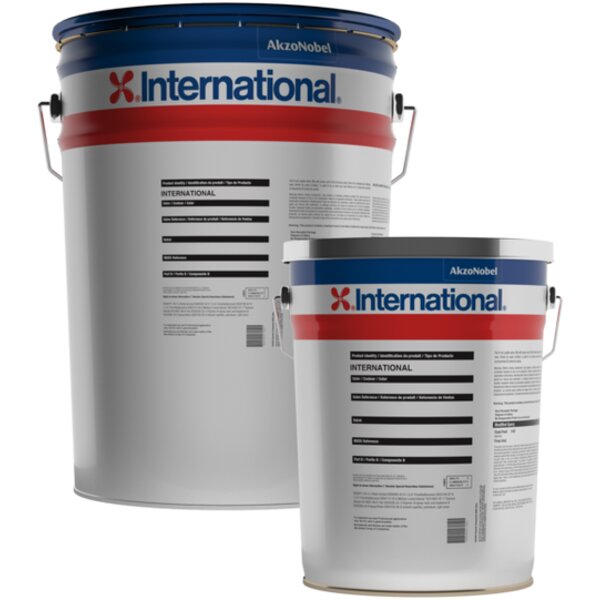
INTERSHIELD 300 PART A INDIVISIBLE KIT by International Marina is the base component of a two-component, abrasion resistant pure epoxy coating pigmented with aluminium. When mixed with its dedicated curing agent, it provides excellent long-term anticorrosive protection and fast curing, even under low temperature conditions. Designed as a heavy-duty primer for steel, it is especially suited for aggressive marine and offshore environments where mechanical damage, immersion service and severe weathering are expected.
This high-solids coating (60% ±2% volume solids) has been developed using proprietary polymer technology to ensure rapid cure and overcoating, allowing productivity in shipyards and offshore maintenance projects without compromising long-term performance.
Main features
- Abrasion resistant aluminium epoxy – pure epoxy matrix heavily pigmented with aluminium to resist impact, wear and mechanical damage.
- Long-term anticorrosive protection – acts as a robust barrier coating to minimise corrosion in aggressive atmospheres and immersion service.
- Low temperature application – formulated to cure and be overcoated rapidly even at low substrate temperatures, maintaining productivity in cold climates.
- High solids formulation – 60% ±2% volume solids helps achieve the specified dry film thickness with fewer coats.
- Flexible application methods – designed primarily for airless spray, with brush and roller application suitable for small areas and touch-up.
- Universal steel primer – can be applied directly to suitably prepared bare steel or to mechanically prepared shop primer.
- Marine and offshore approvals – tested and specified for demanding services such as recognized corrosion control coating systems and NORSOK M-501 (various systems as indicated in the technical data sheets).
- Part of a complete coating system – compatible with a wide range of International primers and topcoats, including Intergard and Interfine systems, as well as Intersleek foul-release topcoats where specified.
Key technical characteristics
Product chemistry and appearance
- Type: Two-component, pure epoxy coating (Part A of a two-pack system)
- Pigmentation: Aluminium, abrasion resistant
- Colour (Part A / mixed system): Bronze or Aluminium, light coloured metallic appearance
- Gloss level: Not applicable
Film build and coverage
- Volume solids: 60% ±2% (ISO 3233:1998)
- Typical dry film thickness (DFT): 100–200 microns (4–8 mils)
- Typical wet film thickness (WFT): 167–333 microns (6.7–13.3 mils)
- Theoretical coverage: 4 m²/litre at 150 microns DFT (Protective Coatings sheet)
- Theoretical coverage (Marine sheet): 4.8 m²/litre at 125 microns DFT
- Practical coverage: 160 sq.ft/US gallon at 6 mils DFT, allowing for normal losses
Drying and overcoating (immersion service, self-overcoating)
Typical drying and self-overcoating intervals for Intershield 300 at various substrate temperatures:
- -5°C (23°F): Touch dry 7 h; hard dry 10 h; minimum self-overcoat 14 h; maximum 14 days
- 5°C (41°F): Touch dry 5 h; hard dry 8 h; minimum self-overcoat 9 h; maximum 14 days
- 15°C (59°F): Touch dry 4 h; hard dry 7 h; minimum self-overcoat 8 h; maximum 14 days
- 25°C (77°F): Touch dry 3 h; hard dry 6 h; minimum self-overcoat 7 h; maximum 14 days
- 40°C (104°F): Touch dry 1.5 h; hard dry 2.5 h; minimum self-overcoat 3 h; maximum 10 days
Values above refer to immersion service. For atmospheric topcoating intervals, see the Product Characteristics section of the technical data sheet.
Mixing and pot life
- Components: Part A (this product) + dedicated curing agent Part B (e.g. ENA303)
- Mix ratio (by volume): 2.5 parts Part A : 1 part Part B
- Induction time: Not required
- Working pot life (typical):
- -5°C: 6 hours
- 5°C: 6 hours
- 15°C: 4 hours
- 25°C: 2.5 hours
- 40°C: 45 minutes
- Maximum pot life when overcoating with Intersleek 737 / 386 / 731 (guidance):
- 0°C: 160 minutes
- 15°C: 105 minutes
- 25°C: 75 minutes
- 35°C: 45 minutes
Application methods
- Recommended: Airless spray
- Airless tip range: 0.48–0.68 mm (19–27 thou) or 0.66–0.79 mm (26–31 thou) depending on data sheet version
- Minimum fluid pressure at tip: not less than 211 kg/cm² (3000 psi)
- Brush: Suitable for small areas only; typically 50–75 microns (2–3 mils) DFT per coat
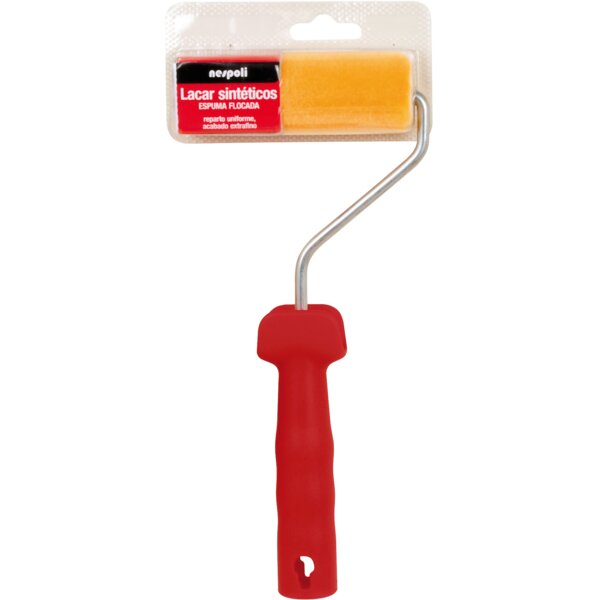
- Roller: Suitable for small areas only; typically 50–75 microns (2–3 mils) DFT per coat
- Thinner: International GTA220 (thinning normally not required; do not exceed local legislation limits)
- Cleaner: International GTA822 or GTA220
Physical and regulatory data (Part A)
- Physical state: Liquid
- Colour (Part A): Bronze
- Odour: Solvent
- Relative density: approx. 1.23–1.33 kg/l (depending on sheet)
- Flash point (typical): 28°C for Part A; 26°C for Part B; 28°C mixed (closed cup)
- VOC (as supplied): 3.22 lb/gal (386 g/L) – EPA Method 24
- VOC (EU Solvent Emissions Directive): 318 g/kg of liquid paint as supplied
- VOC (Chinese National Standard GB23985): 329 g/L
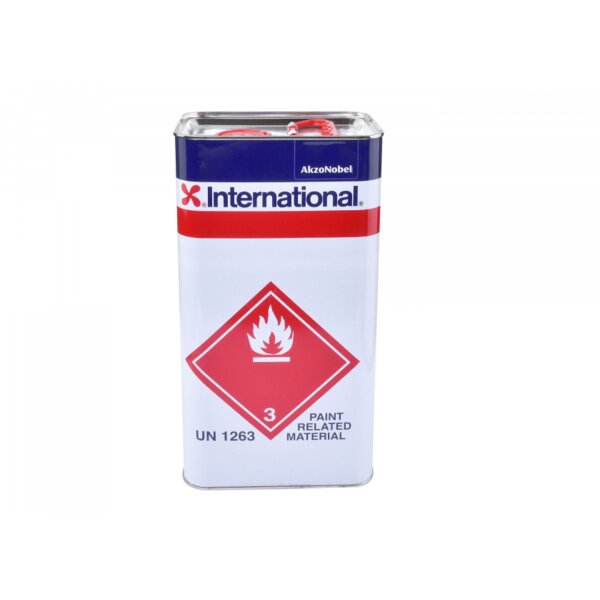
- UN number: UN1263
- UN proper shipping name: PAINT
- Transport class: Class 3 (flammable liquid)
Unit size and packaging
- Typical pack size (metric):
- Unit size 17.5 litres: Part A supplied in 12.5 L can (20 L pack); Part B supplied in 5 L can
- Typical shipping weight for 17.5 L unit: approx. 23.4 kg (Protective / Marine technical sheets)
- Shelf life: Minimum 12 months at 25°C, in unopened containers, stored dry, in the shade and away from sources of heat and ignition.
Surface preparation and application guidance
Steel preparation
- General: All surfaces must be clean, dry and free from oil, grease, salt and other contaminants (SSPC-SP1 solvent cleaning as appropriate).
- Abrasive blast cleaning (immersion service): Blast to Sa2½ (ISO 8501-1:2007) or SSPC-SP10. Recommended profile 50–75 microns (2–3 mils).
- Abrasive blast cleaning (atmospheric exposure): Minimum Sa2½ (ISO 8501-1:2007) or SSPC-SP6.
- Ultra high pressure hydroblasting / wet abrasive blasting: Surfaces prepared to Sa2 (ISO 8501-1:2007) or SSPC-SP6, with flash rust not worse than HB2M (International Hydroblasting Standard) or SB2M (Slurry Blasting Standard).
- Shop-primed steel:
- Breakdowns, weld seams and damaged areas: blast to Sa2½ / SSPC-SP10 or power tool clean to Pt3 (JSRA SPSS:1984) or SSPC-SP11.
- Approved intact shop primers: must be clean, dry and free from soluble salts and contamination.
- Unapproved shop primers: complete removal by blasting to Sa2½ (ISO 8501-1:2007) or SSPC-SP10. Sweep blasting to International standards AS2 or AS3 may be acceptable in some cases.
Mixing and application notes
- Material is supplied in two containers as a unit. Always mix a full unit in the supplied proportions.
- Agitate Part A with a mechanical mixer, then add all of Part B and mix thoroughly until homogeneous.
- Apply by airless spray only for main areas. Use brush or roller only for small areas or touch-up; multiple coats may be needed to reach specified DFT.
- Use only recommended International thinners; alternative solvents, especially those containing ketones, can severely inhibit curing.
- Substrate temperature must be at least 3°C (5°F) above the dew point. Ensure adequate ventilation in confined spaces.
- Over-application will extend minimum overcoating and handling times and may affect long-term overcoating properties.
- Before overcoating, high pressure fresh water wash and/or solvent wash may be required to remove surface contamination.
- Unmixed material must be stored in line with the Storage section of the technical data sheet.
Applications and use cases
Typical environments
- Offshore platforms and FPSOs: Ideal as a primary primer on underwater hulls, topsides, external superstructures, decks and cargo tanks of offshore platforms and floating production and storage facilities.
- Marine newbuilding and repair: Universal primer for new construction or maintenance and repair of ships, including immersed and non-immersed areas.
- Immersion and ballast service: Suitable for immersion service when used with appropriate build and overcoating schemes (e.g. overcoated with Intergard 263 or 269 where specified).
- Tank coatings: Can be used in cargo tanks and ballast tanks as part of approved systems (see certifications and specific system data).
- Tanker decks: Suitable for use on tanker decks subject to Classification Society regulations.
System compatibility
Intershield 300 Part A, when mixed, is normally applied directly to prepared steel substrates but can also be used over suitable primers, and under a range of topcoats.
Suitable primers
- Intergard 269
- Interplate 977
- Interplate 855
- Interplate 997
- Interplate 937
- Intershield 300 (self-priming / stripe coats)
Suitable topcoats (atmospheric service)
- Interfine 1080
- Interfine 979
- Intergard 740
- Intergard 263
- Intergard 269
- Intershield 300 (multi-coat systems)
- Interthane 990
- Intersleek 717
- Intersleek 737 (following specific overcoating intervals)
For other primers/topcoats and detailed system design, Consultar ficha técnica del fabricante.
FAQ – INTERSHIELD 300 PART A INDIVISIBLE KIT
-
What type of product is INTERSHIELD 300 PART A INDIVISIBLE KIT?
It is Part A (base component) of a two-component, aluminium-pigmented pure epoxy coating designed as an abrasion resistant, high-performance anticorrosive primer for marine and offshore steel structures.
-
Can it be applied at low temperatures?
Yes. The mixed product is formulated to cure and be overcoated at low substrate temperatures, with defined touch dry and overcoating intervals from -5°C upwards. In some locations it may be applied down to -15°C or even -20°C following specific procedures.
-
On which substrates can it be used?
It is intended for suitably prepared carbon steel, either bare blasted steel or approved shop-primed steel that has been cleaned and mechanically prepared where necessary.
-
Which application methods are recommended?
Airless spray is recommended for large areas to achieve the specified film thickness in one operation. Brush and roller may be used for small areas and touch-up, typically requiring multiple coats.
-
Do I need to thin the product?
Thinning is normally not required. When necessary, only International GTA220 thinner should be used, and the amount must not exceed local environmental legislation limits.
-
How long can I use the material once mixed?
Pot life depends on temperature: approximately 6 hours at -5°C to 5°C, 4 hours at 15°C, 2.5 hours at 25°C and about 45 minutes at 40°C. After this time the material should be discarded.
-
Is INTERSHIELD 300 suitable for immersion service?
Yes. It is designed for both immersion and atmospheric exposure when applied to correctly prepared steel and used within specified film thickness and system guidelines.
-
What happens if the coating chalks or discolours outdoors?
Like all epoxies, Intershield 300 will chalk and discolour on exterior exposure, but this does not adversely affect its anticorrosive performance. A UV-resistant topcoat can be applied where long-term cosmetic appearance is required.
-
Can I weld or flame-cut steel coated with INTERSHIELD 300?
Yes, but welding or flame cutting on coated steel will generate dust and fumes. Appropriate personal protective equipment and local exhaust ventilation must be used, following relevant standards such as ANSI/ASC Z49.1 where applicable.
-
How should leftover material and empty containers be disposed of?
Waste paint and contaminated containers should be disposed of via authorised waste contractors in line with local and national regulations. Typical waste code given is EWC 08 01 11* for waste paint and varnish containing organic solvents or other hazardous substances.
Section 14 – Transport information
Key transport data for INTERSHIELD 300 PART A (Bronze):
- UN number: UN1263
- Proper shipping name: PAINT
- Transport hazard class: Class 3 (flammable liquid)
- Environment: Classified as hazardous for the aquatic environment; the environmentally hazardous substance mark may not be required for small pack sizes (≤5 L or ≤5 kg) depending on mode of transport.
- Special precautions for user: Within the user’s premises, always transport in closed, upright and secure containers. Ensure personnel know emergency actions in case of accident or spillage.
For full transport classification details, Consultar ficha técnica del fabricante.
Section 8 – Personal protective measures
According to the Safety Data Sheet for INTERSHIELD 300 BRONZE PART A, the following individual protection measures and controls are recommended for professional and industrial users:
Engineering controls
- Use only with adequate ventilation, including local exhaust where necessary, to keep airborne concentrations below applicable limits and below lower explosive limits.
- Use explosion-proof ventilation and electrical equipment in areas where flammable vapours may be present.
Eye and face protection
- Wear chemical splash goggles and/or a face shield conforming to an approved standard when there is a risk of splashes, mists or vapours.
- If inhalation hazards are significant, a full-face respirator may be required instead of goggles.
Hand protection
- Use chemical-resistant, impervious gloves compliant with EN374 or relevant standards.
- For prolonged or frequently repeated contact: gloves with protection class 6 (breakthrough time >480 minutes) are recommended; materials such as Viton or nitrile with thickness ≥0.38 mm.
- For brief contact: gloves with protection class ≥2 (breakthrough time >30 minutes), e.g. nitrile gloves with thickness ≥0.12 mm.
- Replace gloves regularly and immediately if damaged. The final glove choice must be based on the user’s risk assessment and manufacturer data.
Skin and body protection
- Wear suitable protective clothing selected according to the task and exposure risk, approved by a safety specialist.
- Where ignition from static electricity is possible, use anti-static protective clothing (e.g. anti-static coveralls, boots and gloves) in line with EN 1149.
- Use appropriate protective footwear and any additional skin protection required by the work conditions.
Respiratory protection
- Select a respirator that meets relevant standards or certification, as part of a full respiratory protection programme.
- Where ventilation is inadequate or during operations generating vapours, spray mists or sanding dust, wear a respirator conforming to EN140 fitted with an A/P2 filter or better.
- Dry sanding, flame cutting or welding of the dry paint film can produce hazardous dust and fumes; wet sanding or flatting is preferred, and appropriate respiratory protection must be used if exposure cannot be otherwise controlled.
Hygiene and environmental precautions
- Wash hands, forearms and face thoroughly after handling, before eating, drinking, smoking or using the lavatory, and at the end of each shift.
- Remove contaminated clothing and protective equipment before entering eating areas; wash contaminated garments before reuse.
- Ensure eyewash stations and safety showers are located near work stations.
- Check emissions from ventilation and process equipment to ensure compliance with environmental legislation; scrubbers or filters may be necessary to reduce emissions.
*Contenido generado por IA